CERL Newsletter Spring 2022
by Marian Lefferts
Share this article
With great energy we closed last year and worked through the first months of 2022. We would like to use this CERL Blog post to present you with our news.
Last December, CERL organised an online Annual General Meeting. In addition to signing off the finances for the year 2020-2021 and approving the budget for 2021-2022, members heard progress reports and elected new representatives on the CERL Board of Directors and the Executive Committee. Claudia Fabian of the Bayerische Staatsbibliothek and Andrea de Pasquale of the National Central Library in Rome stepped down at the end of their second three-year terms. We are very pleased to welcome Dott. Stefano Campagnolo, new Director of the National Central Library in Rome and temporary Director of the Marciana National Library in Venice, Dr Dorothea Sommer, Deputy Director General of the Bayerische Staatsbibliothek, München and Mgr Katarzyna Slaska, Deputy Director for Special Collections at the University of Warsaw Library, to the CERL Board of Directors.

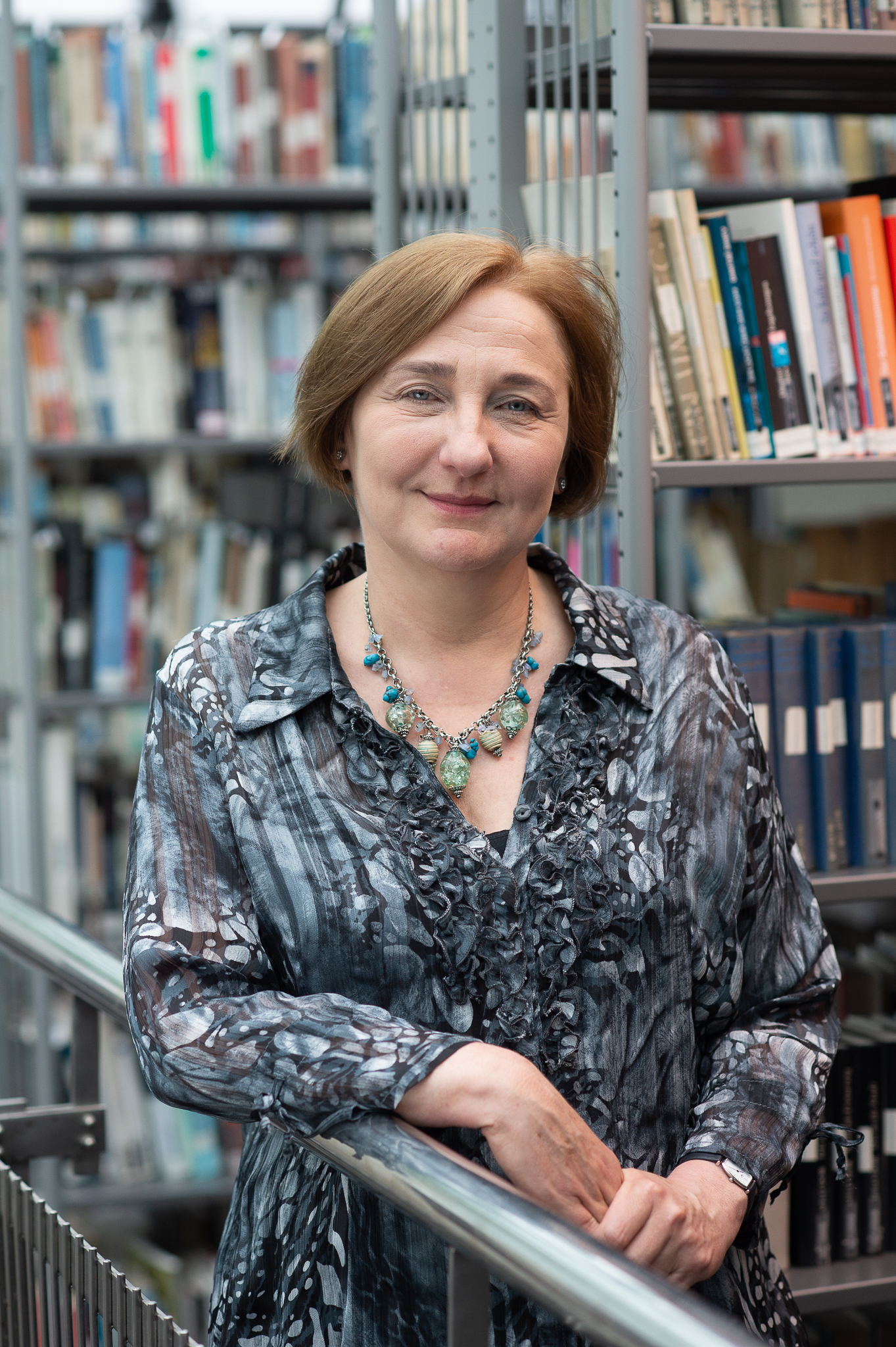

Davide Campagnolo
Katarzyna
Slaska
Dorothea Sommer
Marieke van Delft retired from the Koninklijke Bibliotheek, the National Library of the Netherlands, Edwin Schroeder from the Beinecke Library, and Andreas Fingernagel from the Österreichische National Bibliothek. We thank them for their work on the Executive Committee and their generous contributions to CERL. New members on the Executive Committee are Flavia Bruni, Istituto Centrale per il Catalogo Unico, Rome (also member of the IFLA Rare Books and Special Collections Section Committee), Esther van Gelder, Curator of Early Printed Book at the Koninlijke Bibliotheek, the National Library of the Netherlands, and Agnieszka Franczyk-Cegła, head of the Early Imprints department at the Ossolineum Library, Wrocław and the new Chairman of the CERL Provenance Working Group.


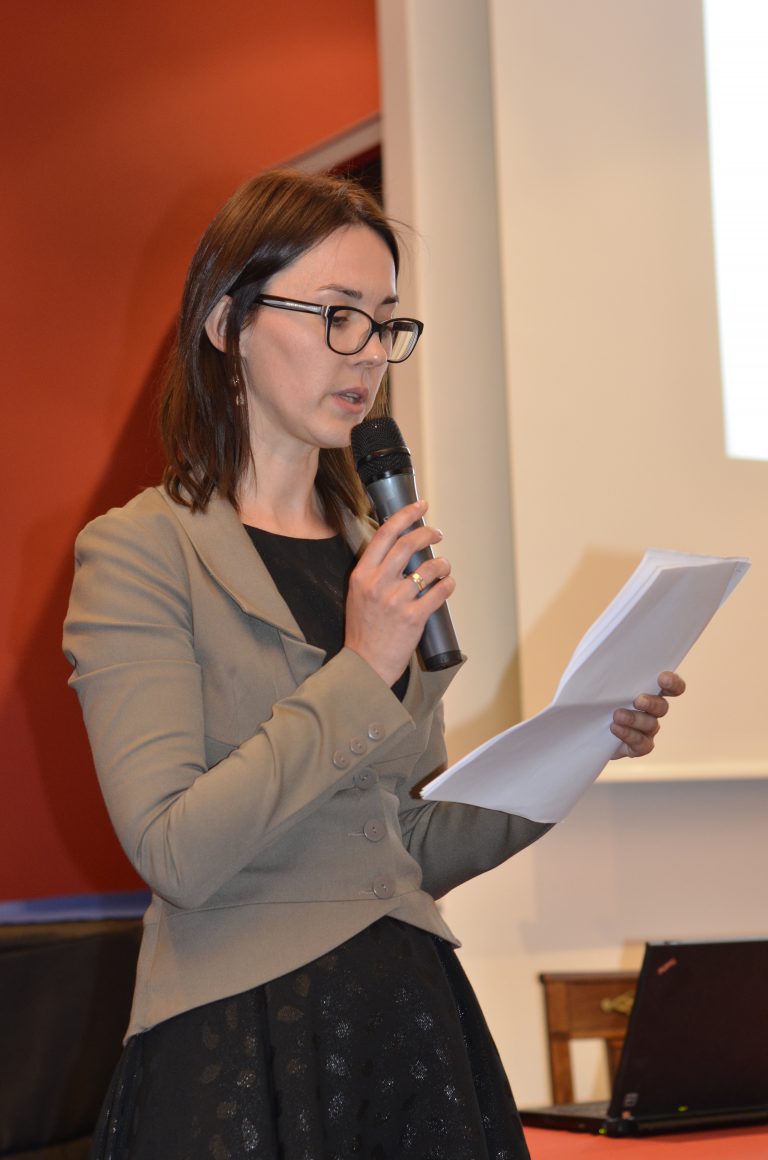
Esther
van Gelder
Flavia
Bruni
Agnieszka Franczyk-Cegła
Due to the pandemic, our CERL member libraries were unable to welcome interns in their libraries in 2021. We are much more hopeful for 2022, and have advertised the CERL Grants scheme again. Early career librarians and academics are invited to apply for one of the projects we proposed in the call, which can be accomplished either in person, remotely, or a combination of the two, to guarantee that they take place in these still uncertain times. The deadline for applications is 16 March 2022 and projects should be completed by 31 December 2022.
In January of the year, three new datasets were added to the Heritage of the Printed Book database (HPB):
- Just over 20,300 records from Eton College
- Just over 26,800 records from the Library of Vilnius University
- Just over 2,800 records from the School of Oriental and African Studies at the University of London (SOAS Library EB81.148 /11620 ->)
This brings us to a total of 8.9 million records for 54 institutions in 22 countries covering the collections of at least 200 libraries.
Next, we will upload updates for VD16, HeBIS, Warsaw and the Czech National Library, and we are working with the British Library and the National Library in Spain to incorporate their bibliographical records in the HPB.
If your library has a collection of European books printed between 1450 and 1850, we warmly invite you to contribute your records to the Heritage of the Printed Book database. Together we present our shared cultural heritage in context.
CERL hosts the Incunabula Short Title Catalogue for the British Library, as a stand-alone database. Recently we were asked to similarly host the Short Title Catalogue Netherlands for the Koninklijke Bibliotheek, the National Library of the Netherlands. This year, our colleagues at the KB NL and the Data Conversion Group in Göttingen will be working on transferring the STCN records, as well as its supporting authority files, on tailoring the search and download interfaces and on setting up the editing facility for STCN editors.

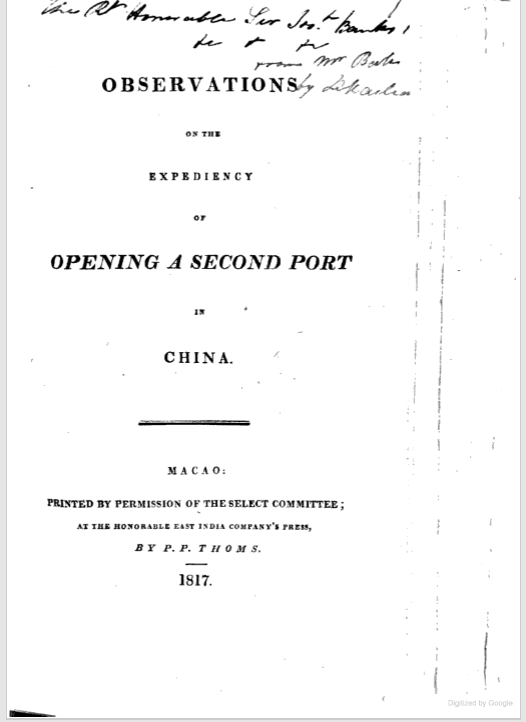
In addition to these two stand-alone databases, we have data from several Retrospective National Bibliographies (RNBs) in the HPB database (e.g. Fennica for Finland, VD16 for Germany, SBN(A) for Italy, STCN for the Netherlands, STCV for Flanders, SB17 for Sweden). A small working group has started put together an inventory of national bibliographies that include information about early printed materials for the period 1450-1850.
You can work with us on this: it is one of the proposed CERL Grant projects (see above). We want to make sure that the information we bring together is available centrally, that we make the most of the data that is already included in the HPB, and expand it where possible. Ultimately, we hope to encourage all libraries to use the unique identifiers that are available in RNBs. Including these identifiers in your catalogue records underpins linking between records and helps to group records in our shared resources, such as the HPB database.
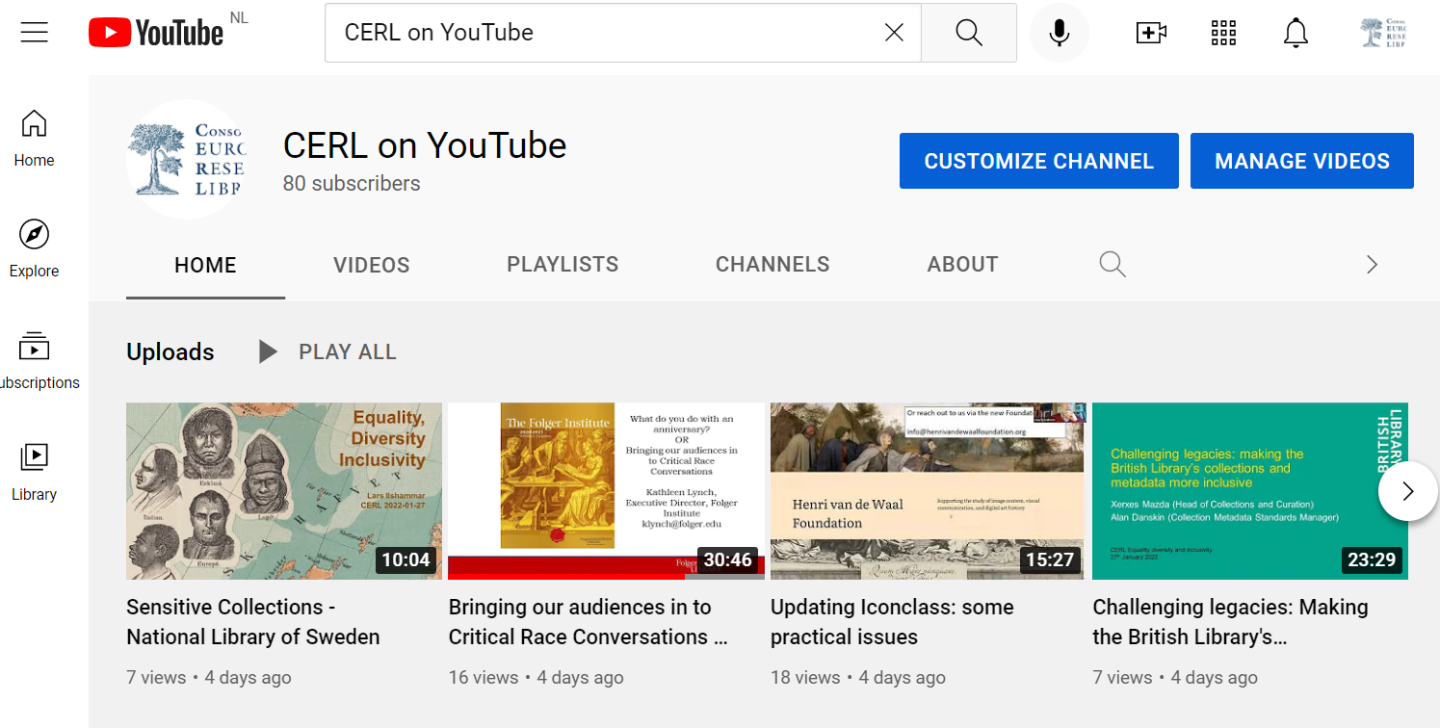
The Cultural Property Working Group organised an online event around fostering Equality, Diversity and Inclusivity in our libraries. Representatives of the Royal Library in Sweden, Iconclass, the Folger Institute and the British Library gave presentations and their videos and powerpoint slides are made available through the CERL website. Speakers and participants noted that the presentations had given them much food for thought, and we felt that while the online event had ended, the conversation had not. CERL is therefore planning to organise a second online event, where we tackle topics that warrant further exploration. Proposals for themes and speakers are very welcome.
We have previously reported that the Manuscripts Librarians Working Group was in the process of compiling extensive information about online resources online for students of manuscripts and archival materials.
In this we have concentrated on a) Institutional collections – Databases and repositories sorted by country and institution, b) collections with a wider coverage – Databases and repositories with a regional or national scope (sorted by country), and those with a transnational scope (sorted by title), c) Research tools – Including categories such as: general (journals, organisations), A-Z (glossaries), codicology, music, palaeography, provenance, reference, texts, and d) Educational and other resources – Including categories such as: blogs, exhibitions, projects, subjects (websites dedicated to individual manuscripts or persons).
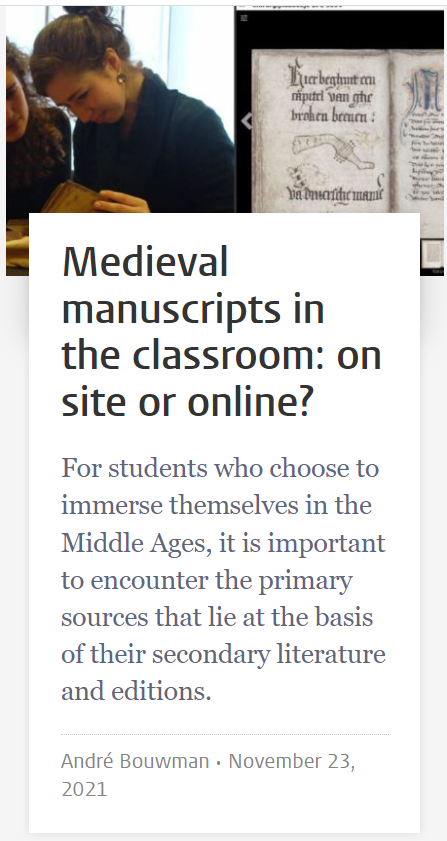
We are very grateful to André Bouwman of the University of Leiden for his wonderful work on curating the lists and for his extensive testing of the best method to present this information on the CERL website. You might be interested in reading his blog (->) on a related topic.
If you have suggestions for further resources that should be added, we invite you to record a URL and short description in this Google document – we regularly move information from this Google doc to the consolidated lists on the website.
The Working Group is planning its eight conference, themed Working with Letters, which will take place on 2-3 June 2022. Twenty-three speakers will gather in Olso to present 27 papers. You can contact the organisers via workingwithletters@nbo.no.The Working Group is planning its eight conference, themed Working with Letters, which will take place on 2-3 June 2022. Twenty-three speakers will gather in Olso to present 27 papers. You can contact the organisers via workingwithletters@nbo.no.
There are many more CERL Working Groups, and you can follow what they do on their CERL webpages, via Twitter (@cerl_org), or via this blog. If you want to join one of the Working Groups you can write to secretariat@cerl.org.
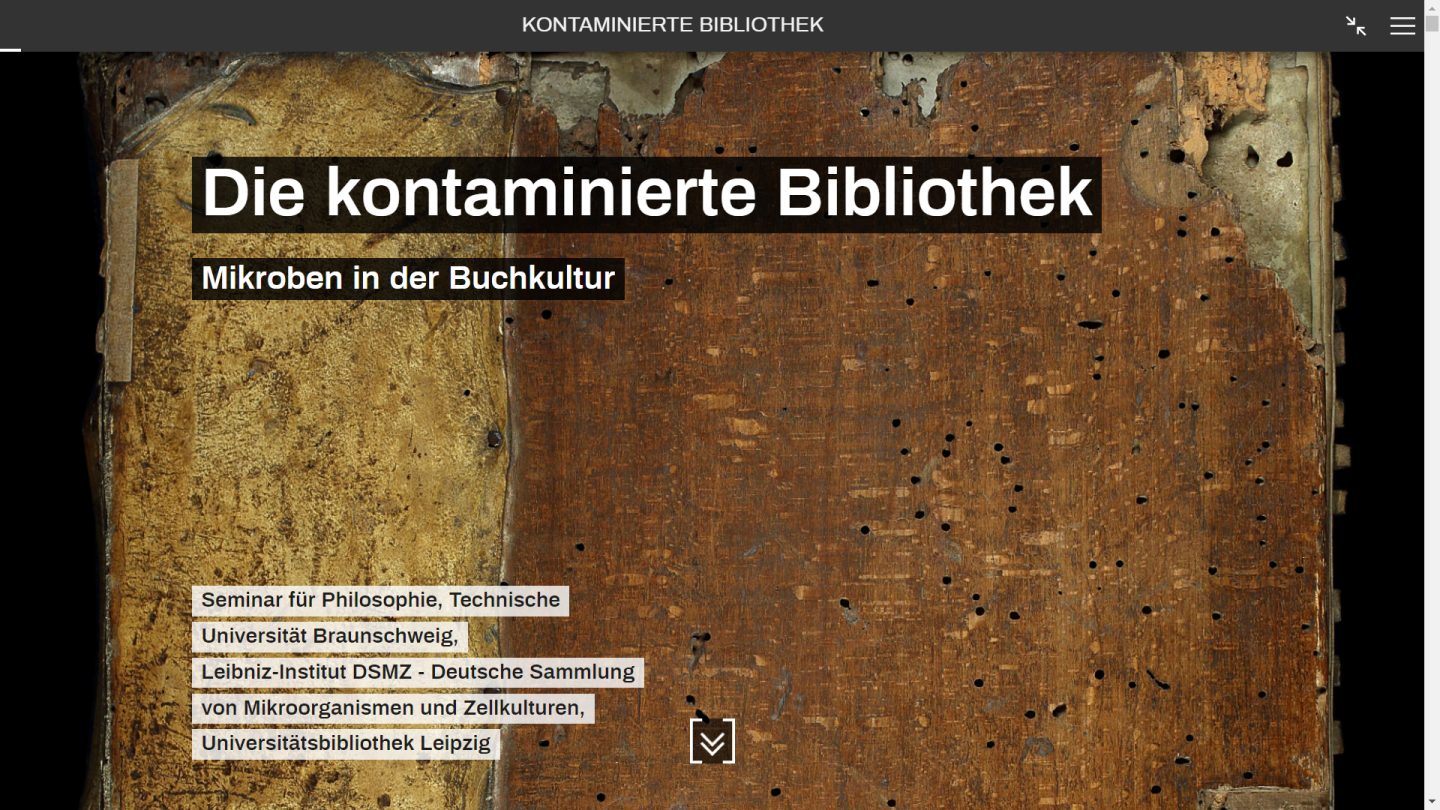
Exhibition resulting from the MIKROBIB project
Partners: Seminar für Philosophie der Technischen Universität Braunschweig, Universitätsbibliothek Leipzig and Leibniz-Institut DSMZ