
The Incunabula and MEI Editors Working Group supports and develops Material Evidence in Incunabula (MEI), a specialist database documenting the copy-specific, post-production history of 15th-century printed books. MEI records material evidence such as provenance, bindings, decoration, manuscript annotations, stamps, and prices, providing unparalleled insight into the life and transmission of each surviving incunable.
MEI is closely linked to the British Library’s Incunabula Short Title Catalogue (ISTC), from which it derives its bibliographical records. This integration allows users to combine ISTC bibliographical data with rich copy-specific descriptions.
The Working Group brings together the editors and curators of the digital resources for the study of incunabula: Gesamtkatalog der Wiegendrucke (GW), ISTC, MEI and Typenrepertorium der Wiegendrucke (TW)
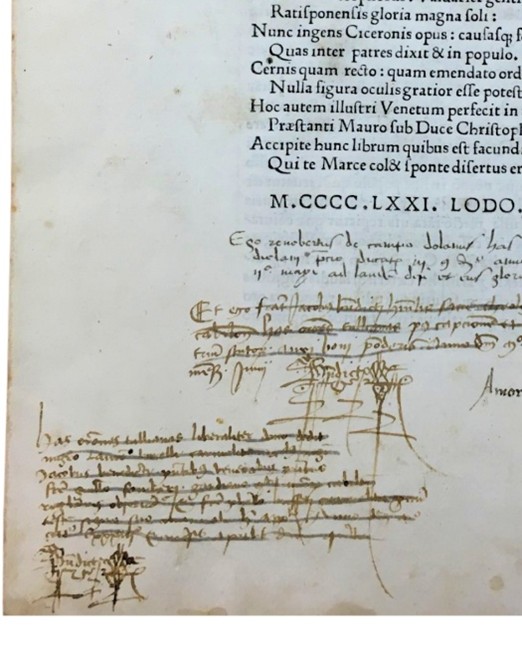
MEI Editors work towards the insertion into Material Evidence in Incunabula database of high quality data relating to the copy specific of incunabula, either book in hand, or by transferring into the database information from printed or electronic catalogues. A group of Advisers is in place for consultation on the ongoing development and growth of the database, and its integration with other existing incunabula databases.
The working group usually meets twice a year.
Chair: Cristina Dondi, CERL Secretary
- Nathalie Coilly, Paris BnF
- Martin Davies, MEI Advisor, London
- Oliver Duntze, Staatsbibliothek, Berlin
- Falk Eisermann, Gesamtkatalog der Wiegendrucke, Staatsbibliothek, Berlin
- John Goldfinch, MEI UK Editor, London
- Alexander Jahnke, Niedersächsische Staats- und Universitätsbibliothek, Göttingen
- Julia King, ISTC
- Mira Kroll, Vienna ONB
- John Lancaster, MEI US Editor
- Karen Limper-Herz, ISTC, The British Library, London
- Paul Needham, formerly Scheide Library, Princeton
- Greg Prickman, Atlas of Early Printing and Folger Library, Washington
- Saveria Rito, IGI, Biblioteca Nazionale Centrale, Rome
- Bettina Wagner, Staatsbibliothek, Bamberg
The Incunabula WG has a circulation list to ask for the advice of the members on challenging inscriptions, decoration, binding, stamps, provenance, coat of arms etc. To register please write to Cristina Dondi at c.dondi@cerl.org.
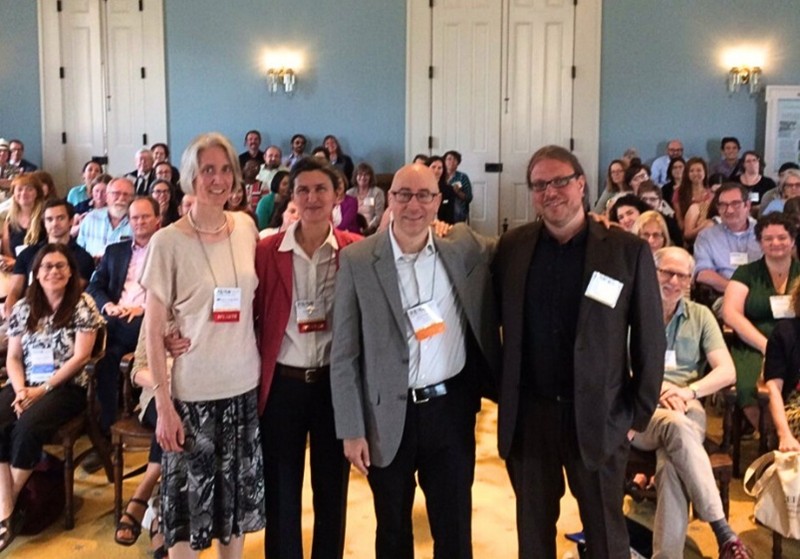
Iowa City Rare Books and Manuscripts Section of the American Library Association, 21 June 2017
The Future of Bibliographic Data—New Discoveries from the Study of the Oldest Printed Books (from left to right: Karen Limper-Herz, ISTC; Cristina Dondi, MEI; Greg Prickman, Atlas of Early Printing (organiser); Oliver Duntze, GW).
Resources
Contact information
For more information about the Incunabula Working Group, please contact the Chair: Cristina Dondi, Consortium of European Research Libraries.