
CERL Internships 2022 – Working Group on Retrospective National Bibliographies (RNB)
by Dr Olga Tkachuk, Ossoliński National Institute in Wrocław (Poland)
Share this article
Early in 2022, CERL established a Working Group on Retrospective National Bibliographies (RNB) covering the period 1450-1850 which is the focus of CERL. The Working Group’s intention is to identify and to create a detailed overview of RNBs in Europe (especially those in electronic form. Ultimately, the Working Group hopes to promote the role of RNBs in the world of linked open data and research infrastructures by encouraging countries to develop a shared view on the role of identifiers, linking, and authority records. The Working Group attempts to monitor, define and foster the role and impact of RNBs in the context of other existing databases covering early printed books (i.e. the Heritage of the Printed Book database, ISTC, STCN, USTC). In cooperation with other institutions, like IFLA, the Working Group hopes that a European network of linked RNBs will give unhindered access to our shared heritage.
The RNB Working Group is supervised by Marian Lefferts, the Executive Manager of CERL, the other members of the Group are: Claudia Fabian (Bayerische Staatsbibliothek, München), Marieke van Delft (formerly of the Koninklijke Bibliotheek, the National Library of the Netherlands, The Hague), Esther van Gelder (Koninklijke Bibliotheek, the National Library of the Netherlands, The Hague), Anette Hagan (National Library of Scotland, Edinburgh), Matthias Reif (Bayerische Staatsbibliothek, München) and Peter Sjökvist (University Library Uppsala, Uppsala).
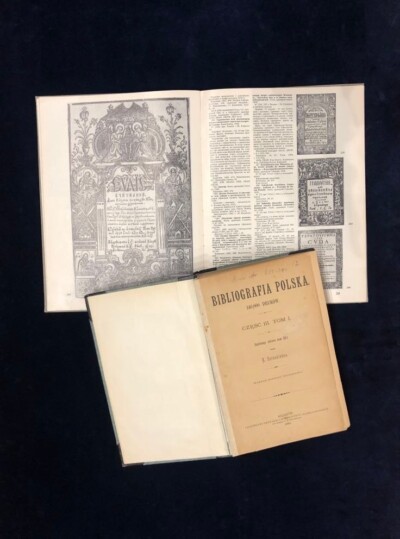 The CERL Remote Internship allowed me to join the RNB Working Group on May 2022. As my research interests lie in the East and South Slavic languages, particularly Ukrainian, Croatian and Serbian, and in the history of Slavic Cyrillic book printing of the 15th-19th centuries, I decided to apply for this internship, because I believed my experience and knowledge in these fields together with the knowledge of bibliographies of the Slavic countries could be useful for the Working Group tasks and would help the WG to achieve its goals.
Through the internship I managed to investigate the state of retrospective national bibliographies in 21 countries in Central and Eastern Europe. I prepared a list of these bibliographies focusing on those which exist in electronic form and include printed materials before 1850. If a bibliography existed only in printed form, I gave its bibliographic description and link to a PDF (if it existed). For countries that do not have retrospective bibliographies in any, printed or electronic, form, I choose and listed their most important and comprehensive catalogues of early printed books. I made a short overview of every RNB and for the majority of them found the institution responsible for its preparation. My last step was to contact these institutions and to ask colleagues to verify the information I had established. As a result, I also managed to create a contact list of people who are responsible or engaged in the preparation of RNBs in various countries. The information about RNBs which I managed to gather is now available on the CERL webpage, where you can also find more information about the CERL RNB Working Group, its tasks, goals, activity and plans:
At the end of my internship I was honored to be invited to become a member of the RNB Working Group and to continue our cooperation. The next stage will be a CERL International Conference which will take place at the Ossolineum Library on June 29 and30 2023. At the Conference the results of our previous work will be discussed, and the presentations will cover such topics as: 1) scope, definitions and forms of RNBs; 2) RNB electronic databases: resources, structure, data formats and tools; 3) collaboration, cooperation and data sharing; 4) the role and impact of RNB as separate databases hosted by CERL in the context of the Heritage of the Printed Book database and other electronic databases with early printed books.
Because of the nature of the project during I haven’t visited new libraries during my internship, nor did I work with a book collection, but I did learn a lot of new information about retrospective national bibliographies and especially I’ve met new people from different countries who are not only prominent professionals and experts in their fields, but also good and friendly colleagues, ready to share their knowledge and experience with others, something I really, really appreciated.
Related articles
by Markéta Kučerová and Vojtěch Šícha, Library of the Czech Academy of Sciences
November 9, 2026
by Konrad K. Szymański (Ossolineum National Library, Wrocław)
November 9, 2026