
Reconstructing the Manuscript Collection of San Giorgio Maggiore in Venice and the Biblioteca Universitaria of Padua
by Antonia Delle Fratte, PhD student at the University of Padua/Venice Ca’ Foscari
Share this article
Since September 2025, I have been working on the reconstruction of the library collection of the Benedictine Monastery of San Giorgio Maggiore, in Venice, which was dispersed following the Napoleonic secularization at the beginning of the nineteenth century. This research is part of a doctoral project funded by the Italian government (PNRR), which began in 2022 under the joint doctoral programme of the University of Padua and Ca’ Foscari Venice, under the supervision of Paola Molino (University of Padua) and Flavia De Rubeis (Ca’ Foscari Venice). The programme includes a placement at CERL supervised by Cristina Dondi.
This project is a natural continuation of the thorough study and reconstruction of the incunabula collection of the same monastery conducted by Cristina Dondi (Università La Sapienza, Rome), Dorit Raines (Università Ca’ Foscari, Venice) and Lavinia Prosdocimi (Biblioteca Universitaria in Padua), and published in How the Secularization of Religious Houses Transformed the Libraries of Europe, 16th-19th Centuries, 2022.
With the support of the Fondazione Cini and Factum Foundation, within the framework of the ARCHiVe programme supported by the Helen Hamlyn Trust, and the collaboration of Padua’s Biblioteca Universitaria, where the majority of the manuscripts can be found today, the project is continuing the reconstruction of the Benedictine library by extending its investigation to manuscript material.
The Biblioteca Universitaria of Padua has been chosen as a prime location from which to begin a recollection of fundamental information on the fate of the manuscripts once held on the Venetian island. Thanks to the provenance investigation investigation conducted by librarians in the past century, nearly 160 manuscripts had already been placed under the San Giorgio Maggiore provenance umbrella.
Nonetheless, throughout my research and consultation of each manuscript assigned to that collection, I have been able to confirm the provenance of 130 specimens. This identification is based on the annotations found in the manuscripts, the presence of specific bindings or decoration, cross-referencing with the few surviving San Giorgio Maggiore catalogues, and the catalogue compiled in 1811 by Giuseppe Nicolò Dainese, Catalogo generale ossia, riunione di tutti gli elenchi di libri scelti dalle biblioteche delle Corporazioni religiose regolari concentrati nel già convento di Sant’Anna in Padova. This is a list of all manuscripts coming from monastic collections of the area, Venice included, then gathered in the Convento of Sant’Anna in Padua before being dispersed into different collections as their final locations.
After tracing all the most relevant information concealed in the manuscripts, and reconstructing a pattern of the different “shelf marks”, I have recorded the 130 identified manuscripts in the database Manus Online (National Census of Manuscripts from Italian Libraries), to provide a clear description of the distinctive features that pertain to the books formerly belonging to San Giorgio Maggiore. Meanwhile, I have been able to trace additional San Giorgio Maggiore manuscripts — some already known as such, others previously unknown — in various European and American libraries, thereby increasing both the corpus and the likelihood of identifying further specimens in the future.
The work first carried out by Cristina Dondi, Dorit Raines, and Lavinia Prosdocimi on incunabula, and now extended through my own research on manuscripts, represents an ideal starting point for a broader and more systematic investigation into the many other manuscripts from the Venetian monastery that were dispersed. The first phase of this evidence-based reconstruction aims to digitally reunite the book collection once held in the Library of the Benedictine monastery, recreating a visual understanding of what it once was, which we hope to expand further towards a future of new discoveries.
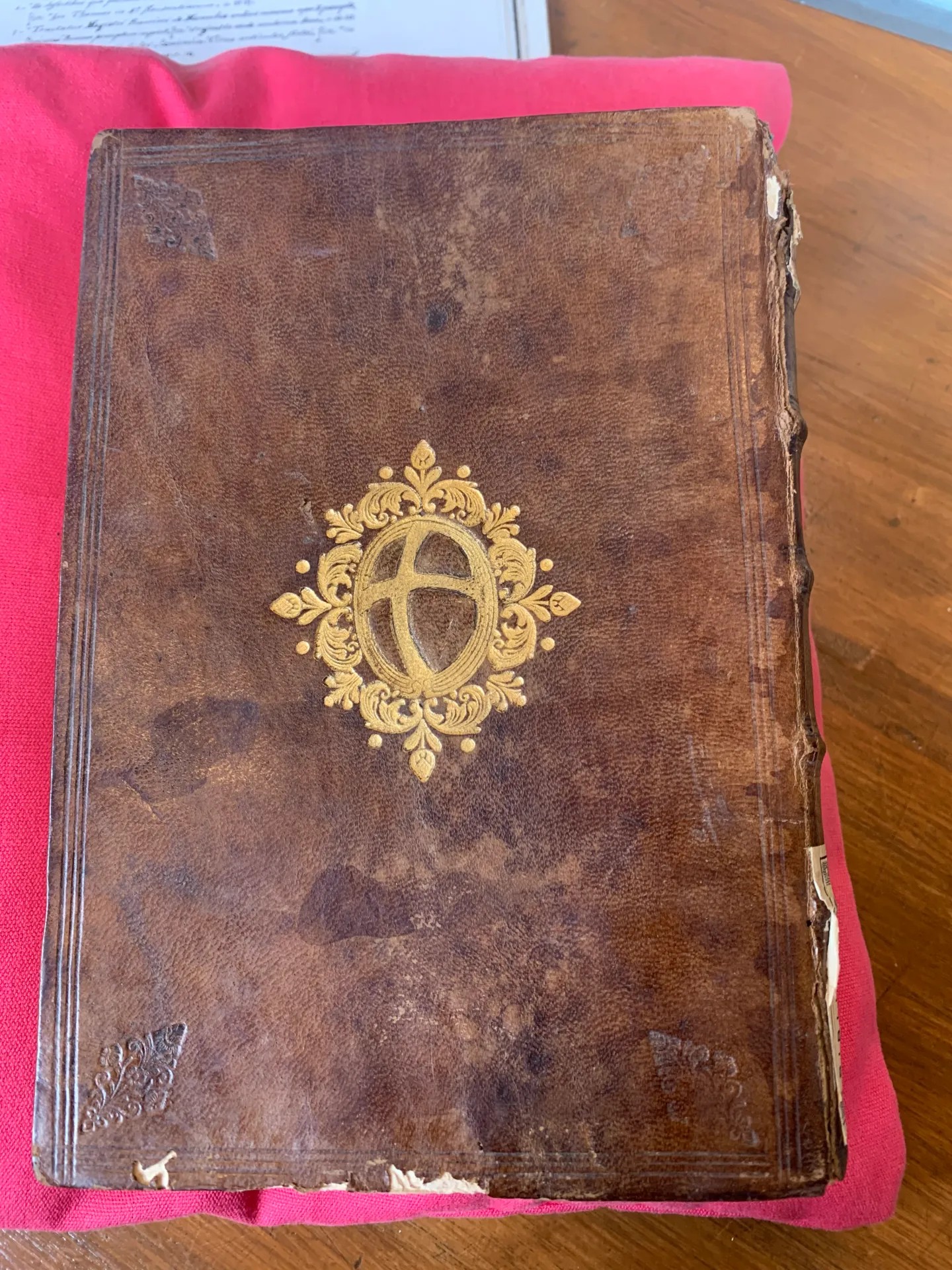
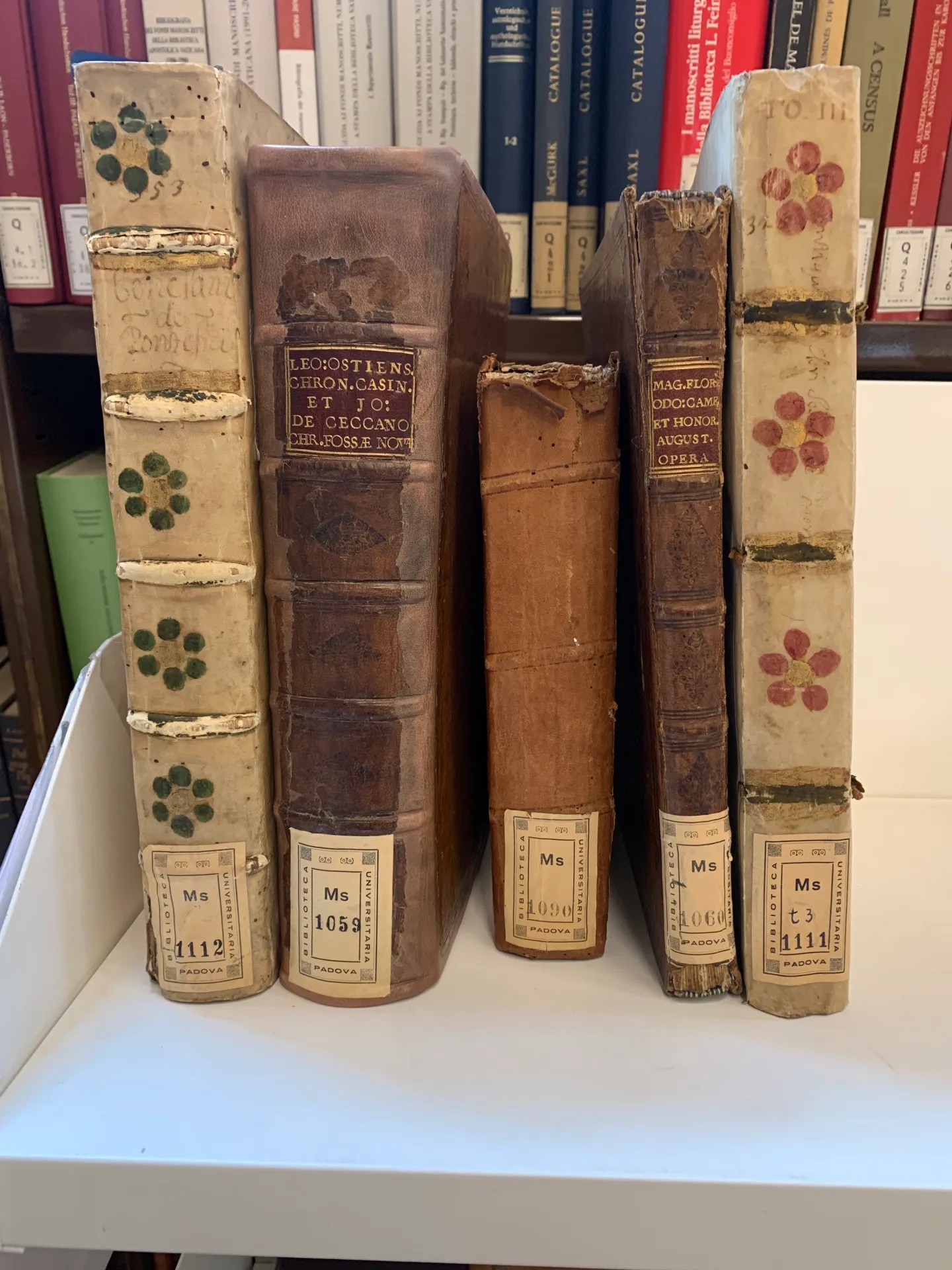
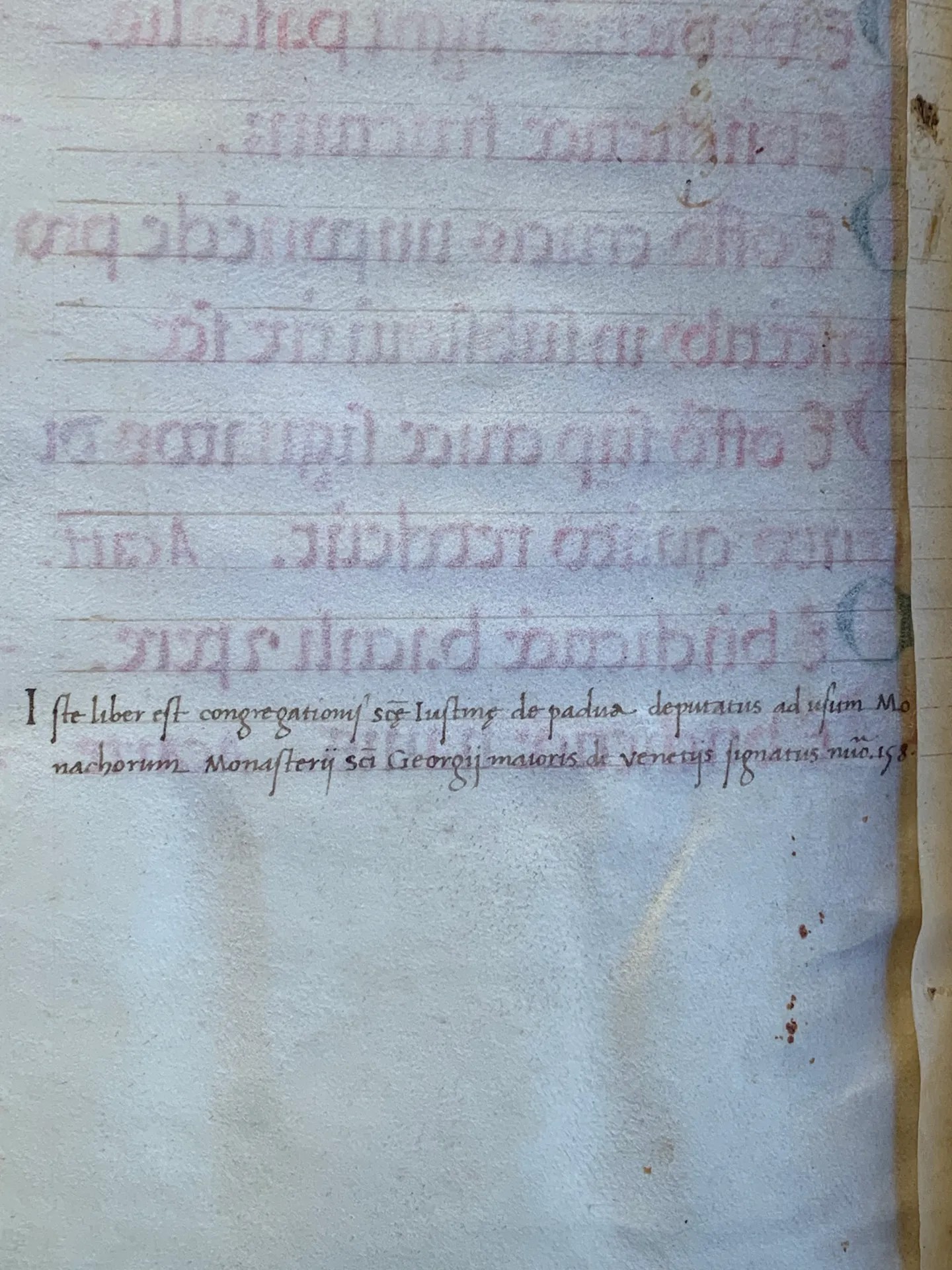
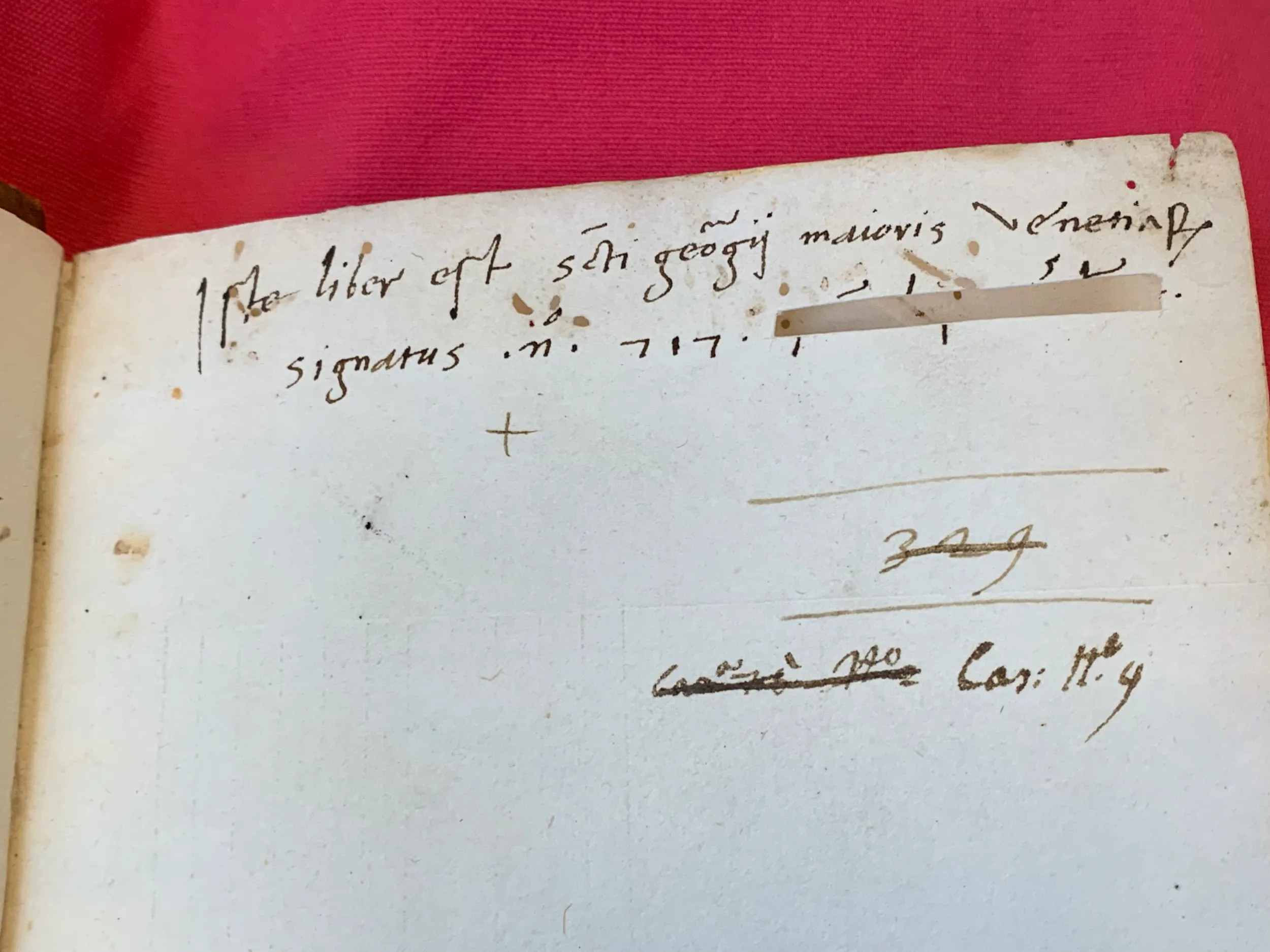
4. MS. 591, Biblioteca Universitaria, Padova. Possession note: “Iste liber est scti georgij maioris Venetiarum signatus n. 717”, f. IIr
Related articles

by Markéta Kučerová and Vojtěch Šícha, Library of the Czech Academy of Sciences
November 9, 2026
by Konrad K. Szymański (Ossolineum National Library, Wrocław)
November 9, 2026