Hafız Ahmed Agha Library in Rhodes – Where Manuscripts and History Inspire Scholarship and Muhabbet
by Tarik Tuten, Hafız Ahmed Agha Library
Share this article
The Hafız Ahmed Agha Library in Rhodes was inaugurated in 1793, a year after the establishment of the charitable foundation in Istanbul that was created to sustain it. Its founder, Hafız Ahmed Agha, was born on the island of Rhodes in the early 1740s and, while still a child, was sent to the Enderûn, the prestigious palace school of the Ottoman court in Istanbul. Following his education, he embarked upon a distinguished career in the imperial palace, serving under three successive sultans before retiring in 1789. Through imperial grants, privileges bestowed by the Porte, and perhaps a measure of entrepreneurial acumen, Ahmed Agha accumulated considerable wealth, which he ultimately chose to dedicate to public benefaction. The act of founding a library in the late 18th century can be interpreted not solely as an elite or philanthropic gesture, but as the institutionalization of an ethical obligation or conscious preference. By endowing a library, he opened private erudition into public access—offering future generations texts in literature and across disciplines including theology, jurisprudence, medicine, astronomy, logic and history. The library, therefore, functioned not merely as a physical collection of manuscripts, but as a vehicle of ethical continuity and epistemic justice. Nevertheless, the foundation of a library on his native island represented an undertaking of exceptional ambition. In the late eighteenth century, Rhodes was a distant outpost of the Ottoman Empire, where transportation was difficult, communications slow, and construction costs substantial. The project was therefore remarkable not only for its scale but also for its rarity. In a period starting at the end of the 17th century until the mid-19th century some wealthy Ottoman dignitaries endowed libraries in the imperial capital or in former capitals of the empire; the establishment of such an institution in a peripheral province was unusual and reflected both the founder’s attachment to his birthplace and his commitment to the diffusion of learning beyond the metropolitan centres.
The library stands within a walled precinct opposite the courtyard entrance of the Süleymaniye Mosque in Rhodes. Its imposing gateway, crowned by a round arch, signals the importance of the institution and hints at a close relationship between the two monuments. Together with the adjoining Imâret, the former public soup kitchen, these landmarks of the Old Town of Rhodes evoke the constituent elements of a külliye—an Ottoman socio-religious complex—united by both function and urban setting. Engraved in marble above the gate, the inscription identifies the founder as: “Hafız Ahmed Agha of Rhodes, possessor of charitable deeds and former chief equerry to his Sovereign Sultan.”
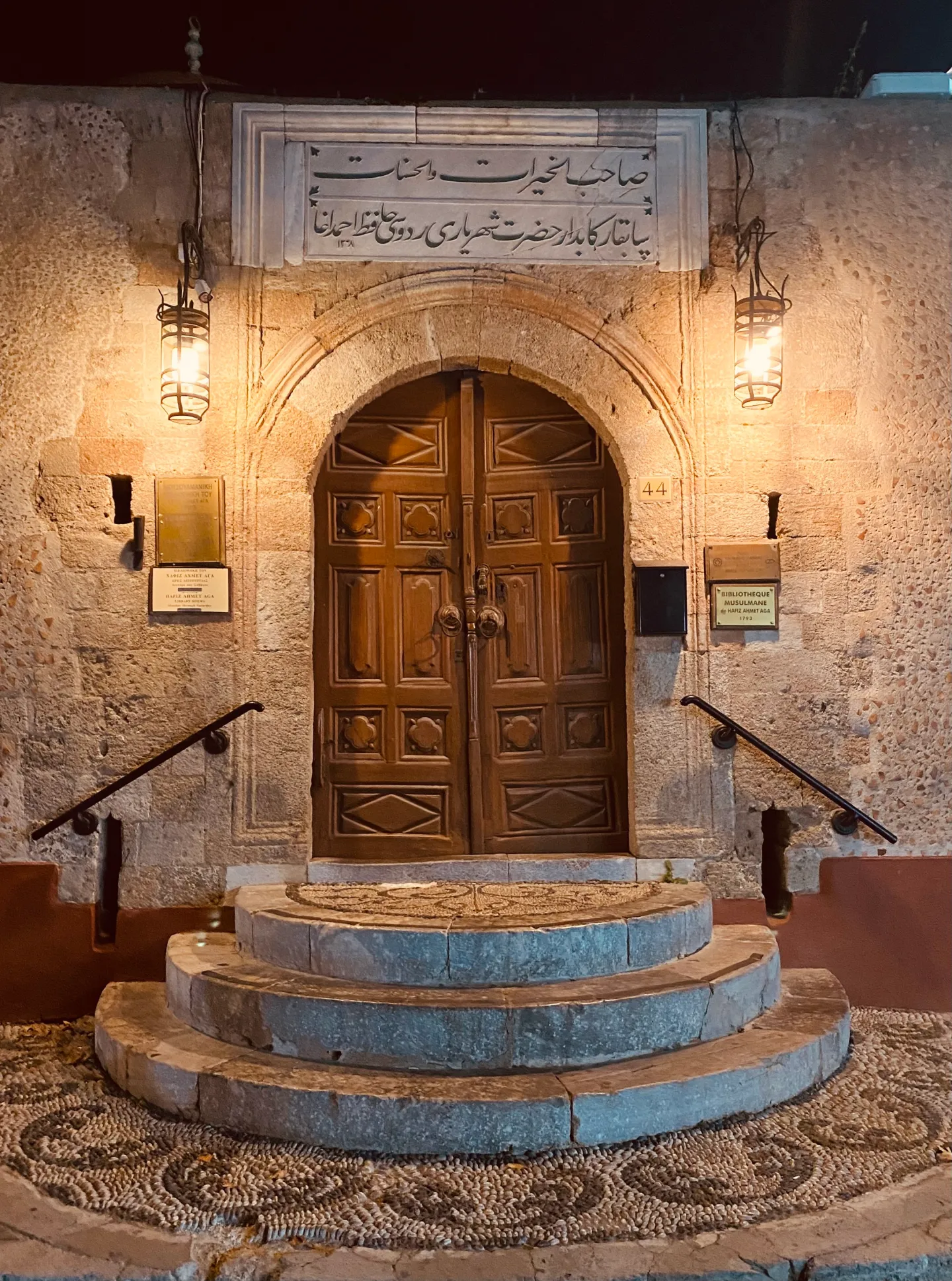
Picture 1: Main entrance of the Hafız Ahmed Agha Library with the inscription in marble on top.
The commercial thoroughfare that passes between Süleymaniye and the library descends toward the Kolona and Mandraki harbours, from where the modern day’s cruise ship passengers can see the domed silhouettes of Süleymaniye and the library while approaching Rhodes. Passing through the gateway, the visitor enters a tranquil courtyard that forms a striking contrast to the bustle of the surrounding streets. Paved with black and white sea pebbles arranged in elegant artistic patterns, called Khokhlaki in the Dodecanese, the enclosure is shaded by orange, mandarin, lemon and loquat trees and enlivened by numerous flowering plants and herbs set in terracotta pots.
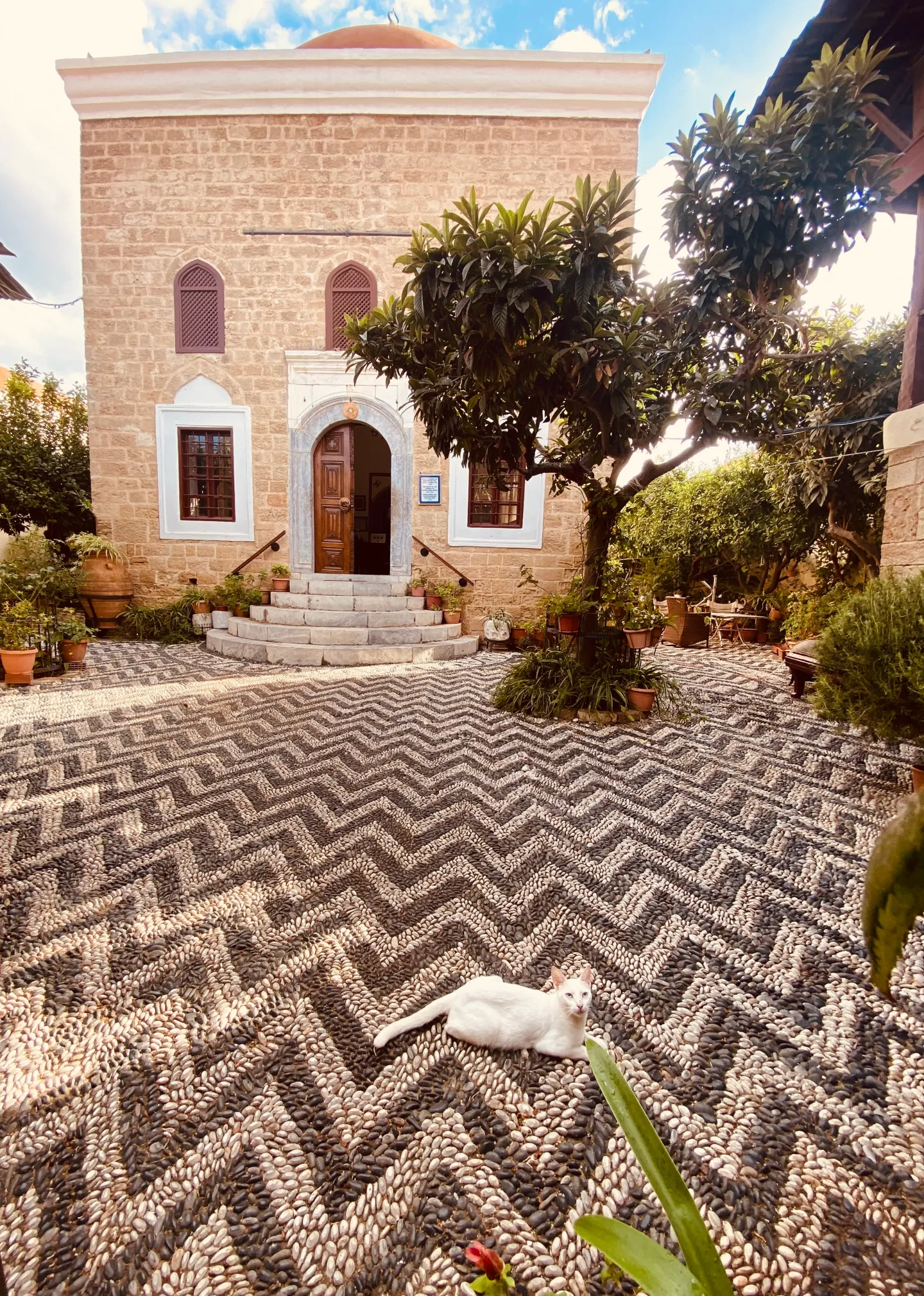

Picture 2: Courtyard and the library building with Bianca in the foreground (left) and
the former lecture room and the minaret of the Süleymaniye in the background (right).
A fountain built into the courtyard wall bears an inscription praising Hasan Agha, the founder’s father who died in Rhodes in 1772 and was buried in the Murat Reis Cemetery in Rhodes—an esteemed burial ground reserved for the Ottoman notables and dignitaries which remained in use until the early 20th century.
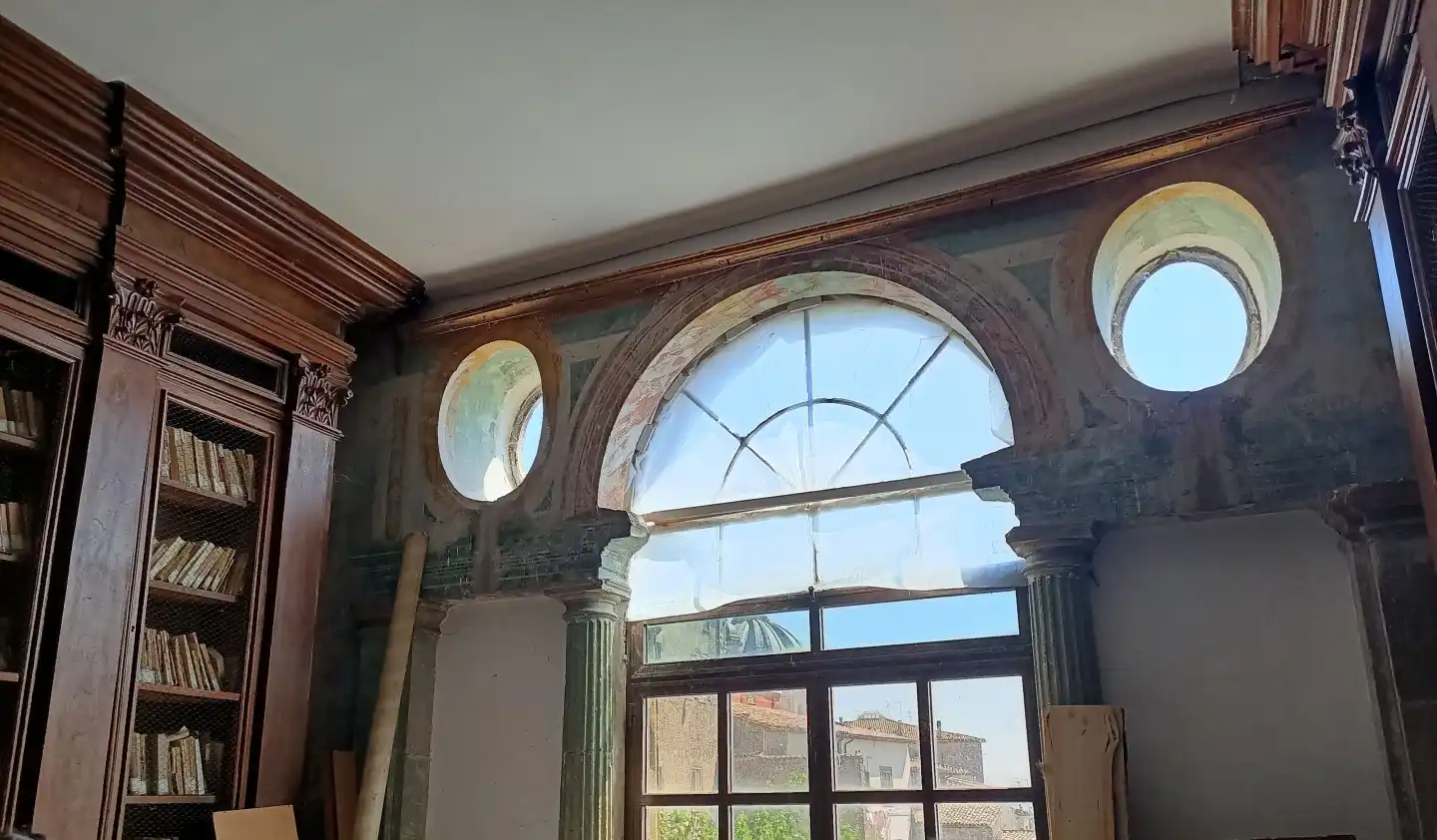
The principal library building occupies the centre of the complex and consists of two domed chambers. To one side stands the residence of the head librarian, hafız-ı kütüb, while the opposite side is defined by a two-storey mansion, a former lecture room, distinguished by its projecting wooden upper storey, supported by stone columns and a pair of broad arches. Within the library, each dome rises gracefully above four corner squinches. Rows of windows arranged on two levels flood the interior with natural light, creating an atmosphere of serenity particularly conducive to study and contemplation.
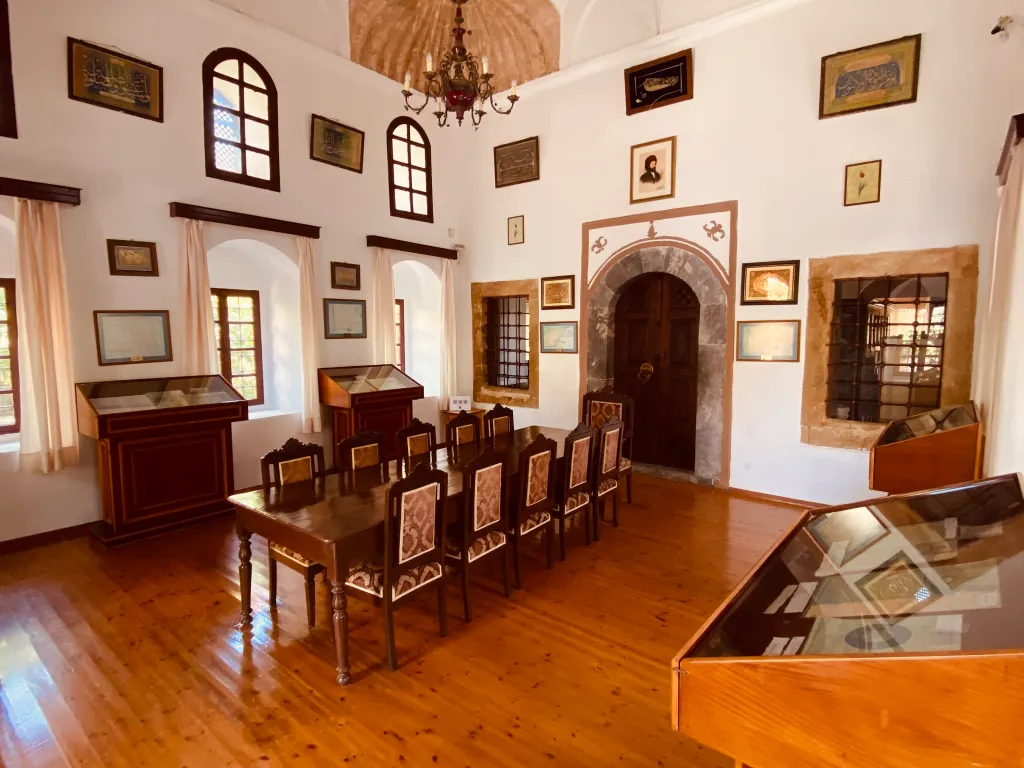
Picture 3: Hafız Ahmed Agha Library reading room.
Through two iron-grilled openings flanking the arched doorway, readers seated around the central table are afforded a tantalising glimpse of the collection preserved beyond and shelved in the original 18th century library furniture made of cherry wood that has survived.
Noteworthy is also the survival of the library’s original catalog, a beautiful leather-bound book, defter, listing main data of each item of the original collection. Equally worth mentioning is the fact that the original organisational scheme of the library survived as well: the shelves remain arranged according to twenty fields of knowledge, each section labeled and preserved in its original form.
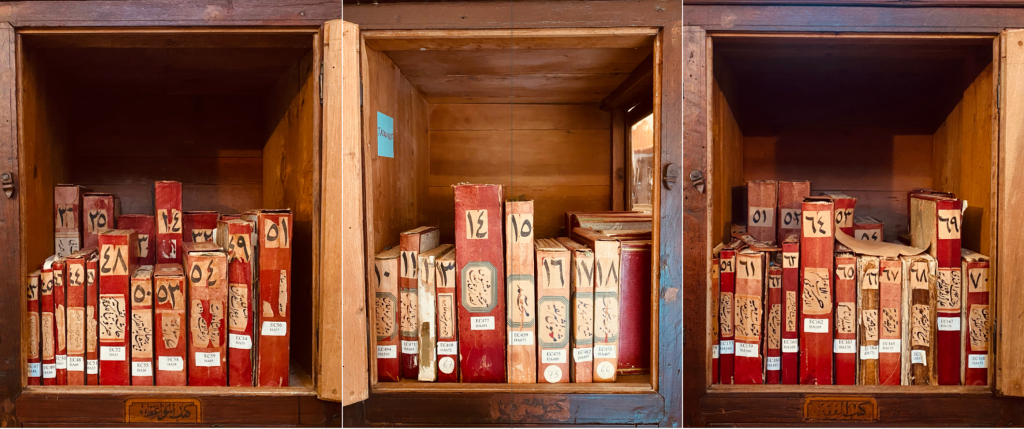
Picture 4: Library shelves with sections of Tefsir, Commentaries (left), Tasavvuf, Mysticism (center), Hadis, Hadith (right) in original furniture from the 18th century made of cherry wood.
The collection exhibits a remarkable uniformity in the use of material and design of the bindings and the protective slipcases. The slipcases are made of paper pasteboard, either fully covered with leather or with marbled paper and edged with leather on both sides, and open along the short side. On their inside, a ribbon is included to facilitate the removal of the manuscript.
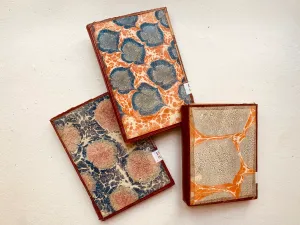
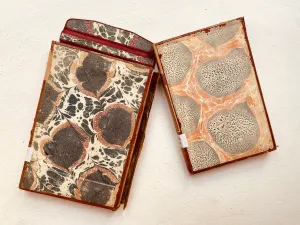
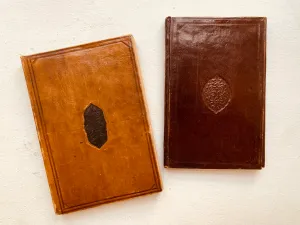
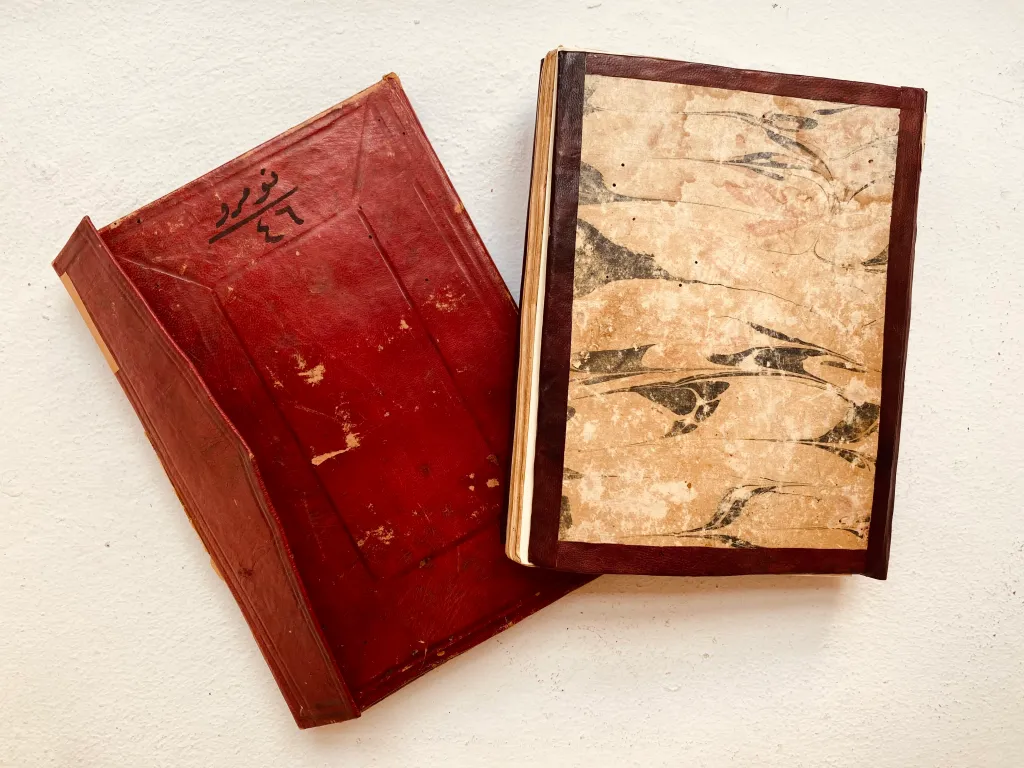
Picture 5: Slipcases, covered in leather or marbled paper.
The measures adopted by Hafız Ahmed Agha to protect his manuscripts reveal an exceptional concern for their long-term preservation, reflecting a sophisticated understanding of the requirements of a library collection at the close of the eighteenth century. The specially commissioned slipcases, custom made for each manuscript, served not merely as physical protection against wear and environmental damage, but also as repositories of information, preserving traces of the manuscripts’ origins and journeys. Viewed today, these enclosures constitute valuable historical sources in their own right, offering insights through their materials, craftsmanship, and inscriptions. They remind us that manuscripts should be approached not only as carriers of texts but also as complex material objects whose physical features can illuminate aspects of their history that the written word alone cannot convey.
Marginal notes, derkenâr, or more comprehensively kuyûdât, can contain remarks relating directly to a work, but they may also preserve unexpected glimpses of the time in which a manuscript was copied, revealing details about the copyist’s—the müstensih’s—state of mind, contemporary political events, or even the weather. Another medium through which a manuscript reveals its own story and the path it has followed through history is its ownership inscriptions, or temellük records. These notes record through whose hands the book has passed and by whom it was possessed, thereby shedding light on its provenance and offering valuable insights to historians and manuscript scholars. Such notes often provide surprising, vivid, and occasionally amusing insights into the past. Beyond their primary texts, calligraphy, illumination, and the artistry of their bindings, manuscripts are increasingly studied through these unique marginalia, which differ from copy to copy and tell their own distinct stories. The examination of such marginal notes has, in itself, become a specialized field of scholarship.
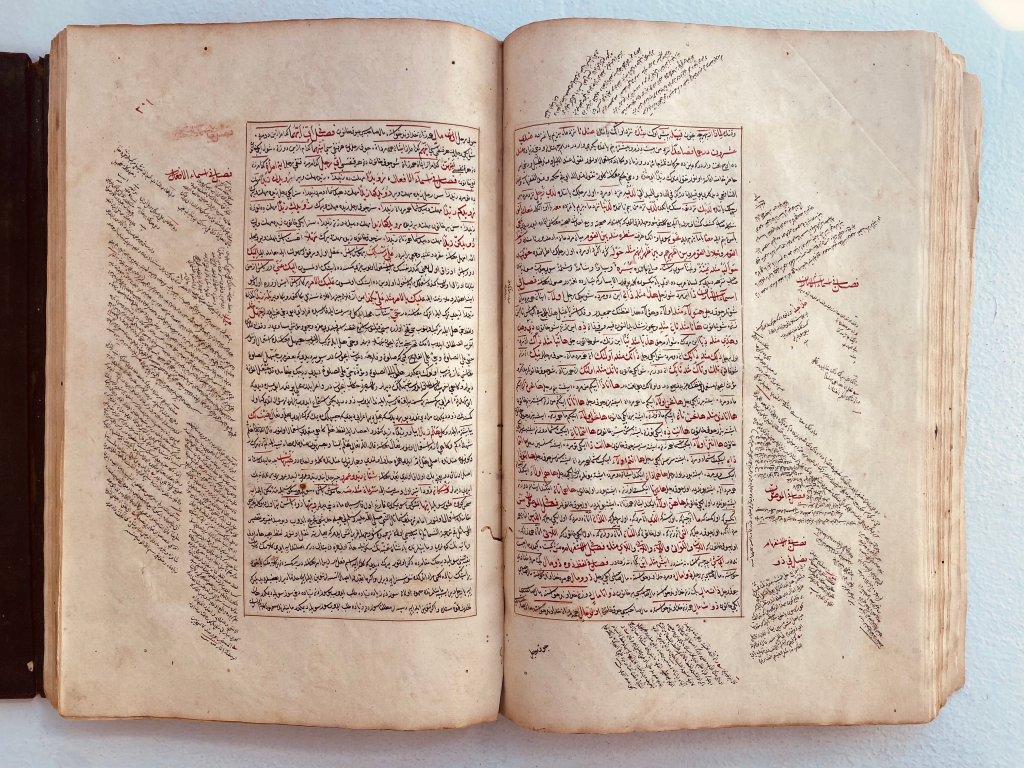
Picture 6: Aksā al-Arab fī Tarjamat Muqaddimat al-Adab, folios 200b-201a, a Turkish translation of al-Zamakhsharī’s Muqaddimat al-Adab by Ishak Hodja. Copied in 1715 (1127 AH) in Bursa by Fakhr al-Dīn ibn Sharaf al-Dīn, then professor at the Muradiye Madrasa. The colophon notes that it was transcribed directly from the autograph manuscript.
The foundation established by Hafız Ahmed was expanded in 1851 when his son, Ahmed Fethi Pasha, created a second endowment. In 1852, the two foundations were merged, taking the name Rodosî Hafız Ahmed Agha and Rodosîzâde Ahmed Fethi Pasha Foundation. Between 1852 and 1854, Ahmed Fethi Pasha constructed a Clock Tower, or Roloi as it is called in Rhodes, which still exists today as a Rhodian monument and a school in Rhodes, and remains among the properties of the foundation. In addition, the foundation’s commercial assets located in the Old Town of Rhodes continue to contribute to its financial sustainability.
The manuscript collection of the Hafız Ahmed Agha Library consists of an original core collection and works that were later incorporated into the library. The original collection comprises 1,288 manuscripts contained in 828 bound volumes. Each of these works bears the founder’s seal, or mühür. The seal reads: “This is the endowed collection of books of the library erected on the island in 1207 H.A./1793 CE by Sâbikân Rikâbdâr (Former Court Equerry) to His Majesty the Sultan, Rhodes‑born Hafız Ahmed Agha”.
Remarkably, this core collection has survived to the present day with very few losses. Including the 465 volumes of manuscripts acquired or donated at later stages, the library’s total manuscript holdings exceed 2,100 items.
Noteworthy precious manuscript mushafs (written copies of the Qur’an) in the collection include one from the 13th century, Mamluk period (1250-1517 CE) most likely scribed in Cairo.
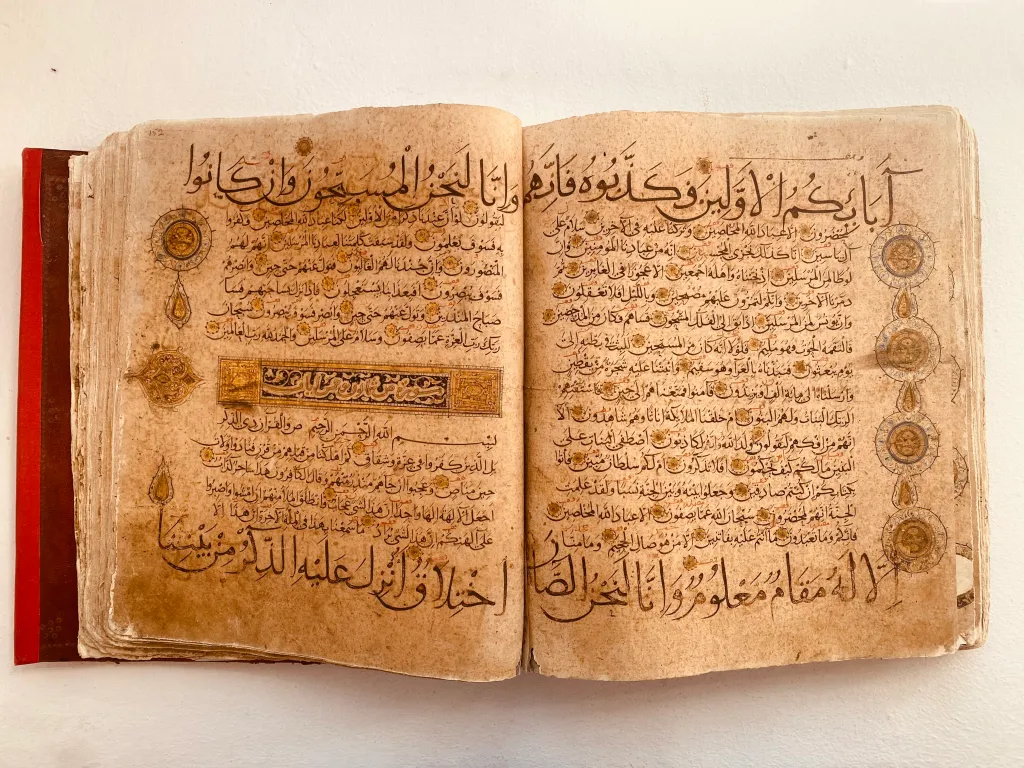
Picture 7: A Mamluk-style mushaf from 13th century, folios 151b-152a, featuring the use of naskh (nesih), thuluth (sülüs), and kufic (kûfî) scripts together.
A highly precious mushaf is the 859 A.H./1454-55 CE dated copy calligraphed by Hizanetü’l-Amire Katibi Ahmed Ibn Abdullah, Sultan Mehmet II’s (r. 1444-1446, 1451-1481 CE) chief secretary and scribe responsible for the principal state treasury, where cash reserves, and official financial records as well as secret documents were safeguarded. Another remarkable mushaf from the reign of Mehmed II is dated 831 A.H./1427-28 CE by the calligrapher Muhammed bin Ahmed bin Yusuf el Cüşşi. The mushaf by the master calligrapher Maksûd et-Tebrîzî from 1555 represents Suleyman the Magnificient’s era.
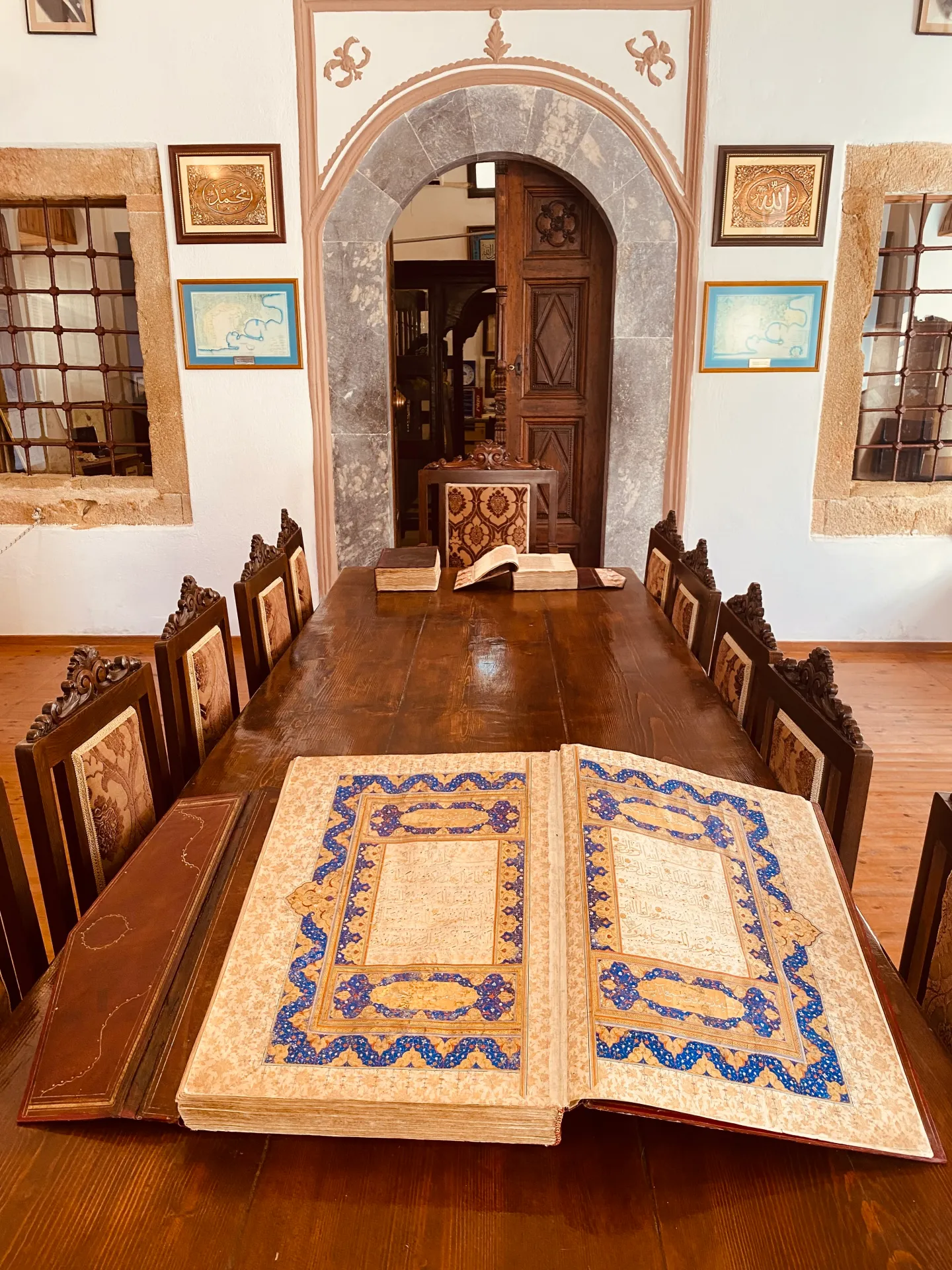
Picture 8: Mushaf inscribed by Maksûd et-Tebrîzî in 963 A.H./1555 CE, Hafız Ahmed Agha Library, reading room.
Beyond the mushafs, the library is home to numerous rare manuscripts the oldest being from the year 607 A.H./1210-11 CE.
Founded in the eighteenth century, when the island of Rhodes formed part of the Ottoman Empire, the Hafız Ahmed Agha Library continues, 233 years after its establishment, to attract the interest and affection of researchers. Its appeal lies not only in its manuscript collection, which encompasses a remarkably broad spectrum of subjects for its time, but also in the knowledge and memories still whispered to us by the manuscripts’ marginal notes and bindings, as well as by the countless inscriptions, documents, and memorabilia preserved within and around the library.
Owing to Rhodes’ unique geographical position, its rich historical and cultural heritage, and the enduring significance of the library’s own history and collections, the institution attracts the interest of an exceptionally diverse scholarly community. Anthropologists, historians, archaeologists, art historians, cultural historians, historians of medicine, theologians from different faith traditions, philologists, political scientists, specialists in international relations, and researchers from other disciplines find in the library a source of inspiration and inquiry.
It is therefore fair to say that, irrespective of its physical size, the library’s intellectual and cultural impact is truly remarkable. Equally noteworthy is the fact that such academic outreach and international visibility have been cultivated not through large institutional frameworks, relying instead on personal dedication, sustained commitment, and modest financial resources.
Consider how this library has endured across successive political regimes. After the Ottoman period, it came under the authority of the Kingdom of Italy, the Nazi occupation, the British Military Administration, and the Kingdom of Greece. Today, it stands within the territory of the Hellenic Republic. Empires and kingdoms have risen and fallen, yet the library has remained steadfast in its place, continuing through the centuries to welcome scholars, visitors, and friends alike, and to serve as a living bridge between past and present.
The Eastern Mediterranean has long been a space where cultures and civilizations have coexisted for millennia, even as it has also been marked by rupture and destruction. Libraries, in this context, are not merely repositories of manuscripts, books, and knowledge; they are also places where knowledge is shared and disseminated, where encounters and dialogue take place, and where coexistence is made possible. In the case of the Hafız Ahmed Agha Library in Rhodes—a site deeply infused with memory and meaning—it becomes a medium through which ripples of muhabbet, that delicate communion of hearts and minds, are sent forth toward shores far beyond the written page.
At this point, we would like to draw the attention of the CERL community to one of our publications released at the end of 2025. We encourage readers to explore our two-volume work Conversation in the Library, which brings together contributions by seventy scholars alongside a storyteller. Prepared as a tribute to the founders, to the world of manuscripts, to libraries, and to the island of Rhodes, the book—meanwhile catalogued in the permanent collections of over 150 libraries worldwide—will soon be available in digital form on our foundation’s website.
The Hafız Ahmed Agha Library was declared a historical monument in 1948 by decree of the General Administration of the Dodecanese, as an integral component of the cultural heritage of the Old Town of Rhodes and as an asset meriting preservation. In 1960, the Ministry of Culture extended this protective framework through the designation of the entire Old Town as a historical monumental complex.
In 1988, the Old Town of Rhodes was inscribed on the UNESCO World Heritage List. Subsequently, in 2009, a ministerial decree classified the Old Town as an archaeological site, concerning the safeguarding of antiquities and cultural heritage.
The Rodosî Hafız Ahmed Agha and Rodosîzâde Ahmed Fethi Pasha Foundation is grateful to Prof. Dr. Christina Bondi, Dr. Vera Andriopoulou, Marian Lefferts and to CERL Executive Committee as well as Board of Directors for paving the way for the library’s admission to CERL as a special member in November 2025, marking it as the first member library dedicated exclusively to Ottoman manuscripts.
The Hafız Ahmed Agha Library warmly invites the CERL community to Rhodes to experience firsthand the world of manuscripts in Ottoman Turkish, Arabic, and Persian. The library welcomes scholars into an environment that has opened its doors to research and international academic gatherings—not only as a place of learning and discovery, but also as a mekân of muhabbet, where intellectual exchange is enriched by conversation and a shared spirit of conviviality and companionship.
Photo credits: T. Tuten, 2024-26.
Related articles
by Markéta Kučerová and Vojtěch Šícha, Library of the Czech Academy of Sciences
November 9, 2026