
A new Special Member at CERL: Special Collections at the I Tatti Harvard University Center for Italian Studies
by Caroline Duroselle-Melish, Angela Dressen and Attilio Bottegal, I Tatti, Harvard
Share this article
The Special Collections at the I Tatti Harvard University Center for Italian Studies are part of the Biblioteca Berenson, a research library originally formed by art connoisseur and art historian Bernard Berenson (1865–1959) and today made up of over 250,000 books. The Special Collections comprise the rare books and manuscripts collections as well as the archives. The Fototeca collection of photographs is a connected but separate entity of Special Collections. Anyone is welcome to use these collections by simply making an appointment in advance of their visit.
Within Special Collections, the rare book and manuscript collection is made of approximately 7,000 works from the fifteenth to the twentieth century. It is a multi-faceted collection due to its history. At its center are approximately 1,000 books acquired by Berenson. During his lifetime these books were spread throughout his vast library, which at his death contained 70,000 books. Mary Berenson (1864–1945), his wife, participated in the building of their library, but further research is needed to better understand her role.
Berenson was neither a bibliophile nor a bibliographer. He described his approach to acquisitions as follows: “I have never bought a book for its rarity from a collector’s point of view… My books are books for use, tools, not works of art, although I take more pleasure in reading Dichtung—poetry whether in verse or prose—in shapely type on a well-set page of hand-made paper, crisp, elastic, almost musical as you turn the leaf…. For me the main object is to have books at hand soas to be able to use them when one is piping hot with eagerness for them and malleably receptive to what one can get out of them.”[1]
Although Berenson owned first editions of certain texts, such acquisitions were never his primary pursuit. In many cases, he acquired whichever edition he could find of early works, which often meant eighteenth-century editions of pre-1700 books. The rare book collection thus includes many eighteenth-century editions of Renaissance texts documenting the active publishing market and the continued interest in these early works in Italy in the 1700s. Such acquisition decisions may have also reflected an esthetic choice. Berenson enjoyed a well-designed book by modern standards and had little interest in early bookmaking, or as he himself explained: “I certainly enjoy the Bible, Saint Augustine, Dante, Shakespeare, Boccaccio, Wordsworth, Goethe, Keats, Shelley, etc., etc. much more in the Doves, the Ashendene, the Bremen presses than I do in ordinary editions. But nothing would induce me to read a seventeenth-century author in the wretched print of that period.”[2]
Despite Berenson’s wide-ranging interests, it is possible to identify several broad subject areas well represented in the rare book collection.
Treatises on Art and Works of Art
Berenson acquired a significant collection of sixteenth-century treatises on the visual arts written by members of the Florentine and Roman academies, as well as works which contributed to the intellectual formation of artists and the establishment of artists’ academies. The works of Benedetto Varchi (1503–1565) and Anton Francesco Doni (1513–1574) were especially dear to him.
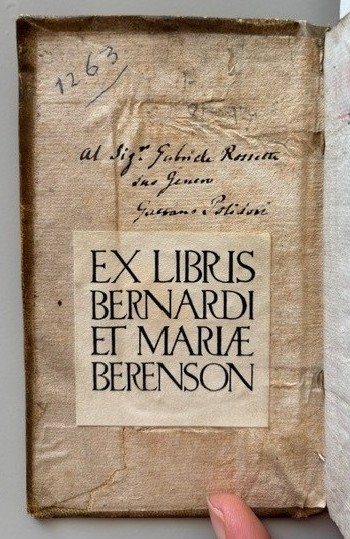
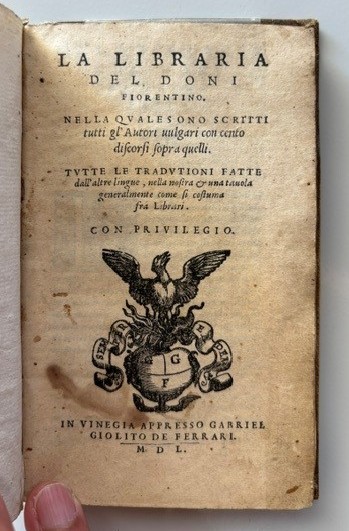
Fig. 1 Left: Bereson’s bookplate in Doni’s book pasted below a manuscript dedication to the Italian poet Gabriele Rossetti (1783-1854). Right: Anton Francesco Doni, La libraria del Doni fiorentino, Venice: Gabriel Giolito de Ferrari, 1550, Biblioteca Berenson Special Collections copy Z2352 .D68 1550 S.
Multiple editions of their works are included in Special Collections. While a copy of the first edition of Giorgio Vasari’s treatise on the Lives of the Most Excellent Painters, Sculptors, and Architects (1550) was added to the collections only recently, the artist’s other writings are represented in Special Collections in original and eighteenth-century editions. Likewise, the library owns first editions of all but one work by the art historian Carlo Cesare Malvasia (1616–1693).
Related to these interests are books on perspective, geometry, and architecture. In the latter area, Berenson assembled a representative sample of books by the most influential early modern Italian architects, from a copy of the 1485 Florentine edition of Leon Battista Alberti (1404-1472), De Re aedificatoria to the works of civil architecture of Ferdinand Galli Bibiena (1657–1743) and Francesco Milizia (1725–1798). Special Collections has an especially strong collection of works by architect Giacomo Barozzio da Vignola (1507-1573). Berenson also acquired early modern books on Florentine and Italian history which he likely consulted for his research on works of art.
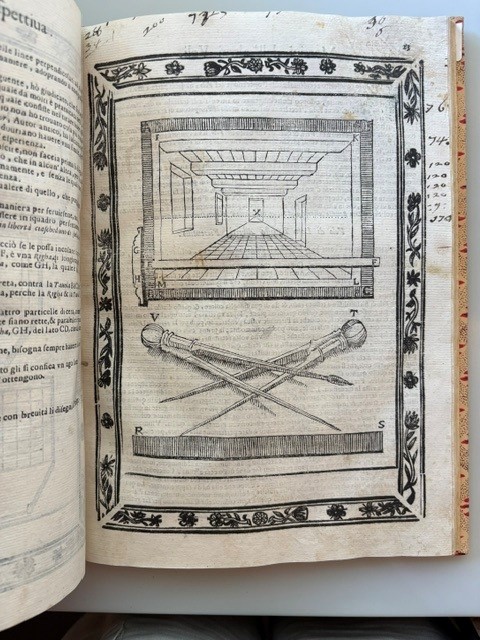
Fig. 2: A woodcut page from Giulio Troili, Paradossi per pratticare la prospettiua senza saperla, Bologna: Heirs of Peri all’Angelo custode, 1672, Biblioteca Berenson Special Collections copy NC749 .T7 1672 L
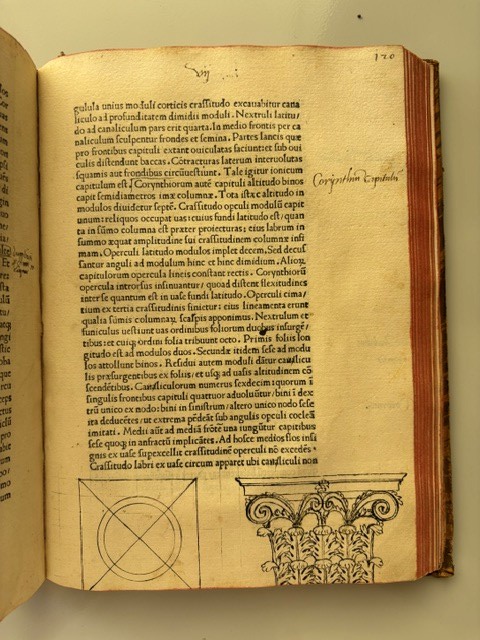
Fig. 3: The Berenson copy of Alberti’s De re aedificatoria includes a manuscript index and multiple annotations in a 16th– century hand as well as ink drawings.
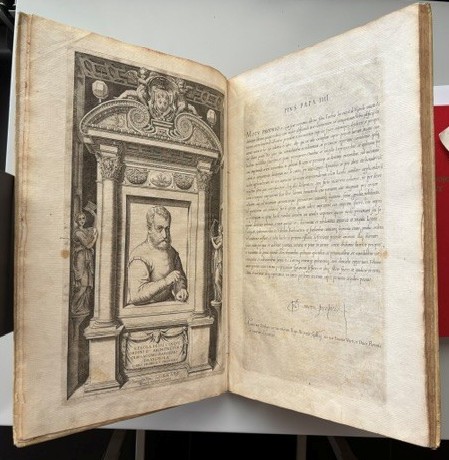
Fig. 4: Engraved copy of Vignola’s Regola delle cinque oridini d’architettura printed in Rome by G.B. de Rossi in 1617.
Biblioteca Berenson Special Collections copy NA2810 .V5 1617 XL
The Mediterranean World
His interests in art and books were, however, far from being restricted to Italy and the Italian Renaissance. He thus acquired many recent publications pertaining to the Mediterranean world, the Middle East, and Asia, which led him to acquire pre-1800 and early 1800 books of travel literature, especially early travel guidebooks, and works on the Mediterranean world.
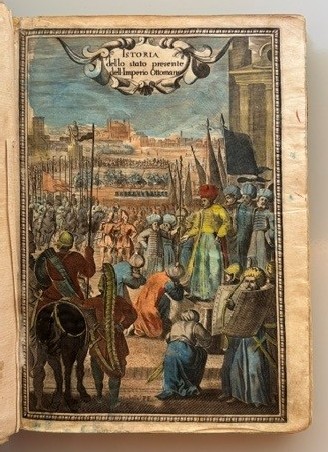
Fig. 5: Hand painted frontispiece of Paul Rycaut,
Storia dello stato presente dell’ imperio Ottomano … Venice: Combi & La Noù, 1673,
Biblioteca Berenson Special Collections copy DR485.R93 I7 1673 M
Literature
Likewise, Berenson’s tastes in literature were wide-ranging and supported by his knowledge of multiple languages. The strength of the collection in this area though are works of modern and contemporary literature. The Berensons had many Anglo-American friends in literary circles. These authors sent copies of their work often signed with a very personal dedication. Edith Wharton was a regular guest at the Villa I Tatti.
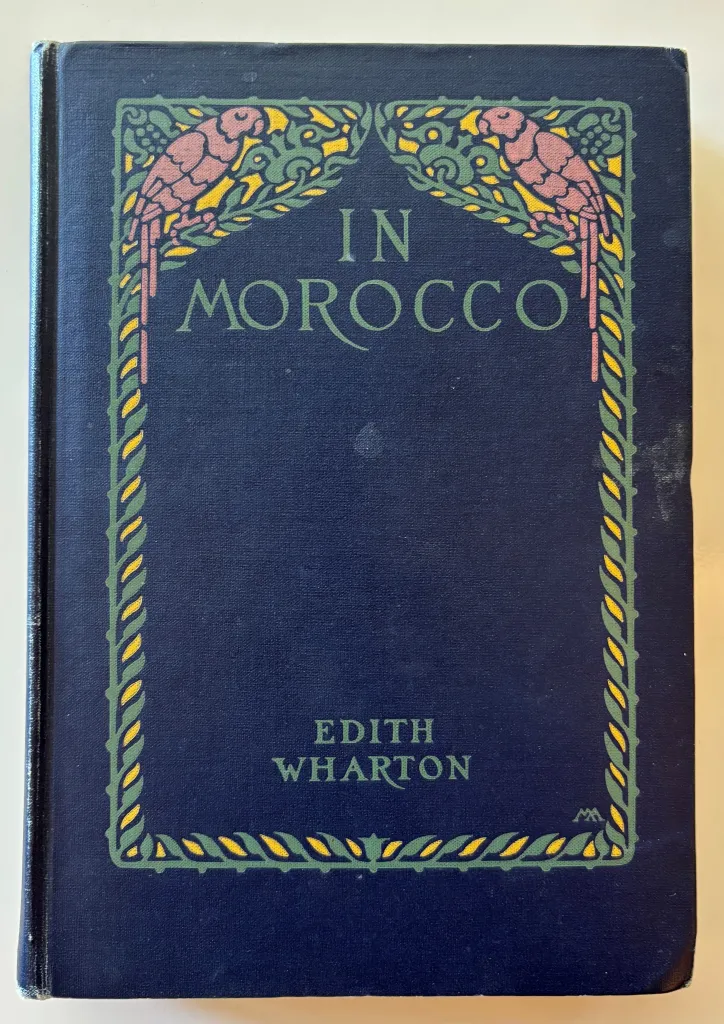


Fig. 6 (left): Edith Wharton, In Morocco, New York: C. Scribner’s Sons, 1920. Biblioteca Berenson Special Collections copy DT310 .W5 1920 M
Fig. 7 (centre): Edith Wharton, Tales of Men and Ghosts, London: Macmillan and Co., 1910. Biblioteca Berenson Special Collections copy PS3545.H1
Fig. 8 (right): With Wharton’s dedication to Bernard Berenson
Many of her publications, including rare small private press productions are in the rare book collection. While the Wharton collection is very strong, works by other author-friends are well represented such as those of the Hogarth Press, Henry Adams, Vernon Lee, George Santayana, and Henry James. As mentioned earlier, publications by the Ashendene and Doves, among other fine presses, are well represented in Special Collections due to Berenson’s desire to read texts in books with a clear typography.
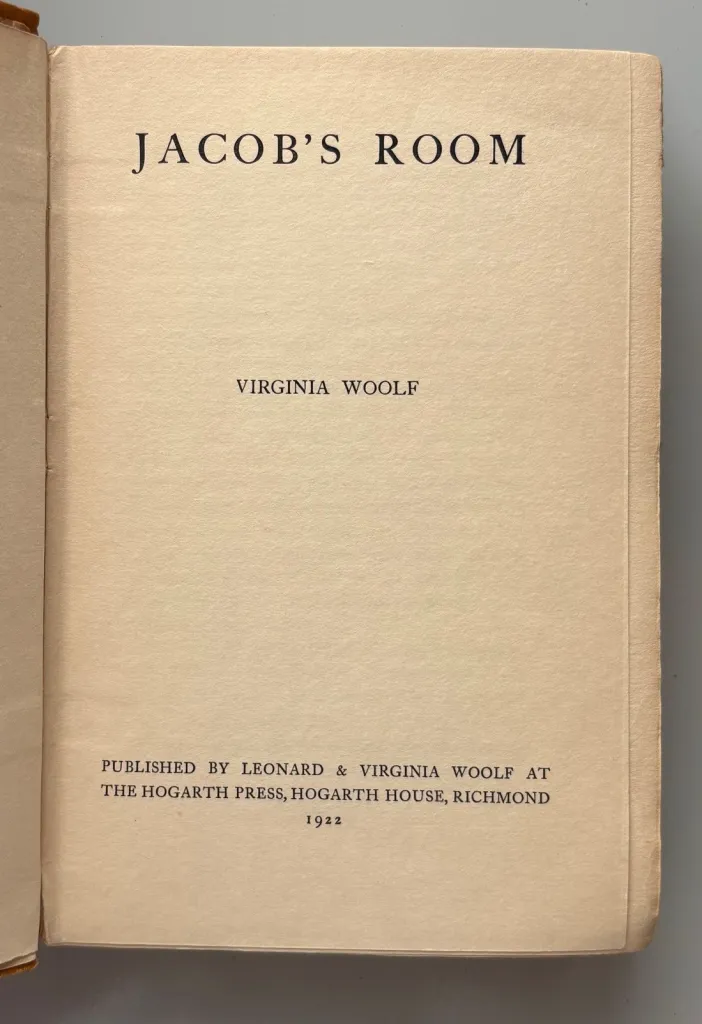

Fig. 8 Left: Virginia Woolf (1882-1941), Jacob’s Room, New Edition, London : Hogarth, 1922.
Biblioteca Berenson Special Collections copy PR6045.O72 J3 1922 S.
Right: With subscriber’s ticket and Virginia Woolf’s signature
Despite his lack of interest in acquiring scarce items, the collection includes titles extant only in unique or a few copies such as Enea Vico’s L’imagine de le donne auguste (Venice: Donato Bertelli, 1579) and Pietro Delphino’s, La vita de Merlino & de le sue prophetie … (Venice: Manfredo Bonelli, 1516).
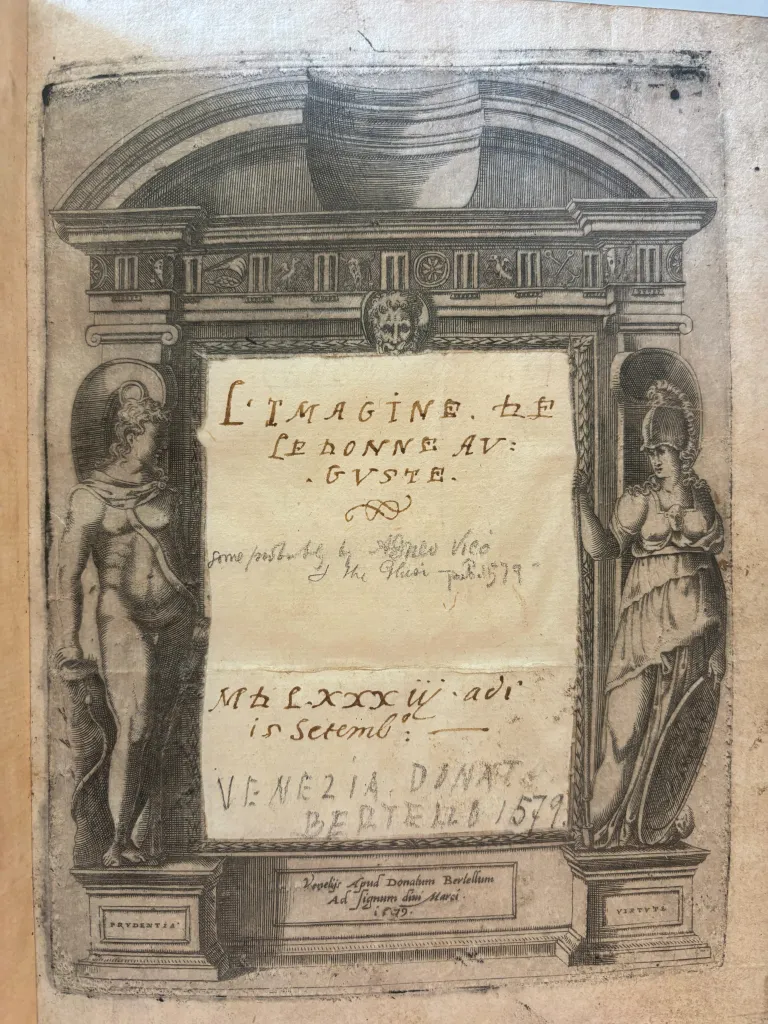
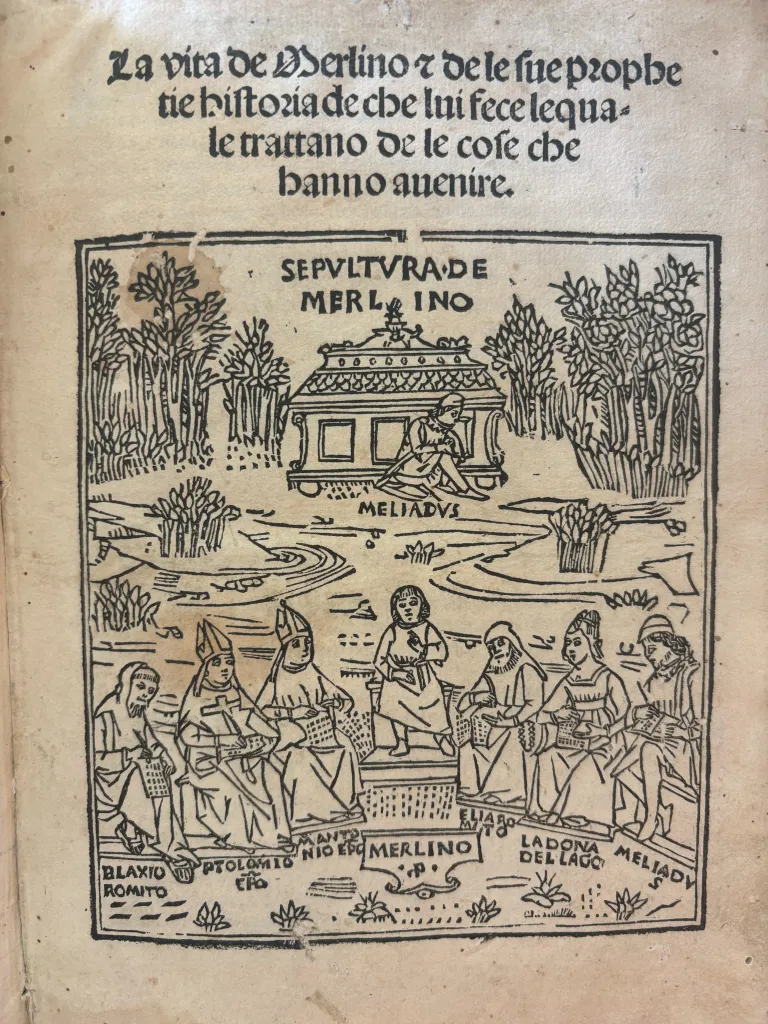
Fig. 9 Left: A unique set of prints by Enea Vico, L’imagine de le donne auguste, Venice: Donato Bertelli, [1579]. Biblioteca Berenson Special Collections copy N7589.C2 I43 1579 M.
Right: One of three copies extant of this text: Pietro Delphino, La vita de Merlino & de le sue prophetie historiade che lui fece le quale trattano de le cose che hanno a venire, Venice: Manfredo Bonelli, 1516. Biblioteca Berenson Special Collections copy PQ 4552.P3 1516 M
Many books are also in their original bindings, sometimes finely decorated, and with interesting provenances.
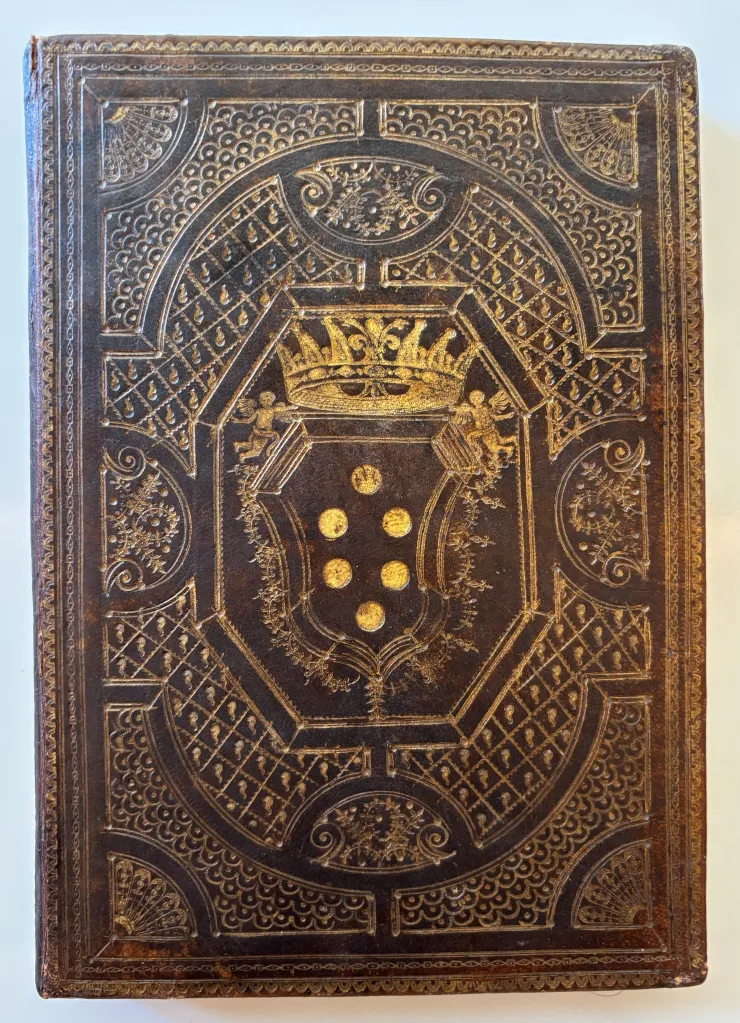
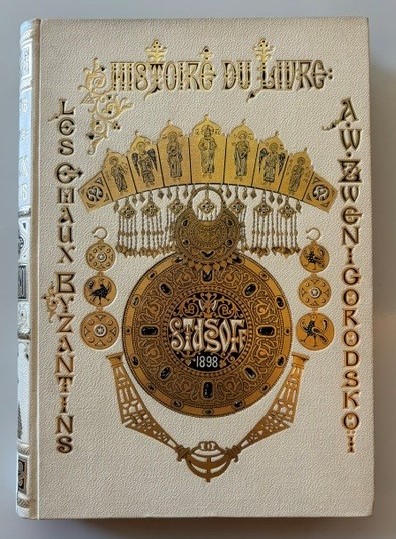

Fig. 10 Top Left: A decorated binding with Cosimo de Medici’s coat of arms. Camillo Rinuccini, Descrizione delle feste fatte nelle reali nozze de’ serenissimi principi di Toscana d. Cosimo de’ Medici, e Maria Maddalena arciduchessa d’Austria. Florence: Giunti, 1608. Biblioteca Berenson Special Collections copy DG738.23 .R537 1608 M. Bottom left: A lavishly decorated modern binding. Vladimir Vasilʹevich Stasov, 1824-1906, Histoire du livre Les émaux byzantins, St. Petersburg: [s.n.], 1898. Biblioteca Berenson Special Collections copy NK5013.K63 S814 1898 L. Right: With gilt and decorated edges.
The library has continued to acquire early books along the subjects of interest to its founder through targeted acquisitions, bequests, and gifts. It has also expanded acquisitions to other fields with particular attention to early printed books with manuscript annotations.
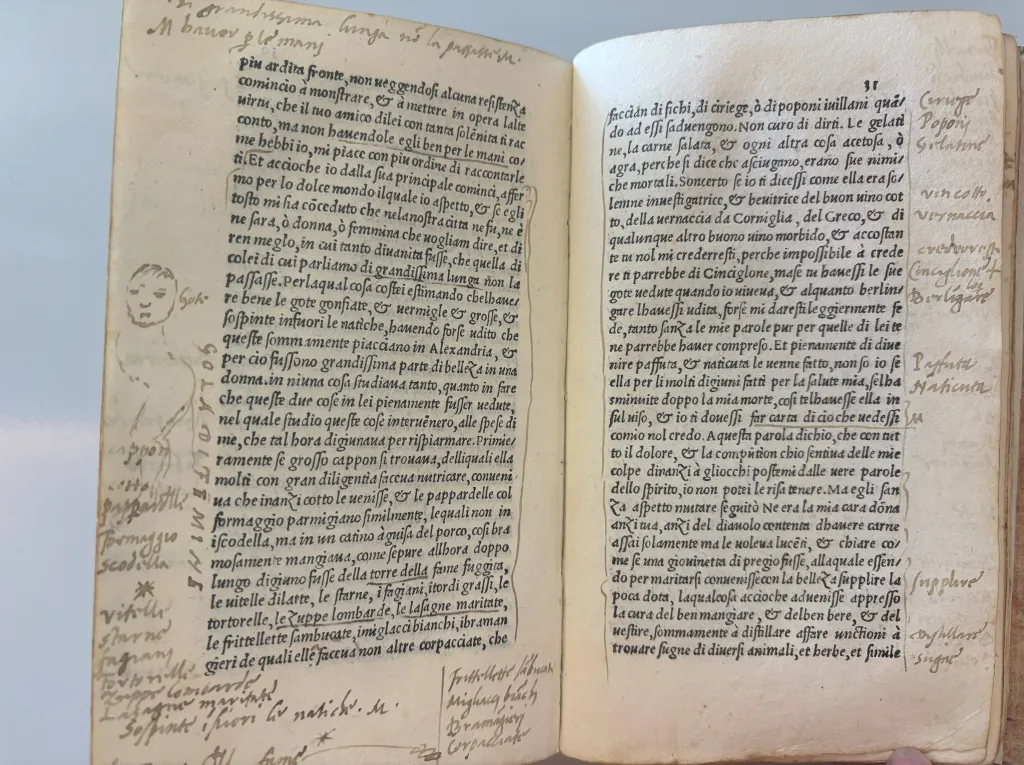
Fig. 11: A richly annotated copy in two hands, one from around 1524, of Giovanni Boccaccio, Laberinto d’amore di M. Giovanni Boccaccio…, Florence: Filippo Giunta, 1516. Biblioteca Berenson Special Collections copy PQ4270 .A2 1521 S
Recently the library was lucky to acquire two major collections. In 2023 the collection of Luigi Grassi, a well-known Florentine antiquarian bookseller and expert in Old Master paintings, was added to Special Collections. Grassi’s collection comprises over 220 rare books on Florentine history, monuments, seventeenth- and eighteenth-century guidebooks to Italian cities, early treatises on art theory, and works on Roman antiquity. Among its highlights is the first edition of Giorgio Vasari’s Lives of the Most Excellent Painters, Sculptors, and Architects (1550) mentioned earlier. In 2025, the collection of Fausto Montanari (1907-2000), a professor of literature at the University of Genoa, came to the library. Montanari’s collection of over 1,200 books from the fifteenth century to the early 1800s includes many early works of Italian literature, especially rare editions by lesser-known authors, as well as books of poetry and theatre. Montanari often acquired books in contemporary bindings with manuscript annotations. Much is to be discovered in both collections, which are currently being cataloged.
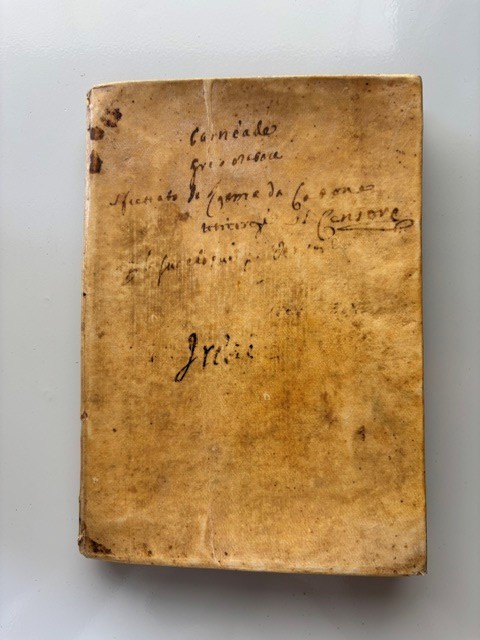

Fig. 12: A book from the Montanari collection which is most likely the author’s copy with the censors’ manuscript notes bound at the end of the book. Discorsi dialogistici: I. Della libbertà di Coscienza, II. del giansenismo, III. dello scisma d’Inghilterra … Lucca: [s. n.], MDCCLXV [1765].
Biblioteca Berenson Special Collections copy BR738.2 .D58 1765 M
Music Collection
The rare music collection was built after Berenson’s death as a part of the Morrill Music Library founded in 1968 through the generosity of Gordon and Elizabeth Morrill in memory of Bernard Berenson. The Morrill Library was created to provide a dedicated research collection for the study of Western music up to about 1650, with particular emphasis on the Italian repertory. Today it is widely regarded as a major European center for the study of early music in its multidisciplinary contexts as it combines a working reference collection of modern critical and practical editions, facsimiles, secondary literature, periodicals, sound recordings and microforms and a growing collection of early printed books and manuscripts. The strength of the latter is in secular vocal music of the sixteenth and early seventeenth centuries. The rare music collection thus holds a wide range of madrigal, villanella and canzonetta prints from the principal Venetian presses – Angelo Gardano, Girolamo Scotto, Ricciardo Amadino, Giacomo Vincenti– as well as from other Italian centers. These publications document the output of composers such as Luca Marenzio (1553-1599), Orazio Vecchi (1550-1605), Benedetto Pallavicino (approximately 1551-1601).
Among the earliest material in the collection are two rare music prints by Ottaviano Petrucci (1466-1539) (Motetti. C, Venice, 1504 and Motetti a cinque: libro primo, Venice, 1508).


Fig. 13: Ottaviano Petrucci, Motetti C, [Venetijs: Impressum per Octavianum Petrutium, 1504]. Biblioteca Berenson (Altus partbook) Special Collections copy M1999 .P48 1504 S.
Attention has been paid to acquire unique copies, such as a Canto part book of Ascanio Meo’s Secondo libro de madrigali a cinque voci (Venice, 1589), an Alto of Giulio Scala’s Quinto libro delli suoi madrigali, a quattro voci (Rome, 1562).
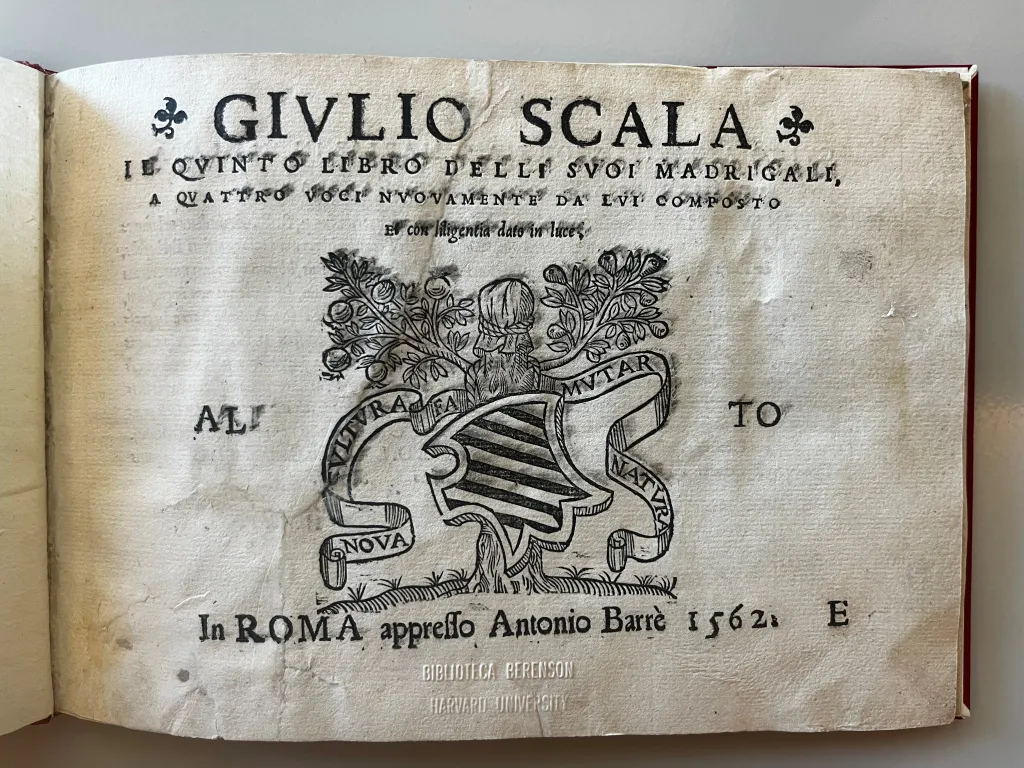
Fig. 14; Giulio Scala, Il quinto libro delli suoi madrigali, a quattro voci, In Roma: appresso Antonio Barrè, 1562.
Biblioteca Berenson (Altus partbook) Special Collections copy M3.1.S33 M33 1562 S.
Books of Italian poetry with demonstrable musical connections, as recorded in the Repertorio della poesia italiana in musica (RePIM), have also been actively acquired. Special Collections thus owns, among others, Giovambattista Strozzi’s Madrigali, Isabella Andreini’s Rime, Muzio Manfredi’s Madrigali, and Adriano Grandi’s Rime. Anthologies such as Dionigi Atanagi’s De le rime di diversi nobili poeti toscani (Venice, 1565, and Piergirolamo Gentile’s Della corona di Apollo (Venice, 1605) bring together poems set by contemporary composers. The holdings also include large single‑author collections by writers such as Bernardo and Torquato Tasso, Annibal Caro, Cesare Caporali, Giuliano Goselini, Girolamo Muzio, Lodovico Domenichi, and Scipione Bargagli, as well as pastoral and narrative works (for example Pietro Colla’s Egle, Ettore Martinengo’s Retorica d’amore, and Leonardo Quirini’s Il Narciso.
Material on dance, instrumental music, and music theory is also well represented in the rare collection. First editions of Fabritio Caroso’s Il ballarino (Venice, 1581) and Cesare Negri’s Nuove inventioni di balli (Milan, 1604) offer detailed descriptions of late Renaissance court dances, etiquette, and choreography, accompanied by music in staff notation and lute tablature. Instrumental sources include Gabriele Fallamero’s Primo libro de intavolatura da liuto (Venice, 1584), Giovanni Battista Abatessa’s Cespuglio di vari fiori (Rome, 1634) for chitarra spagnola, and keyboard music by Girolamo Frescobaldi—such as his Il secondo libro di toccate, canzone, versi d’hinni, magnificat, gagliarde, correnti et altre partite d’intavolatura di cimbalo et organo.
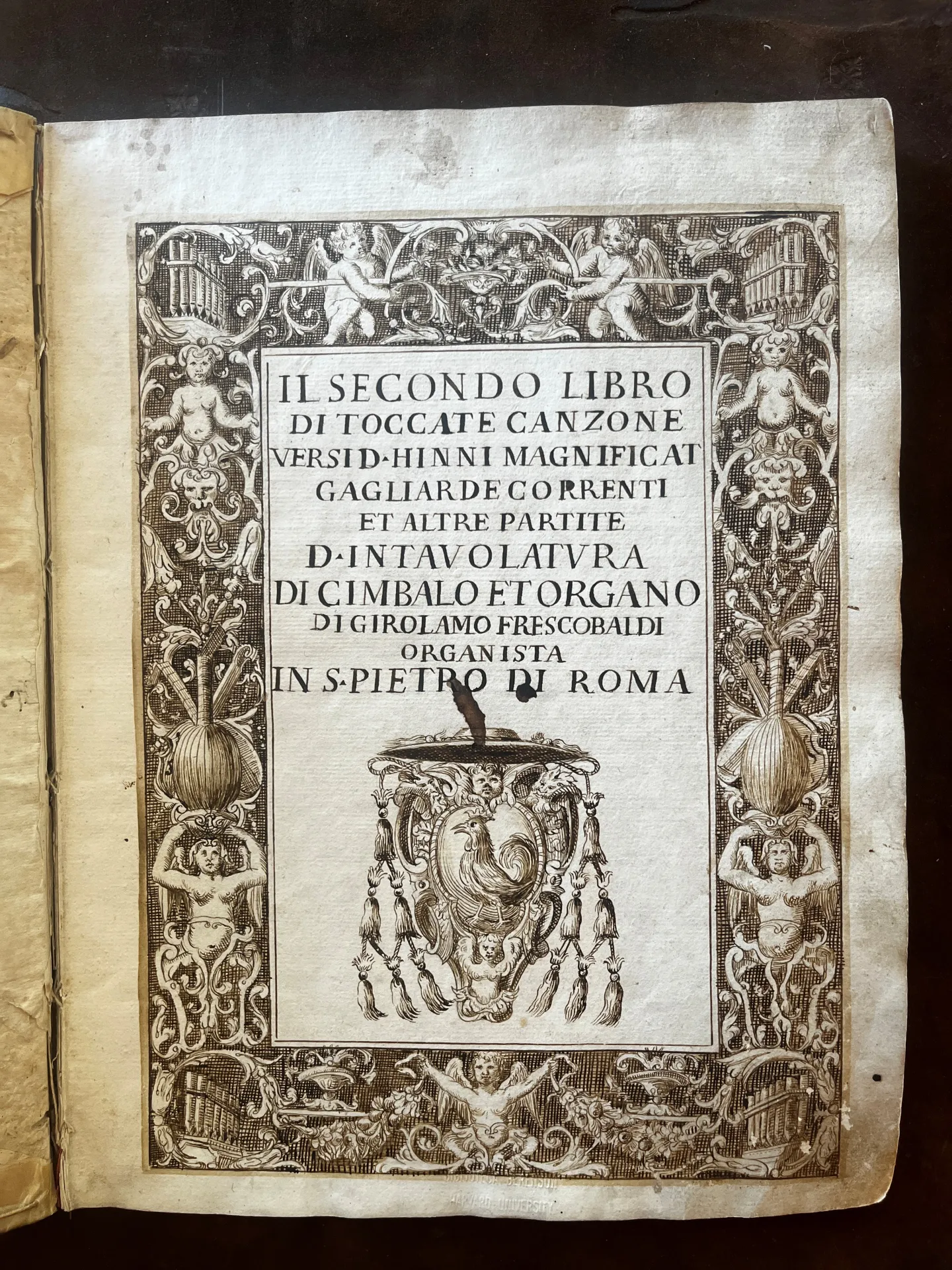
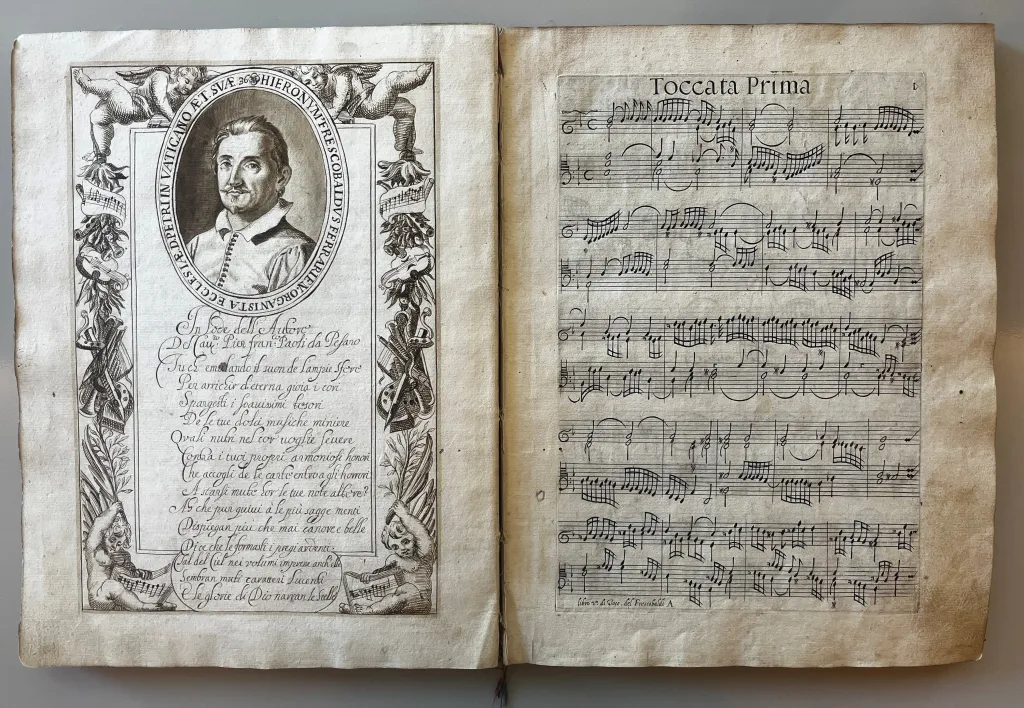
Fig. 15: Girolamo Frescobaldi, Il secondo libro di toccate, canzone, versi d’hinni, magnificat, gagliarde, correnti et altre partite d’intavolatura di cimbalo et organo, n Roma: da Nicolò Borbone, 1637. Biblioteca Berenson Special Collections copy M3.1.F84 T63 1637 L.
The theoretical and pedagogical framework is represented by works such as Gioseffo Zarlino’s Istitutioni harmoniche (Venice, 1562),

Fig. 16 Gioseffo Zarlino, Le istitvtioni harmoniche, In Venetia: appresso Francesco Senese, al segno della pace, MDLXII [1562]. Biblioteca Berenson Special Collections copy MT5.5.Z37 1562 M.
Nicola Vicentino’s L’antica musica ridotta alla moderna prattica (Rome, 1555), and Orazio Scaletta’s Scala di musica (Milan, 1630).
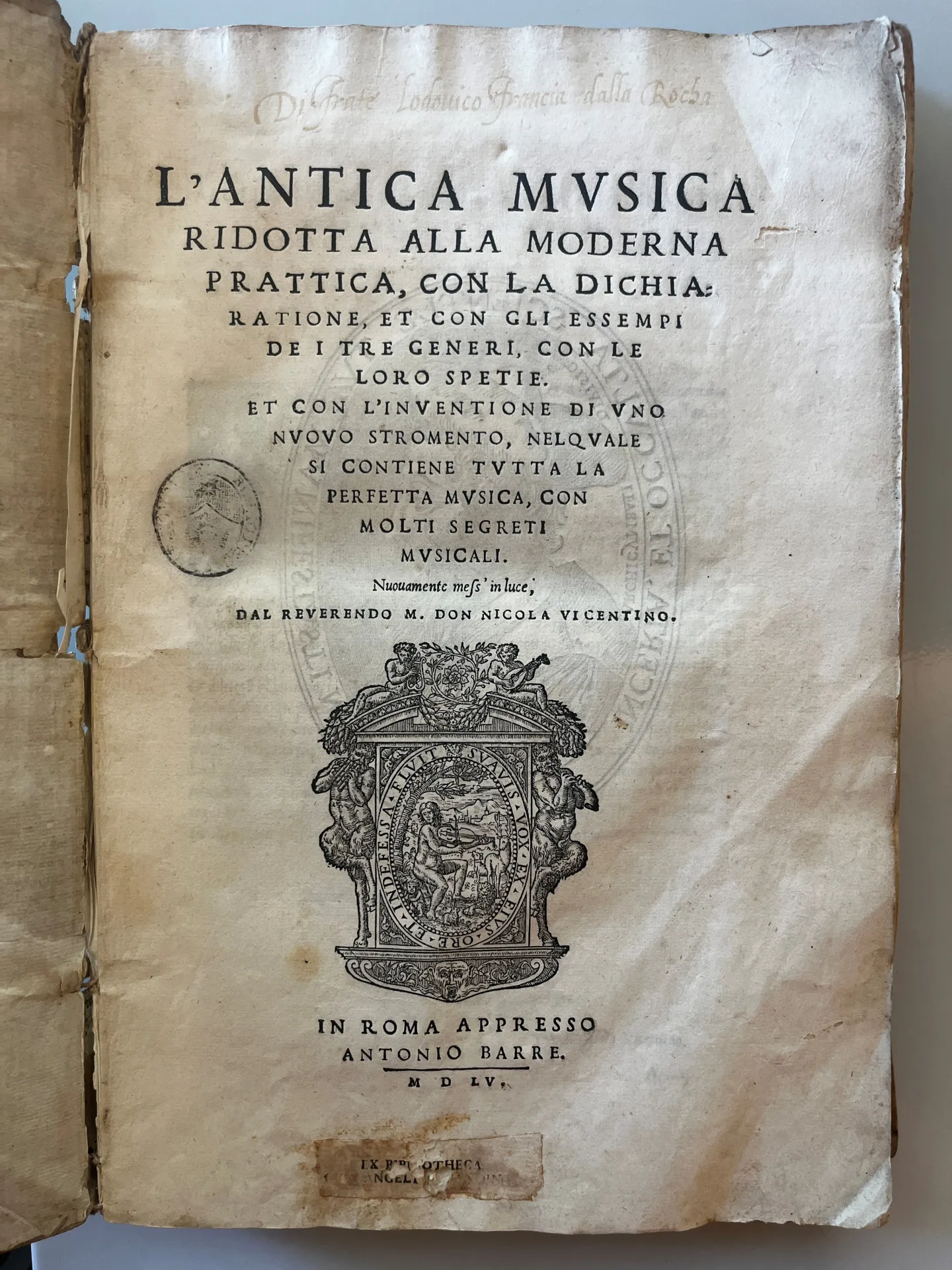
Fig. 17: Nicola Vicentino, L’antica mvsica ridotta alla moderna prattica, In Roma: appresso Antonio Barre, MDLV [1555]. Biblioteca Berenson Special Collections copy MT40.A2 V77 1555 L.
Early opera, intermedi and court spectacles form another distinctive strand, with a particular concentration on Florence and Mantua. Among the Florentine material are several editions of Ottavio Rinuccini’s pioneering libretti—Dafne, Arianna, the Mascherata dell’ingrate and the Mascherata di selvaggi—and Gabriello Chiabrera’s Rapimento di Cefalo (Florence, 1600), all linked to Medici celebrations.
Fig. 18 Left: Ottavio Rinuccini, Rappresentazione di Dafne favola pastorale, [Firenze: publisher not identified, before 1600], Biblioteca Berenson Special Collections copy ML50.2.D34 R56 1598 S. Right: Ottavio Rinuccini, La Dafne, In Firenze: appresso Giorgio Marescotti, MDC [1600].
Biblioteca Berenson Special Collections copy ML50.2.D34 R56 1600 S.
These are complemented by descriptions of tournaments, horse ballets and allegorical performances, including Andrea Salvadori’s Precedenza delle dame (Florence, 1625), Ferdinando Saracinelli’s Descrizione dell’arrivo d’Amore in Toscana and Partita d’Amore dal bel regno di Toscana (1615–1616), and Benedetto Rigogli’s Combattimento, e balletto a cavallo (Florence, 1652). From Modena and Ferrara, the Library holds accounts such as Tomba d’Atlante avventurosa (Modena, 1604), together with the Intramezzi dell’Idalba (Ferrara, 1614) and the Invenzione nella Quintanata (Ferrara, 1609). Mantuan festivities are represented by Chiabrera’s Gli amori d’Aci e Galatea (Mantua, 1617) and Baldovino Monte Simoncelli’s Europa (Mantua, 1626).
Manuscripts in Special Collections
The manuscript collection is small but contains several valuable items, including a fifteenth-century recipe book, mercantile records concerning fifteenth-century trading practices, an eighteenth-century description of a Grand Tour, and, most notably, nine precious illuminated Persian and Arabic manuscripts dating from the eleventh to the sixteenth century.
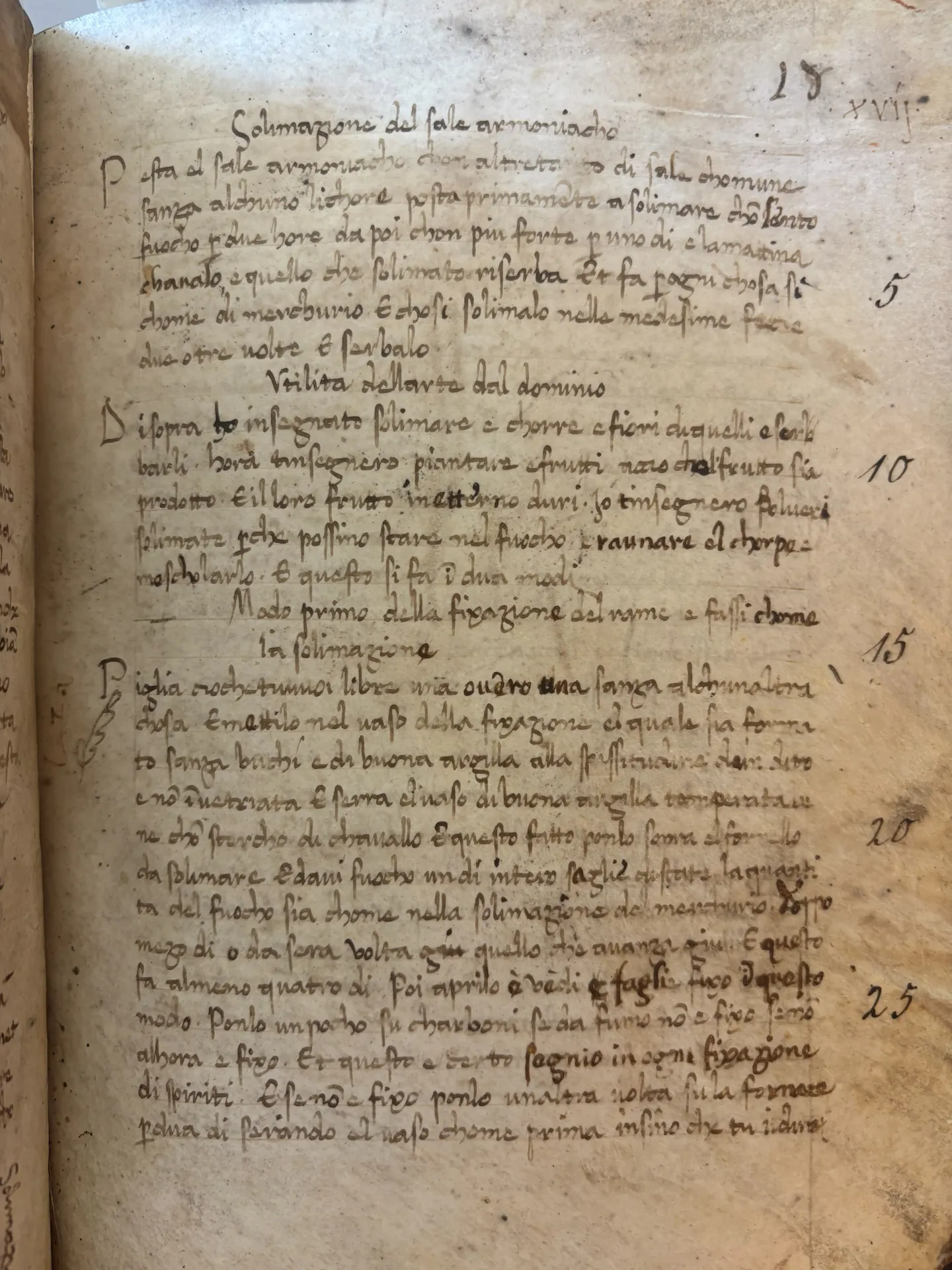
Fig. 19: Ricettario, 15th century. Biblioteca Berenson Special Collections copy MS 8
These Asian manuscripts reflect Berenson’s interest in Asian art and culture. Regarding music, a thirteenth‑ or fourteenth‑century fragment (MS 6) preserves parts of offices for Saints Theobaldus and Judocus, documenting local chant traditions. Seventeenth‑century Italian manuscripts – notably MSS 7, 11 and 14 – contain extensive collections of arias, cantatas, and duets with continuo for high voice, often associated with Roman composers such as Luigi Rossi, Loreto Vittori, Marco Marazzoli, Marc’Antonio Pasqualini, Mario Savioni, and Giacomo Carissimi.
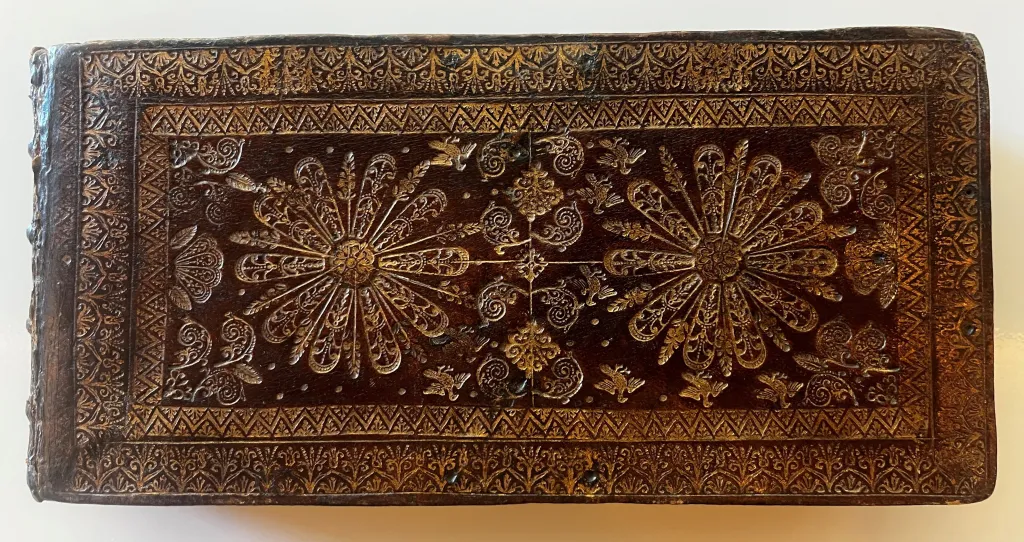
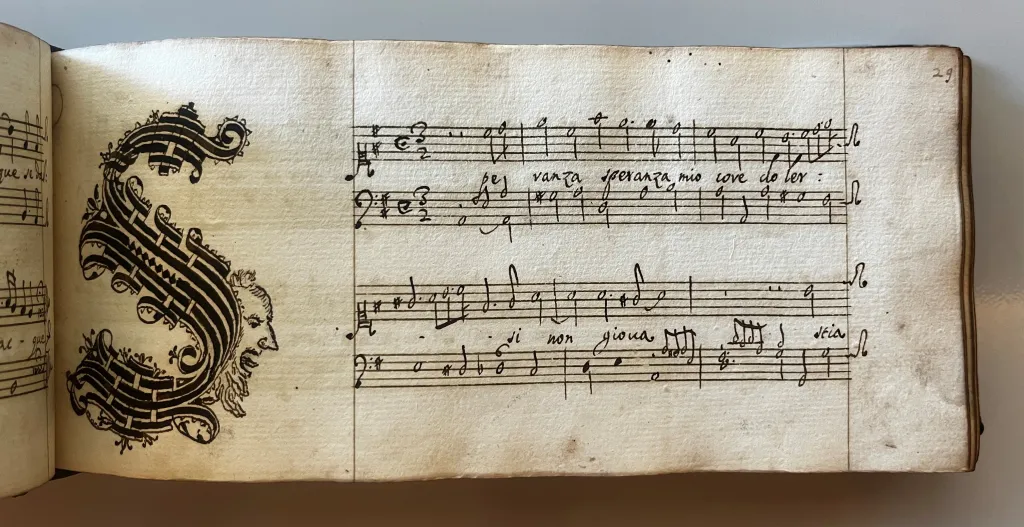
Fig. 20: [Collection of 24 cantatas], [between 1650? and 1700?]. Biblioteca Berenson Special Collections copy MS14.
The library also holds the score of the opera Chi soffre speri on a libretto by Giulio Rospigliosi, with music attributed to Virgilio Mazzocchi and Marco Marazzoli.
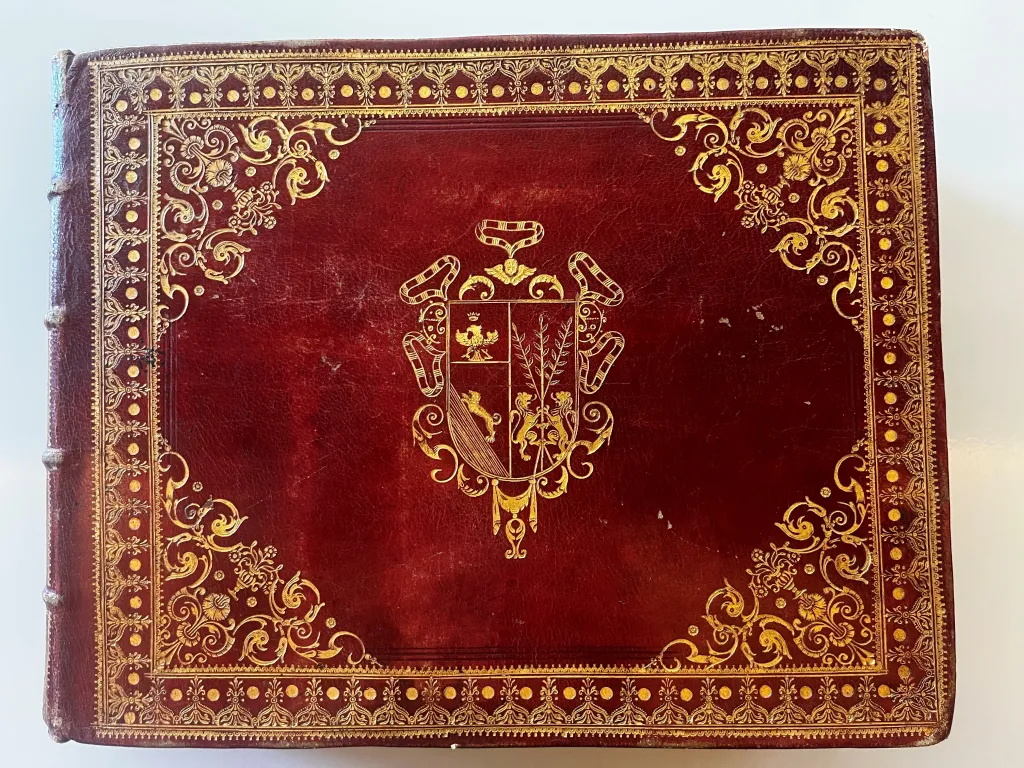
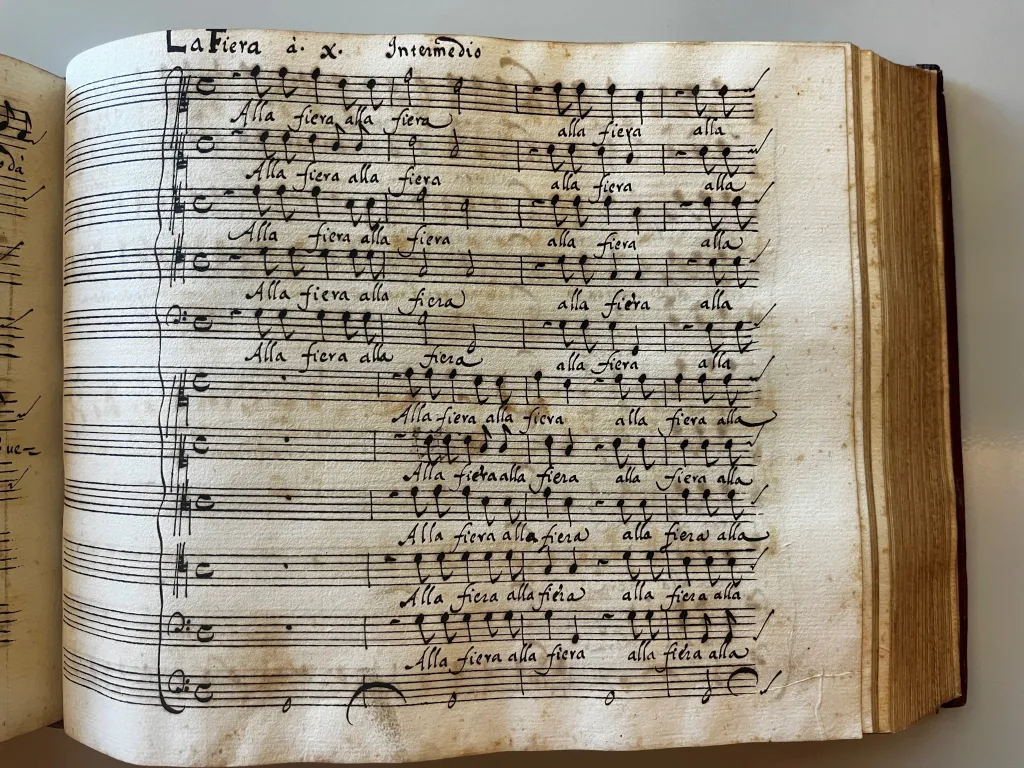
Fig. 21: Virgilio Marzocchi and Marco Marazzoli, Chi soffre speri, [Rome: Bernardino Terenzi?, between 1650 and 1675]. Biblioteca Berenson Special Collections copy MS 15.
As we keep enriching the rare books and manuscripts collection, we look forward to continuing to share with you news of new acquisitions.
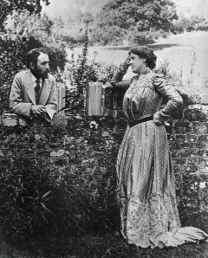
Bernard Berenson and Mary Smith Costelloe
Related articles
by Markéta Kučerová and Vojtěch Šícha, Library of the Czech Academy of Sciences
November 9, 2026
by Konrad K. Szymański (Ossolineum National Library, Wrocław)
November 9, 2026