A new database on pigments in illuminated manuscripts from the BnF
by Charlotte Denoël, Head of the Medieval and Renaissance Manuscripts Service, Bibliothèque nationale de France, Manuscripts Department
Share this article
A new database has recently been put online, “Fabrique de l’art. Couleurs et matériaux de l’enluminure“. This database has been produced as part of the research program “La couleur: artefacts, matière et cognition”, conducted from 2021 to 2023 with funding from the four-year research plan at the Bibliothèque nationale de France (BnF), in partnership with the Institut national d’histoire de l’art (INHA).
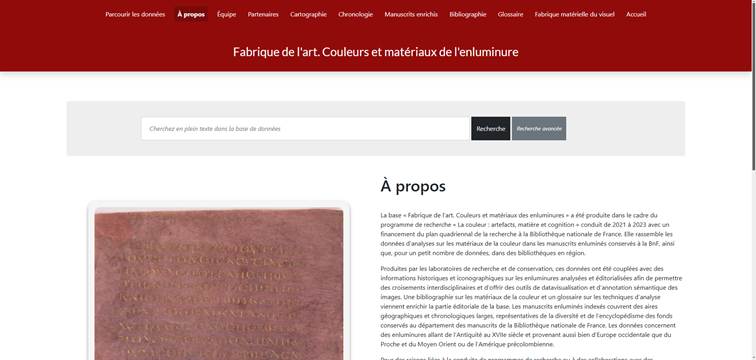
Fig. 1 Fabrique de l’art – home page of the database
This is the first time that data from colour materials in illuminated manuscripts is being made accessible through a dedicated database. The illuminated manuscripts are mainly held at the BnF, with a few of them coming from French regional libraries.
Pigment analysis data produced by research and conservation laboratories has been coupled in the database with historical, stylistic and iconographic information on the analysed illuminations. This corpus of data has been curated to enable interdisciplinary cross-fertilization through an advanced search form and through additional tools for data visualization and semantic annotation of images with IIIF.
The illuminated manuscripts that have been analysed and indexed in the database cover a wide range of geographical and chronological areas, representative of the diversity and encyclopaedic nature of the collections held by the Manuscripts and Arsenal Departments of the Bibliothèque nationale de France. The data covers illuminations from Antiquity to the 17th century, from Western Europe, the Near and Middle East and pre-Columbian America. Due to the research programs and the specific conservation scientists we worked with, the two main groups in the database are Western medieval manuscripts and manuscripts from the Christian East.
At present (2025), the database contains around 200 parent records for manuscripts, 1,000 records for works on analysed folios linked to the parent records, and over 8,000 analysis data records. Records feature an IIIF viewer in which the image of the work is displayed. For reasons of weight and copyright, images of analysis reports have not been integrated.
This database is the result of a collaborative effort, led jointly by the Bibliothèque nationale de France and the Institut national d’histoire de l’art, with the participation, for physico-chemical analyses, of several laboratories : the Centre de Recherche et de Restauration des Musées de France, the Centre de Recherche sur la Conservation du Muséum national d’histoire naturelle, the Centre Ernest-Babelon at the Institut de recherche sur les ArchéoMAtériaux and the University of Eastern Piedmont.
The database itself was developed by the digital research service of the INHA, in connection with another INHA research program “La fabrique matérielle du visuel. Transferts des matériaux et des techniques des panneaux peints en Méditerranée XIIIe-XVIe siècles” led by Sigrid Mirabaud from 2019 to 2023. A database on pigments and techniques in Mediterranean panel paintings has also been produced as part of this program, sharing the same infrastructure as “Fabrique de l’art”. « Fabrique de l’art » also includes data from the INHA research program on “Les matériaux de la couleur dans les manuscrits des fonds orientaux de la Bibliothèque nationale de France” led by François Pacha-Miran as part of his INHA/MESR post-doctoral fellowship (2022-2024).
The main objective of this physico-chemical analysis data base is to create an interdisciplinary conceptual model that meets the different needs of the scientific communities working on colour and its materials.
The data fed into the database is firstly indexed in AGORHA, INHA’s open data platform, in RDF format, according to FAIR principles. Then the data is interconnected and serialized in JSON-LD format for its export to Omeka S, the content management system which has been chosen to create both databases “Fabrique de l’art” and “Fabrique matérielle du visuel”.
In AGORHA, data fields are structured into several categories, to facilitate data export and query in Omeka S: identification, location, description, creation, documentary typology, links between works, documentation, record management.
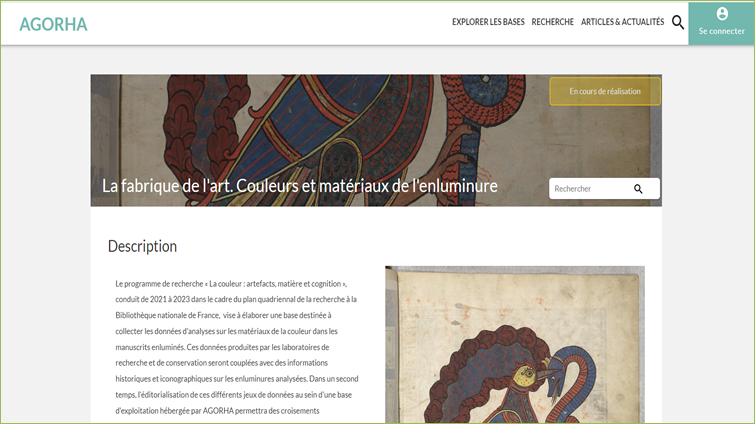
Fig. 2 Home page of “Fabrique de l’art”’s data in AGORHA, INHA’s open data platform
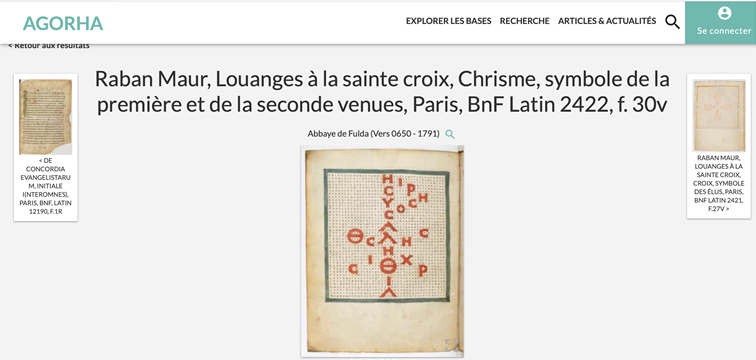
Fig.3 Data related to a specific manuscript in AGORHA, INHA’s open data platform
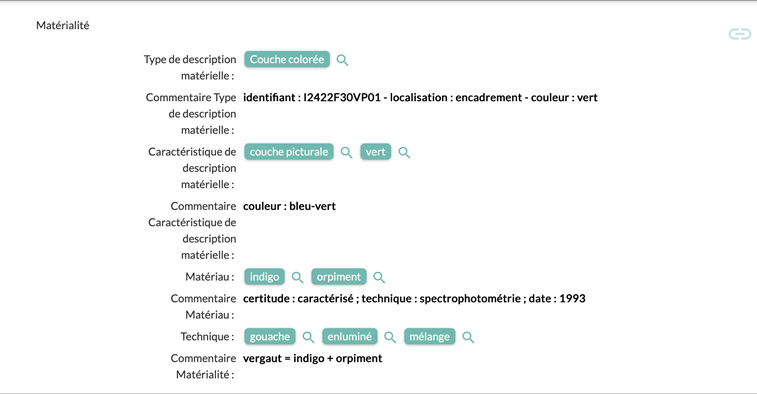
Fig. 4 Data related to material aspects of a pictural layer in AGORHA, INHA’s open data platform
Data relating to the materiality of works has been structured in AGORHA within a new materiality block. Documentary thesauri on materials and techniques, which did not yet exist or which existed only partially in AGORHA, were developed in SKOS format within the framework of both databases. They use a poly-hierarchy in order to facilitate the indexation of data and queries.
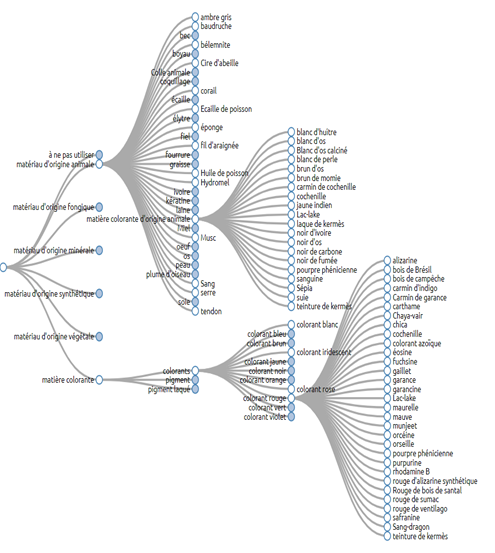
Fig. 5 Extract from the poly-hierarchical thesaurus on materials created for the database
They enabled material data to be structured, indexed, queried and visualized. They have been aligned with the Getty’s AAT vocabularies and added to the French Ministry of Culture’s Ginco (“Gestion d’informations communes”) platform, which provides access to all the scientific and technical vocabularies produced by the French Ministry of Culture and its partners. Simultaneously, the INHA has set up an independent platform, thesaurus.inha.fr, to disseminate AGORHA thesauri and, more generally, those produced as part of INHA’s missions (beyond AGORHA), since thesauri are documentary and scientific objects in their own right, and should not be considered solely as a list of values used only for indexing content.
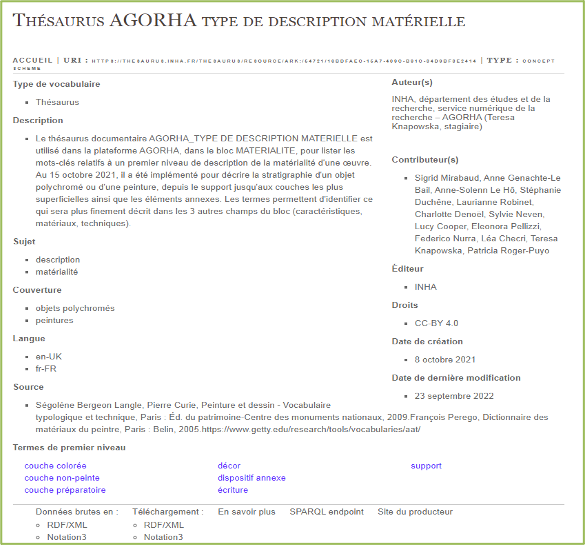
Fig. 6 INHA’s platform dedicated to its thesauri
In order to facilitate comparative research into the data, two modes of query are offered: a full-text search or an advanced search form. The advanced search is particularly relevant to investigate the materials, techniques, and artistic choices of illuminated manuscript production, since if offers several search fields, some of them (“property”) with multiple values such as materials, colours, shelfmarks, date, place of origin, iconographic descriptors or motifs with auto-complete suggestions. The advanced search allows to combine several fields and values, for example material & date in order to display all occurrences of a material within a specific timeline, or material & iconographic motif in order to highlight the links that may exist between the use of materials and specific iconographic subjects.
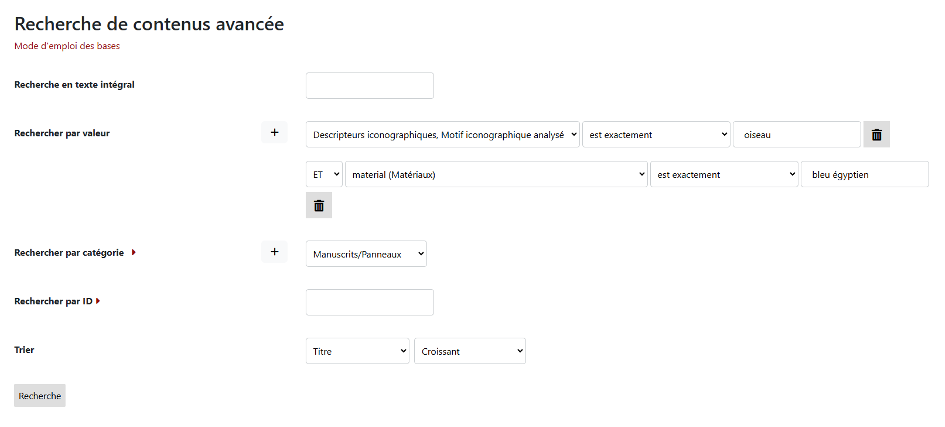
Fig. 8 Advanced search form in the database, with a query combining two criteria in the field “value”
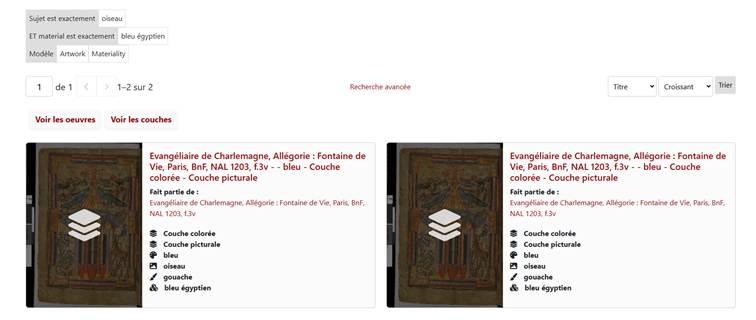
Fig. 9 Results of the advanced search above
The search results page is presented as a set of labels, referring either to manuscript (or folio) records, or to pictorial layer records. The icon representing three superimposed layers above the cartel illustration indicates that it is a descriptive record of a pictorial layer, thus differentiating it from the labels of manuscripts (or folios).
The labels display a range of information providing a brief introduction to the work or the pictorial layer:
- For labels of manuscripts (or folios): title, type of work, call number, place of conservation and one or more fold-out sections indicating the different pictorial layers analysed in this work (with or without iconographic motif).
- For pictorial layer labels: the title of the work, including its material characteristics, a link to the parent work from which the layer originates, and its material data (function and characteristics of the layer, its colour, iconographic motifs, production technique and materials).
Interactive tools of data visualization have been specifically developed for both databases in order to visualize the corpora, and to obtain additional information on the works and analysis data. These tools allow new information to emerge from the raw data, and facilitate mediation around the data contained in the database by making it easier to read.
The first tool is an interactive map. It uses a tool from the Javascript community: Leaflet.js, which offers intuitive and dynamic visualization of data in space. The data may be edited using 4 filters: material, colour, location and creation date. Data from this geographical visualization is not exhaustive and must be used with caution, since some manuscripts cannot be located or have more analysed folios than others.
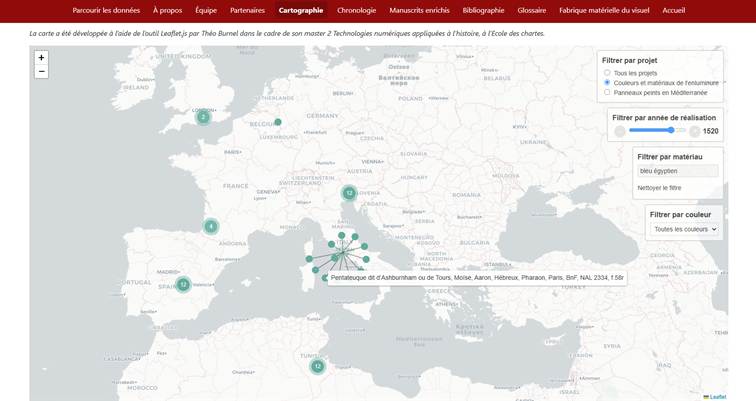
Fig. 10 Interactive map with Leaflet.js
The second tool is a timeline visualization using Vikus Viewer software (whose it is the firstuse in France), an advanced web visualization system that allows users to explore heritage collections using thematic and temporal criteria. Its dynamic interface provides views on material occurrences, i.e., pigments, over time (here with chronological breakdown by half-century), with interruptions and returns. When clicking on materials above, corresponding icons of the folios appear below. These icons may be then enlarged in order to visualize documentary and material data linked to each folio. This pioneering tool facilitates a temporal understanding of the corpus and identified materials, especially by providing important information on use and circulation of pigments over time.
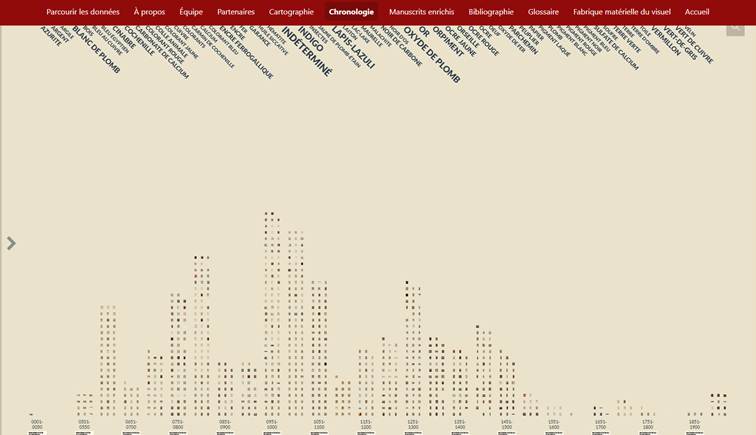
Fig. 11 Interactive chronology with Vikus Viewer
Naturally, data from the chronology, as well as from the map, should be interpreted with caution, as they are not exhaustive, given that they are restricted to the contents of the database.
In addition, twelve manuscripts geographically and chronologically representative of the corpora integrated into the database have been selected in order to provide enriched contents in regard to physico-chemical analysis. IIIF images of these manuscripts and their related data can be viewed with Mirador. Analysis points are identified using visual image segmentation, and results are annotated in red frames, while documentary information on the manuscripts is available on the left column.
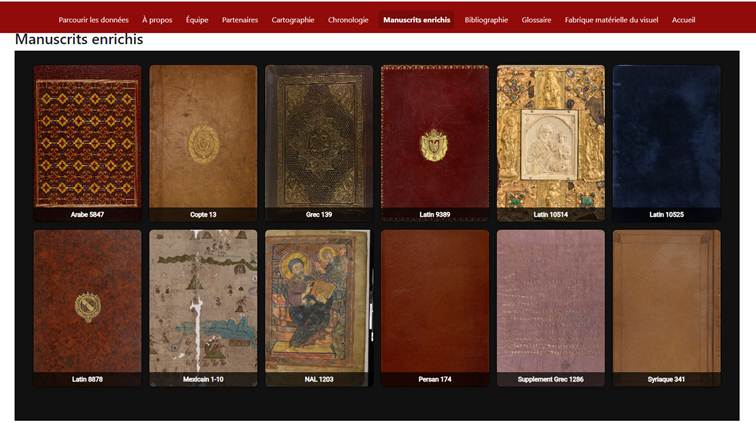
Fig. 12 Selection of 12 manuscripts with enriched contents
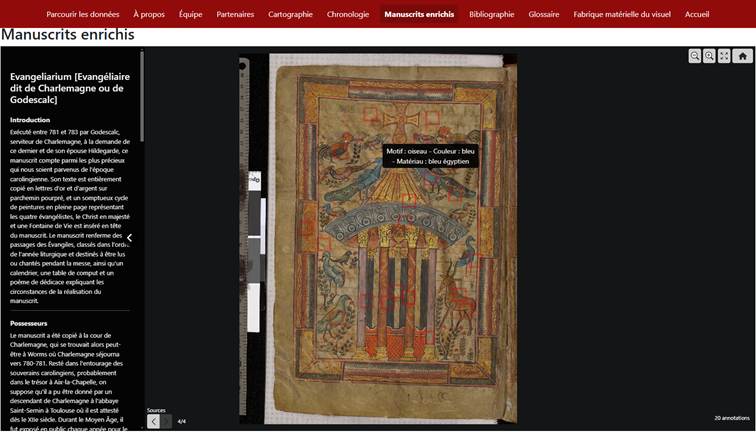
Fig. 13 Charlemagne Gospel Book with enriched content (IIIF annotated images)
Users will eventually find in the editorial part of the database a bibliography on colour materials and a glossary on analysis techniques mentioned in the records.
By bringing together and sharing detailed pigment analysis data from illuminated manuscripts across different collections, this database represents a groundbreaking step forward in the field of cultural heritage research, opening new paths for cross-disciplinary research, conservation, and a deeper understanding of artistic and technical practices. Designed to promote transparency, collaboration, and innovation, it provides scholars, institutions, and the general public with valuable insights into scientific works previously unavailable outside research and conservation laboratories. This tool not only facilitates cross-institutional collaboration and comparative research, but also opens new avenues for understanding the materials, techniques, and artistic choices of illuminated manuscript production. As a prototype, the database will need to undergo further refinement and enrichment, and may eventually be extended to encompass other forms of artistic medias such as polychrome sculptures or frescoes. In any case, it is my hope that it will inspire further similar initiatives in the digital humanities and scientific analysis of art.

Related articles
by Konrad K. Szymański (Ossolineum National Library, Wrocław)
November 9, 2026
by Caroline Duroselle-Melish, Angela Dressen and Attilio Bottegal, I Tatti, Harvard
November 9, 2026