Ukrainian cultural heritage at CERL
by Marian Lefferts, CERL
Share this article
Early April 2022, CERL Librarians attended an online briefing about the position of Ukrainian libraries in particular, and the fate of cultural heritage in that war-torn country in general. It was clear that donations in the form of money, 1 medicine, food and shelter remain a first priority. Throughout Europe, cultural heritage institutions are taking the initiative to help their colleagues in Ukraine to evacuate and protect their collections.
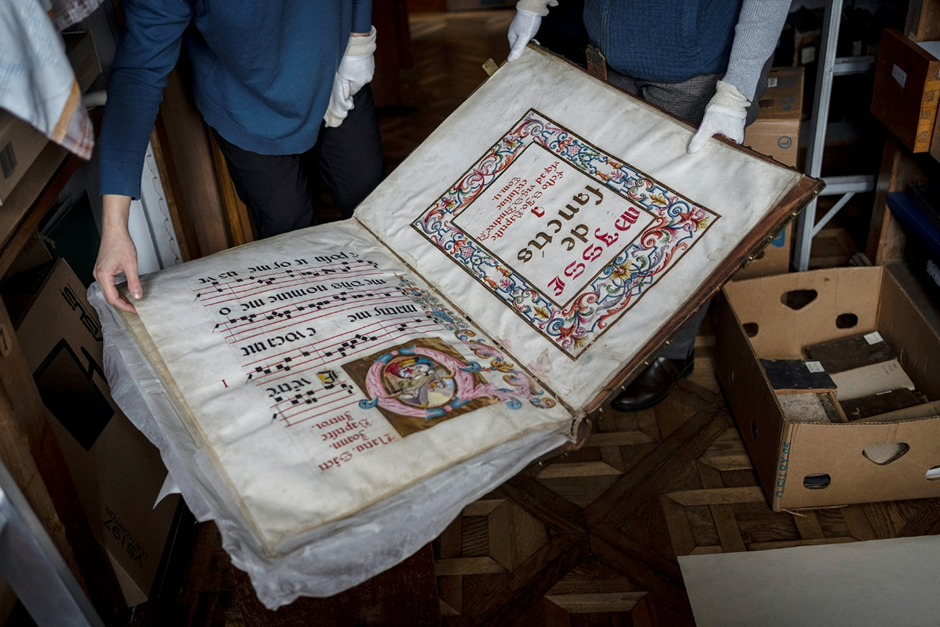
Workers at the rare manuscripts and old printed books department of the Andrey Sheptytsky National Museum store them in cardboard boxes to reduce the risk of damage in the event of an attack in the western Ukrainian city of Lviv, Friday, March 4, 2022. (Image: AP Photo/Bernat Armangue)
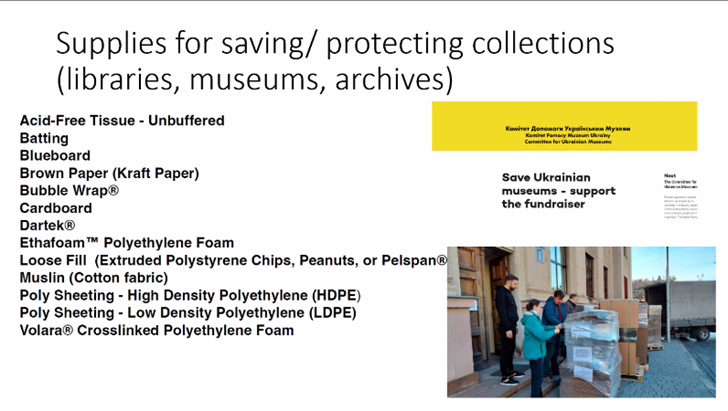
A Cultural Heritage Rescue Centre has been established at Lviv Polytechnic National University’s Scientific and Technical Library (their Facebook page is here). It is coordinating the effort to distribute materials across the country. The image below lists some the types of materials that are needed, but also: fire blankets, fire extinguishers, packing crates are urgently requested. Donors are encouraged to contact the Center before sending materials to ensure that donations contain materials that are currently needed and to ensure that the materials reach their intended destination. More information on this website.
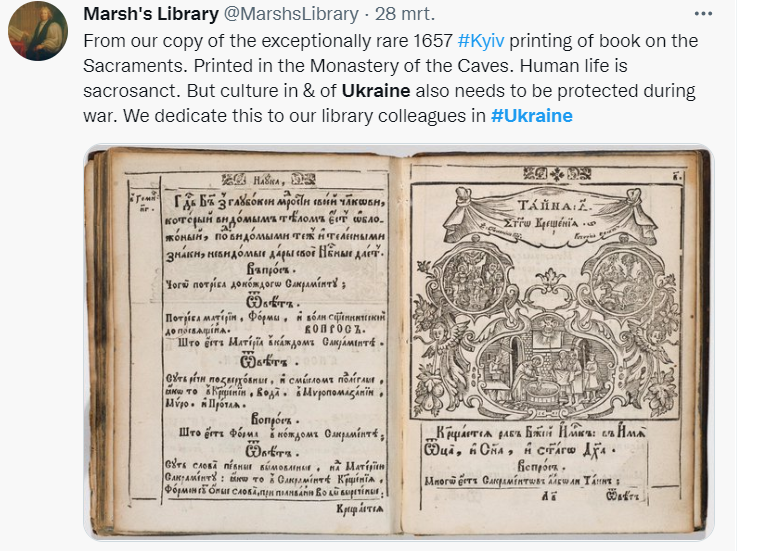
Librarians in Europe have also been called upon to help their Ukrainian counterparts by offering jobs or internships. CERL is considering whether and how it can play a role in coordinating some of these efforts in the special collections community. During the briefing we learned that many of our library colleagues have identified Ukrainian cultural heritage materials in their collections and have posted them on social media, organised exhibitions and provided youngster with reading and study materials. Europe’s cultural sector is active in organising cultural exchange events, exhibitions and concerts to give the millions of Ukrainian refugees that fled their home, a warm welcome in their cities.

With the aid of our data collections, CERL aims to facilitate, enhance, and improve the use and impact of printed and manuscript cultural heritage material. We explored our datasets to identify materials related to Ukraine.
After the collapse of the USSR in 1991, Ukraine became an independent state. People in the region always took an active part in European intellectual life and academic exchange. They traveled widely and lived, worked and retired all around Europe. This is reflected in their engagement with texts and books, as well as in our curation of the books that are now in CERL members’ collections. In cataloguing data held in CERL databases we find that Ukrainian authors, editors, former owners, printers and their imprints are frequently marked with the code for Ukraine or Ukrainian, in addition to codes for other countries and languages, e.g. Poland, Russia, Austria, France, Greece and Polish, Church Slavonic, French, Latin.
In the CERL Thesaurus materials related to Ukrainian culture are conveniently accessible.
In the Heritage of the Printed Book database (HPB) there are no bibliographical records contributed by libraries in Ukraine.2 The database does, however, contain materials printed in Ukraine and now held at libraries in, for example, Poland and Germany.
In order to find items printed in Ukraine, we can insert the placenames retrieved from the CERL Thesaurus (make sure you select [PLC] imprint name place or click here to execute the search).
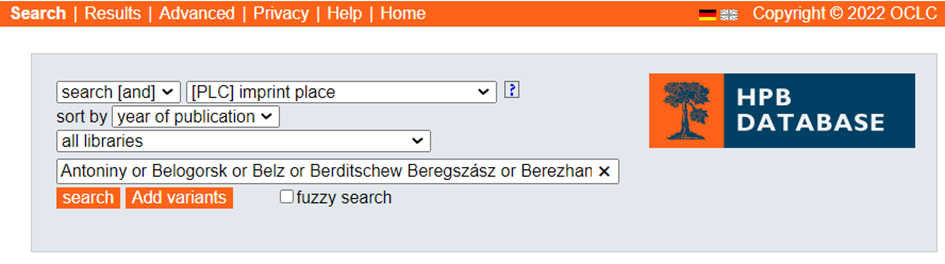
Early May 2022, this search resulted in 335 bibliographic records, from 14 cities in Ukraine.
Printers active in Ukrainian cities printed materials in a variety of languages. The HPB database offers a Language facet, and it is possible for a user to analyse by language the 335 records related to Ukraine in the database. This of course only indicates the language distribution among the records held in the HPB, not the overall language distribution in historic books from Ukraine.
Language and Country facets can be constructed because the catalogue formats in use at our contributing libraries offer the option to record the Country of Publication and/or the Language of Publication. While not all HPB records contain such a code, the majority do and to retrieve HPB bibliographical records for items that have been coded in this way, you may do the following:
| Language code Ukr | Country code UA |
|---|---|
| For records with language code Ukr, go to hpb.cerl.org and enter ppn 0? and \9004 UKRsecondly, create a new search ppn 1? and \9004 UKRthen, in Search History combine these two searches with OR, e.g. s1 or s2On 8 April 2022, these records with language code Ukr were in the HPB. |
For records with country code UA, go to hpb.cerl.org and enter ppn 0? and \9005 UAsecondly, create a new search ppn 1? and \9005 UAthen, in Search History combine these two searches with OR, e.g. s1 or s2On 8 April 2022, these records with country code UA were in the HPB. |
The database Material Evidence in Incunabula (MEI), and its satellite database Owners of Incunabula and Other Early Printed Books (https://data.cerl.org/owners/_search, free search: ‘Ukraine’) lists 44 incunabula with Ukrainian provenances. We look forward to welcoming in the MEI database records from incunabula which today are in libraries in Kharkiv, Kyiv, Lviv, and Odesa (according to the Incunabula Short Title Catalogue https://data.cerl.org/istc/_index/clocation, searching ‘Ukraine’).
So far, CERL’s databases do not hold records contributed by Ukrainian institutions. This means that the Ukrainian book production is underrepresented and it also means that the descriptive data used in the records reflects the time and the place in which the records were created by our member libraries around Europe. We hope to work with Ukrainian librarians and the wider CERL community to add more data and to review cataloguing practices, thus to do better justice to Ukrainian cultural heritage.
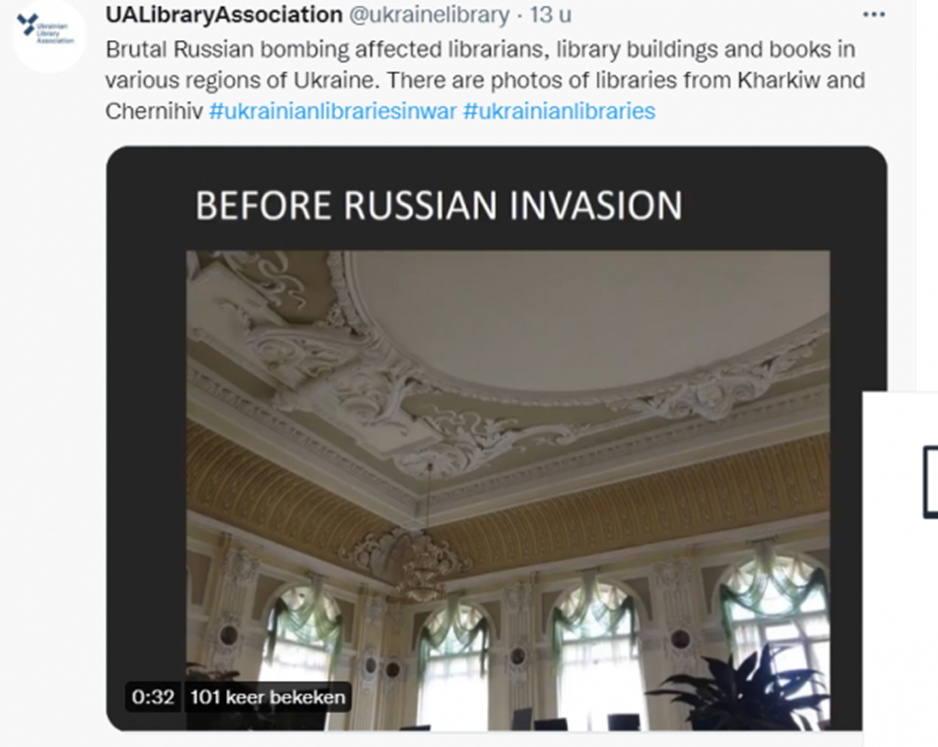
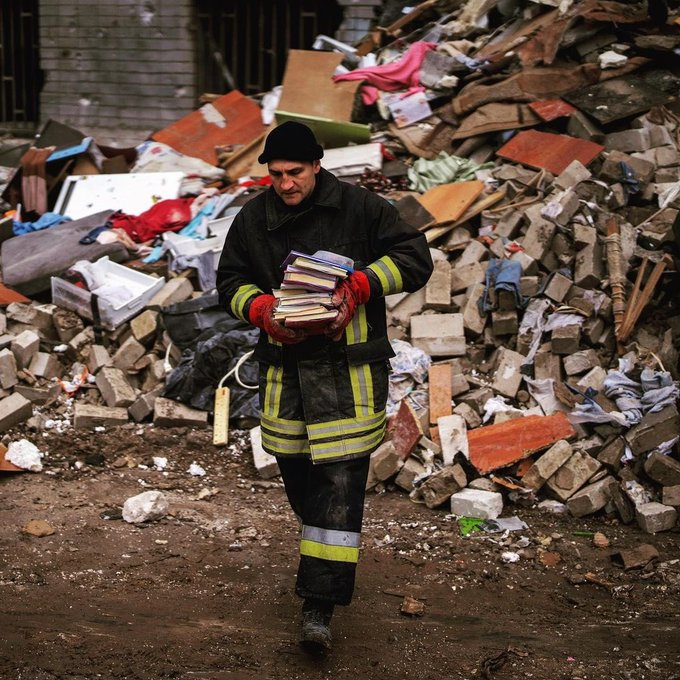
Meanwhile the news from Ukraine remains bleak: footage of the destruction in Chernihiv and Kharkiv was shared with the world via Twitter (below). The Ukrainian Ministry of Culture and Information Policy maintains a website which records damage done to cultural institutions, including libraries.
CERL has created a website where we record information about efforts to assist the cultural heritage sector in Ukraine and we welcome your suggestions for links that should be added.
Footnotes
1 Donate via the International Rescue Committee DEC Ukraine Humanitarian Appeal or your national Aid Agency
2 You may be interested in these two efforts to create a back-up of Ukrainian digital cultural heritage: Saving Ukrainian Cultural Heritage Online (SUCHO) is a distributed project to capture, archive and preserve digital cultural materials from Ukraine and relating to the war in Ukraine and here is information about SUM at the 4CH project.
Related articles
by Caroline Duroselle-Melish, Angela Dressen and Attilio Bottegal, I Tatti, Harvard
November 9, 2026
by Antonia Delle Fratte, PhD student at the University of Padua/Venice Ca’ Foscari
November 9, 2026