The William L. Clements Library’s Incunabula Collection in MEI
by Debora Di Pietro, MEI Editor
Share this article
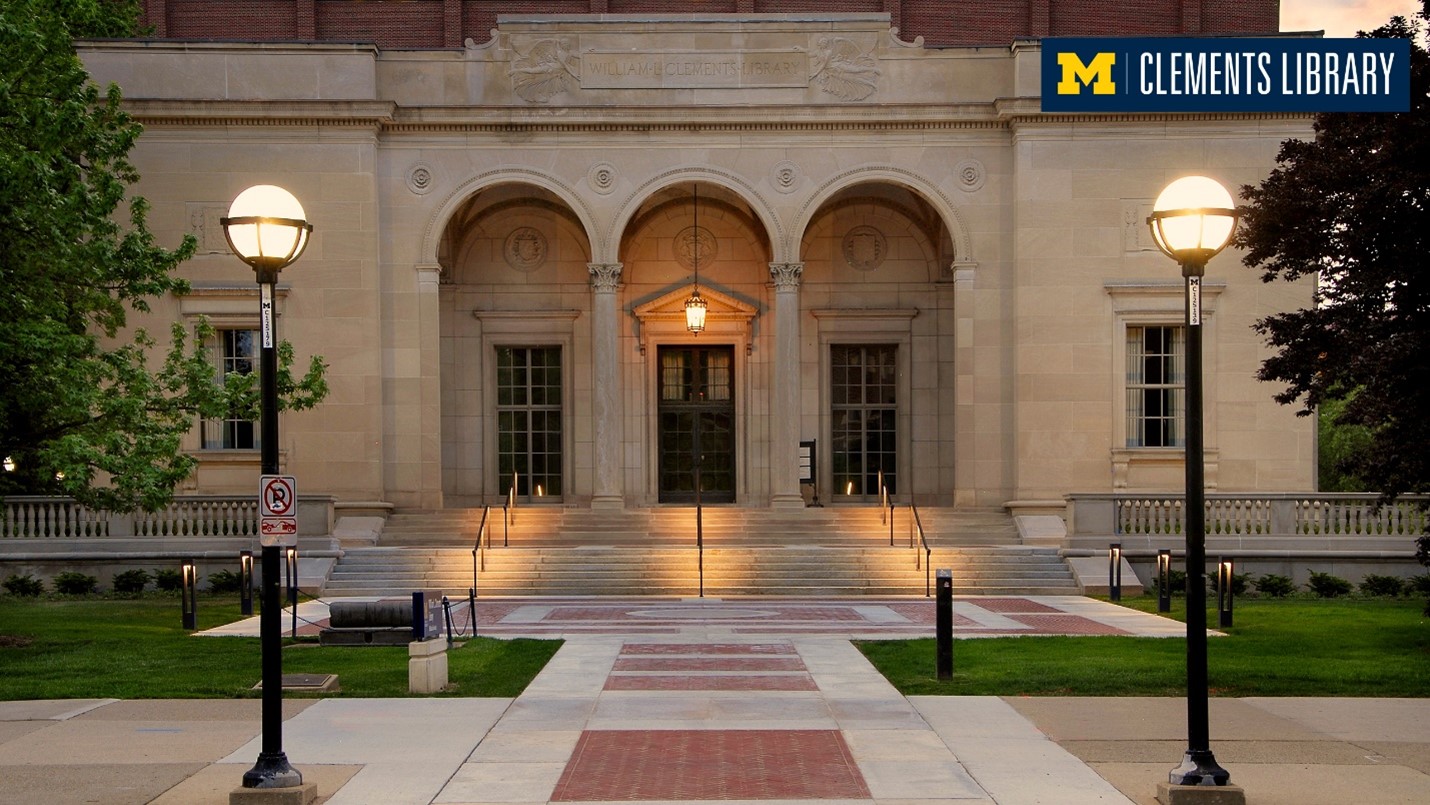
Figure 1. South entrance of the William L. Clements Library.
https://quod.lib.umich.edu/b/bhl/x-hs17384/hs17384
The William L. Clements Library was founded in 1923 at the behest of William L. Clements (1861-1934), an American industrial businessman and one of the greatest collectors of the 20th century. During his life, Clements, a bibliophile who specialized in Americana, managed to set up an outstanding book collection about the history of the United States, from Columbus’ discovery of the continent to the American Revolutionary War. At the time of his donation to the University of Michigan, the collection consisted of 20000 volumes of rare books, 2000 volumes of early newspapers, several hundred maps, and the papers of Lord Shelburne, the British Prime Minister who negotiated the peace ending the Revolutionary War. He also arranged a significant amount of money for a building to house the collection. To the present day, the William Clements Library is located on the central campus of the University of Michigan on 909 S University Ave in Ann Arbor, MI.
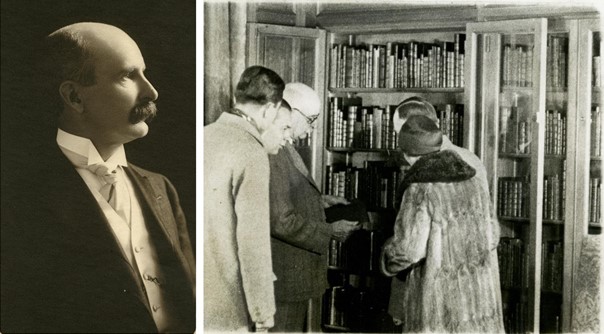
Figure 2. A portrait of William L. Clements and him showing
treasures from his collection. https://quod.lib.umich.edu/b/bhl/x-hs17384/hs17384
As he said in June 1923, the foundation of the William L. Clements Library had the claim to set up ‘a library of source books and auxiliary works, or manuscripts of American history which would enable any student to make independent, first-hand investigations’. [1]
Today the library, considered among the leading institutions for the study of the American history, posses 80,000 units including books, pamphlets, magazines, and the extensive collection of posters and proclamations; over 2,700 manuscript collections, and approximately 30,000 geographical maps, 2,500 of which are manuscript, and about 500 atlases dated between 1486 and the end of the 19th century. The library’s collection also includes visual material of various kinds, including prints, photographs, ephemera, paintings, drawings, and other documentation. [2]
The Incunabula collection
During 2020, as MEI editor, I studied the incunabula collection housed in the William L. Clements Library, composed of 20 copies. I have described the incunabula into the Material Evidence in Incunabula (MEI) database, highlighting the provenance data stored in them. By analysing the manuscript and printed documentation, I was able to reconstruct the most recent passages of possession, also identifying, in some cases, the belonging to libraries now dispersed. [3] Sold through auctions and individual merchants, these incunabula belonged to prestigious collections and still retain fundamental provenances that allow the reconstruction of their journey. The study of the itinerary of the incunabula throughout the centuries, from Europe to America, is reconstructed by analysing elements such as ex libris, inscriptions, bindings, stamps, reading marks, and manuscript notes. Below are some images of provenance traces present in the specimens studied.
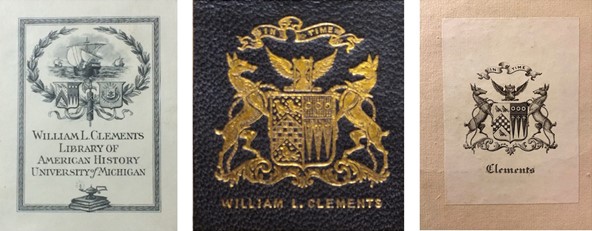
Figure 3. Bookplates of William L. Clements and William L. Clements Library.
The twenty incunabula preserved today at the William L. Clements Library, of which only nine originally belonged to William Clements, all have one characteristic in common: in one or more parts of the text, they make explicit reference to the American continent, to its discovery and the geography of the globe at the time of European explorations in the fifteenth century. Thus, for example, it is part of the collection the 1493 Latin edition of Christopher Columbus’ letter to the King and Queen of Spain, written after his first voyage to America and titled Epistola de insulis nuper inventis, fully digitized in HathiTrust. [4]
The study of this peculiar incunabula collection and the recording of the provenances in MEI has also allowed me to retrace the historical stages of the history of American collecting that developed in the period between XIX and XX centuries. My next goal is to enrich the records in MEI with links to the provenance images uploaded into the Provenance Digital Archive (PDA).
So, if you are curious to know more about the history of these incunabula, you can find them all in MEI! For further details, check out my recently published article about the incunabula collection of the William L. Clements Library at the University of Michigan in Ann Arbor.
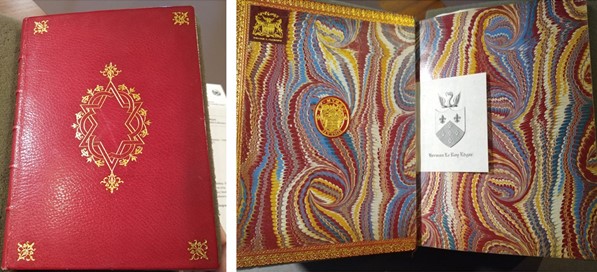
Figure 4. Brant Sebastian, Stultifera Navis, Strassburg, Johann (Reinhard) Grüninger, 1 June 1497: 19th century front cover tooled in gold, front pastedown and the endleaf in marbled paper (binding signed by Hardy), the ex libris of Herman Le Roy Edgar (1865-1938).
https://data.cerl.org/mei/02139539
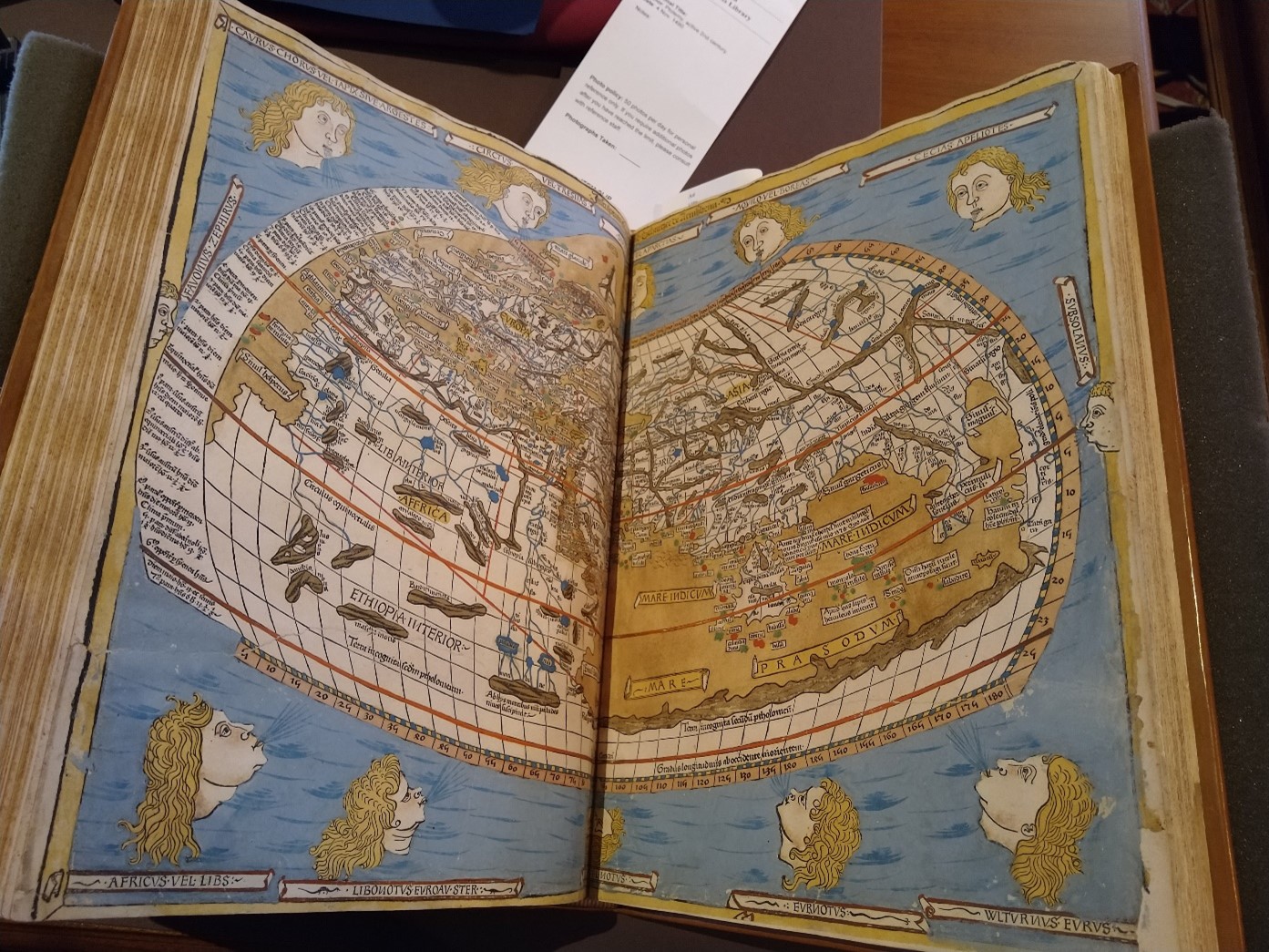
Figure 5. Ptolemaeus Claudius, Cosmographia, Ulm, Johann Reger, for Justus de Albano,
21 July 1486: 15th century world map hand coloured. https://data.cerl.org/mei/02140937
Bibliography
[1] J. Franklin Jameson, The American historian’s raw materials: an Address, Ann Arbor, University of Michigan, 1923.Jameson 1923, p. 13. For more information about the William L. Clements Library see William L. Clements, Uncommon, scarce and rare books relating to American history during the discovery and colonial periods together with other Americana from the library of William L. Clements, Bay City, Michigan, 1914, and William L. Clements, The William L. Clements Library of Americana at the University of Michigan, Ann Arbor, University of Michigan, 1923.
[2] For more information about the collections held at the library see https://clements.umich.edu/explore-collections/.
[3] For example, it is part of the library’s collection a specimen of Ptolemy’s Comsographia, printed in Rome in 1490 by Petrus de Turre, wich bears the ex libris of the Convent of San Francis in Stroncone at c. A2r (https://data.cerl.org/mei/02140938). For more information about the owner and his dispersal collection see https://data.cerl.org/owners/00014466 and https://marciana.venezia.sbn.it/immagini-possessori/826-convento-di-san-francesco.
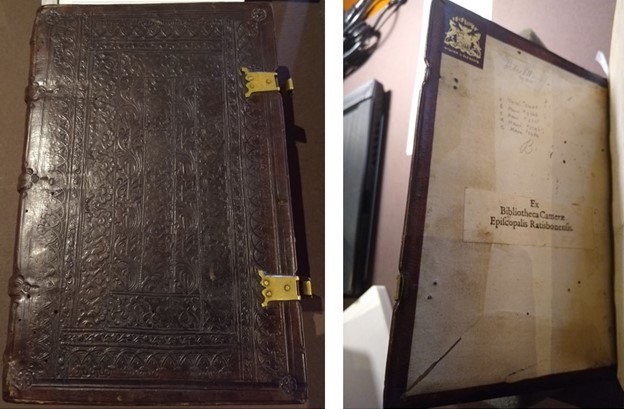
Figure 6. Incunabulum containing five works of Baptista Mantuanus, printed in Venice by Jacobus Pentius de Leuco, between July and September 1499: possibly 16th century German binding in full brown calf with wooden boards and covers decorated in blind panel roll style; on the front pastedown, the Regensburg Episcopal Library’s printed label: ‘Ex Bibliotheca Camerae Episcopalis Ratisbonensis’.
https://data.cerl.org/mei/02139852
Related articles
by Konrad K. Szymański (Ossolineum National Library, Wrocław)
November 9, 2026
by Caroline Duroselle-Melish, Angela Dressen and Attilio Bottegal, I Tatti, Harvard
November 9, 2026