
CERL internships 2025 – Huntington Library: Studying the ‘life’ of Spanish incunabula at Huntington Library (San Marino, California)
by Iván Pérez Marinas
Share this article
Hola! My name is Iván Pérez Marinas, Curator of Manuscripts and Incunabula at the National Library of Spain (Biblioteca Nacional de España, BNE) and Ph.D. in Hispanic Medieval Studies from the Universidad Autónoma de Madrid.
Due to the fact that I got one of the CERL grants for 2025, I made a stay co-financed by the Huntington Library (San Marino, California) to collaborate for one month, from September 15 to October 14, researching copies of the Spanish incunabula that this institution has and including my results in Material Evidence in Incunabula (MEI). This database, developed by CERL, aims to contain the records of all copies of all incunabulistic editions that have survived. They describe chronologically the ‘vital’ trajectory of each copy, that is, both material evidences that are in a book (manuscript notes, binding, bookplates, supralibros, stamps, rubrication, decoration, etc.) and references to each copy in other documents, such as bibliographies, sales and auction catalogs, or reports and invoices kept by the institution that houses it.
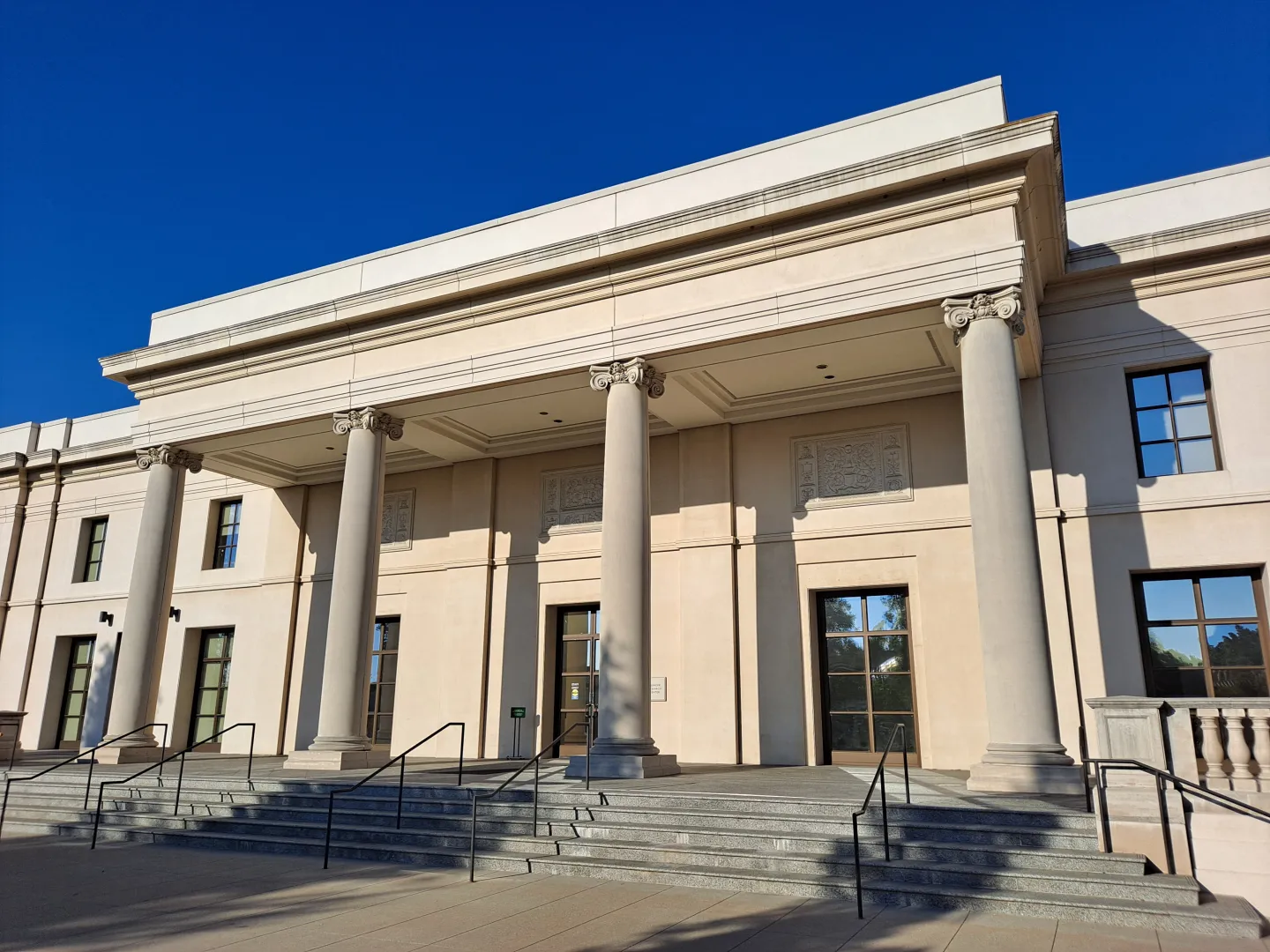
Huntington Library, San Marino, California
In addition, its location is geolocated at each historical period, as well the acquisition method is indicated and its subject is identified (its former and present owners, booksellers, etc.) through another database of personal and corporate body authorities, named Owners of Incunabula and also developed by CERL.
In order to carry it out I was under the supervision and tutoring of one of the world’s greatest experts in incunabula, Stephen Tabor, Curator of Early Printed Books at the Huntington Library. Thanks to his training, which improved completely my skills and knowledge in incunabula and taught me how to catalog in MEI, whose editing software I had never used, during the aforementioned month I made 43 records in MEI, as well 17 new authority records and 2 intensive revisions of authority records in Owners of Incunabula.
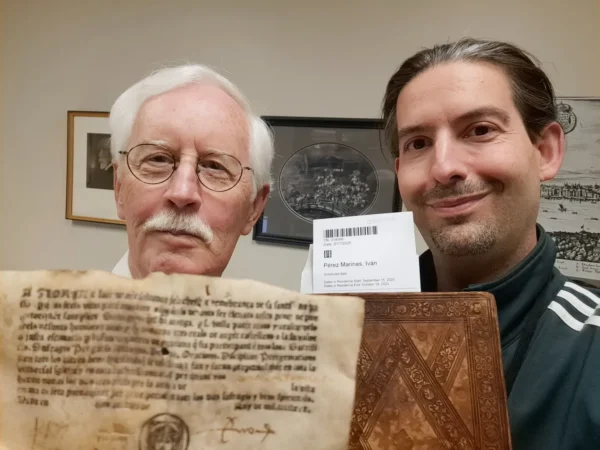
Before delving into the details of my research, I would like to explain that the collection of over 5,200 incunabula of the Huntington Library, the second largest in the United States, after the Library of Congress collection, was formed a century ago by the railroad tycoon Henry E. Huntington, who, with the special initiative of his wife Arabella Huntington, invested part of their huge incomes from the Central Pacific Railroad Company to purchase paintings, furniture, manuscripts, early printed books, maps, photographs, and even plants, since The Huntington estate has one of the most important botanical gardens around the world. Upon his death in 1927, he bequeathed all of his collections to The Huntington institution to be exhibited to the people at his ranch. Specifically, as stated in the library’s documentation, to which I had access, Mr. Huntington acquired most of his incunabula between 1924 and 1926 through a rare book dealer, the German Otto Vollbehr, who had previously purchased them from private owners and booksellers, such as the British company Maggs Brothers; but Mr. Huntington also bought them directly from the Rosenbach Company, based in Philadelphia, through which, for example, he also got part of the libraries of the German philologist Wilhelm Richter and the British politician Charles Thomas-Stanford. In fact, in order to identify several of the provenances from the 19th and 20th centuries, we had to read bibliophiles’ catalogs (Pedro Salvá, Ricardo de Heredia, Thomas-Stanford, Henry Huth, Alfred Henry Huth) and booksellers’ catalogs (Maggs Brothers, Joseph Baer, Bernard Quaritch).
Thanks to my academic training as a historian and my work based on cataloging manuscripts, I could read the manuscript notes of the Spanish incunabula and to assign their typology (comments, corrections, keyword extractions, reading marks, personal notes, collations, censorship evidences, pen trials, etc.), besides identifying the period and language in which they were written.
Thus, I could record when the incunabula were used. As notes were frequent in Gothic and humanistic scripts, these incunabula were usually handled shortly after being edited (15th and 16th centuries); but there were also notes from later centuries, especially bibliographical annotations in German and English, collations, and possible stock numbers of 20th century bookdealers and booksellers.
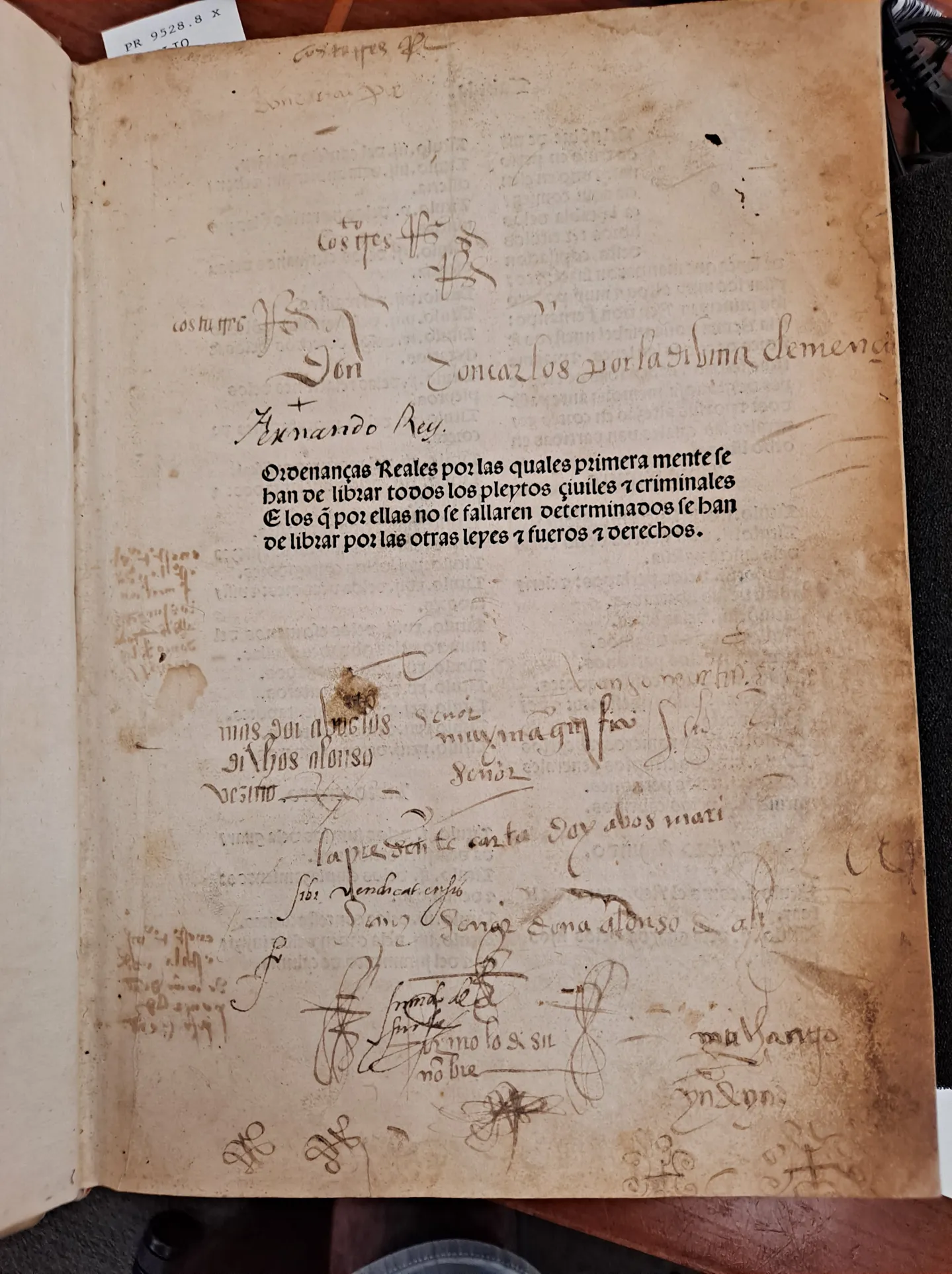

Left: Numerous pen trials on HL, 92561 – Right: Arabic notes
About the note languages, the vernacular languages, that is, Spanish and Catalan, were the most common because of the publication places; but notes in Latin were also frequent in religious and law books. Likewise, it was notable that incunabula published in Zamora and Salamanca had notes in Portuguese, since, due to the geographical proximity, they were acquired by owners from the Kingdom of Portugal. However, the most interesting case was the copy of Seneca’s works translated by Alfonso de Cartagena (Huntington Library, 95876). It has few notes in Arabic; so, in order to understand them, Stephen Tabor and I asked for the collaboration of two experts with training in this language and its literature: Karla Nielsen, Senior Curator of Literary Collections at the Huntington Library, and Ricardo González Castrillo, technical advisor at the Universidad Rey Juan Carlos (Madrid). They were identified by both as mostly keyword extractions, in a 16th century Andalusian-Maghrebi script.
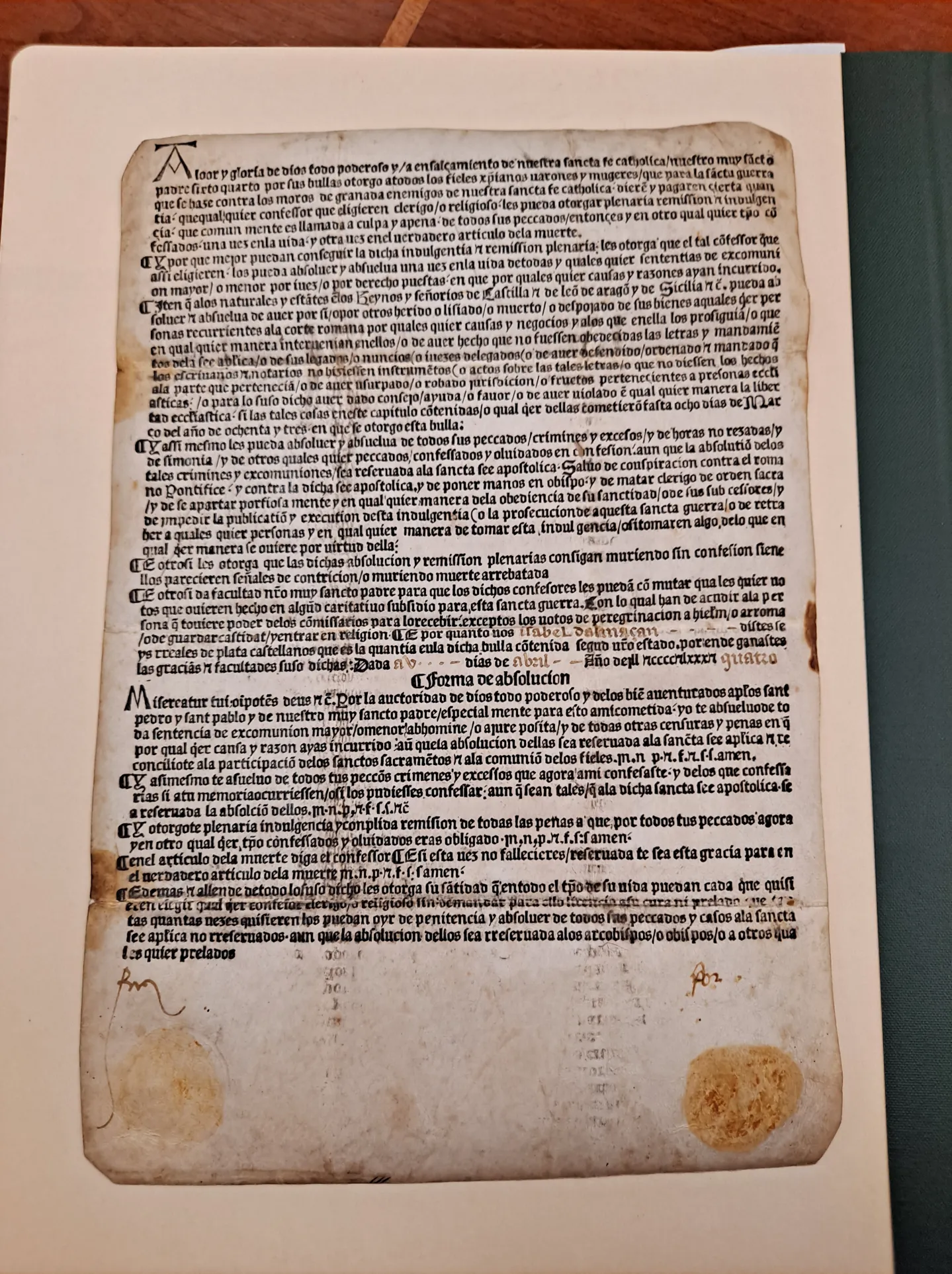
Indulgence for remissions of sins
Within the area of notes, I also found manuscript completions in bulls of indulgences for the financing of the war against the Moorish Kingdom of Granada (HL, 89479, 96583 y 96585). They were forms with blank spaces to be filled out: in the first case, in Spanish, with the donor name, and the date for the remission of her sins; in the second case, in Spanish, with the debtor name, the amount owed, the creditor, and the date for removing debt from a private person; and in the last case, in Catalan, with the donor name, the deceased name, and the date for a donation to save her soul. In addition, at the bottom there were signatures of ecclesiastical secretaries or notaries and remains of wax seals.
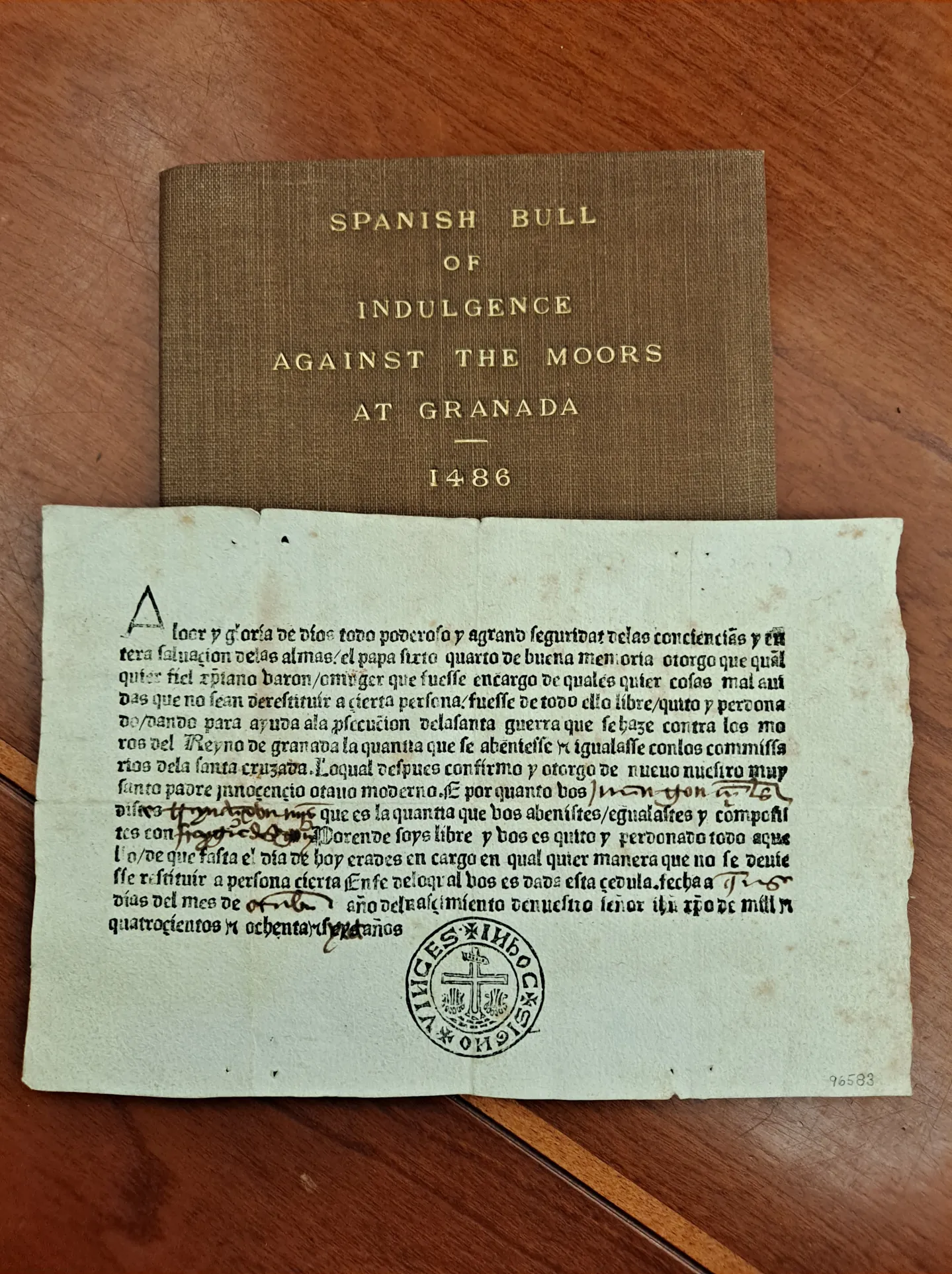
Indulgence for removing debt
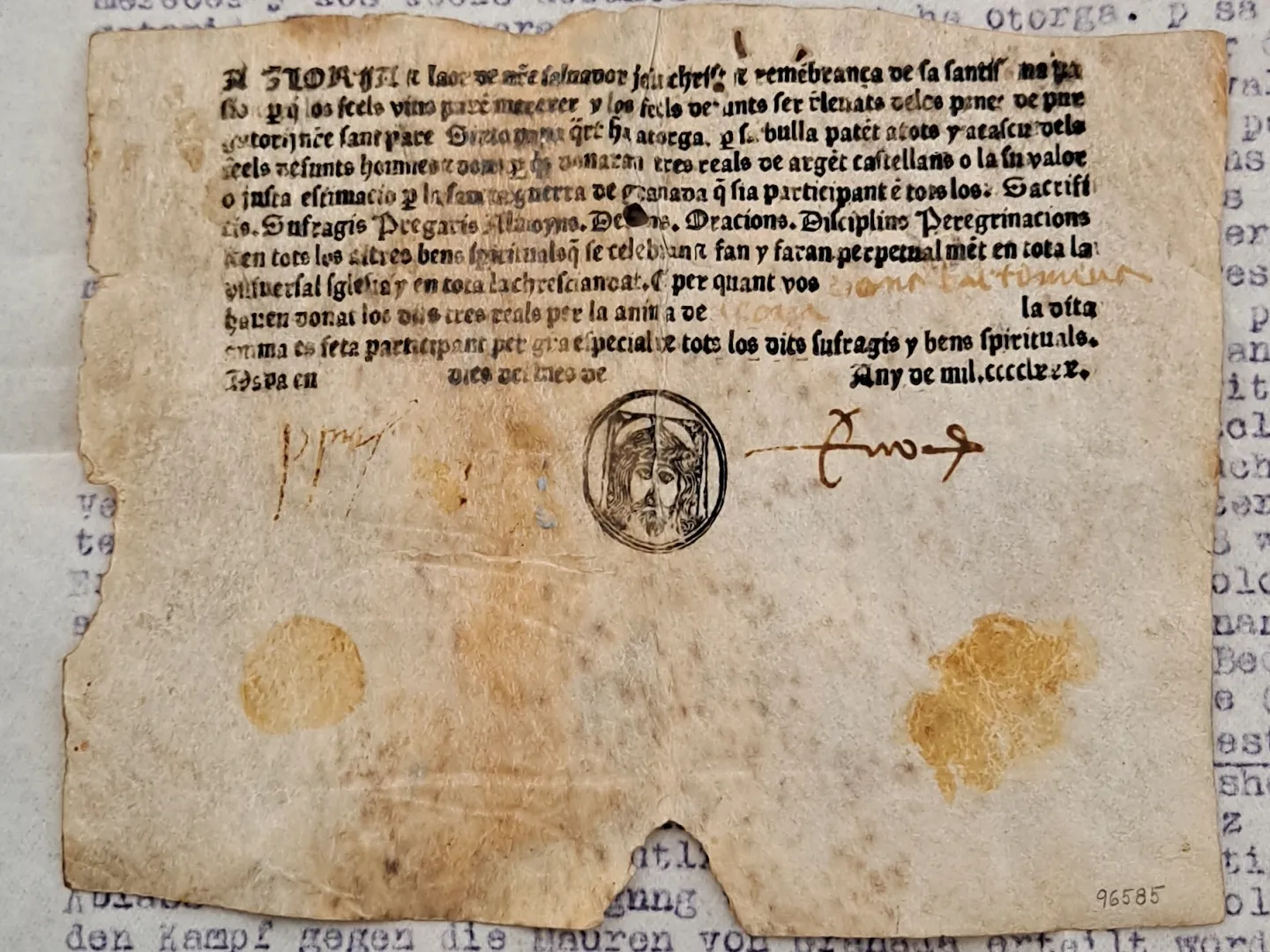
Indulgence for saving soul
The binding description was my most difficult task. Fortunately, Stephen Tabor is a great specialist in this matter, and I also had copies of working documents on concepts, terminology and real examples of bookbindings made by Carlos Vera, conservator and regular describer of bindings at the National Library of Spain; so, I could interpret and identify properly these Spanish bindings. Carlos Vera also answered some questions for me by email. Thus, I could study a rare original late-15th-century binding, made in blind-tooled pigskin on wooden boards with the original clasp and catch fastenings (HL, 97493); the typical-Spanish bindings in plateresque style (HL, 93522 y 95872); the unequivocal bindings in Spanish tree sheepskin (HL, 89054); bindings in limp parchment (HL, 84479) and stiff parchment (HL, 86674); bindings in sprinkled sheepskin (HL, 91595); bindings in half calf with corners (HL, 89949) and in quarter calf (HL, 95876); bindings in diced Russia reindeer skin (HL, 84482); morocco bindings (HL, 93031); and bindings signed by famous bookbinders, such as Francis Bedford (HL, 86168), Rivière & Son (HL, 97480), and Antoine Ménard (HL, 97443, and Owners of Incunabula, 2603).
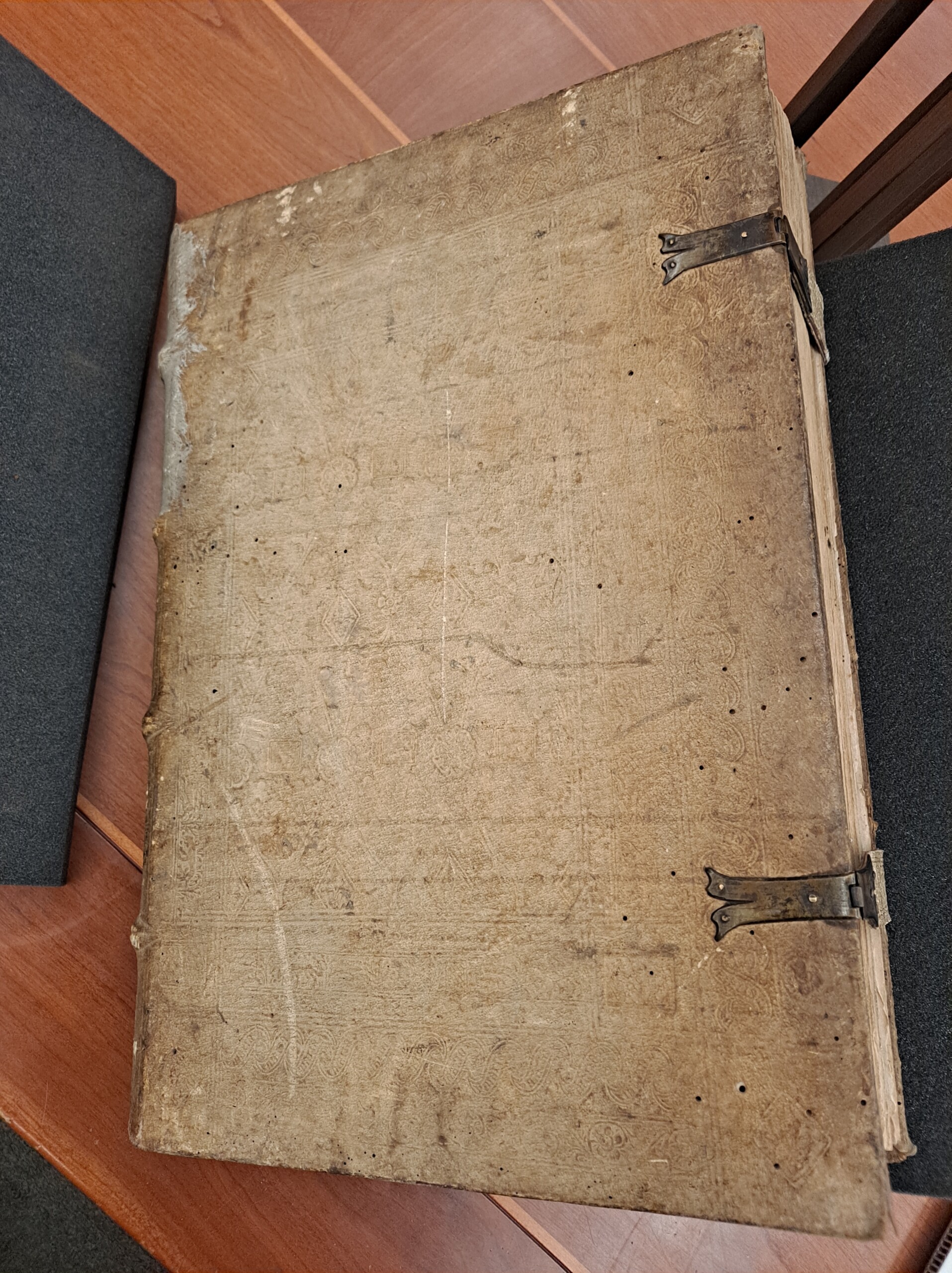
15th-century binding
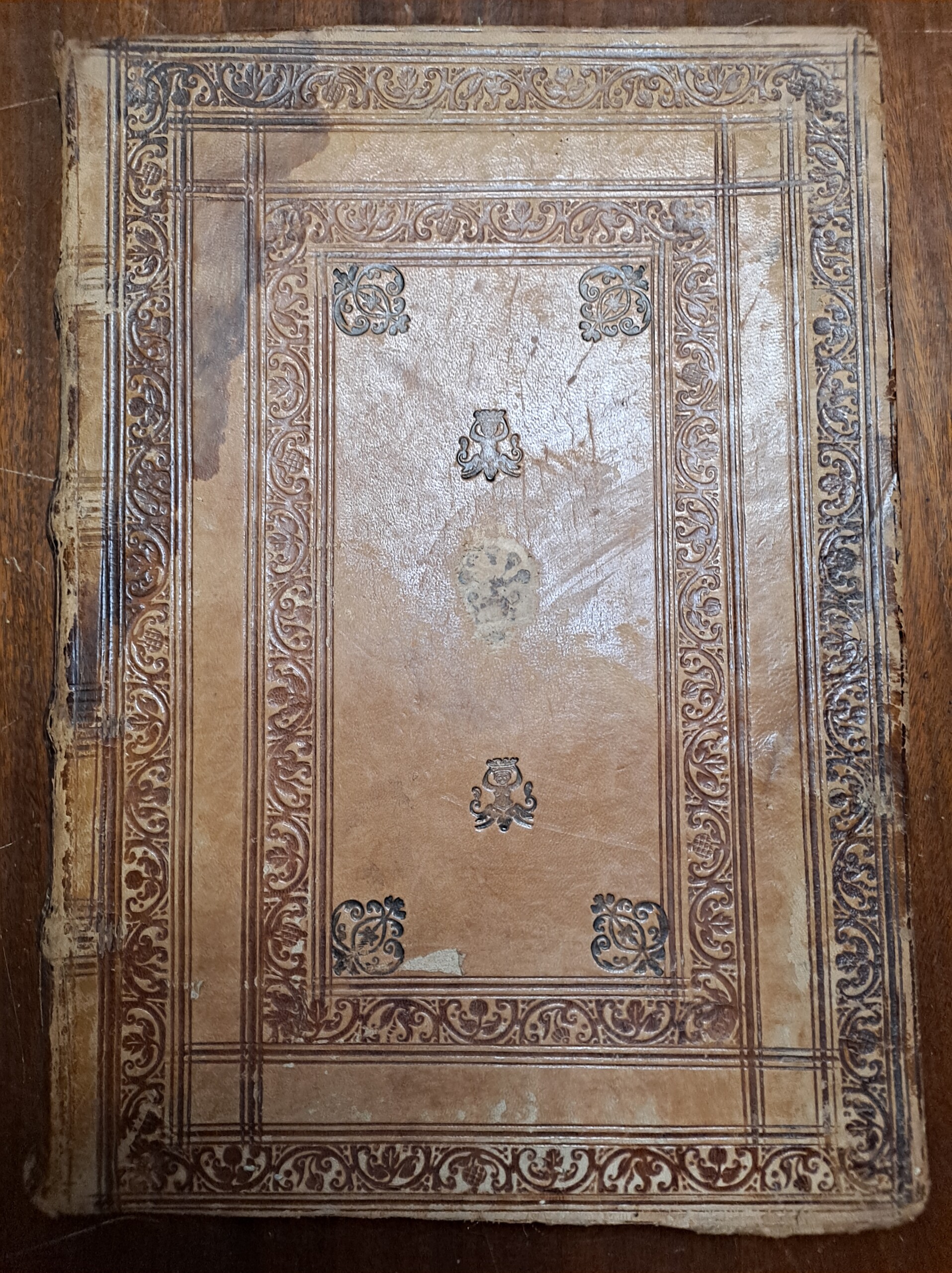
Plateresque binding
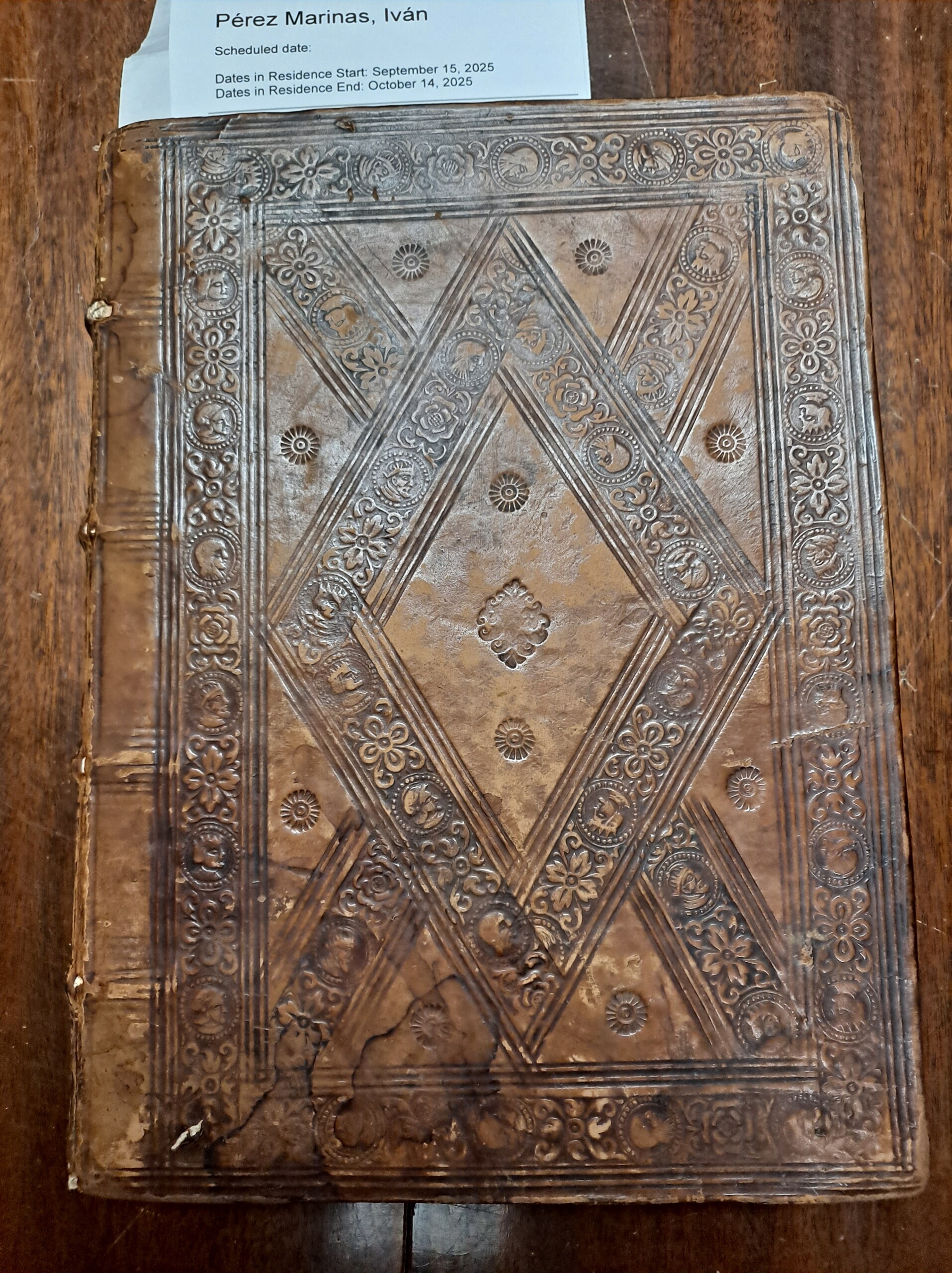
Plateresque binding with a diamond figure of rolls
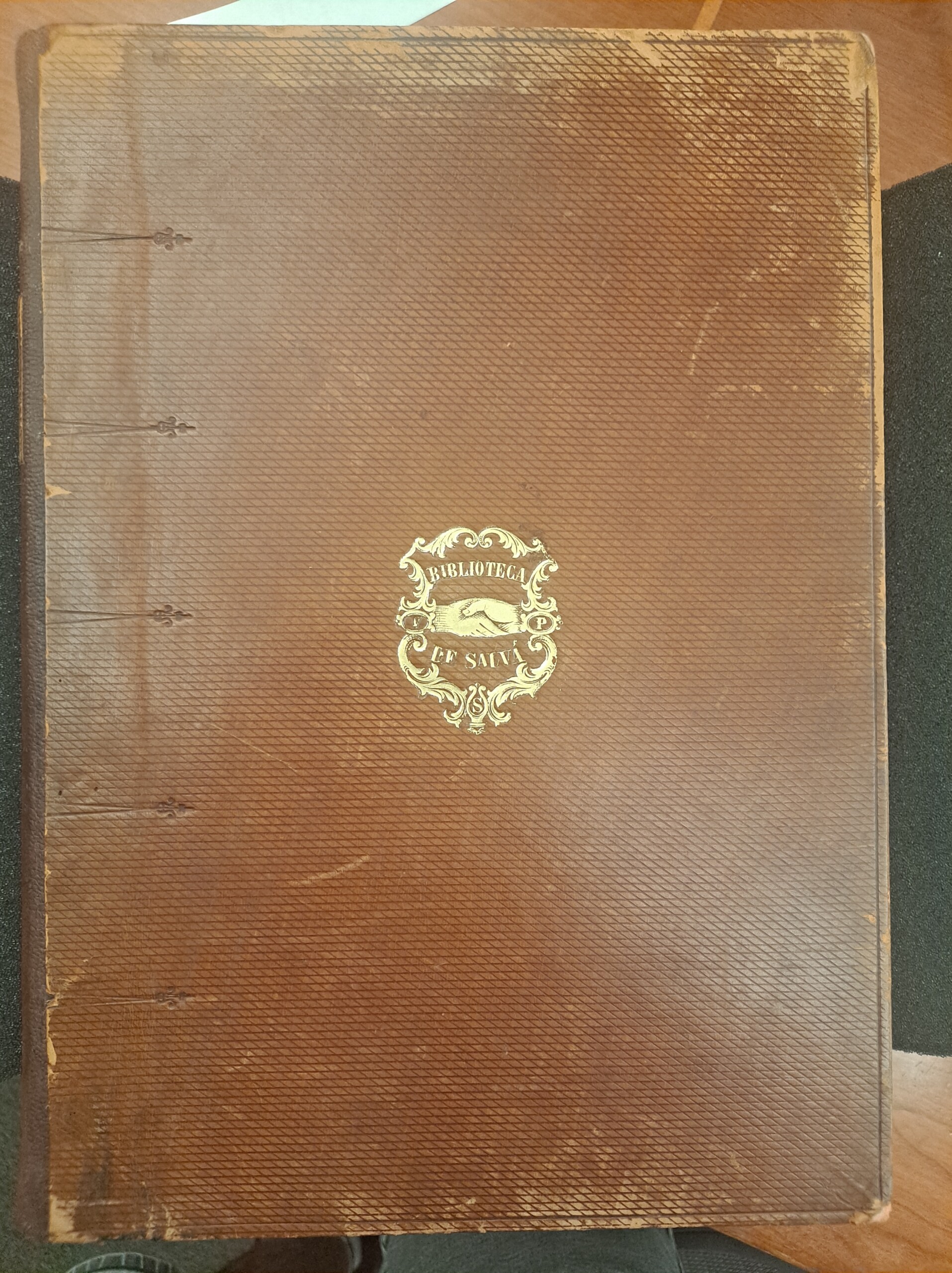
Diced Russia binding
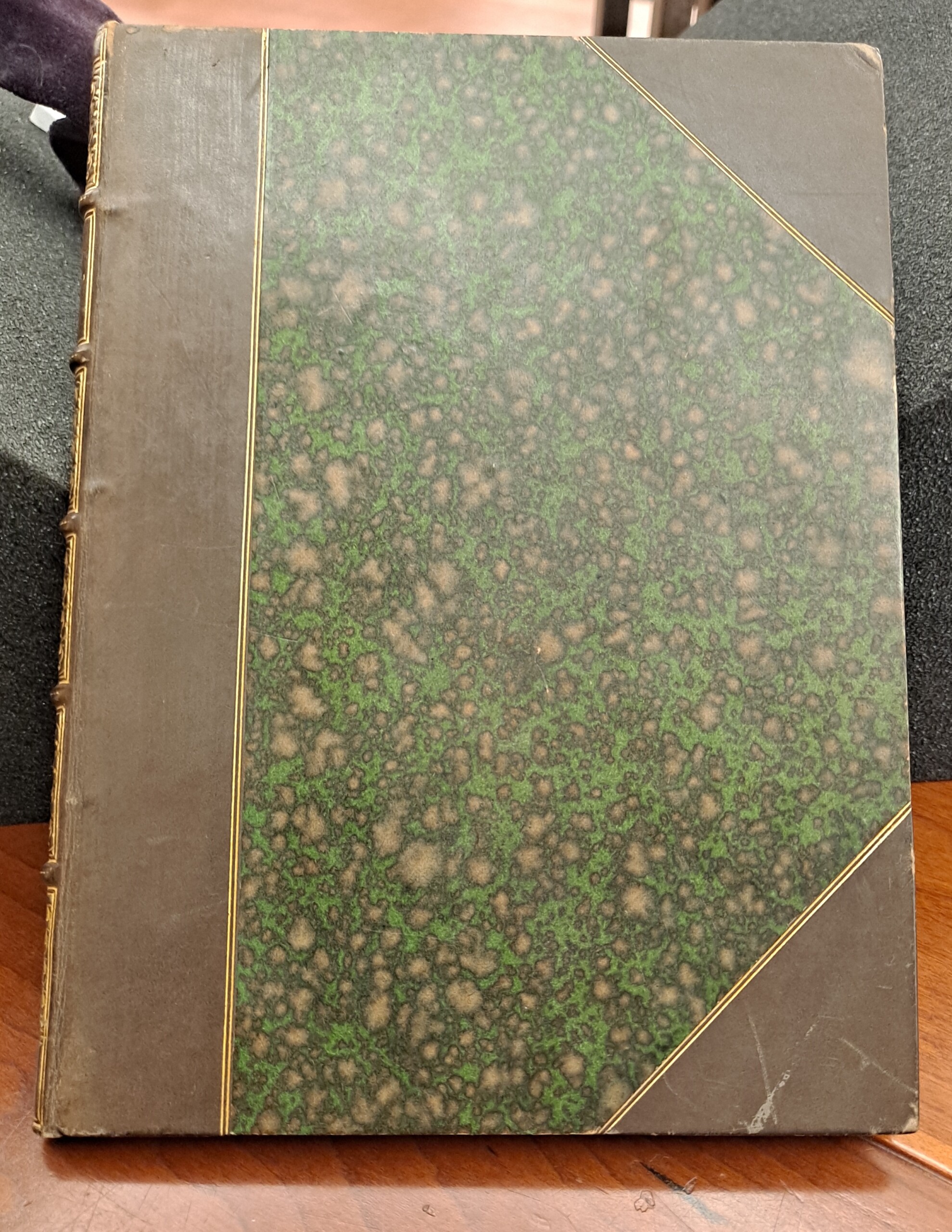
Ménard’s binding
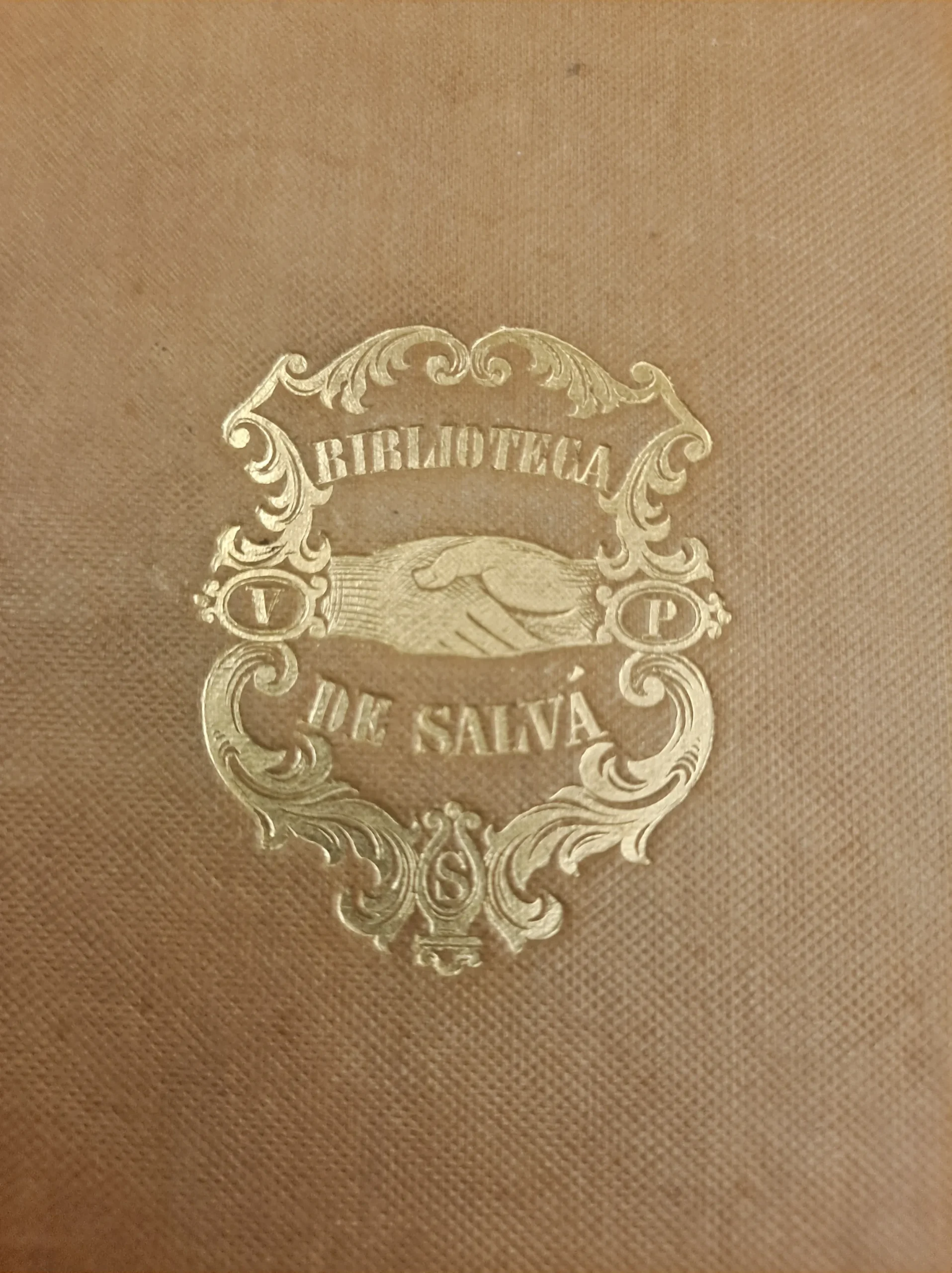
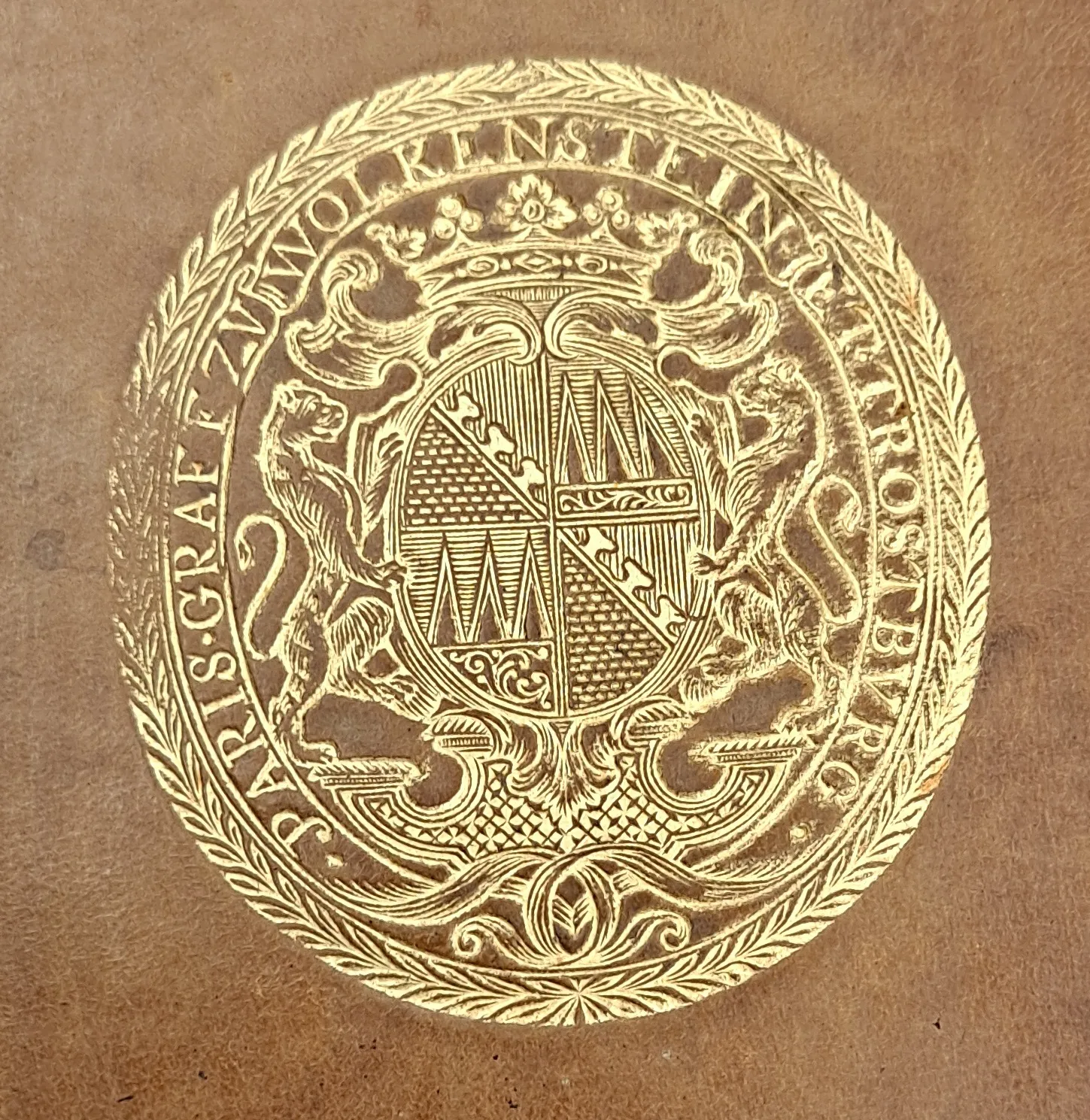
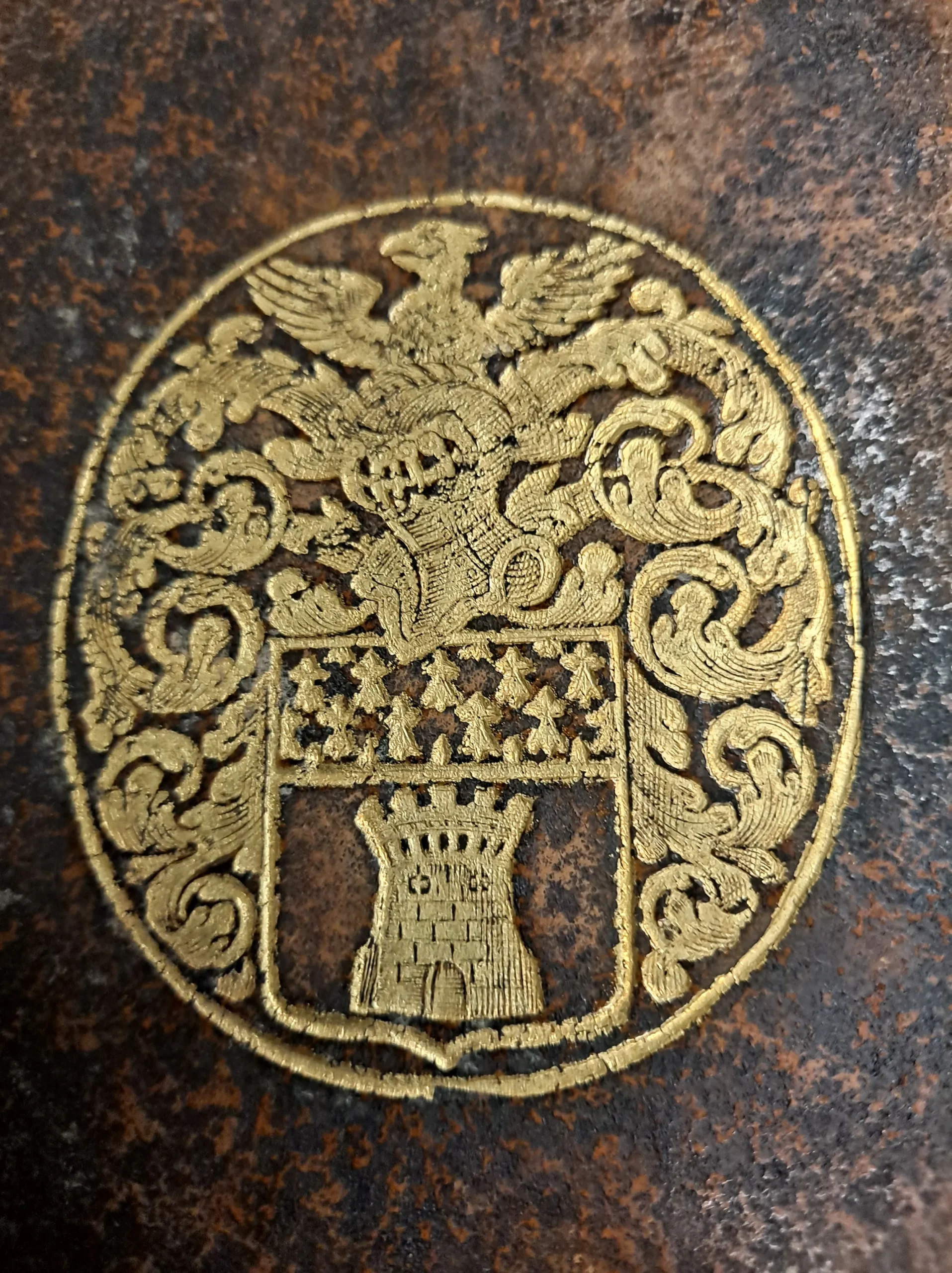
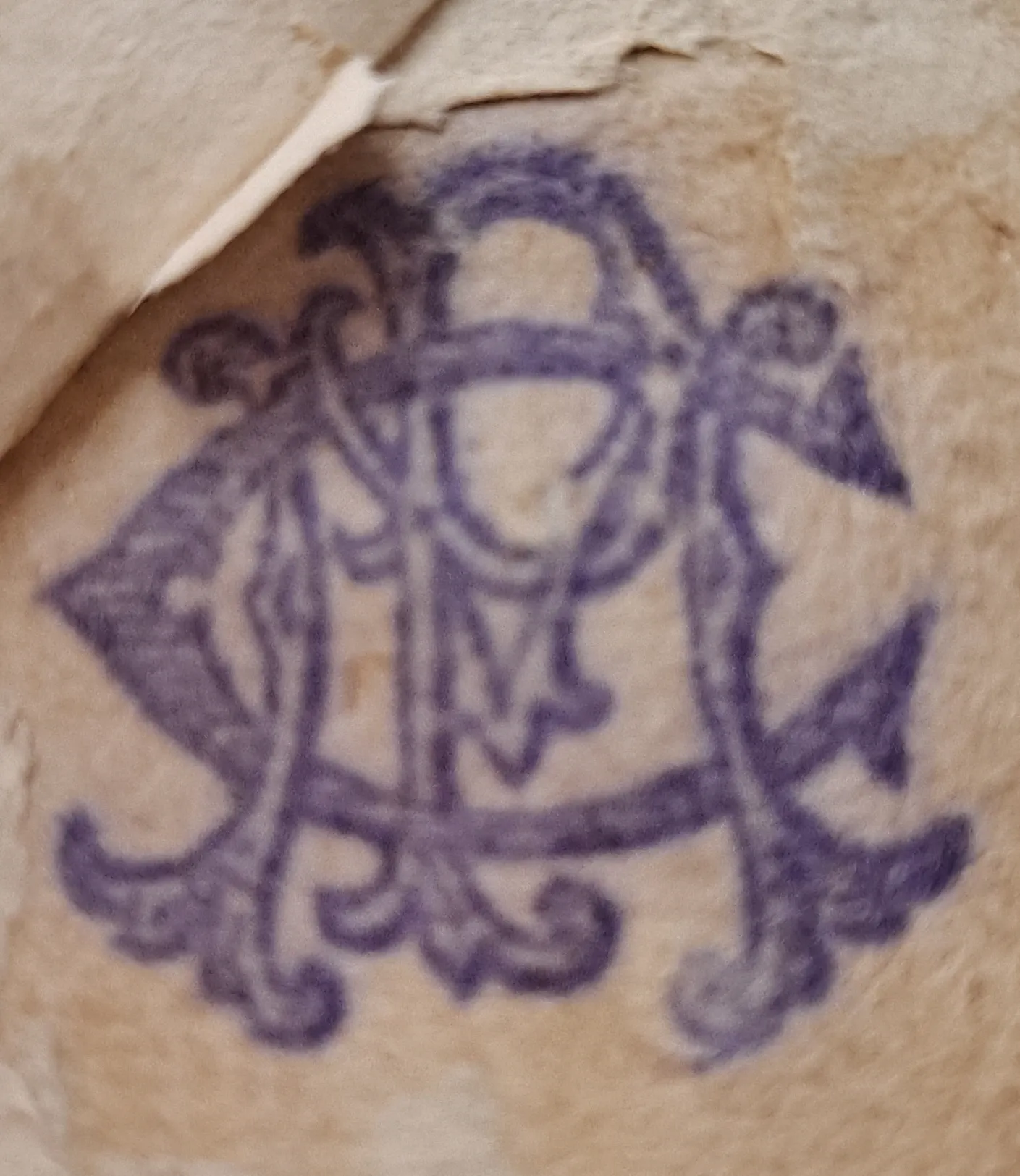
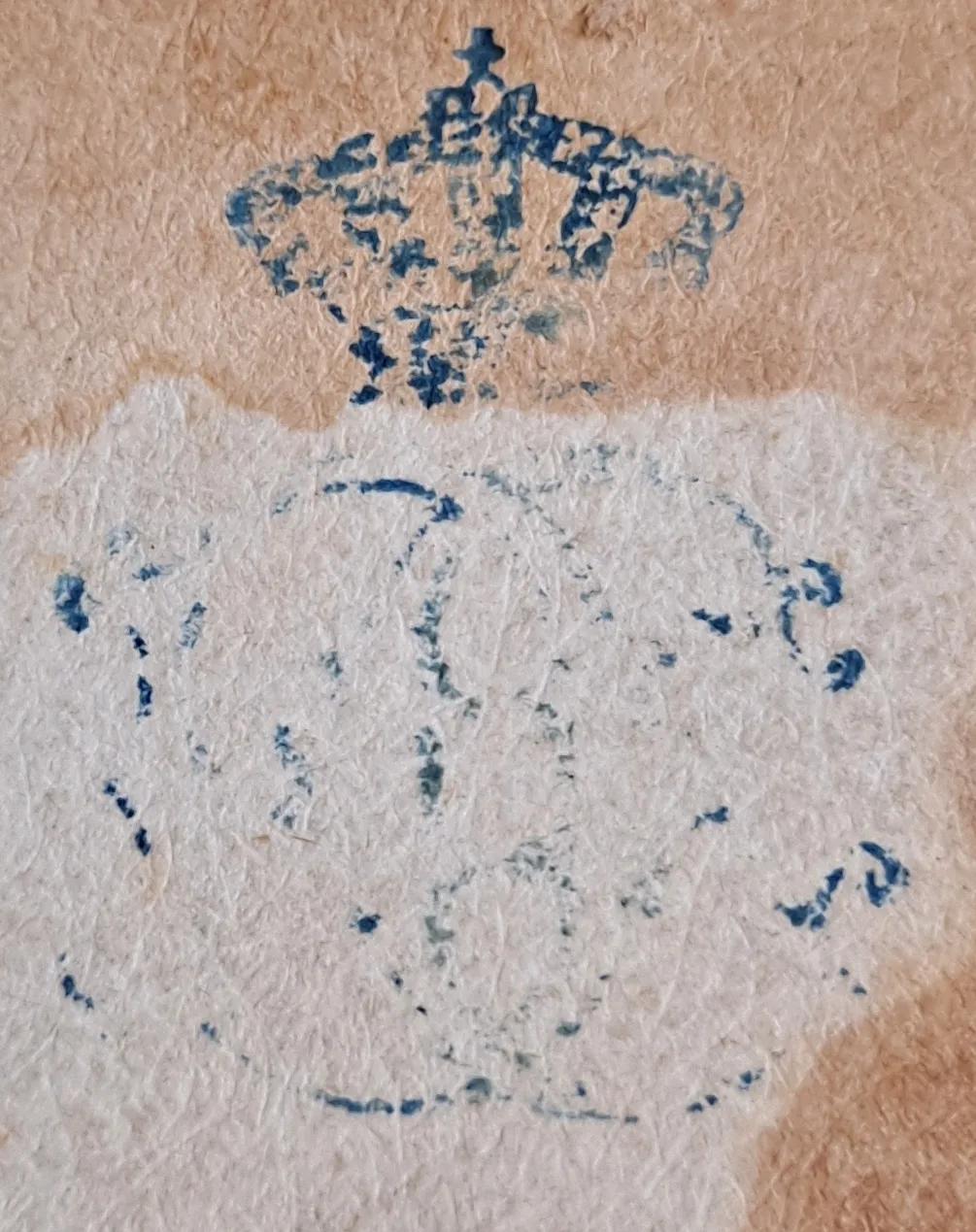
For the analysis of property marks (bookplates, supralibros and stamps), I used several Spanish databases of former owners, including one of the National Library of Spain. Due to this one, I could identify the supralibros of Vicente Salvá, from Valencia, which were together the bookplates of Ricardo de Heredia, from Madrid (HL, 84482 and 84486). Using other databases, I recognized the bookplates of Wilhem Richter, from Germany (HL, 84485); the supralibros of Henry Huth, from England (HL, 86168); the supralibros of Joaquín Gómez de la Cortina, from Mexico (HL, 43373); the monogram stamp of Joaquín Ibáñez García, from Teruel (HL, 91595, and OoI, 480); the bookplate of Juan Moncada y Centellas, from Spain (HL, 91595, and OoI, 00039313); the stamp of Joaquín Acosta, from Colombia (HL, 95549, and Ool, 00039235); the armorial supralibros of Anton Karl Simon von Wolkenstein-Trostburg, from Germany (HL, 86755, and OoI, 00039302); the bookplate and the stamp of the arquitect José Maria Nepomuceno, from Portugal (HL, 98570, and OoI, 00039379); and the label of the bookseller M. Murillo, from Madrid (HL, 97743, and OoI, 00039358). Thanks to an email query, the heraldist José María de Francisco, professor at the Universidad Complutense de Madrid, provided me the recognition of the armorial supralibros of Jacques Laugeois d’Imbercourt, from France (HL, 92501, and OoI, 00039183). Unfortunately, two monogram stamps were left without identification: a stamp with letters M, P and C, that was on two incunabula (HL, 93097 and 95876), and a crowned stamp with letters D and C (HL, 95872). If anyone recognizes them, please let me know.
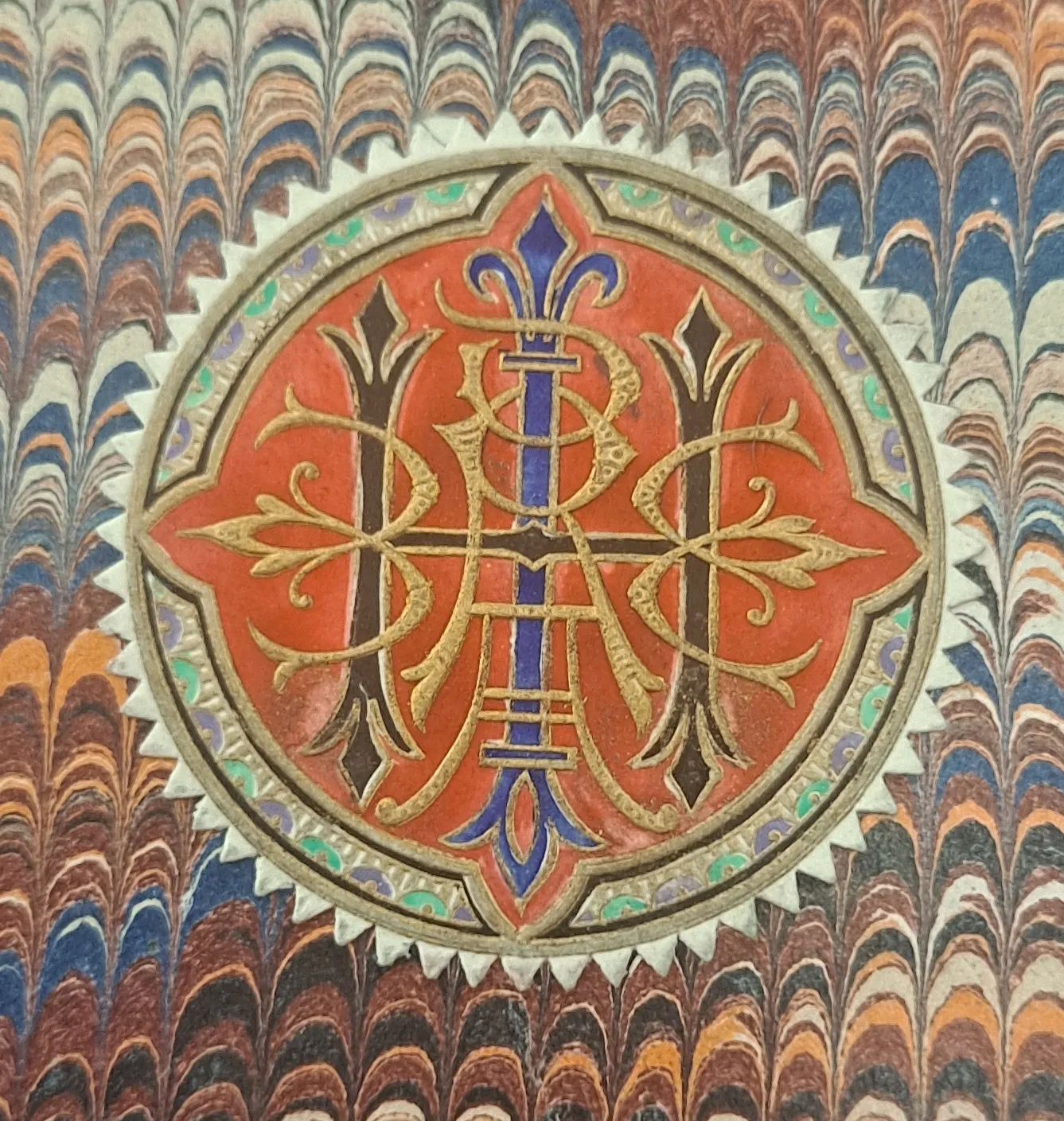
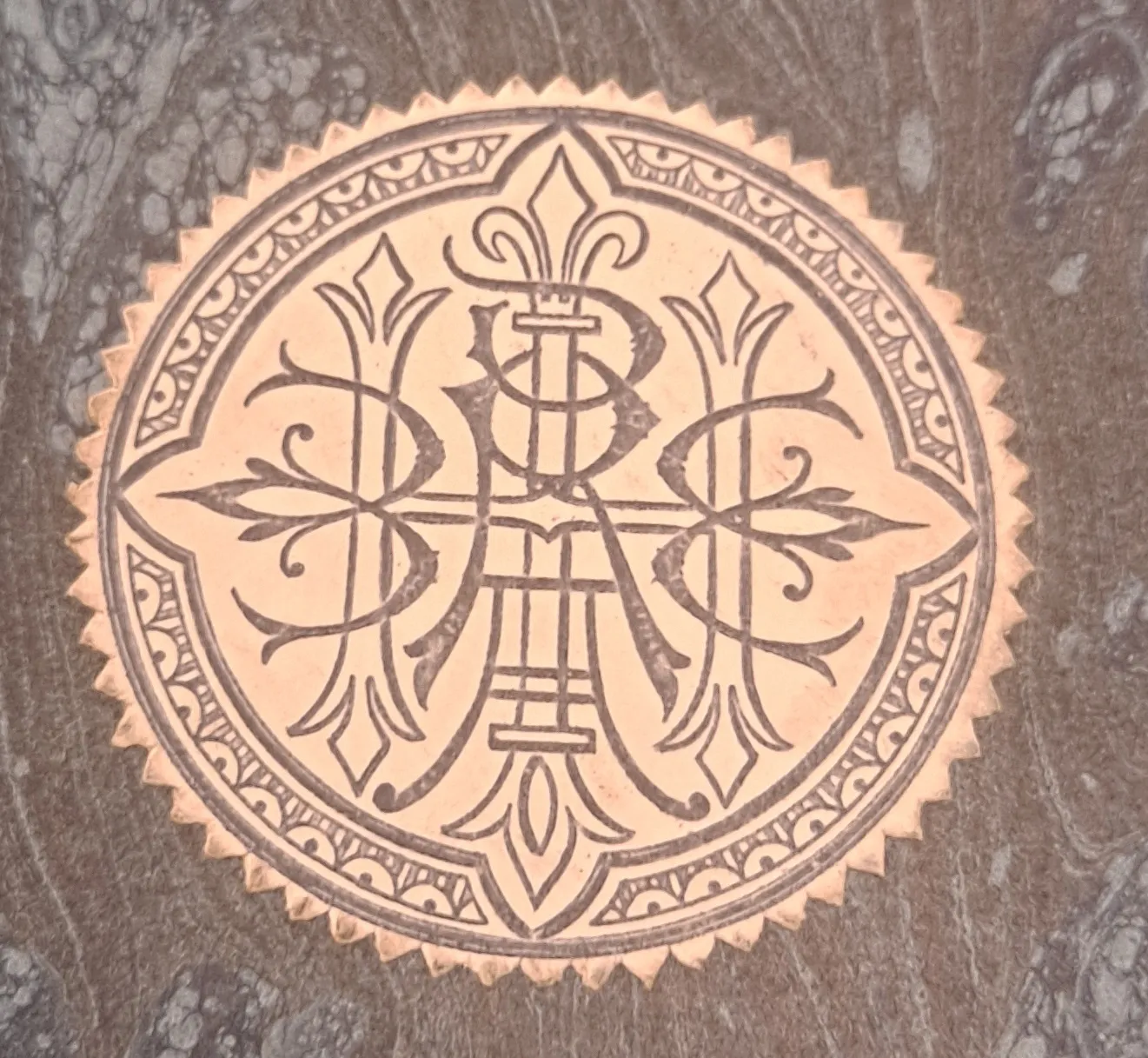
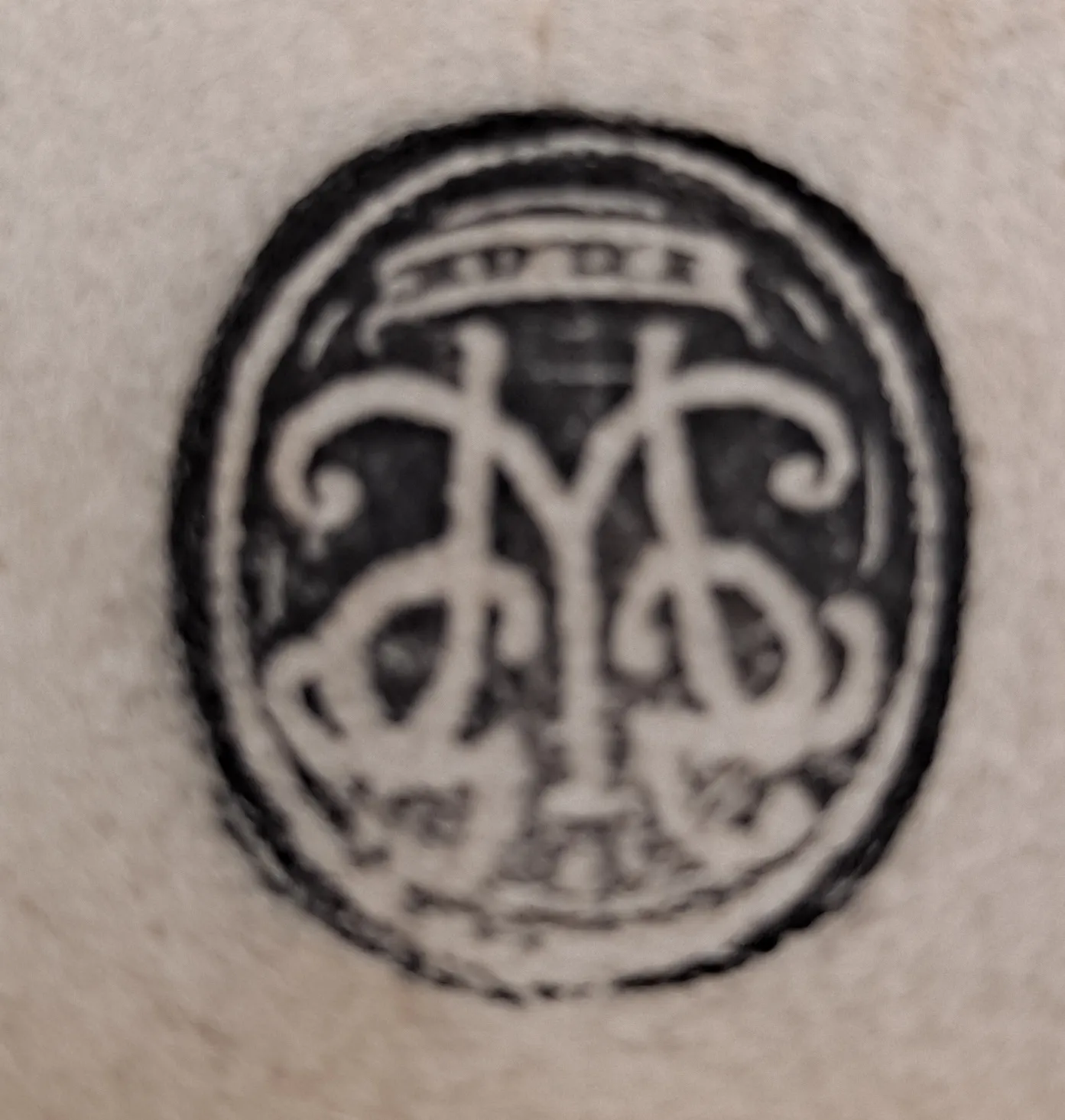
I could identify other former owners due to the palaeographic reading of inscriptions and signatures, with their own autograph names, such as Diego Luis de Motezuma, Jesuit and descendant of the Aztec Emperor Moctezuma II (HL, 84702, and OoI, 00039231); the first Count of Bertiandos, a Portuguese politician (HL, 98570, and OoI, 00039378); and the unknown Francisco de Gallardo (HL, 86168), José Antonio Torraquemada (HL, 89949), and Benito Hores Calderón (HL, 95876); as well the names of currently extinct monastic communities, such as the Franciscan monastery in Arévalo (HL, 93097, and OoI, 00039300) and the Hieronymites monastery in Belém, Lisbon (HL, 97743, and OoI, 00039357).
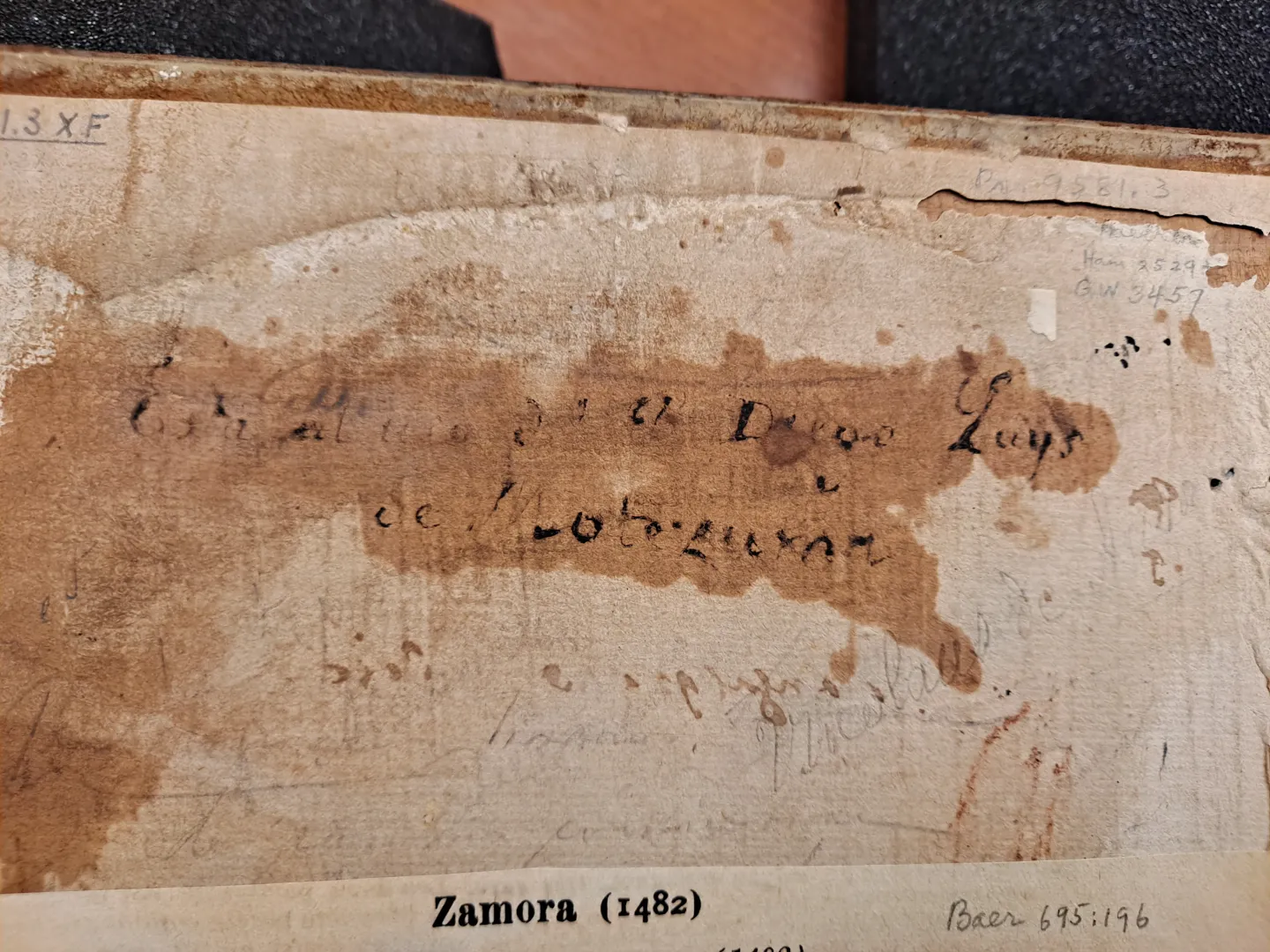
Autograph inscription of Diego Luis de Motezuma
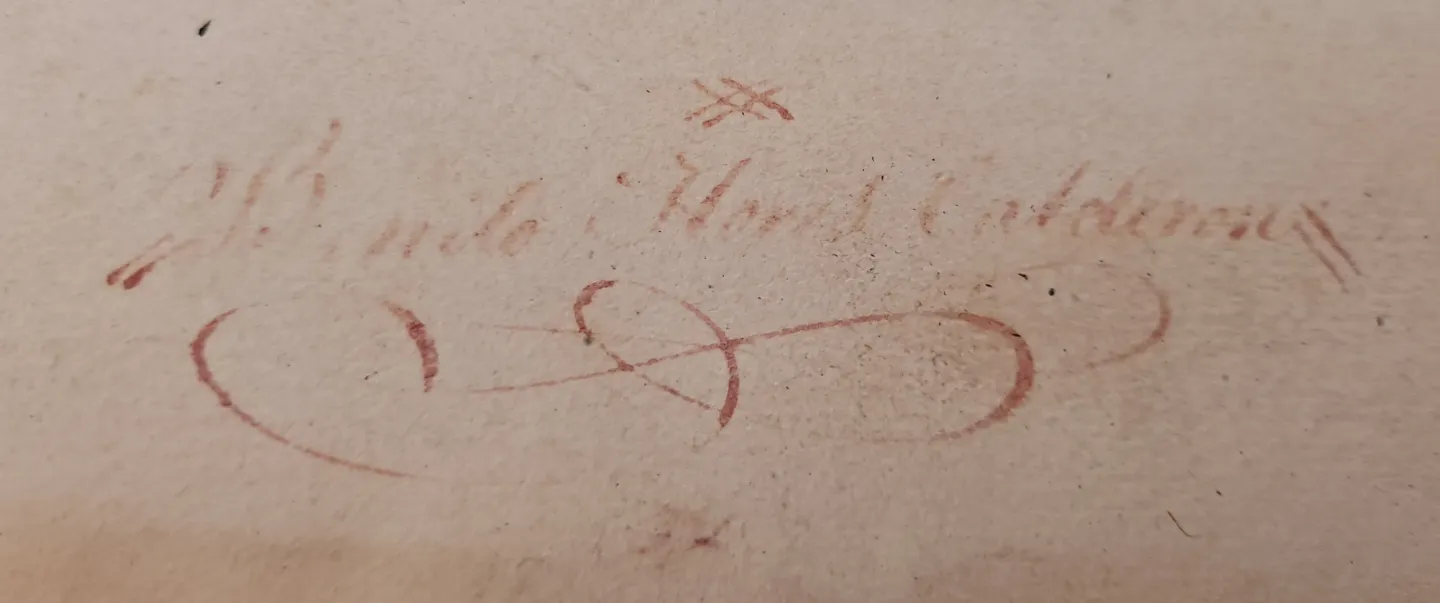
Autograph signature of Benito Hores Calderón
As it is typical in rare books, marginal sketches and drawings cannot be missing. On the one hand, some sketches were hilarious, such as the bust of a furry, long-nosed man, or creature, with a peaked cap, that was in Ordenanzas reales of Alonso Díaz de Montalvo (HL, 92561); but some of them were also natural and ordinary, such as the animals, faces and swordmen drawn on Claros varones of Fernando del Pulgar (HL, 95549). On the other hand, drawings are labored representations of mythical places from the Judeo-Christian tradition (town of Enoch and Tower of Babel) and contemporary locations in Catalonia (monastery of Pedralbes, Tarragona, Urgell or Vic, the bay of Barcelona), as well the arms of the Aragonese Queen Juana Enríquez, and they were made as complements of the text of Histories e conquestes de Cathalunya of Pere Tomic (HL, 84480).
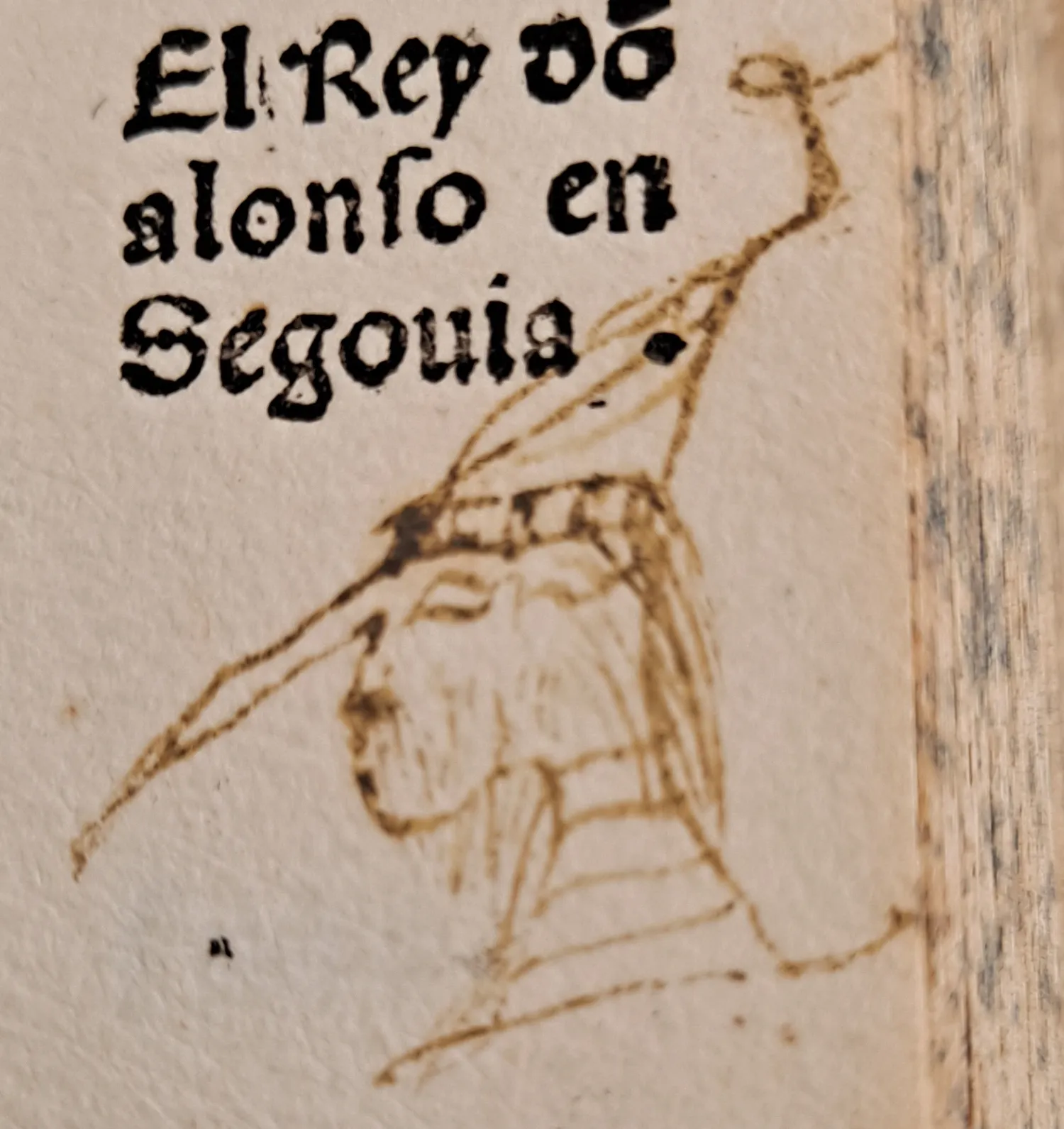
Sketch of a beard man or creature
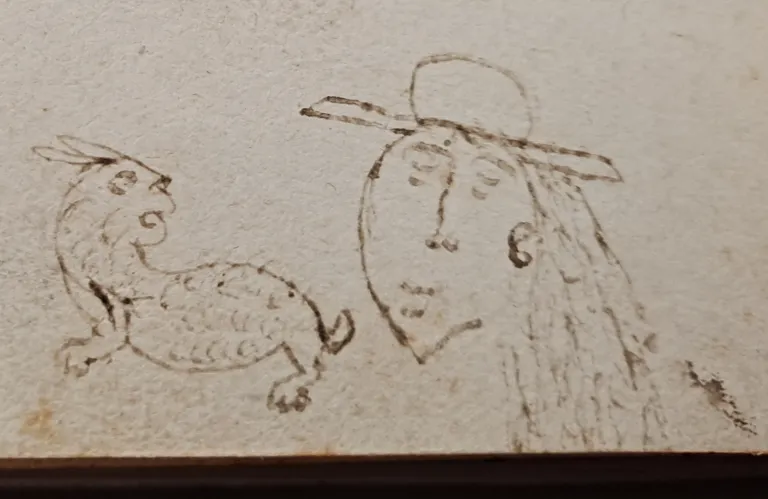
Sketches of a rabbit and a man’s head with hat
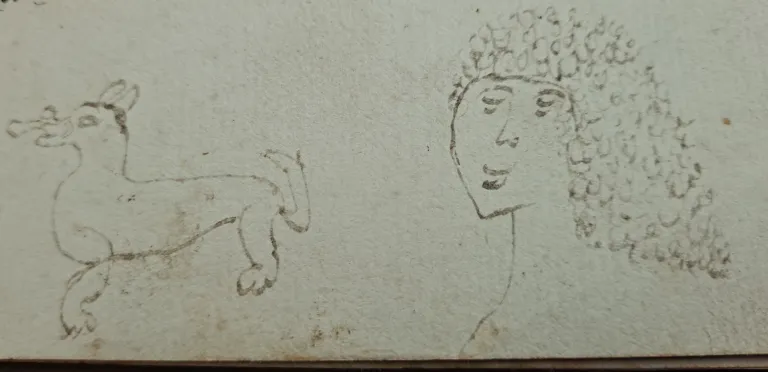
Sketches of a dog and a woman’s head with curly hair
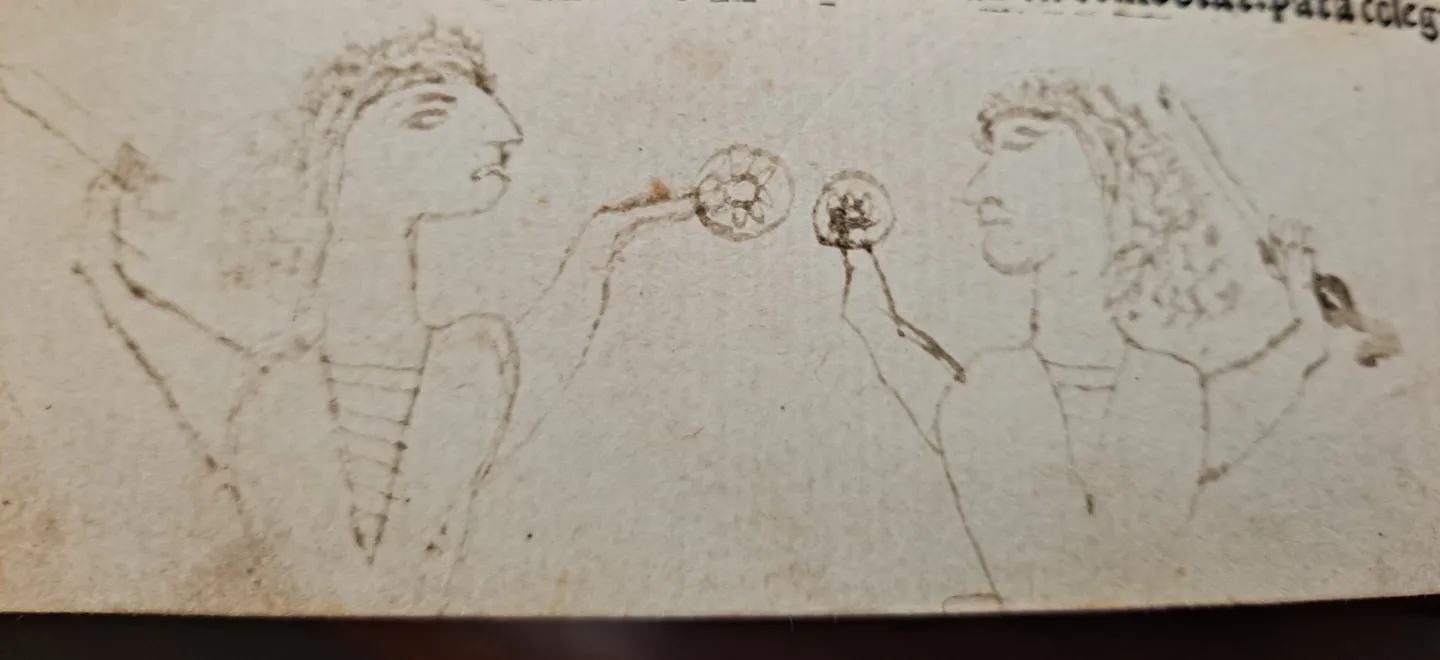
Sketch of two swordsmen
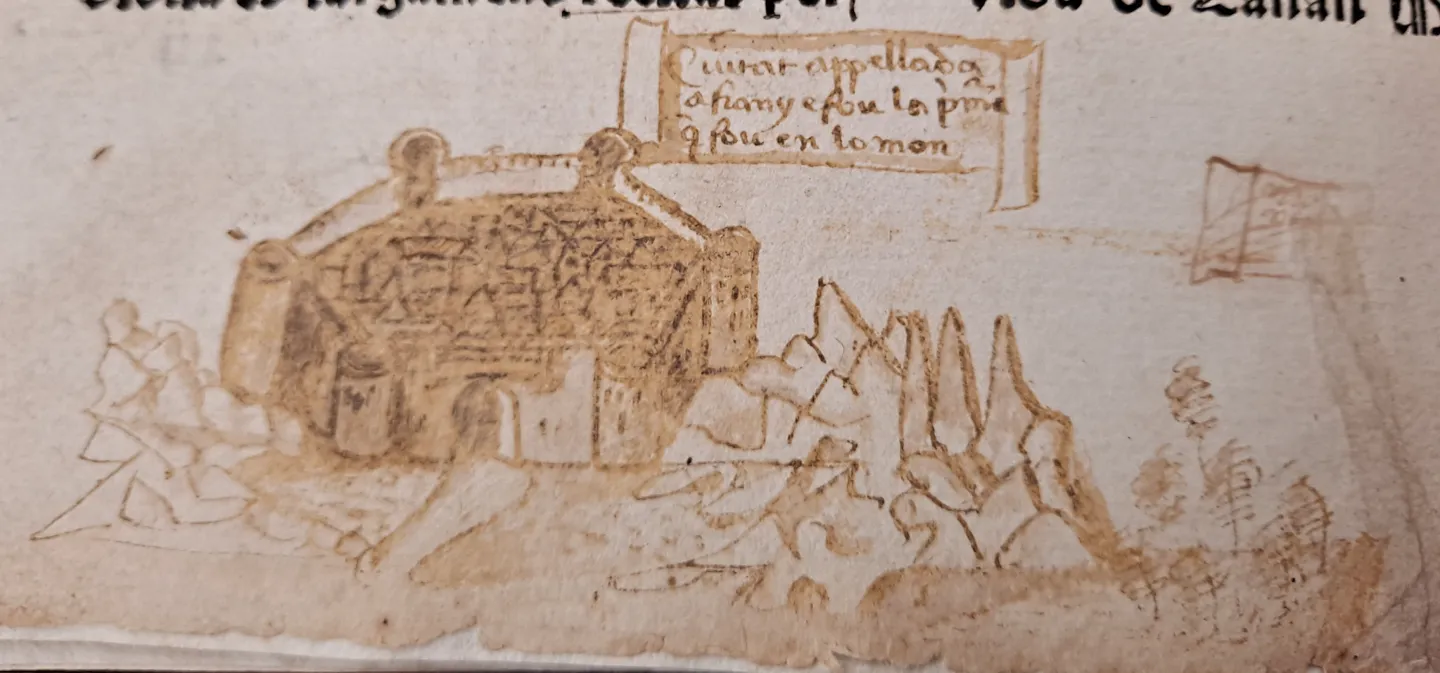
Drawing of Enoch
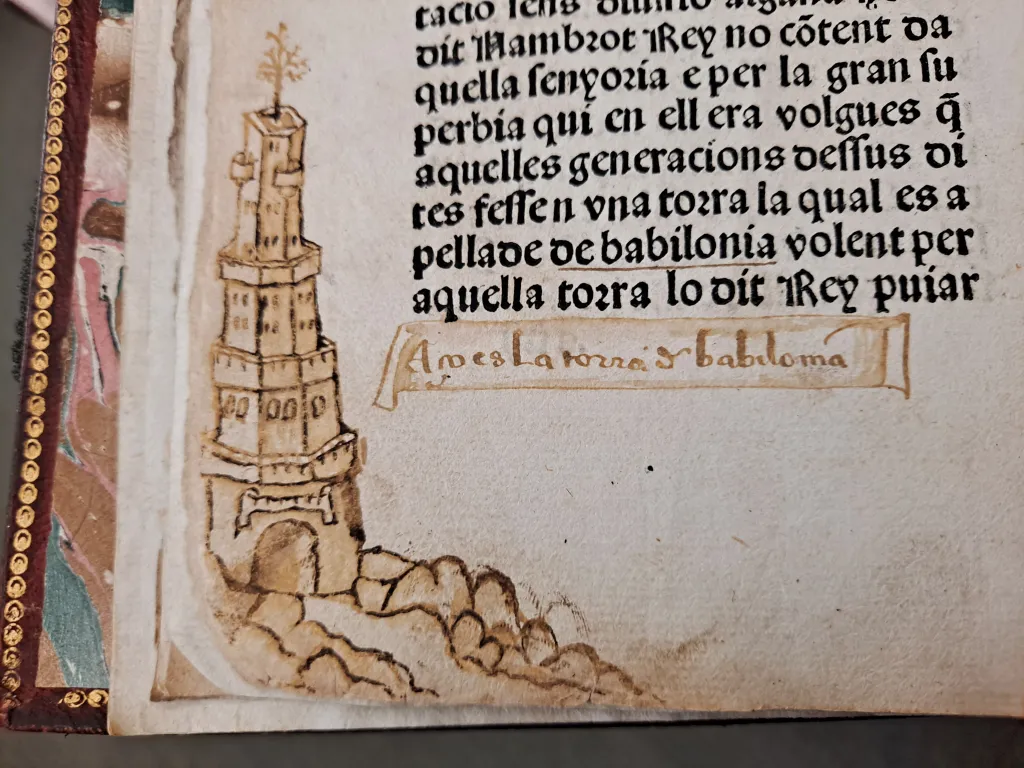
Drawing of Tower of Babel
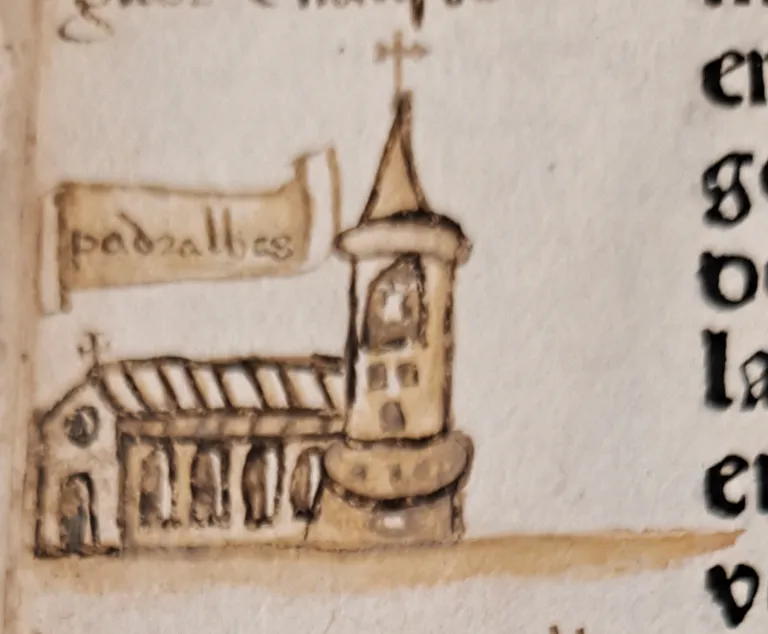
Drawing of monastery of Pedralbes
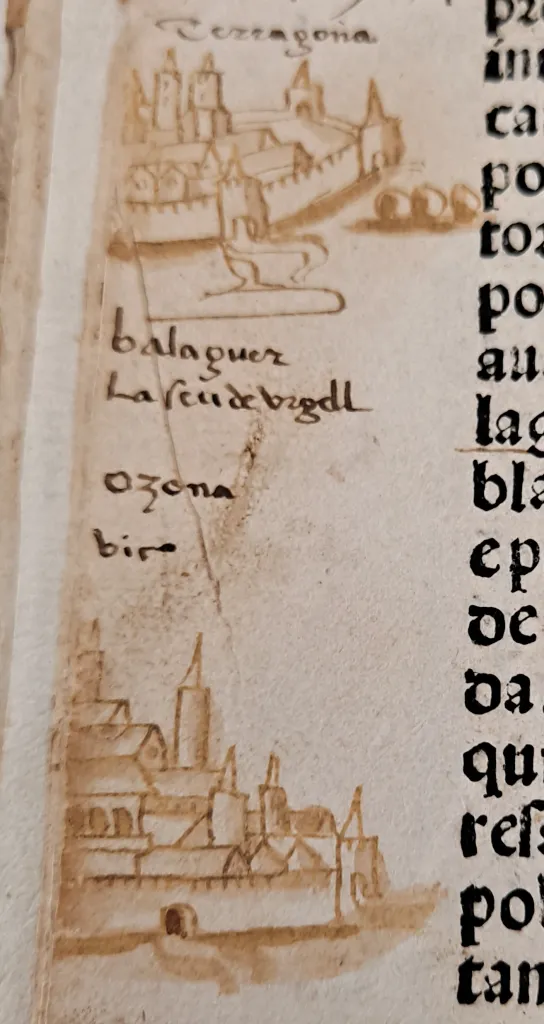
Drawing of Tarragona and Urgell or Vic
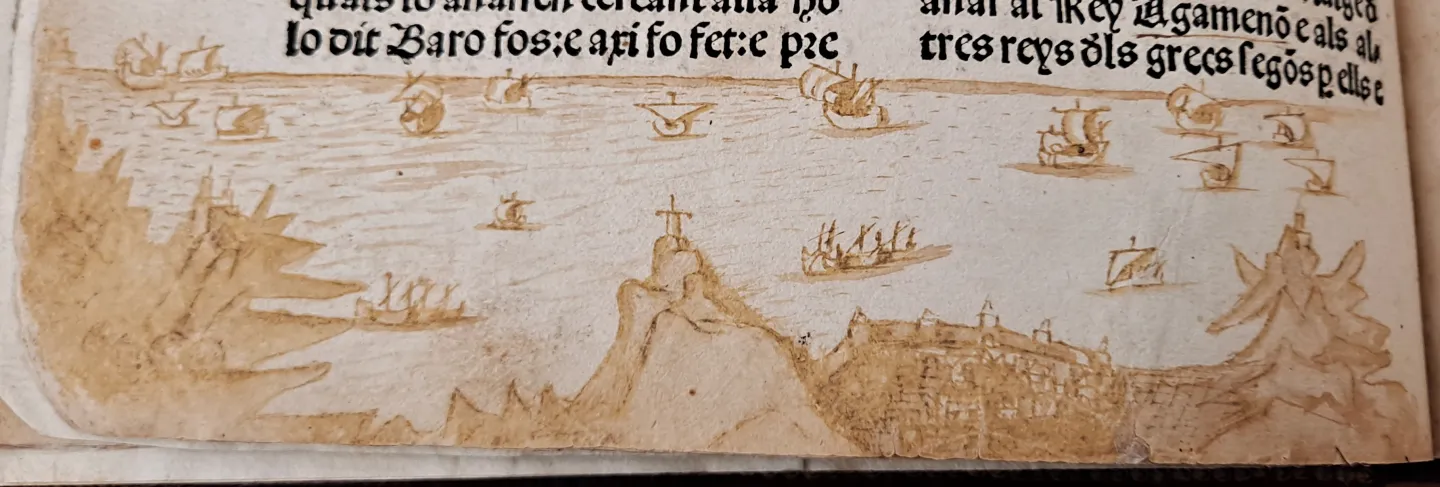
Drawing of bay of Barcelona
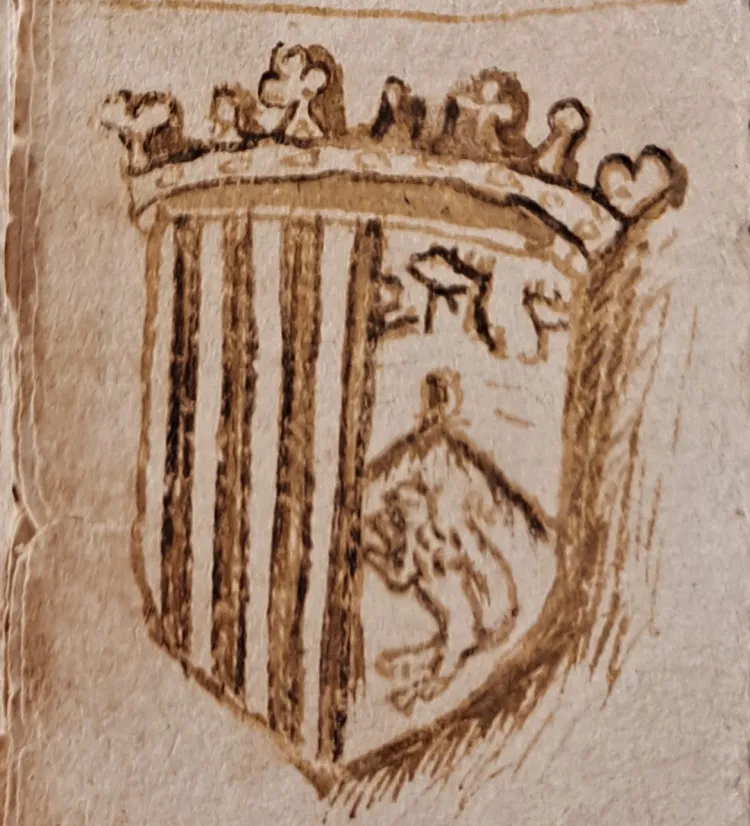
Drawing of arms of Queen Juana Enríquez
These Spanish incunabula also provided interesting curiosities. Thus, in a marginal comment on a historical event of Life of illustrious men of Plutarch (HL, 94929), someone wrote, in a 16th century script, one of the first evidences of the Spanish proverb “Al enemigo, puente de plata” (To the enemy, a silver bridge), attributed to the Captain Gonzalo Fernández de Córdoba. In addition, inside an incunabulum (HL, 89949), I found an old paperclip, made of a reused parchment, and designed to be used as a bookmark. Furthermore, there was correspondence together with two incunabula, such as, to make me feel at home, a 1910 postcard from the secretary of the National Library of Spain, Álvaro Gil Albacete, addressed to Libraire Ancienne Leo S. Olschki (HL, 84482), and such as, nothing more and nothing less, a signed autograph letter from the famous incunabulist Konrad Haebler (HL, 86659).
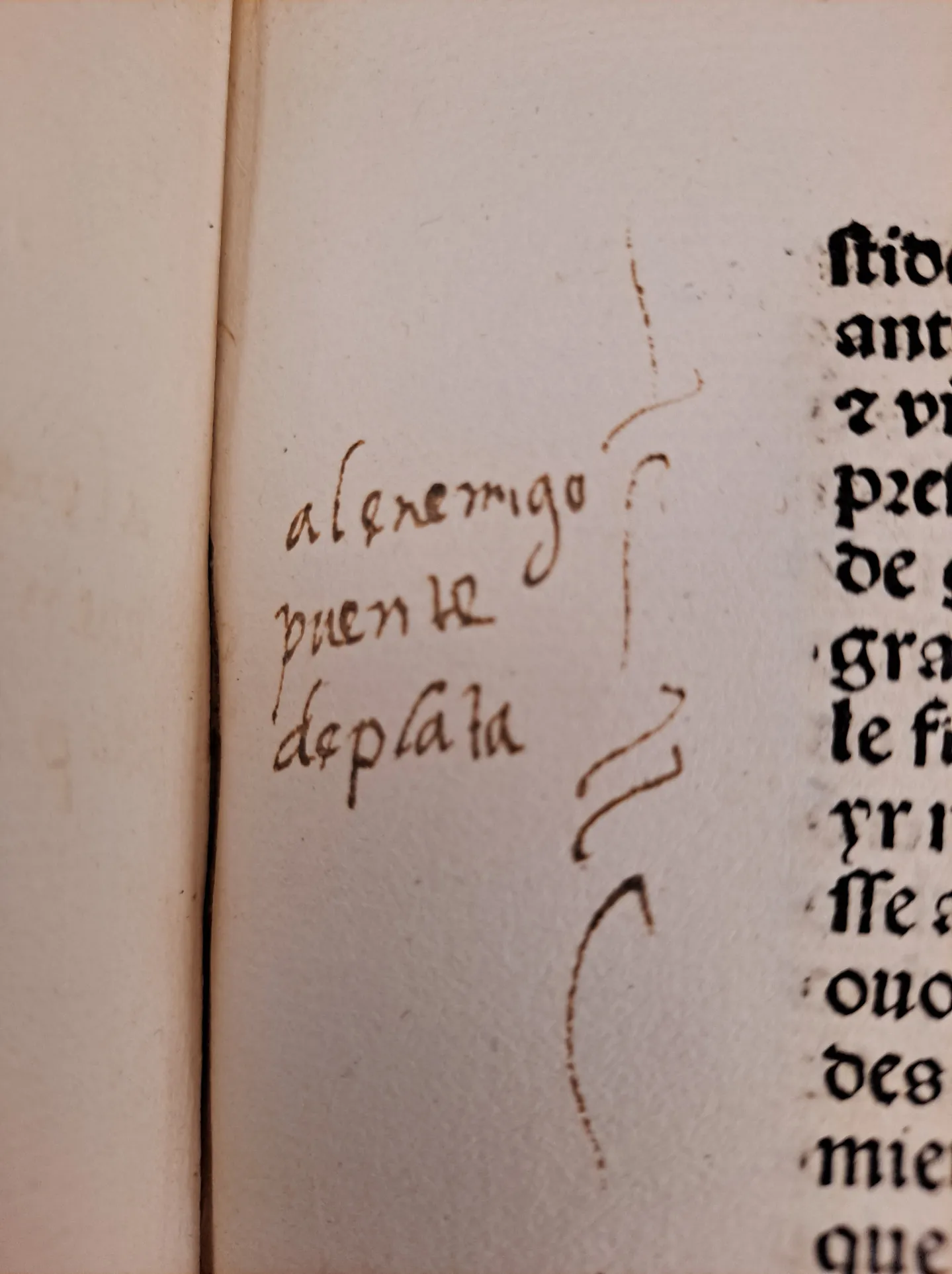
Spanish proverb ‘Al enemigo, puente de plata’
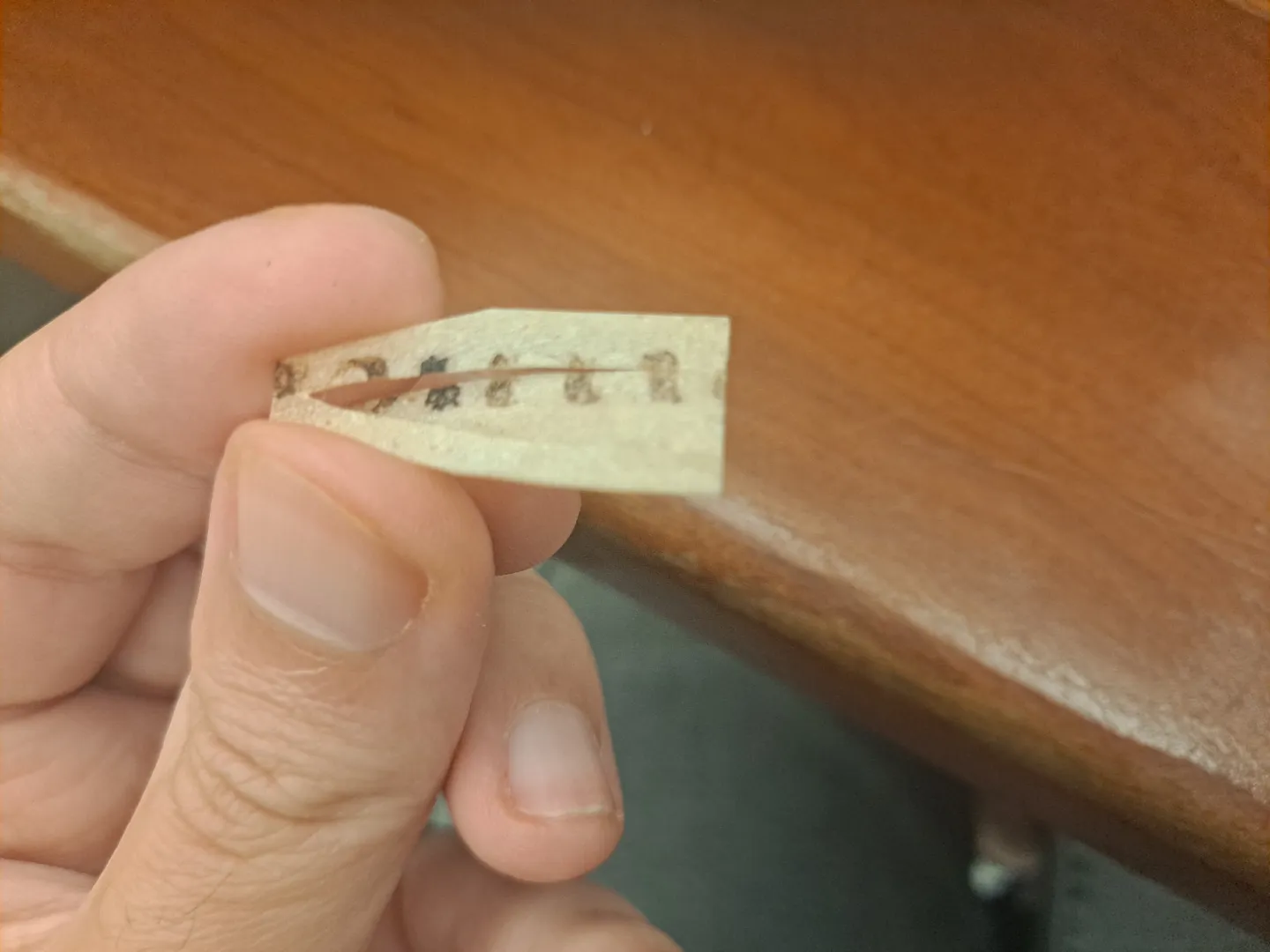
Parchment paperclip
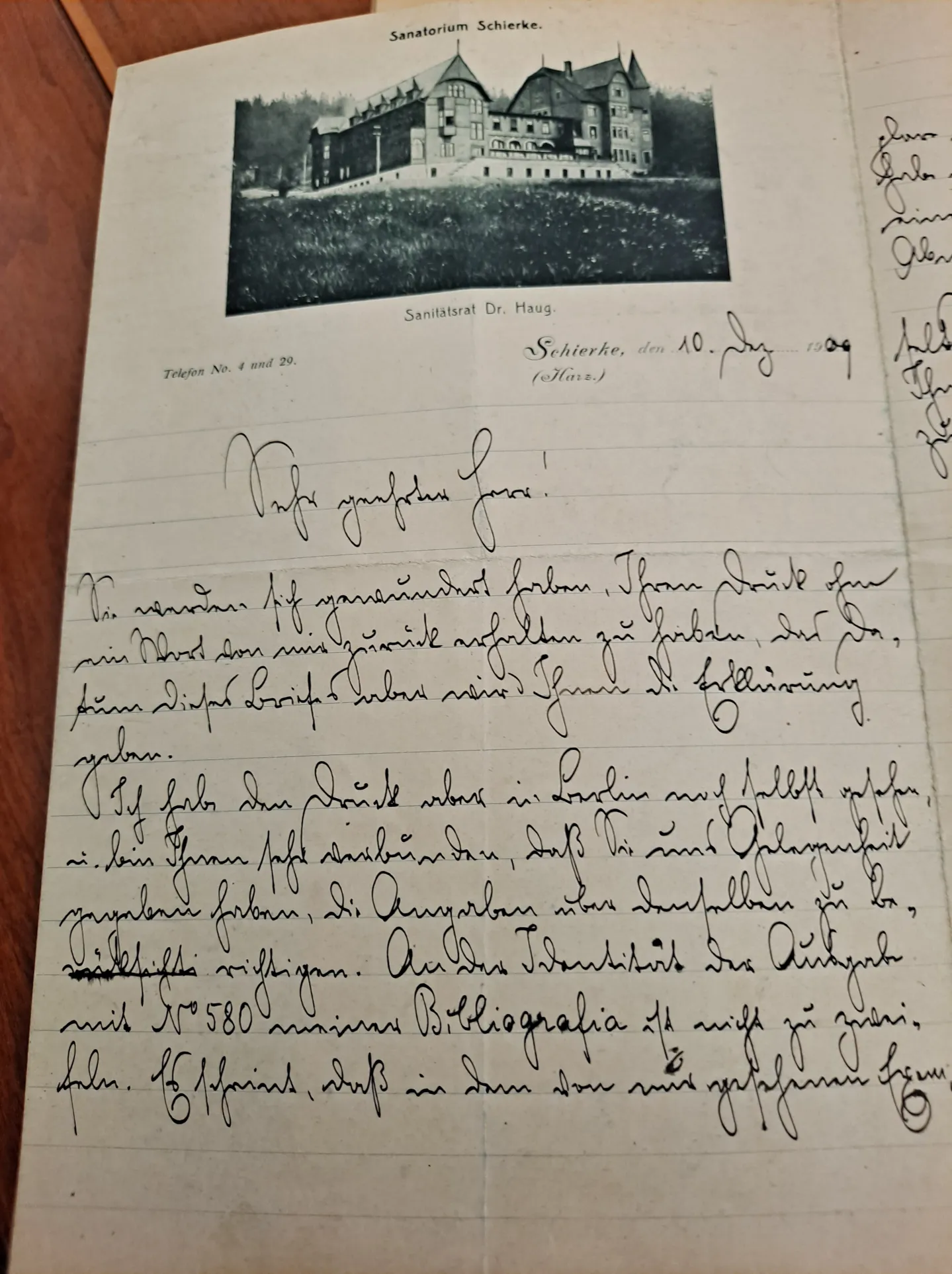
Haebler’s letter
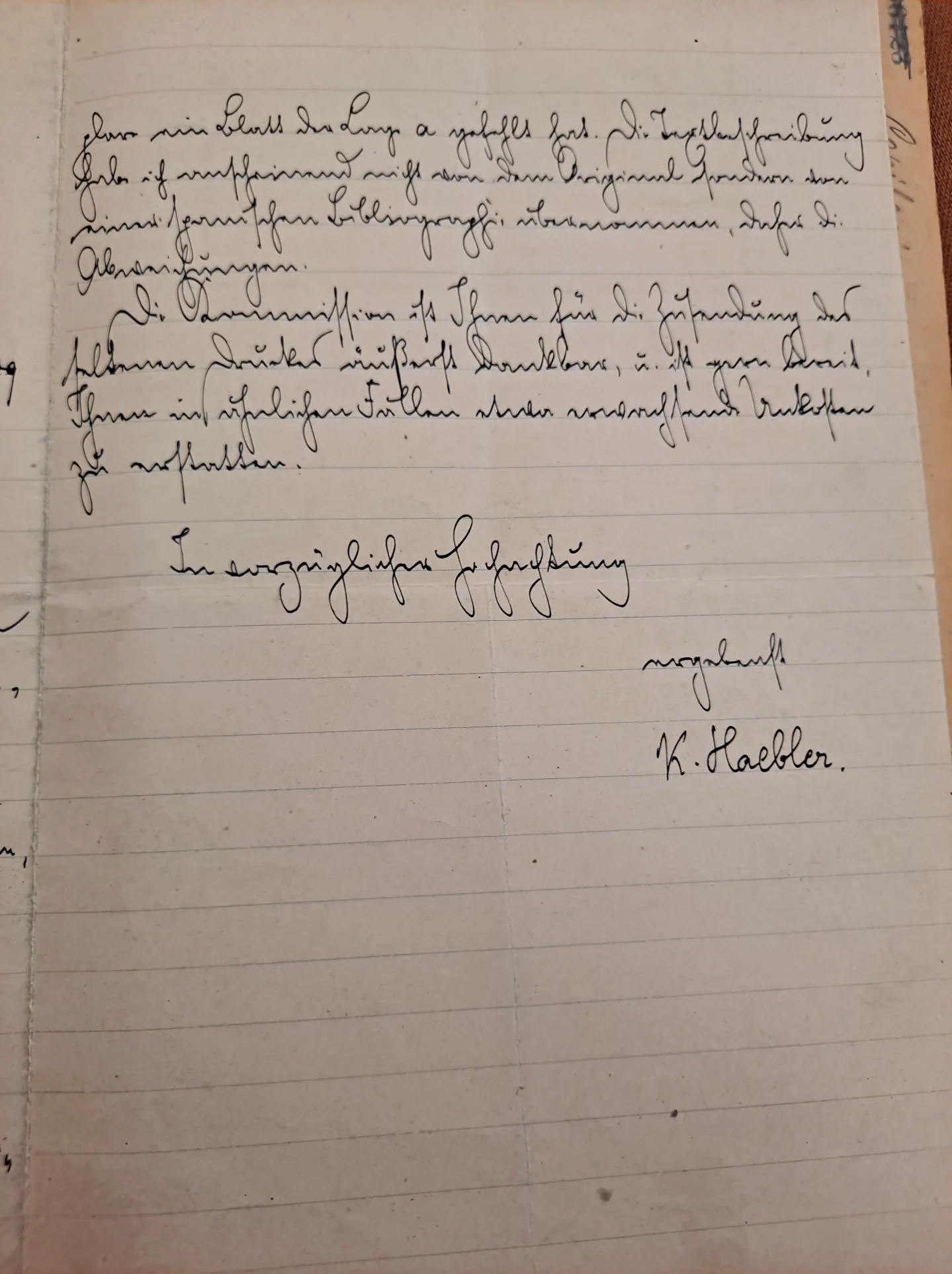
Haebler’s letter
In addition to developing MEI and promoting knowledge on Spanish bibliographic heritage, I could visit the conservation and restoration workshop at the Huntington Library, thanks to Stephen Tabor. There the conservator Mitchell Gundrum showed and explained to me the devices and tools they use daily, and I was also talking with the conservator Verónica Mercado Oliveras about “cartas ejecutorias de hidalguía” (executory charters of nobility), both in their contents and their bindings.
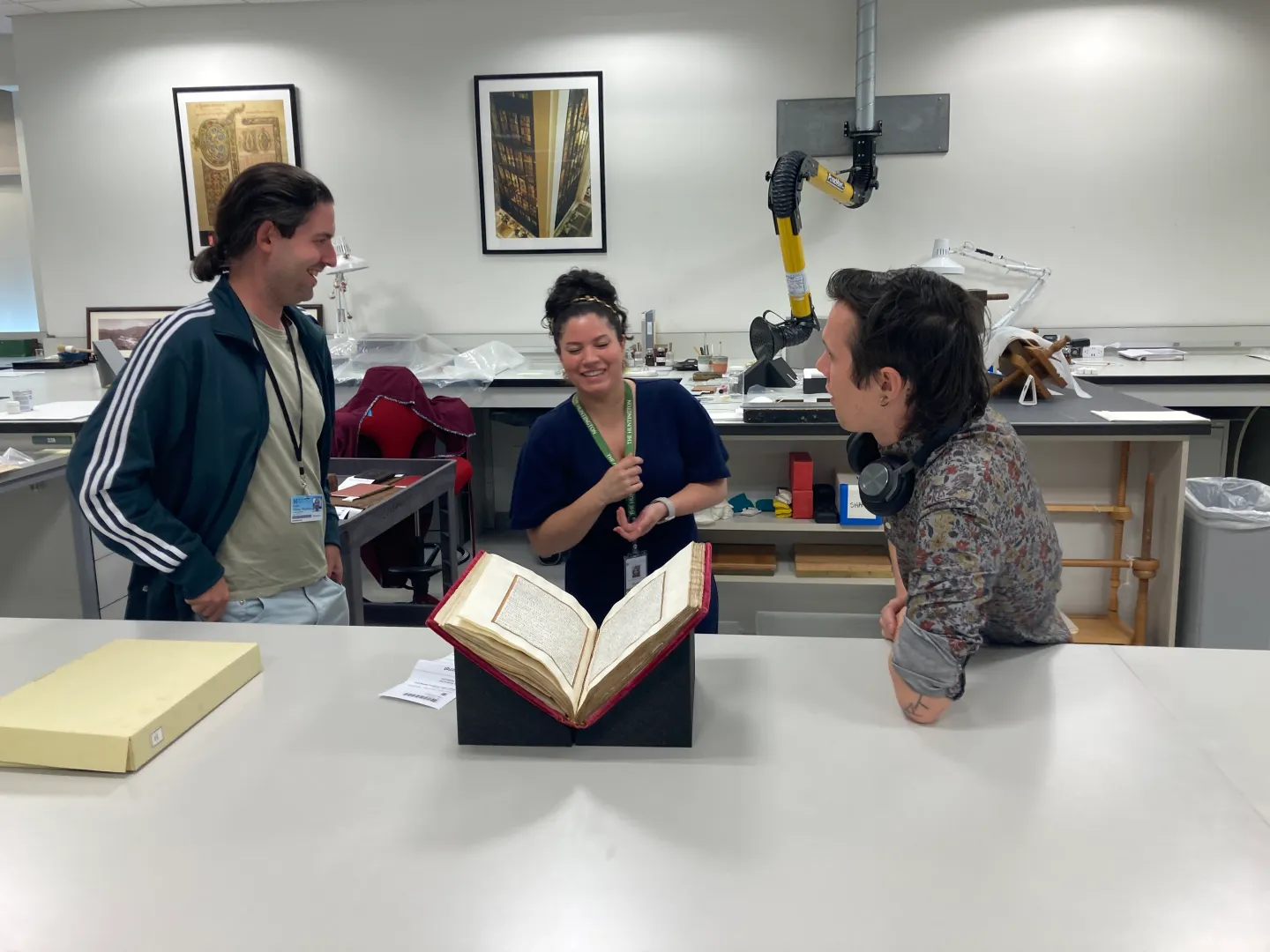
Visit to Conservation Workshop with Verónica Mercado Oliveras and Mitchel Gundrum
Unfortunately, due to its temporary closure for improving works, I couldn’t visit the Exhibition Hall at the Huntington Library, which was the original reading room of the library, opened in 1920. Instead, in my free time on the weekend I toured the various and highly recommended botanical gardens on the large grounds of The Huntington.
Finally, now I must do the last mission for which I was granted by CERL: to train into MEI to my colleagues from the Service of Manuscripts and Incunabula at the National Library of Spain. So, we will continue our contribution to the MEI project, since we will try to add and improve several records each year of the copies of the Incunabula Collection of the National Library of Spain.
Related articles
by Markéta Kučerová and Vojtěch Šícha, Library of the Czech Academy of Sciences
November 9, 2026
by Konrad K. Szymański (Ossolineum National Library, Wrocław)
November 9, 2026