Cosmas’ Chronicle and his sources – towards an exhibition
by Tomáš Klimek, National Library of the Czech Republic
Share this article
This year marks the 900th anniversary of the death of the first Czech chronicler, Cosmas, who served as dean of the Prague chapter and died in 1125. His life’s work, the Chronicle of the Czechs, written towards the end of his long life, is the earliest known account of Czech history. And without exaggeration, we can say that Cosmas didn’t merely record history – he helped shape it. In his book, he set out the significance of the Czech lands within Christian Europe and laid the foundations for a coherent narrative of Czech history, thus playing a key role in integrating Czech society into Latin (Western) culture.

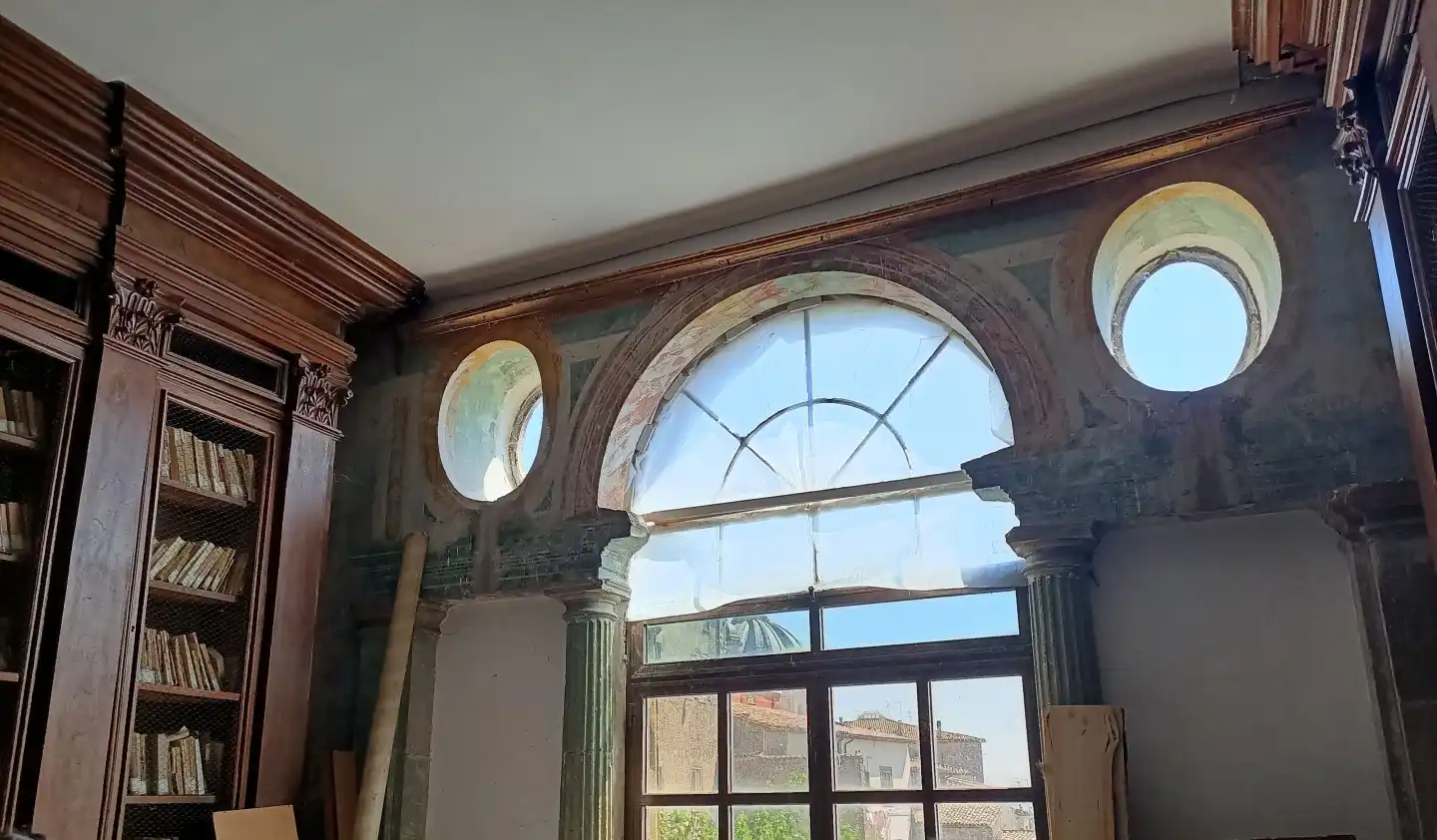
Cosmas’ Chronicle of the Czechs, written in the early 1120s, is the most important contemporary source for the history of early medieval Bohemia. To mark this major anniversary of Czech literary culture – Czech not in the narrow sense of language, since Cosmas wrote in Latin – the National Library of the Czech Republic is organising the exhibition Cosmas 900. For the first time in history, manuscripts preserving the text of Cosmas’s chronicle, now held across eight major libraries (mainly in Central Europe), will be displayed together. The exhibition will take place in the historic heart of Prague, in the Mirror Chapel of the Klementinum (Mariánské náměstí 190, Prague 1), from 24 September to 24 October 2025.
Running in parallel with the physical exhibition, a virtual exhibition will be published within the digital library Manuscriptorium. This will also include access to a critical edition of Cosmas’ text, aligned with images of the digitised manuscripts.
According to his own words, Cosmas, who later became dean of the chapter of St Vitus at Prague Castle, was born in 1045 and was likely connected with an early age. His education at the renowned cathedral school in present-day Liège, Belgium, greatly shaped both his career and intellectual horizons. The office of dean was one of the highest-ranking positions in the country. It gave him regular access to the bishop and the princely court. Thanks to his learning and eloquence, he was also invited to take part in several diplomatic missions to Italy, Germany, and Hungary. Cosmas was an astute observer, and he drew on his many experiences and contacts to gather information and narratives that he would later weave into his Chronicle – material he regarded as essential for understanding Czech history.
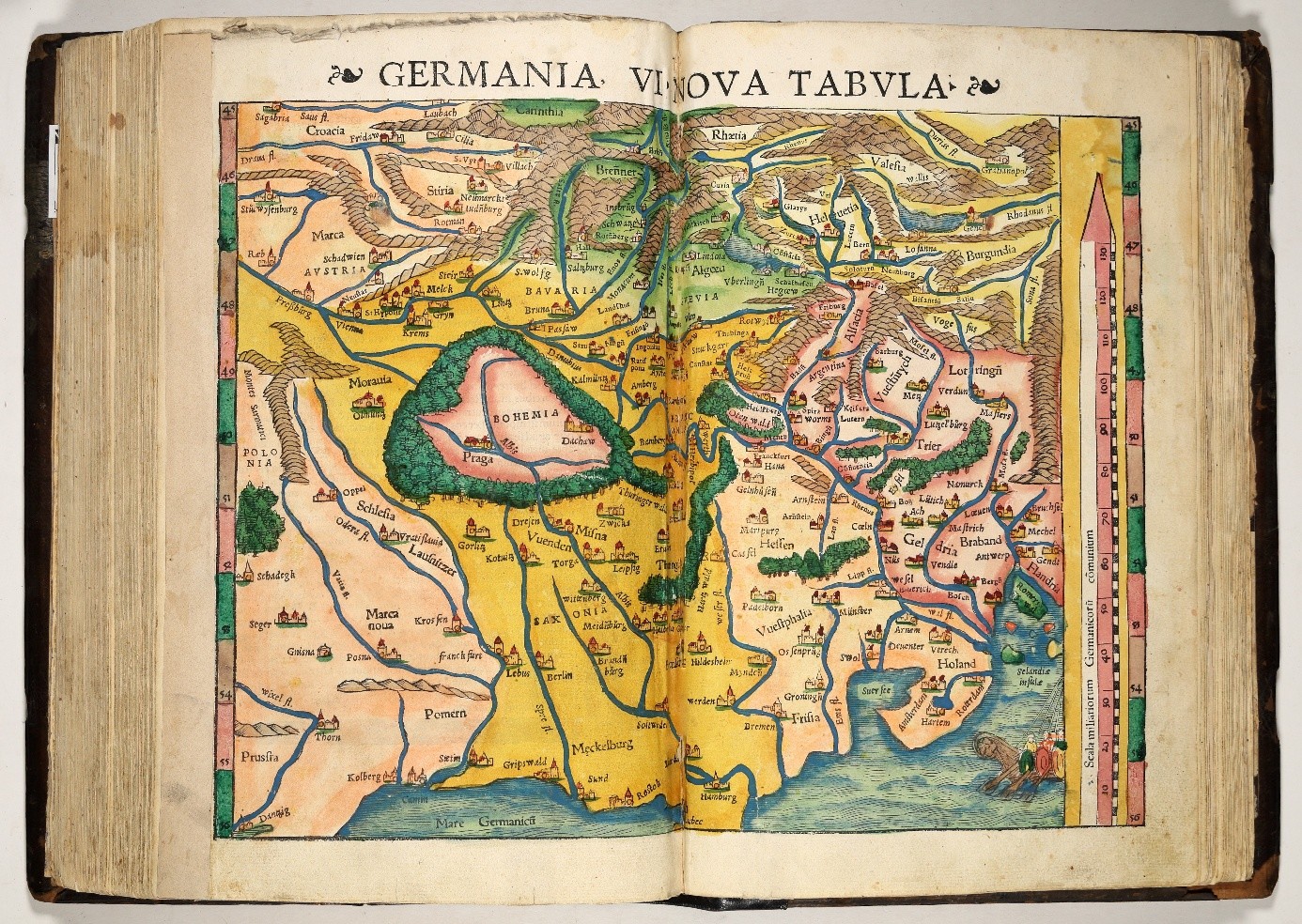
Claudius Ptolemy, Geographia Universalis, Vetus et Nova, Complectens Claudii Ptolemaei Alexandrini Enarrationis Libros VIII, edited by Sebastian Münster, Basel, 1542, National Library of the Czech Republic, shelfmark 5 H 31 – As with modern interpretations, the historical and political vision had to be aligned with geographical context. In his Chronicle, Cosmas describes the Czech lands as “a country encircled on all sides by mountains, which stretch in a marvellous way along the entire border of the land, so that it appears as though a single continuous mountain range surrounds and protects the whole region.” The same image of the land can also be seen in early modern maps.
Towards the end of his life, in the 1120s, Cosmas began writing the Chronicle of the Czechs. Into its pages he wove vivid stories and relatively elaborate, stylistically and intellectually polished narratives, which allowed him to take a clear and often critical stance on the events of his own time. Alongside written sources—such as historical texts and saints’ lives—he also drew on oral traditions: the so-called “fabulous tales of the elders” and conversations with his contemporaries.
The original manuscript—either written or dictated by Cosmas himself, known as the autograph—has not survived. However, most later copies preserve three complete books and the beginning of an unfinished fourth, which is not marked as a separate book. The First Book traces the story of the Czechs from the time of the Flood and the confusion of tongues, through their arrival in a supposedly uninhabited land, the formation of their first political structures, and ends with the election of Duke Břetislav I in 1038 (correctly 1035). The Second Book focuses on the reign of Břetislav and his sons, while the Third Book follows the deeds of the descendants of the first Czech king, Vratislav II, covering the years 1092–1125.
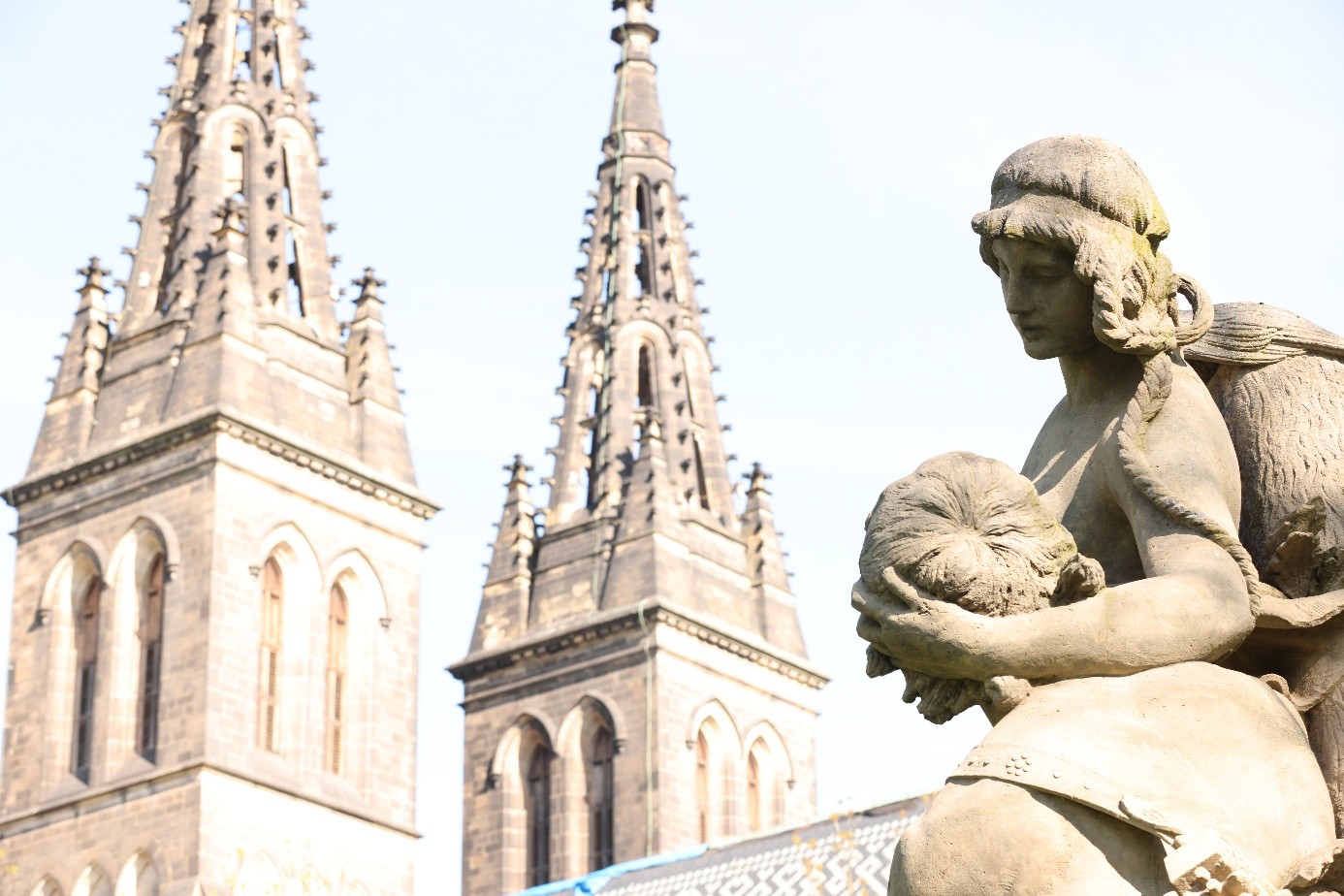
Statue of Ctirad and Šárka at Vyšehrad in Prague, with the Basilica of Saints Peter and Paul in the background – photo by Zdeněk Rerych
In his Chronicle, Cosmas incorporated ancient tales that had been passed down orally. Like his own text—though in a different context—these stories sought to explain the origins and role of the Czech people in the world and to legitimise the ruling dynasty. The sculpture by Josef Václav Myslbek originally stood, along with his statue of Přemysl and Libuše, on Palacký Bridge. However, the bridge was damaged during the bombing of Prague at the end of the Second World War, on 14 February 1945. The legend of the Maidens’ War (dívčí válka) is among the best-known stories of mythical Czech history. At its core, it appears to reflect ritual celebrations and a symbolic explanation of social order and the roles of men and women.
A key question concerns the sources from which Cosmas drew his material. One possible resource was the relatively large library of the Benedictine monastery at Břevnov, which is believed to have contained over a hundred volumes at the time. Although book culture was gradually penetrating Czech society, most people still encountered texts only indirectly—through sermons, storytelling, illuminated images, or performances by actors and singers. Even towards the end of Cosmas’ life, the number of books and readers in the Czech lands likely numbered only in the hundreds.
Cosmas must also have relied on oral sources. These were passed on mainly in traditional gathering places—markets, taverns, near fords, crossroads, or roadside inns. In the earliest parts of the Chronicle, tales told by anonymous elders or dramatic and musical performances inspired by myth served as his sources. Gradually, however, such accounts gave way to reports from so-called “trustworthy witnesses” of actual events.
Around the turn of the 12th and 13th centuries, manuscript copies of the Chronicle of the Czechs began to circulate in three parallel redactions, known today as A, B, and C. Five surviving copies can be linked to the Chapter of St Vitus, but by far the largest group of preserved manuscripts originated in Benedictine monasteries. A copy of Cosmas’ work was acquired at Sázava before the end of the 12th century and expanded with a continuation focused on the history of the monastery. In the late Middle Ages, an abridged version of the Chronicle was adapted in Třebíč. The Leipzig manuscript, which dates back to the mid-12th century, is also of Benedictine provenance.
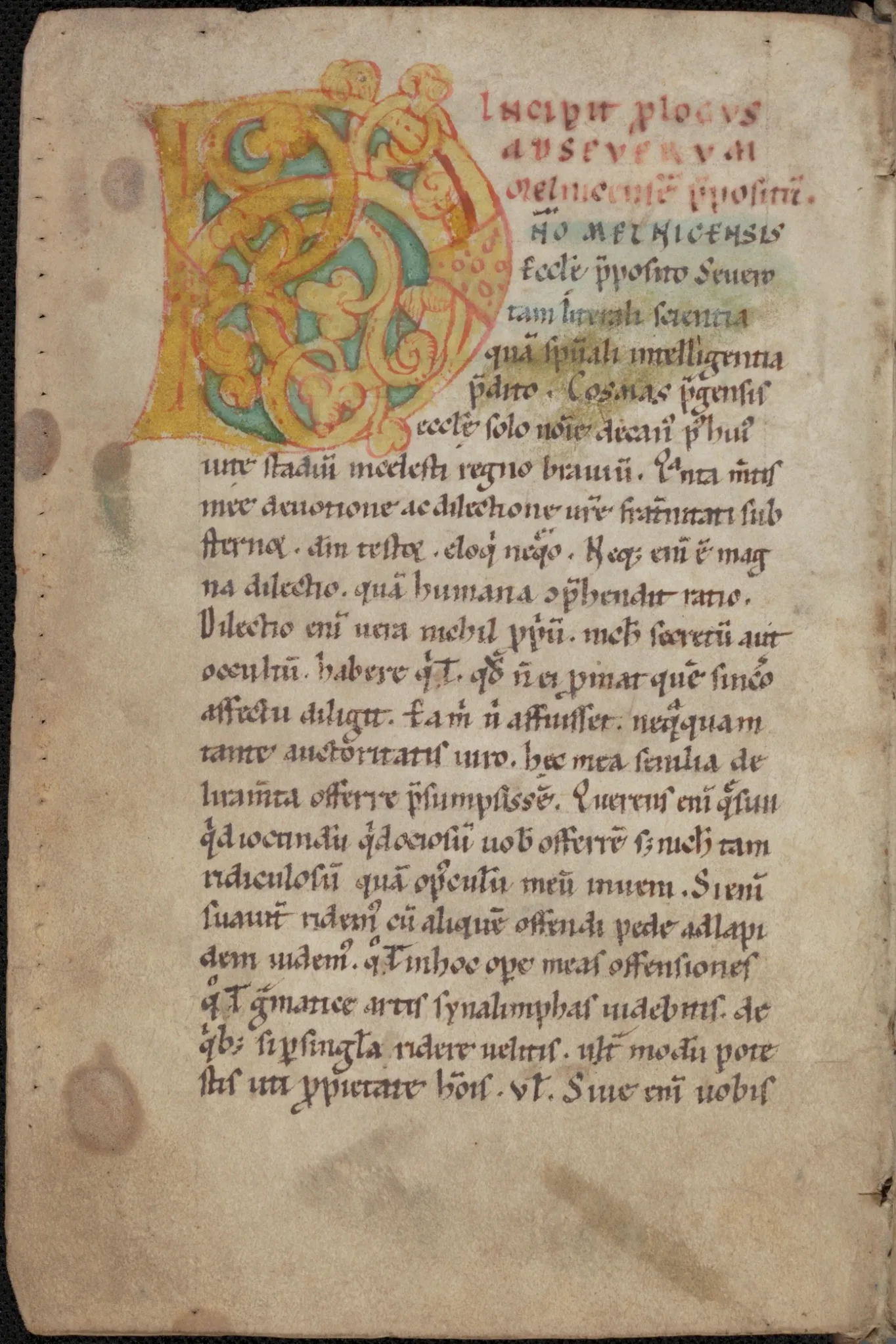
Leipzig Manuscript (A2a), Lower Saxony, mid- or late 12th century, Leipzig University Library, Ms 1324, fol. 1v – The folio shown here contains the first prologue of the Chronicle, introduced by a red rubric reading Incipit prologus ad Severum, Melnicensem prepositum (“Here begins the prologue to Severus, provost of Mělník”) and an illuminated ornamental initial: D-omino Melnicensis ecclesie preposito Severo… (“To Lord Severus, provost of the church of Mělník…”). Ornamental initials from the same scriptorium also introduce the prologue to the second book (fol. 48v) and the beginning of the third book (fol. 93v).
Cosmas’ Chronicle was copied throughout the Middle Ages, which attests to its considerable popularity. A striking example of this continued interest is a manuscript copy made by the Benedictines of Břevnov as late as the end of the 16th century. Without exaggeration, we can say that the Chronicle was the first Czech bestseller. It was first printed in 1602, in Germany. The first Czech and at the same time the first critical edition of Cosmas’ Chronicle was prepared in 1783 by František Martin Pelcl (1734–1801) and Josef Dobrovský (1753–1829). Another critical edition was commissioned in 1900 and entrusted to Bertold Bretholz (1862–1937).
In addition to exploring the genesis, significance, and transmission of the text, the exhibition also focuses on its so-called second life. All major historians and chroniclers of the Middle Ages, Renaissance, and Baroque who dealt with Czech history drew on Cosmas’ Chronicle. They adapted its content to fit new intellectual frameworks and historical narratives, yet for early Czech history, Cosmas remained an indispensable authority. The many reworkings and reinterpretations of the Chronicle of the Czechs over the centuries offer valuable insight into how the understanding of Czech history itself evolved.
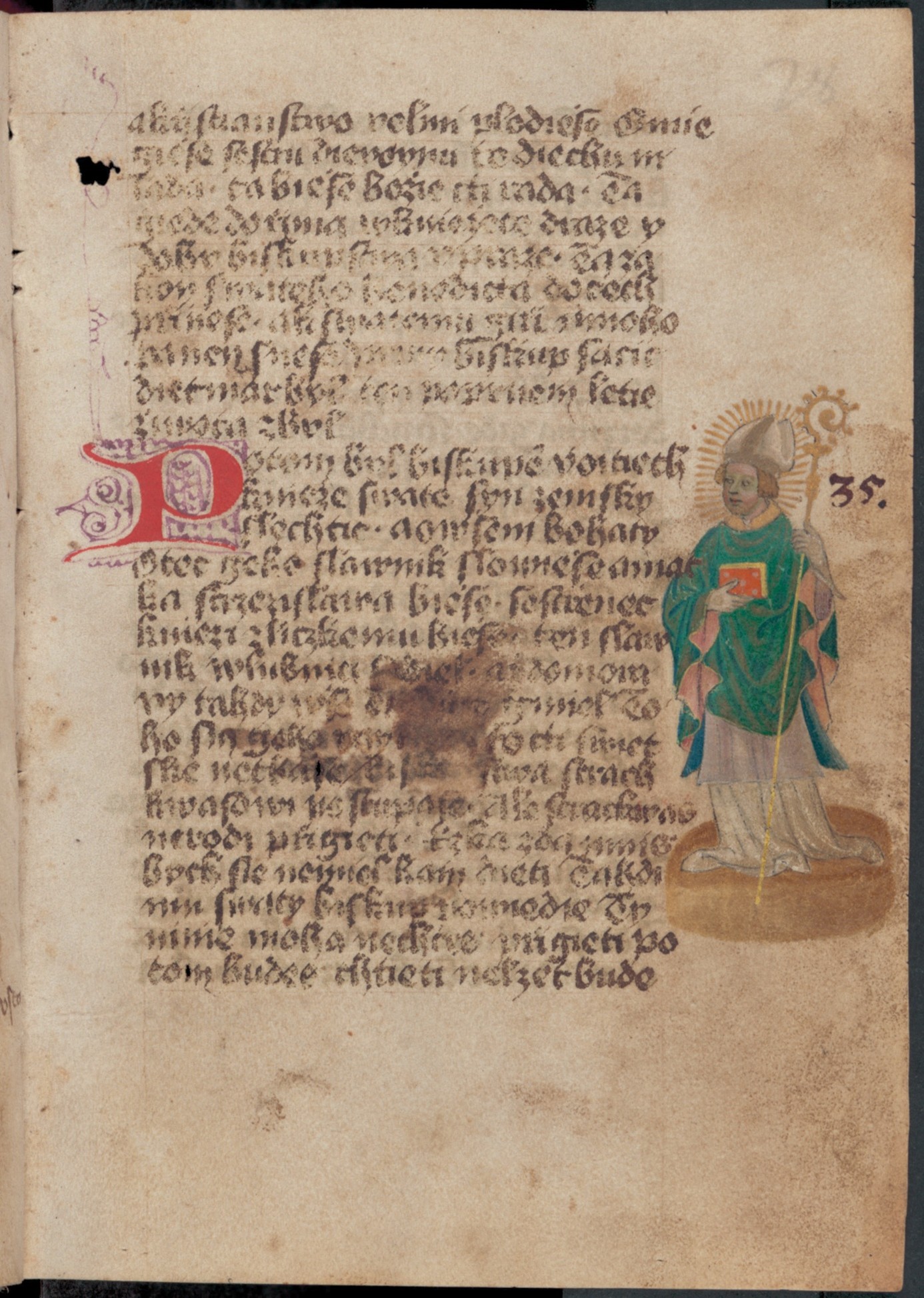
The Lobkowicz Manuscript of Dalimil’s Chronicle, Bohemia, second quarter of the 15th century, National Library of the Czech Republic, XXIII G 87, fol. 28r – The Lobkowicz Manuscript is an exceptionally important textual witness to Dalimil’s Chronicle. It represents a transitional stage between the first and second redactions. The figure depicted in the margin of this folio is St Adalbert (sv. Vojtěch).
Cosmas’ Chronicle was such a foundational work that, as far as we know, no one attempted a new account of early Czech history for nearly two hundred years. The first author to revisit the subject was Dalimil, who composed his Old Czech Verse Chronicle in the early second decade of the 14th century.
In modern times, the most influential adaptation of Cosmas’ text in the Czech cultural sphere was undoubtedly the work of the “national revivalist” Alois Jirásek (1851–1930). His Ancient Bohemian Legends (Staré pověsti české), written at the end of the 19th century, remain part of the compulsory reading curriculum in Czech schools to this day. A lasting place for Cosmas in modern Czech historical imagination was also secured by Vladislav Vančura (1891–1942), who dedicated one of the most captivating chapters of his stylistically ambitious Images from the History of the Czech Nation (Obrazy z dějin národa českého) to the medieval chronicler.
Cosmas’ Chronicle also found a place in Czech music—most notably in Cosmae Chronica Boemorum / Kosmova kronika česká, an extensive bilingual composition of over an hour in length by Jindřich Feld (1925–2007), and in E fontibus Bohemicis, a cycle by Miloslav Kabeláč (1908–1979).
The curators of the exhibition set out to explore a number of fundamental questions. Does the form of our oldest chronicle reflect the literary genre of its time? To what extent is Cosmas’ text a scholarly work based on verified data, and to what extent is it a collection of stories, often shaped by the author’s imagination and written in such a way as to fit into a larger conceptual framework? What is the aim of this framework? Where did Cosmas find the material for his Chronicle? Was he working with widely known oral traditions related to key events and figures, which he sought to preserve for future generations by committing them to writing? And did later generations understand his text? How was it used and interpreted in the centuries that followed, and how can we read a 900-year-old work today? What role has Cosmas’ Chronicle played in Czech education over the last two hundred years, and how has it shaped Czech art?
A peer-reviewed catalogue is being published to accompany the exhibition, in both Czech and English, along with a scholarly monograph by Tomáš Klimek, Living Stories of Dead Princes (Živé příběhy zemřelých knížat), Prague 2025. The importance of Cosmas’ Chronicle for early Czech history is reflected in the extensive body of research it has inspired. However, the author of this book offers a perspective that has so far received little attention in existing scholarship. He focuses on the relationship between the written text and the world of spoken word—both in terms of the sources Cosmas drew on when composing the Chronicle, and the aspects of its so-called second life that may have survived and spread in oral form. To better understand the culture of the early Czech Middle Ages, the author draws on conclusions from anthropological research—particularly the work of Jean Vansina, who systematically examined the interpretation of history in cultures with dominant or exclusive oral traditions. The book also explores the changing external forms of literary genres that may have served, among other things, as models for orally transmitted storytelling, and seeks to identify the role played by genre-based appeal in Cosmas’ Chronicle. Attention is also paid to the differing informational and stylistic sources behind the text, as well as to Cosmas’ critical approach to interpreting oral accounts. As a case study illustrating how a naturally compelling narrative could be processed and shaped for both oral and written transmission, the author has chosen three episodes involving attacks on or murders of Bohemian rulers. A detailed analysis of how these events were presented in Cosmas’ Chronicle, as well as in later medieval, Renaissance, Baroque, and even modern texts, shows how such themes remained “living stories” well into the Enlightenment. The book also considers how this narrative approach to historical material has changed over the past two centuries.
An English translation of the monograph is planned for publication next year.

Related articles
by Markéta Kučerová and Vojtěch Šícha, Library of the Czech Academy of Sciences
November 9, 2026