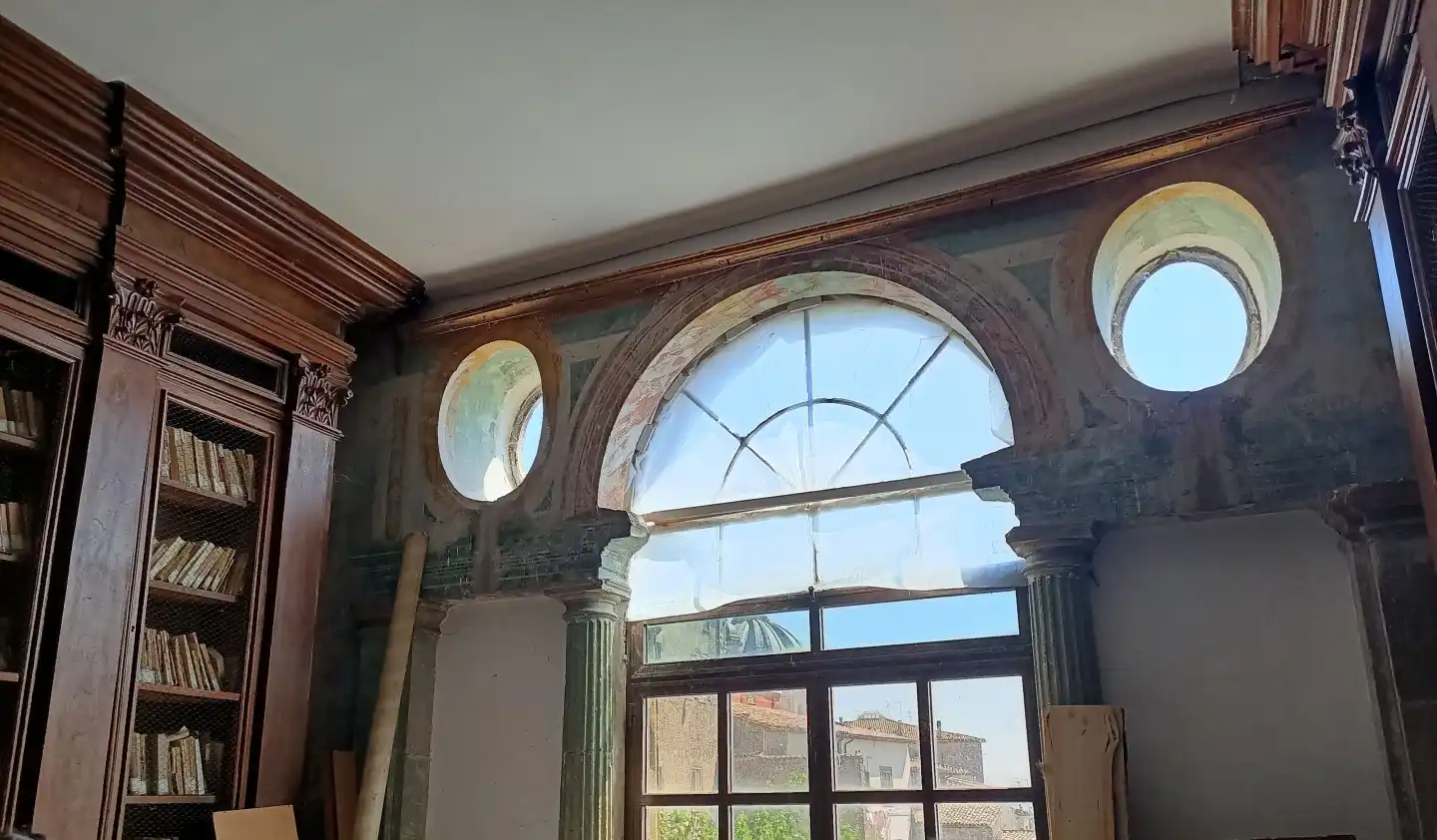
CERL Internships 2025 – Museum Plantin-Moretus
by Laura Semlič, Research MA in Arts, Literature and Media, Leiden University
Share this article
Thanks to the support of the Consortium of European Research Libraries (CERL), I had the exciting opportunity to spend nearly five months at the Museum Plantin-Moretus in Antwerp, working on their collection of incunables. The first three months of this placement, between October and December 2025, were made possible by the CERL Internship and Placement Grant 2025. Because of the welcoming atmosphere at the museum and the fascinating material I was working on, I decided to extend my stay at the museum as a volunteer for two additional months, until February 2026.
The main purpose of the placement was to catalogue the museum’s incunables in CERL’s Material Evidence of Incunabula (MEI) database. Specifically, my task was to describe provenance marks in incunables printed outside of the Southern Netherlands and record them in MEI. This also included linking them to existing or newly-created authority records in CERL’s Owners of Incunabula database and creating photographic records of provenance in CERL’s Provenance Digital Archive (PDA). During the internship, I created 56 new entries in the MEI database.
From Officina Plantiniana to the Museum Plantin-Moretus
Museum Plantin-Moretus and its rich collection has its origins in one of the most prolific and influential printing workshops in Belgium and Western Europe: Officina Plantiniana. Established in 1555 by Christophe Plantin and his wife, Jeanne Rivière, Officina Plantiniana evolved into a successful printing enterprise over the course of the next three hundred years. The present-day museum is located in the historic house in which nine generations of the Plantin-Moretus family had lived and worked since 1576 until 1876 when Edward Moretus sold the property with all its contents, including the library, to the city of Antwerp. The latter converted it into a museum, which today comprises a diverse collection including early printed books, manuscripts, an extensive family and business archive, prints, drawings, printing materials, and the historic house itself. In 2005, the museum became UNESCO World Heritage Site.
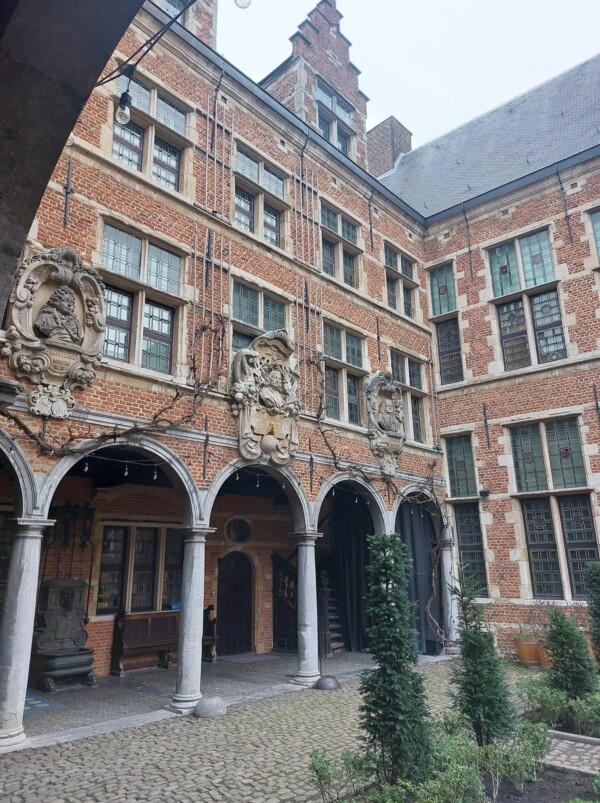
What made my experience at the museum so unique and special was not only the opportunity to work on the fascinating collection of incunables but to be able do so a few metres away from the two oldest printing presses in the world where early printed books had been printed for over three centuries. The museum’s collection conveys the story of the Plantin-Moretus family and their successful printing business, the history of which follows you through every corner of the historic house. In this report, I would like to provide a peek into this history by highlighting three incunables from their collection that I had the opportunity to work on during my internship.
Incunabula at the Museum Plantin-Moretus
The origins of the museum’s book collection go as far back as the 1560s, when Christophe Plantin began to acquire books to be used by the proofreaders working at the Officina Plantiniana. In 1592, Plantin’s grandson, Balthasar I Moretus, compiled a catalogue of this reference library, which still survives in the museum archives. The so-called ‘Index Bibliothecae anagnosteris Plantiniani’ (Museum Plantin-Moretus, M 121) lists 728 works, including fifteen incunables.
Out of the fifteen incunables in the catalogue, I was able to identify fourteen which are still found in the collection today. What makes these so fascinating is that the inscriptions of former owners in some of them highlight the various channels through which Plantin acquired books for the purposes of his printing business. Below, I would like to highlight three copies which particularly caught my attention because of their fascinating layered provenance.
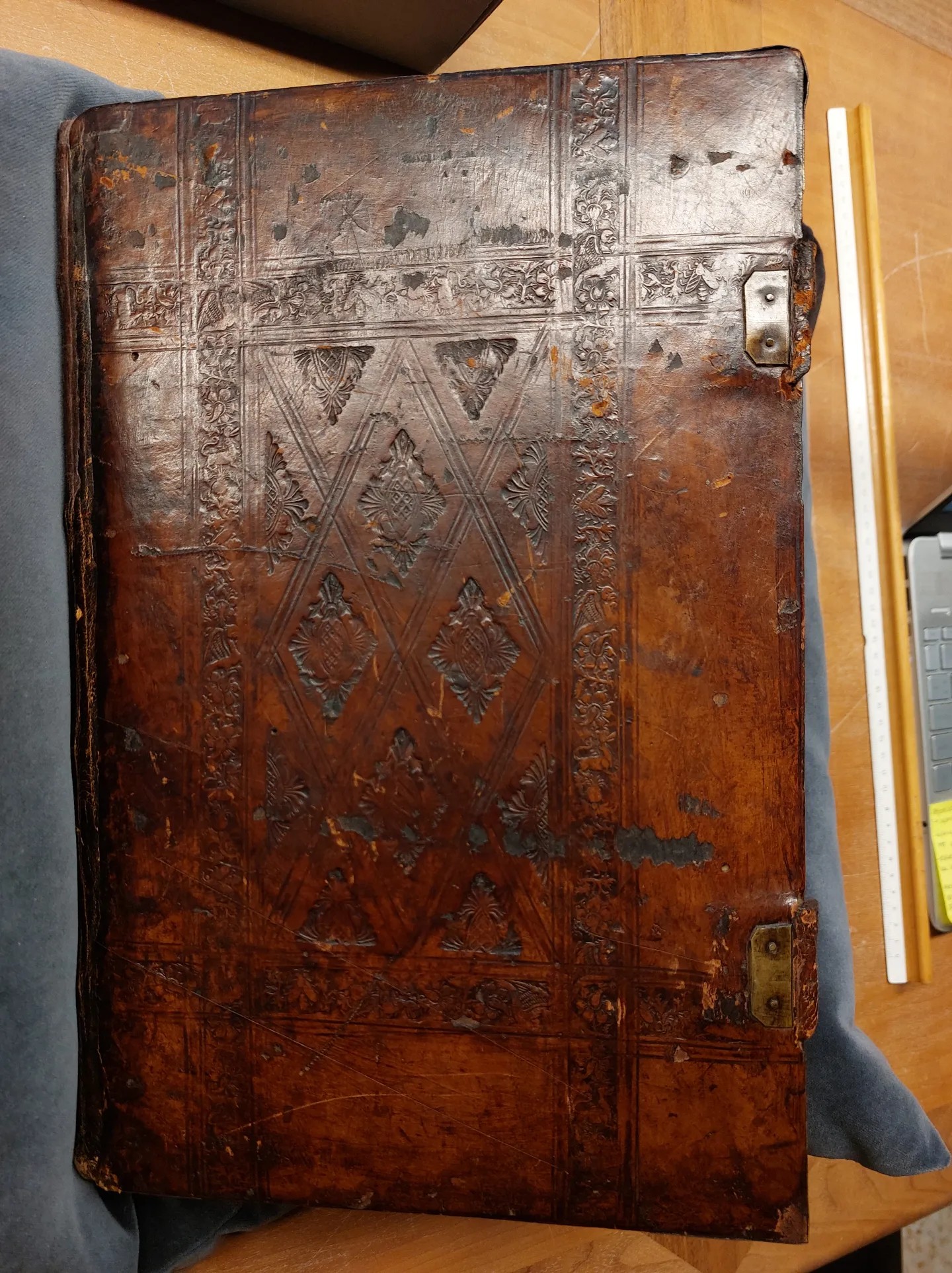
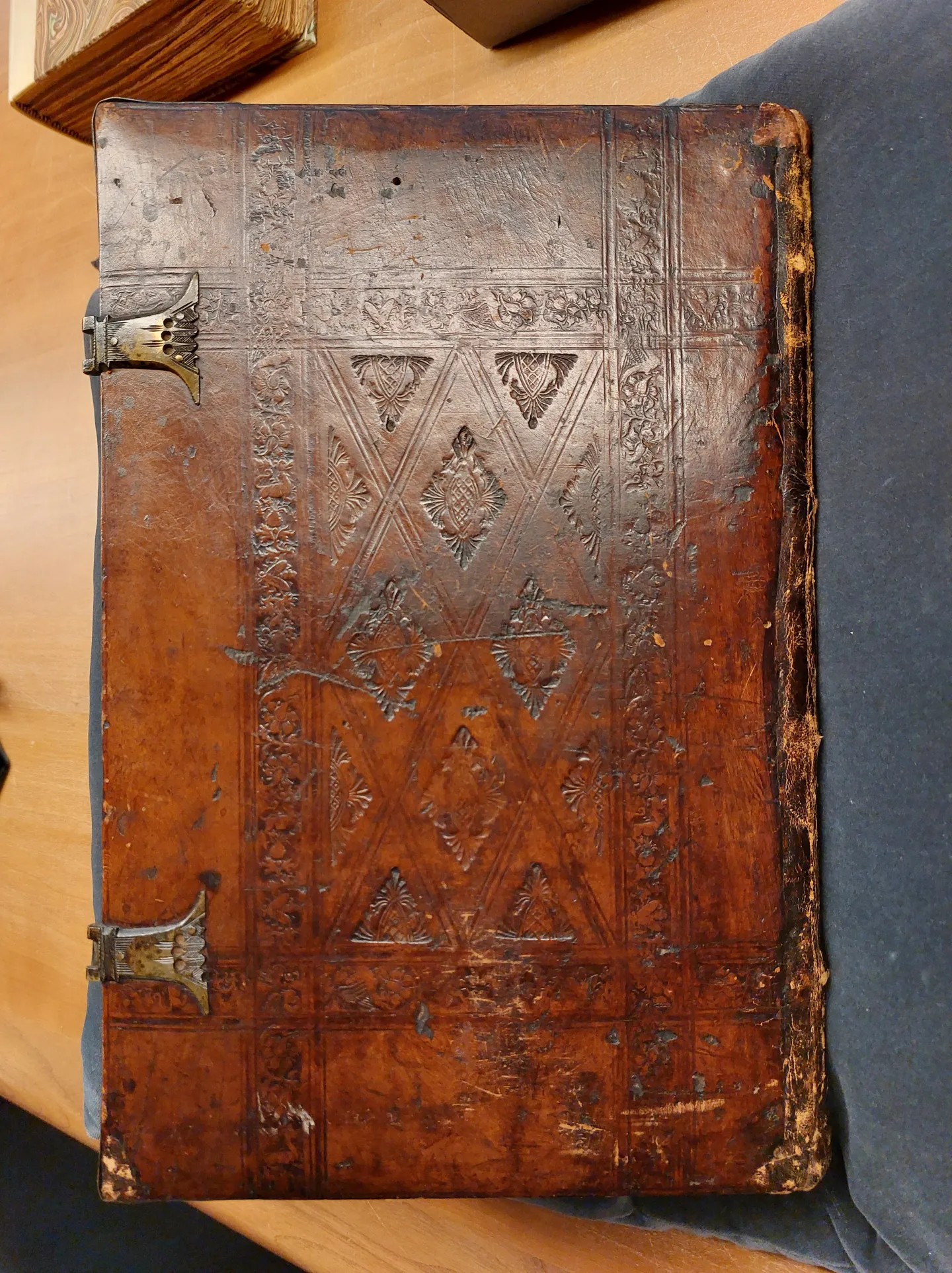
The first copy I would like to highlight is a copy of Epistolae diversorum philosophorum, oratorum, rhetorum, edited by Marcus Musurus and printed by Aldus Manutius in Venice in 1499 (MPM, O.B 4.5). Before looking at the evidence of its former owners, we can observe the binding which in itself already provides interesting clues about the history of this copy. This is an example of an early sixteenth-century binding. It is brown sheep over wooden boards decorated with intricate blind-tooled panel stamps on both the upper and the lower board. Upon closer inspection, the panel stamps reveal a binder’s monogram which can be assigned to Frederick Egmont (d. 1511), a binder working in London at the end of the fifteenth and the beginning of the sixteenth century. Because of Egmont’s monogram we can conclude that, shortly after its publication in Venice, this book must have travelled to England where it was bound by Egmont and where it likely also circulated before making its way back to the continent.
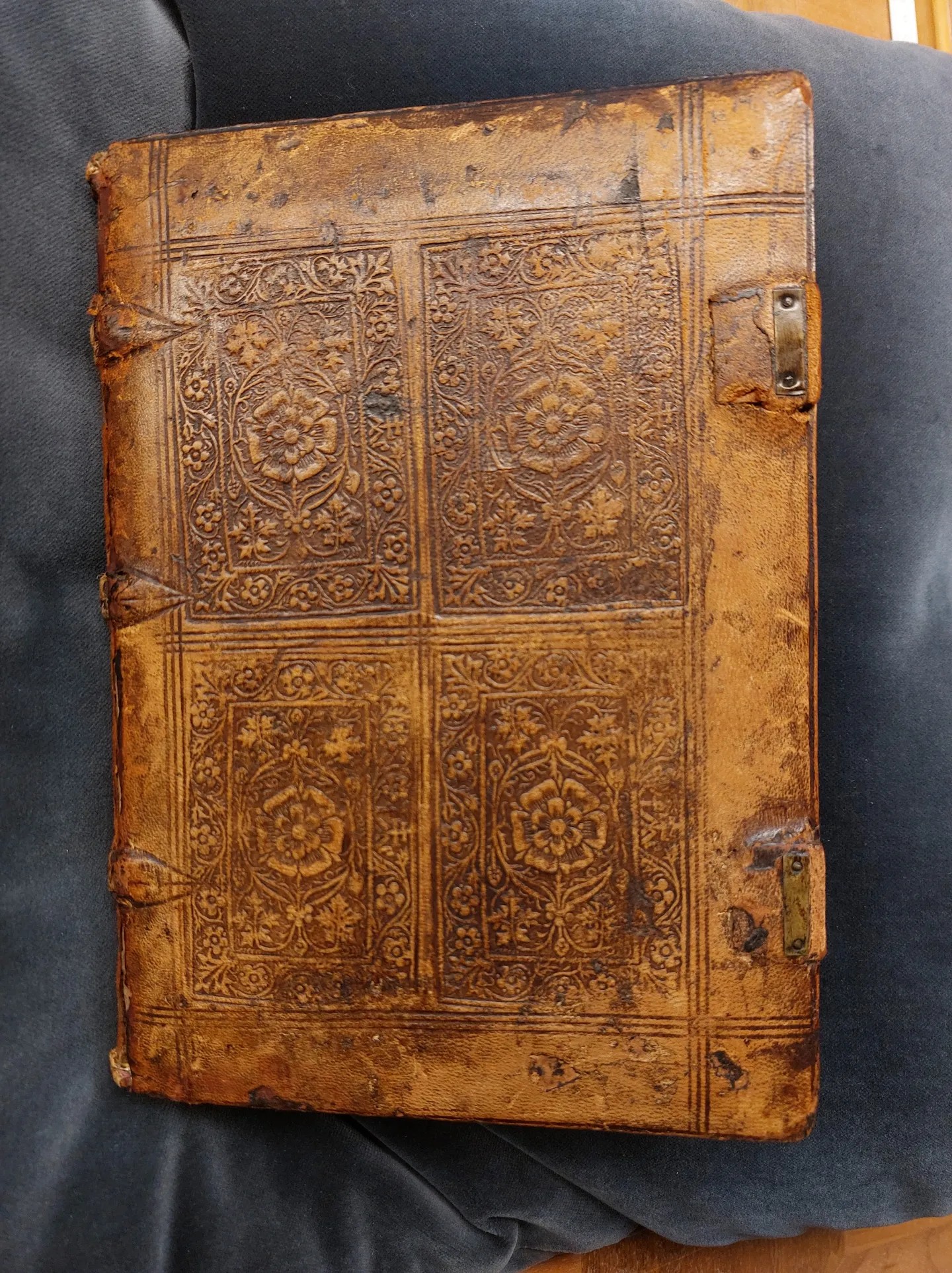
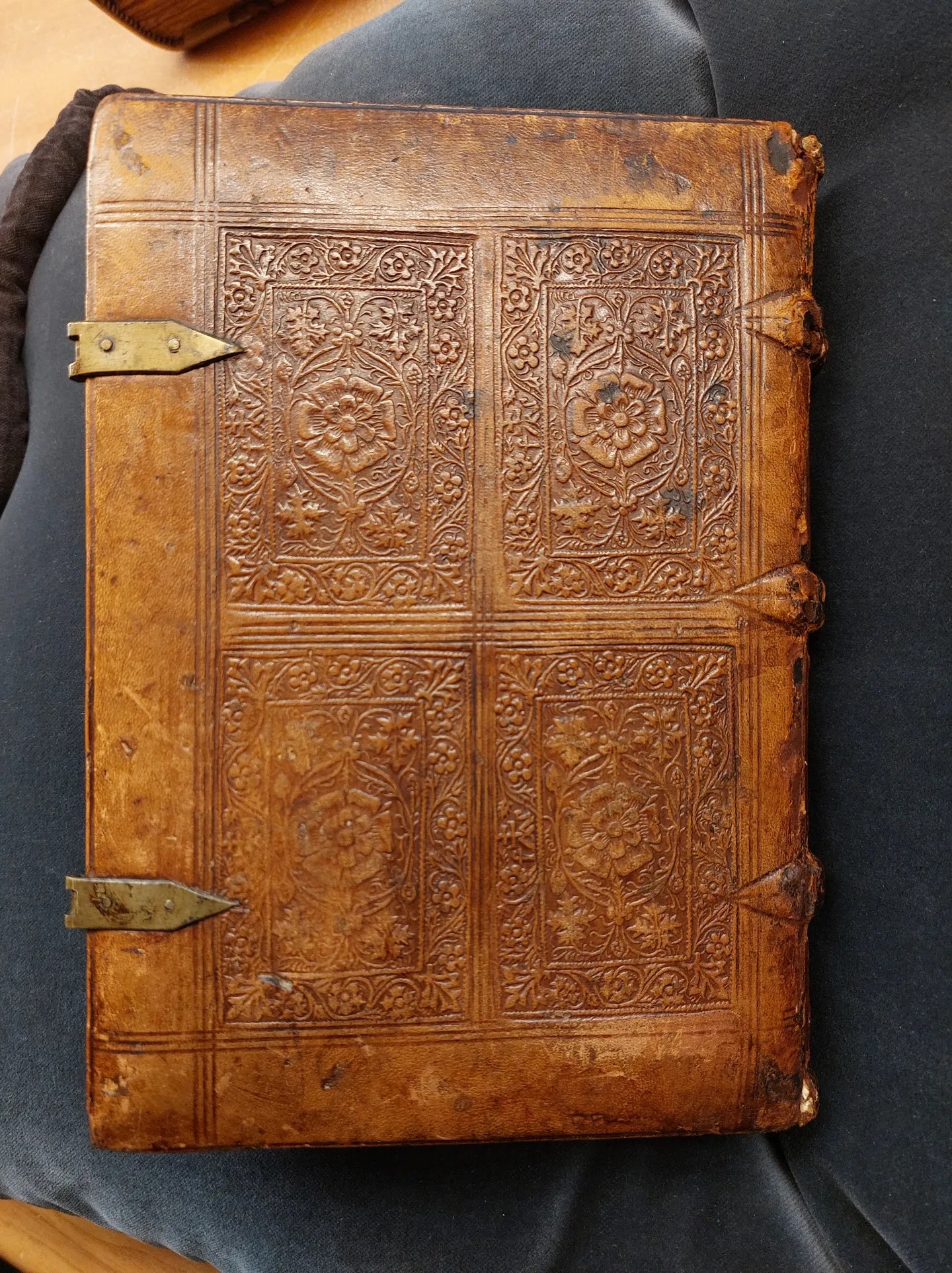
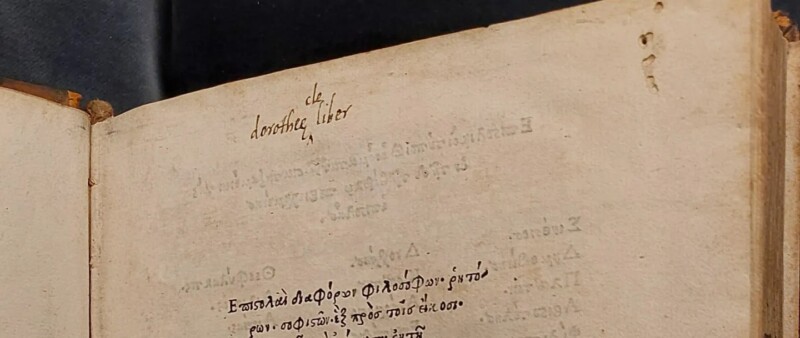
Within a few decades of its publication, the book was in possession of Dorothy Clement (b. ca. 1532), whose inscription can be found at the top of the title page reading ‘dorothee cle liber’. Dorothy was the daughter of John Clement (d. 1572), an English recusant who, together with his family, lived in exile in Mechelen. While finding information about John Clement was not particularly difficult, this was not the case for Dorothy Clement. We know that she was a Poor Clare in Leuven in 1571 and, thanks to the Index Possessorum Incunabulorum (IPI), I found that she owned and signed another incunable, kept by The Morgan Library and Museum. It is likely that this copy of Epistolae diversorum philosophorum came to the continent with the Clements. But how did it come into Plantin’s possession?
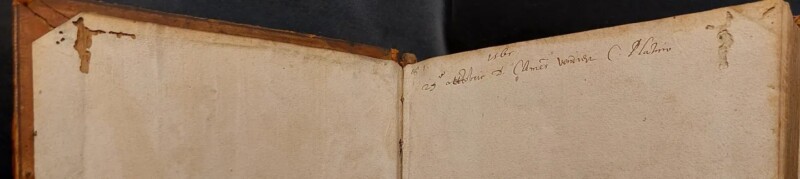
Thanks to the account books of the Officina kept in the museum archives, we know that John Clement frequently conducted business in books with Plantin, and indeed, an inscription on the recto side of the front flyleaf reveals that Plantin bought this copy from him on 29 October 1565: ‘1565 / 29 octobris D. Clemens vendidit C. Plantino’. Once in Plantin’s possession, the book was incorporated into the reference library of the Officina Plantiniana as indicated by the inscription of the Anagnosterii Plantiniani at the bottom of the title page.
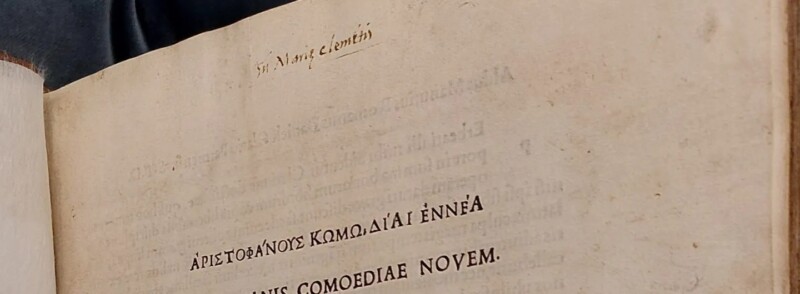
This is not the only incunable in the collection owned by a member of the Clement family. A copy of Comoediae novem by Aristophanes printed in Venice by Aldus Manutius in 1498 (MPM, R 32.6) was owned by Dorothy’s sister, Margaret Clement (1539-1612). Her ownership inscription appears at the top of the title page: ‘Sum Marie Clementis’. The inscription of the Anagnosterii Plantiniani on the title page tells us that this copy was also part of the reference library at the Officina. It is likely that this copy ended up in Plantin’s possession in a similar way as that of her sister, possibly during one of Clement’s visits to Plantin recorded in the account books.
This copy features a brown leather binding over wooden boards decorated with a blind pineapple stamp and an unsigned decorative roll depicting a repeating pattern of flowers, bees, dogs, and falcons. While observing this binding, I was struck by its striking similarity to a binding I had previously seen and which is assigned to John Reynes (d. ca. 1545), one of the more esteemed binders active in London in the sixteenth-century, whose clients, among others included, King Henry VIII himself. Since the binding in my copy is unsigned it is impossible to determine with certainty whether it was made by Reynes. However, the blind pineapple stamp and the blind decorative roll match the ones that J. Basil Oldham assigns to Reynes in English Blind-Stamped Bindings (1952; pl. XXVIII, no. 437 and no. 433). Could this be a binding made by Reynes or his workshop? This is just one example of how reconstructing provenance based on material evidence can be so elusive and challenging.
Another fascinating example is Opera by Claudianus, edited by Thaddaeus Ugoletus and printed in Parma in 1493 (MPM, R 29.6). In comparison to the sturdy bindings with wooden boards described in the two examples above, this copy felt quite flimsy in my hands as I took it out of its storage box. It is an example of a limp parchment binding with an external long stitch. This is an example of a non-adhesive structure in which the gatherings are sewn directly onto the parchment covering and are reinforced by means of two leather pads visible on the spine of the covering. This structure was commonly used in stationary bindings but was later adopted as an inexpensive method of protecting printed books. It offered the reader a lot of flexibility as books bound this way were more easily opened and significantly lighter than those bound in wooden boards. In terms of it use in Europe, it was common in Italy but also in Germany and the Low Countries, where it remained in use long into the twentieth century. The many cropped marginal annotations in this copy indicate that this was likely not its first binding.
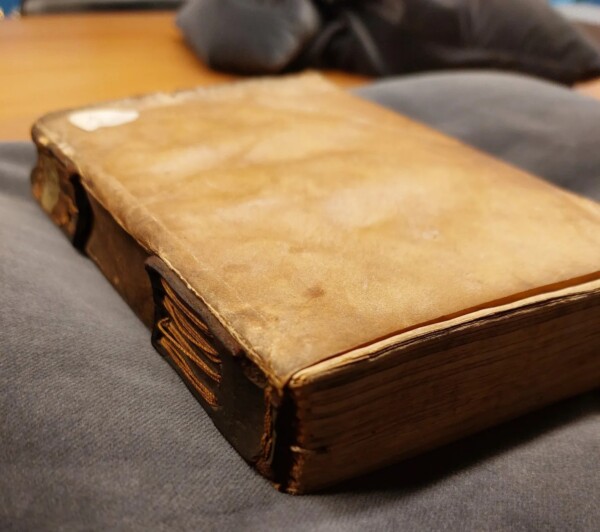
The inside of the covering reveals that this book once belonged to an Antwerp-based printer, Jan I van Waesberghe (1528-1590), who in 1575 gifted it to Theodoor Poelman (1512-1581). Poelman was a sixteenth-century humanist, who worked as an editor and a proofreader at the Officina. Throughout his life, he amassed a large collection of manuscripts and printed works, which he bequeathed to Plantin. This copy was likely a part of the bequest.
The three copies highlighted above have all been in the collection since its earliest beginnings as all three are listed in the 1592 catalogue of the proofreaders’ library. But after 1592, and before the collection was acquired by the city of Antwerp in 1876, two more catalogues of the historic library were made: ‘Catalogus librorum bibliothecae Balthasaris Moreti’, compiled around 1675 by Balthasar III Moretus (1674-1696) and ‘Catalogus librorum Bibliothecae Moretianae digestus anno 1805’, compiled in 1805, possibly by Lodewijk Frans Moretus. These three catalogues combined show how the collection grew over time as it evolved from a working to a private library. This also includes the collection of incunables which, by 1805, had expanded from fifteen to fifty-five volumes. Today, the museum’s collection includes 155 incunables.
Life at a Museum
Even though the main objective of my placement was cataloguing incunables in MEI, I also got to experience different facets of work at a museum. For example, I got an insight into how the communications team at the museum shapes its social media strategy and plans its online content. I was invited to share some of my work on the incunables with the museum’s audience by providing input for the museum’s social media platforms. I also familiarised myself with the work of the collections care team and learnt about their upcoming plans for the cleaning of the historical house and for the inventory of the book collection. Drawing on my previous experience with documenting damage in early printed books, I was able to assist them in designing a damage inventory template, which could be used in the future to document any potential structural or chemical damage in books in their collection. To test the method, I ran a small pilot on the collection of incunabula I was working with.
The three copies which I highlighted in this report represent just a small snippet of the books that I had the opportunity to work on at the Museum Plantin-Moretus. While these three copies all have former owners who are identifiable, this was not the case for the majority of books I saw during my placement. Their pages were full of anonymous readers, who sometime diligently and other times randomly noted down their thoughts, doodled in the margins, or coloured in the illustrations in the text (with various levels of dexterity!). Whether assigned to a specific individual or completely anonymous, these provenance marks help us understand the context in which these incunables circulated and reveal the varied and dynamic life of the earliest printed books as they moved across borders and between owners.
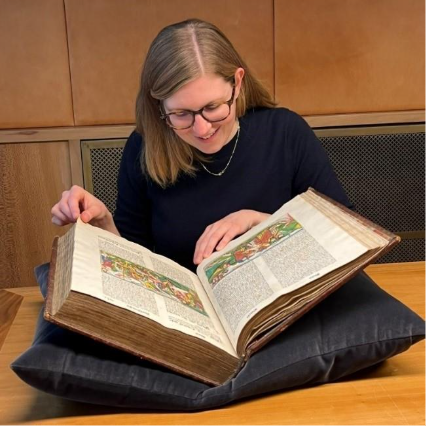
This internship has been invaluable in gaining hands-on experience with incunables and provenance research. It provided me with the opportunity to sharpen my palaeographical skills and broaden my knowledge of material history of books. For example, I now feel more confident dating, naming, and describing bindings and their diverse features. All this would not have been possible without the invaluable support of Dr Zanna Van Loon and her colleagues at the Museum Plantin-Moretus, who warmly welcomed me into their team and shared their expertise with me. I am grateful to Dr Cristina Dondi and the CERL Board for granting me this opportunity and providing the financial support during the internship.
Related articles
November 9, 2026
by Markéta Kučerová and Vojtěch Šícha, Library of the Czech Academy of Sciences
November 9, 2026