The Gennadius Library acquires an exceedingly rare 17th-century Greek book
by Irini Solomonidi, Senior Librarian, Gennadius Library, ASCSA and Stavros Grimanis, Demos Fellow, Gennadius Library, ASCSA
Share this article
Thanks to a gift of Gennadius Library Overseer Lana J. Mandilas, the Library acquired in July 2020 from the Vergos Auctions a rare Venetian edition of the 17th century.
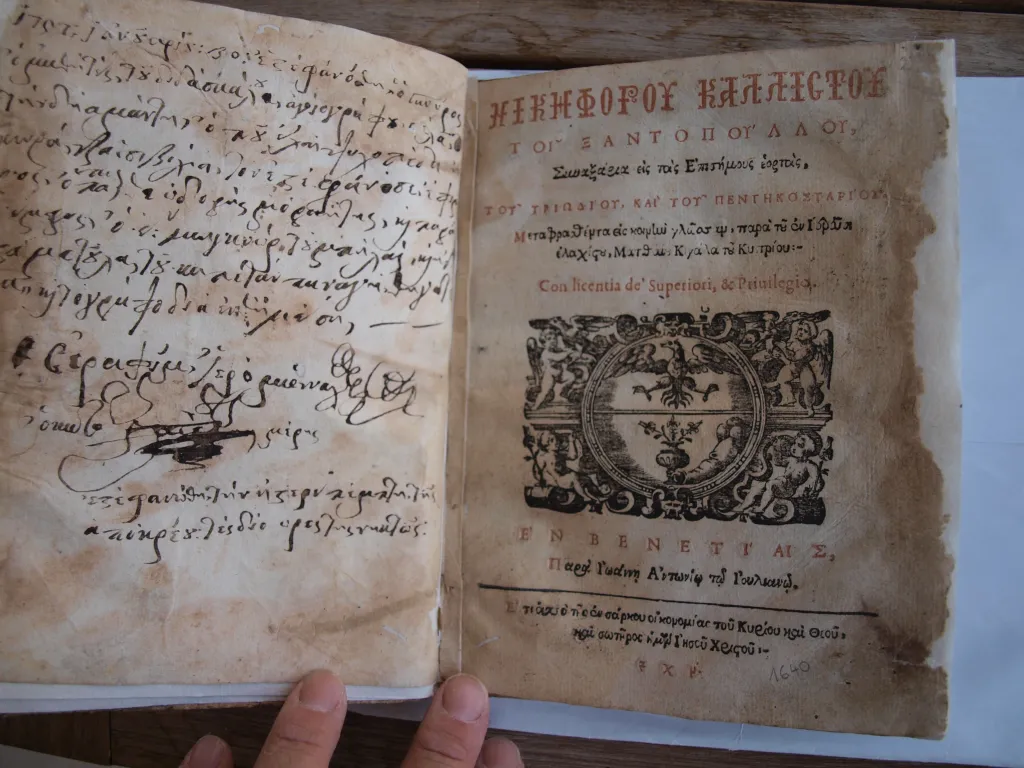
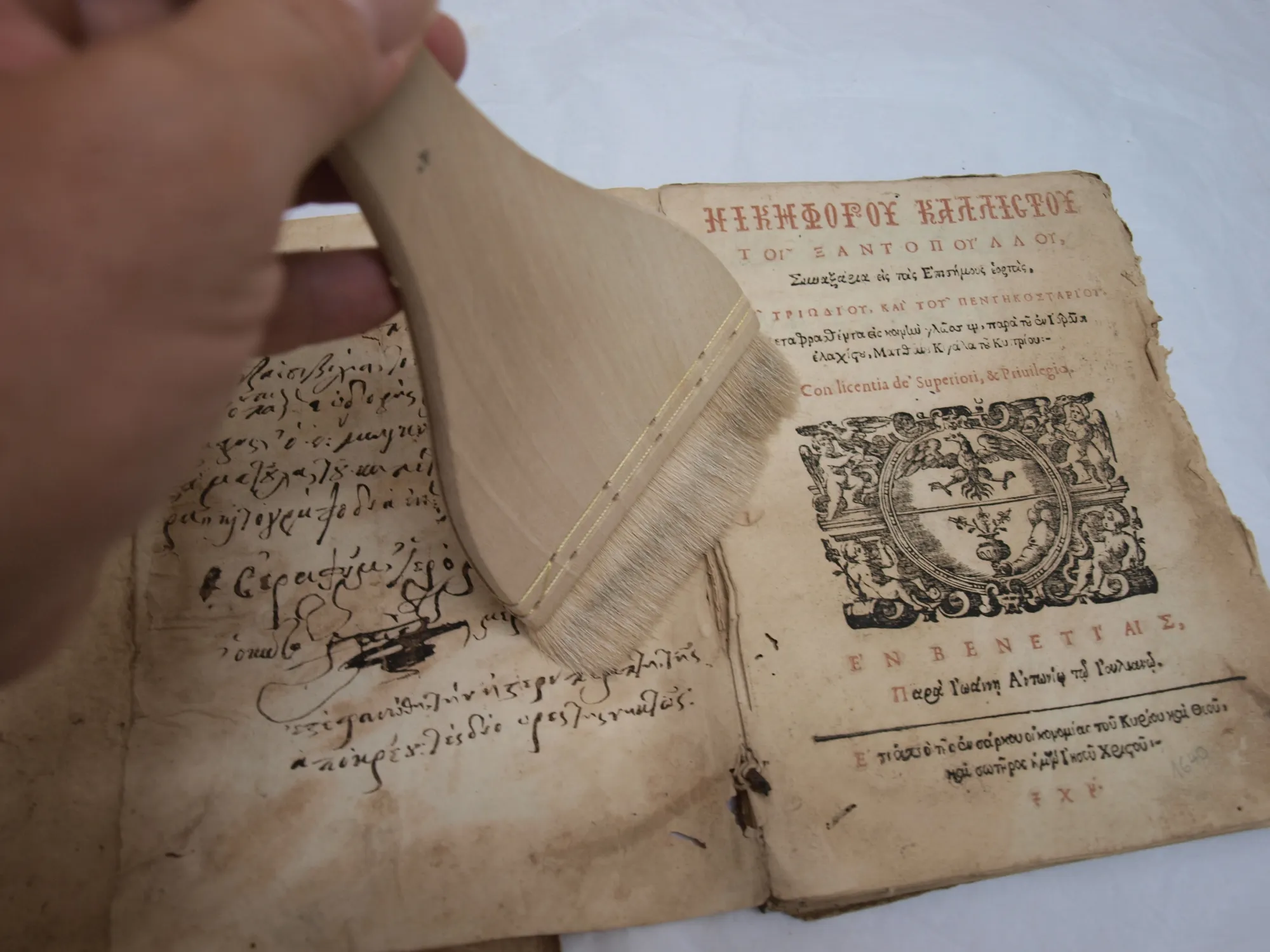
The book with the title Νικηφόρου Καλλίστου τοῦ Ξαντοπούλλου, Συναξάρια εἰς τάς ἐπισήμους ἑορτάς τοῦ Τριωδίου, καί τοῦ Πεντηκοσταρίου, μεταφρασθέντα εἰς κοινήν γλῶσσαν, παρά τοῦ ἐν ἱερεῦσι ἐλαχίστου, Ματθαίου Κιγάλα τοῦ Κυπρίου, was printed in Venice in 1650 «Παρά Ιωάννη Αντωνίω τω Ιουλιανώ» (Giovanni Antonio Giuliani).
Nicephorus Callistus Xanthopulus & Matthaios Tzigalas
This edition captures the meeting of two different moments of the Greek literary tradition. The original creator of these texts, Nicephorus Callistus Xanthopulus, was a learned monk, who lived in Constantinople in the end of the 13th and the beginning of the 14th century, during the so-called Palaeologan Renaissance. It is not by accident that he was the one who reintroduced the genre of ecclesiastical history in Byzantine literature.
Xanthopulus was a skillful orator who frequented the highest circles of Constantinopolitan society. In addition to rhetorical exercises, he also prepared exegetical sermons for the Sundays of the movable calendar of the Church, i.e. of the Trinity and the Pentecost. These constitute the corpus of the 1650 edition of the Synaxaria.
The texts were published three centuries later by the Cypriot learned clergyman Matthaios Tzigalas, who served as minister of the Greek church of Venice from 1630 to his death (1654). In Venice he developed an important publishing activity geared to merchants, craftsmen, and literate Greek speakers active between East and West. He is responsible for the first edition of Ερωφίλη/ Erophile (1637) and the translation of the sermons of Xanthopulus about the Easter cycle into the common language of his Greek-speaking audience. His choice to render the texts into the Modern Greek linguistic idiom, points to the continuities and discontinuities in the mentalities, attitudes and tastes of the emerging Greek communities of the Eastern Mediterranean.
The history of the Giuliani printing press in Venice
The Giuliani printing house in Venice used prominent Greek grammarians in their editorial activities and was particularly important for the production of Greek books before the founding of the printing house of Nikolaos Glykys, a Greek merchant from Ioannina in 1671. From a total of about a thousand Greek books printed in the 17th century, 17% were produced by the Guilani press (170 editions). Their publishing activity started in the late 16th century with Francesco Guiliani, who used as editors Emmanuel Glyzonios and Maximos Margounios, and concluded at the beginning of the 18th century with Balthassare Juliani (Βαλδισέρᾳς Ιουλιανός). The printing house reached its apogee in the 17th century under Giovanni Antonio and Andrea Giuliani.
 Giovanni Antonio Giuliani was active during the period 1631-1656, and used as editors Matthaios Tzigalas, Theophulaktos Tzanphournares, Nikolaos Kerameus and Agapios Landos. Andrea Giuliani was active from 1656 to 1690. While the majority of their publications were ecclesiastical in character, Giovanni Antonio and Andrea Giuliani also printed a number of important first editions or reprints of works of Modern Greek literature. The most significant are: the Ερωφίλη [Erophile] of Chortatzes (1637), Ευγένα [Eugena] of Montselese (1646), Οι Ανδραγαθίες του Μιχαήλ Βοεβόδα [Oi Andragathíes tou Michaíl Voevóda] (1638), Οι Πανουργίαι υψηλόταται του Μπερτόλδου [Panourgiai hypsylotatai tou Bertoldou, Modern Greek translation of Sottilissime astutie di Bertoldo of Giulio Cesare Croce] (1646) and Ροδωλίνος [Rodolinos] of Troilos (1647).
The Gennadius Library owns 30 copies of Giuliani editions. The oldest copy is the Θείον και ιερόν Ευαγγέλιον [Divine and Sacred Gospel] printed in Venice by Francesco Giuliani in 1588 and edited by Emmanuel Glynzounios. (Ετυπώθη εν Βενετίαις παρά Φραγγίσκω των Ιουλιανών συνδρομή συνθέσει και διορθώσει Εμμανουήλ Γλυνζουνείου) and the most recent is the Παλαιά Ελλάς περί του αγίου Ρωμαικού θρόνου καλώς φρονούσα, η προς τον Ιεροσολύμων πατριάρχην Δοσίθεον απολογία Αλουσίου του Ανδρούτζη Κυπρίου printedin1713 by Balthassare Juliani.
Twenty-five of the Giuliani editions owned by the Gennadius Library were printed in the 17th century. Eight of them are extremely rare, while two stand out for their importance in the history of Modern Greek literature: Βασιλεύς, ο Ρωδολίνος [King Rodolinos] and Πανουργίαι υψηλόταται του Μπερτόλδου. To these precious acquisitions of Joannes Gennadius we have now added the extremely rare (“rarissime” according to bibliographer Émile Legrand) edition of Συναξάρια εἰς τάς ἐπισήμους ἑορτάς [Synaxaria for the formal feasts].
According to Émile Legrand, the Synaxaria was published by Giuliani in two editions, in 1639 and 1650. Legrand’s Bibliographie hellénique ou, Description raisonnée des ouvrages publiés par des Grecs au dix-septième siècle, mentions only one copy of the 1650 edition in the “Musée britannique.” This most probably refers to the copy now in the British Library collections, which is also cited in Worldcat. The Heritage of the Printed Book Database [CERL] refers only to a copy at the Bodleian Library (Oxford), while the Greek Bibliology Workshop “Philippos Iliou” cites, in addition to the copy of the British Library, eight other copies in Greek Libraries most of them in monasteries of Mt. Athos: St. Panteleimon Monastery, Monastery of Vatopedi, Mone Dionysiou, Mone Megistes Lauras, Mone Xeropotamou, Mone tou Philotheou, Educational Association of Adrianoupolis Library, and the Onassis Library.
Description
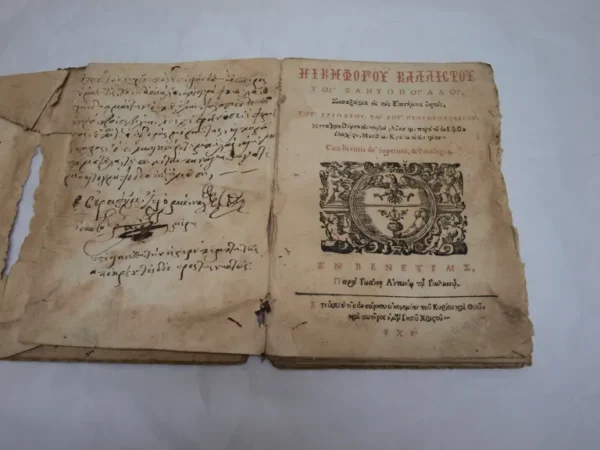
The new acquisition preserves its original paper binding and a handwritten note, witness to its 18th century owner: «1757, Ϊἀνοῦαρίου 30. Ἐστέφανόθη ὅ Σπύρος ὄ μαθήτείς τοῦ διδάσκάλου ἀγίογράφου Πὲλᾶ, τὴν Δηαμάντη, ὁποῦ είχαι ψυχοπὲδα ἠ κυράτζα Σιβίλια. Τον ἐστέφάνοσε ἐφιμέριος ὄ παπά Θεώδορής Μοραήτης, καὶ παράνειμφος ὀ κ. Μαιγκυώρ τοῦ Μπηλαί(;) καὶ ἠ μ.α Σταματοῦλα τοῦ καπετὰν Παναγἠ θηγατέρα καὶ τὸ γράφο διὰ ἐνθἤμειση. Σἐραφίμ Ἰερομόναχος, ὁ κατομέρης ἐστεφανώθη τὴν ὐστερεί Πέμπτη τῆς αποκρέου, τές δύο ωρες της νυκτῶς.»
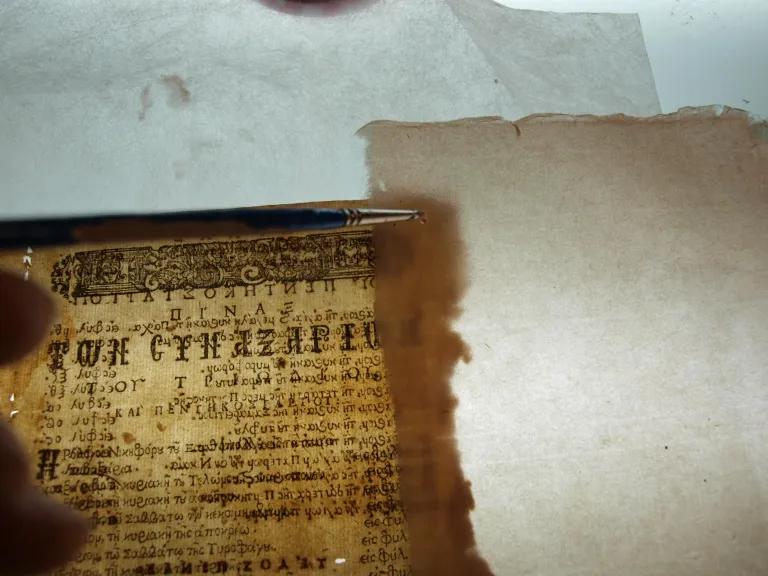
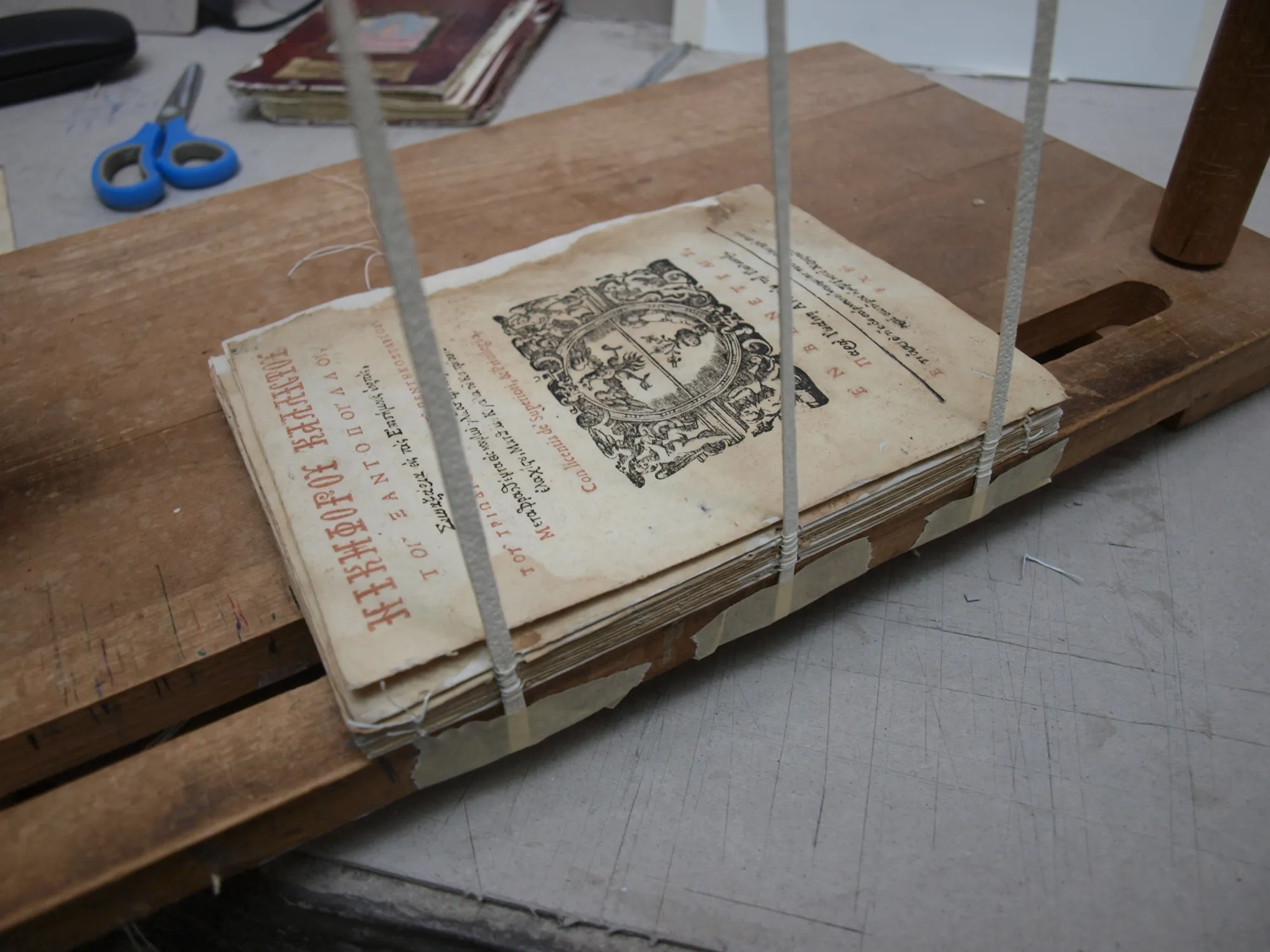
The excellent conservation treatment of this remarkable rare copy was performed by the expert conservator Nikolaos Karametos in August 2020.
Related articles
by Tarik Tuten, Hafız Ahmed Agha Library
November 9, 2026

November 9, 2026