The facsimile edition of the Philostratus Corvina and accompanying study
by Edina Zsupán, HUN-REN – HNMPCC NSZL Fragmenta et Codices Research Group, Head of the Corvina Programme of the National Széchényi Library, Budapest
Share this article
The National Széchényi Library in cooperation with the Schöck ArtPrint Kft. has recently published the facsimile edition of the Philostratus Corvina and an accompanying study composed by Edina Zsupán (also see this announcement published in December 2024).
The luxury codex is one of the most outstanding pieces of the Bibliotheca Corvina, the famous humanistic Renaissance library of Matthias Corvinus, King of Hungary (1458–1490). [1] It contains the works of Philostratus (II) the Elder, (160/170–247/250), a major representative of the Second Sophistic, translated from Greek into Latin by court historian Antonio Bonfini. The works are as follows: On Heroes (Heroica), Images (Imagines), Lives of the Sophists (De vitis sophistarum) and Letters (Epistolae). However, the preface of the volume is a detailed account of the siege and capture of Wiener Neustadt by King Matthias, composed by the translator.
The codex occupied a special place in the royal library not only because of its beauty, but also because it being closely linked to the royal representation of Matthias, preserving certain aspects of the bibliotheca’s establishment and reflecting on the role that the King and his court intended the royal library to play. This makes it particularly important for posterity and research. The codex’s ability to reveal much about itself is further enhanced by the fact that it has recently been proven to be originating from Buda.
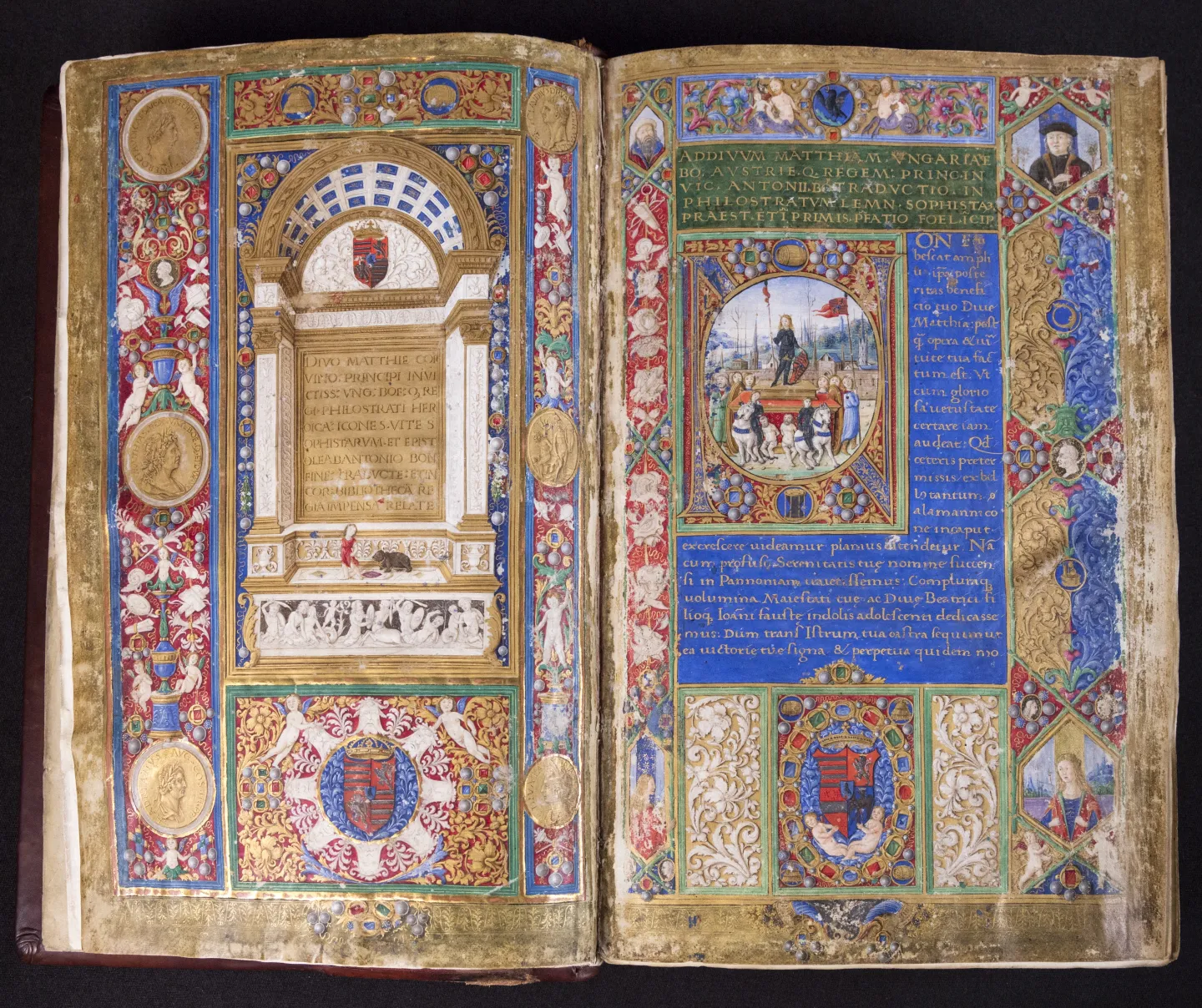
Cod.Lat.417. – OSZK – Corvina
The Buda Origin of the Philostratus Corvina
Previous research has unanimously placed the manuscript’s place of origin in Florence. Only the binding was recognised as a Hungarian work, and it was made during the reign of Wladislaw II (1456-1516). The Florentine origin was made unquestionable by the illuminator Boccardino il Vecchio. The most significant novelty in this connection is that it has been possible to prove that the decorative codex was in all likelihood made entirely in Hungary, at the royal court. We used a number of elements to prove this: the parchment was found to be identical to the type regularly used in Hungary for the decorative codices of the court elite in the third quarter of the century. The copyist was confirmed to be the most important scribe of the scriptorium set up at court to develop the royal library. Furthermore, we have shown that the figures in the initials of the interior decorative pages were not created by Boccardio il Vecchio, but by another painter from the Buda workshop. The only point left in question is Boccardino il Vecchio. However, it seems that we must assume he painted the codex in Buda and that the interior figural initials are the result of a collaboration with another Buda master. This can also be inferred from the fine-tuning of the iconographic programme, the deliberate use of the coat of arms, and the fact that he incorporated motifs from a specific codex of the Buda library. A supposed residence of Boccardino in Buda is not contradicted by his career either. [2]
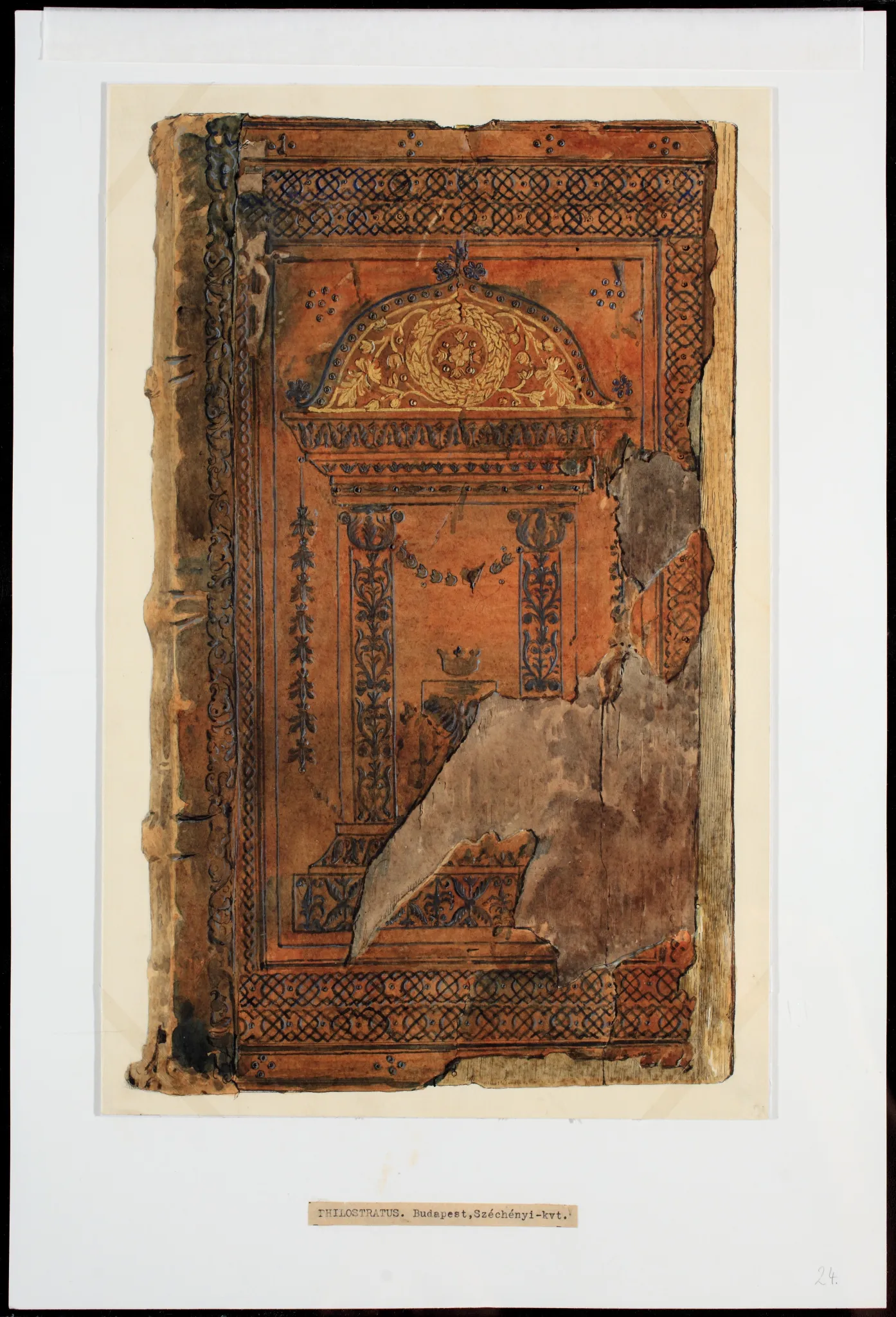
Fig. 2 The binding of the Philostratus Corvina before the restoration. Watercolour painting by Gyula Végh
The Corvina Library
An important stage in the extensive and intensive research on corvinas of the past three decades was the National Széchényi Library’s corvina exhibition in 2018/2019, which focused on the codex manufacturing workshop in the royal court of Buda. [3] (the exhibition, curated by Edina Zsupán, is available online). The exhibition examined this issue in a monographic manner, based on the detailed codex research of the previous years, and in fact drew a new picture of both the Buda workshop and the library as a whole, especially regarding its establishment. One of the most important results was the dating of the library, which clarified that the decorative library known as the Bibliotheca Corvina was established in the last years of Matthias’ reign. This representative library, which was housed in separate room or rooms next to the royal chapel, with uniform bindings and a uniform ownership mark, the King’s coat of arms, was essentially different from any group of books found in the palace before. It was created after the Austrian conquests of Vienna (1485) and Wiener Neustadt (1487) by Hungarians, as part of the general expansion of the royal representation, and in parallel with the reconstruction of the palace in Buda.
Both the historical sources and the information gathered from the surviving corvinas show that the library’s holdings were systematically and consciously developed on the basis of a unified concept of content. To this end, existing items were acquired, where possible, either from the book market or from the libraries of previous, deceased owners. In many cases, however, new codices were produced. New orders were mainly placed with Florentine book illuminator contractors, but a book production workshop was also set up in Buda. The first traces of codex production in the Buda court in the era of Matthias date back to around 1480. The arrival of Queen Beatrix and her entourage in 1476 was a key moment in this regard, but establishing a library systematically in Buda only began after the Austrian conquests.
A careful approach to the Philostratus Corvina reveals the above aspects of the library’s construction. The codex documents that political endeavors and changes in representation are interconnected. Both its contents and its decoration contribute to this.
It should be emphasised that the courtly representation of the Buda court was strongly influenced by all’antica patterns. This applies not only to the built environment, including sculptures and fountains, but also to the library. The royal family’s constructed Roman origin from the gens Valeria Corvina complemented this generally all’antica milieu well. The main aim in choosing the all’antica forms was probably functional: the most modern trends in visuality and ideas upon which they were based were intended to ensure the succession of the king’s natural son, Johannes Corvinus, to the throne. For the Hungarian monarch, who had no legal heir, this issue was of paramount importance during those years. Well-chosen cultural assets could be turned into political advantages. However, the positive attitude towards all’antica representation could also be based on earlier developments in adapting humanism and Renaissance in the Hungarian Kingdom.
Illumination, iconographic programme
The extremely carefully elaborated iconographic programme of the manuscript conveys to the observer the complex cultural and political situation, described above.
The codex opens with a double decorative page, the main subject of which is the laudation of Matthias. It does not form a close unity with the ancient texts, but rather with the preface describing the siege and capture of Wiener Neustadt. The main principles of composition are the rhetorical rules of laudation: in the case of a ruler, both deeds of war and peace must be touched upon. The means of visualisation are mainly drawn from the all’antica repertoire of Italian Renaissance book painting.
The most prominent and important element of the composition is the initial N(on) (2r), which dominates the centre of the right page. In the body of the letter, in accordance with the events described in the preface, we likely see Matthias in a triumphal chariot, with a walled city behind him, referencing the besieged city of Wiener Neustadt or possibly Vienna, where the actual triumphal march took place.
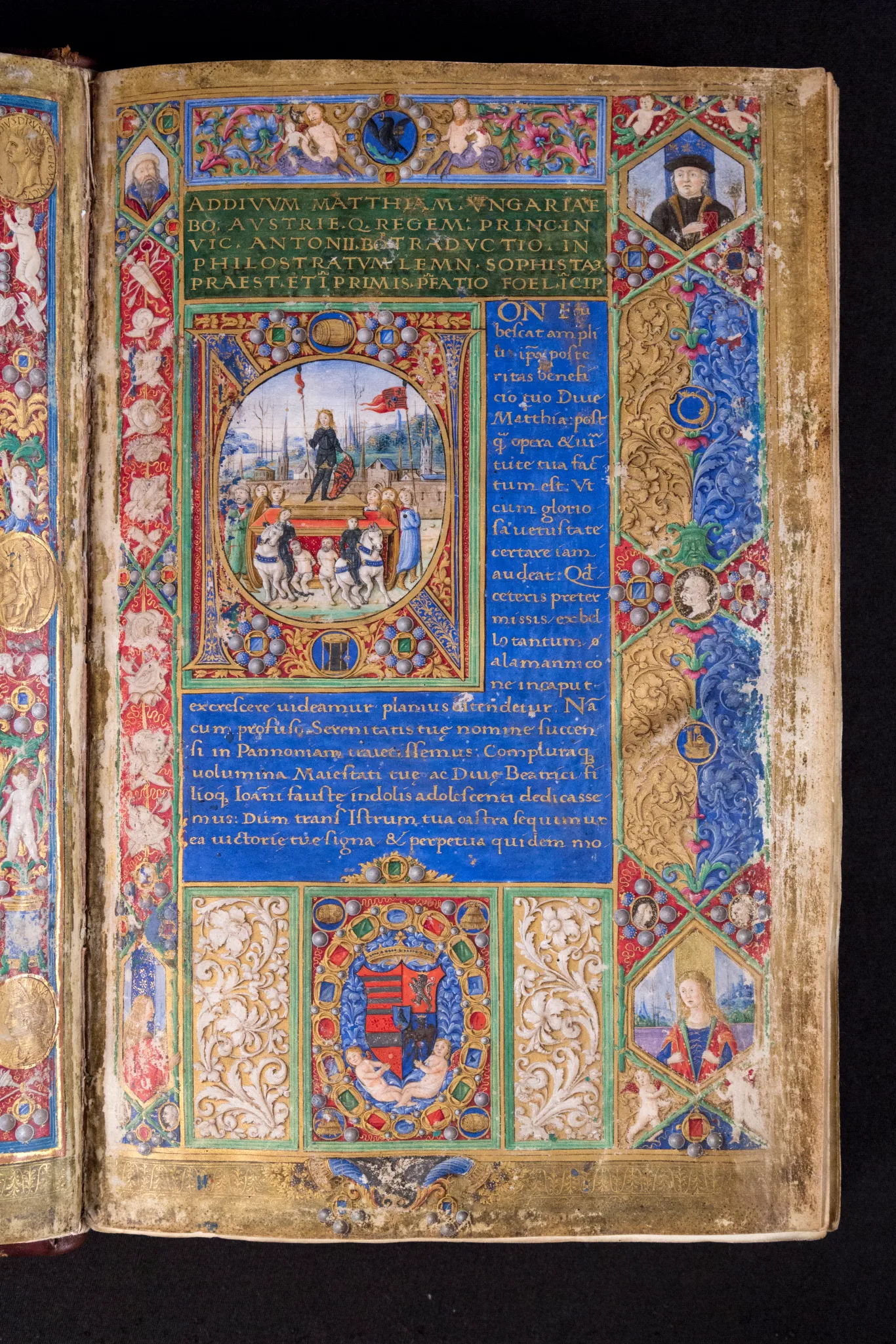
Fig. 3 The Philostratus Corvina, Budapest, National Széchényi Library, Cod. Lat. 417, 2r (Photo by Máté Török)
In the upper left corner, there is probably a fictitious portrait of the author, Philostratus. In the upper right corner, Antonio Bonfini can be seen, as indicated by the book he holds and points to with his right hand, emphasising the crucial and complex role he played in the creation of the volume. In the bottom right corner there is probably the heir to the throne, Johannes Corvinus, and opposite him is his fiancée, Princess Bianca Maria Sforza of Milan. As mentioned above, the depiction of the heir and his bride was important to emphasise Matthias’ plans for succession to the throne.
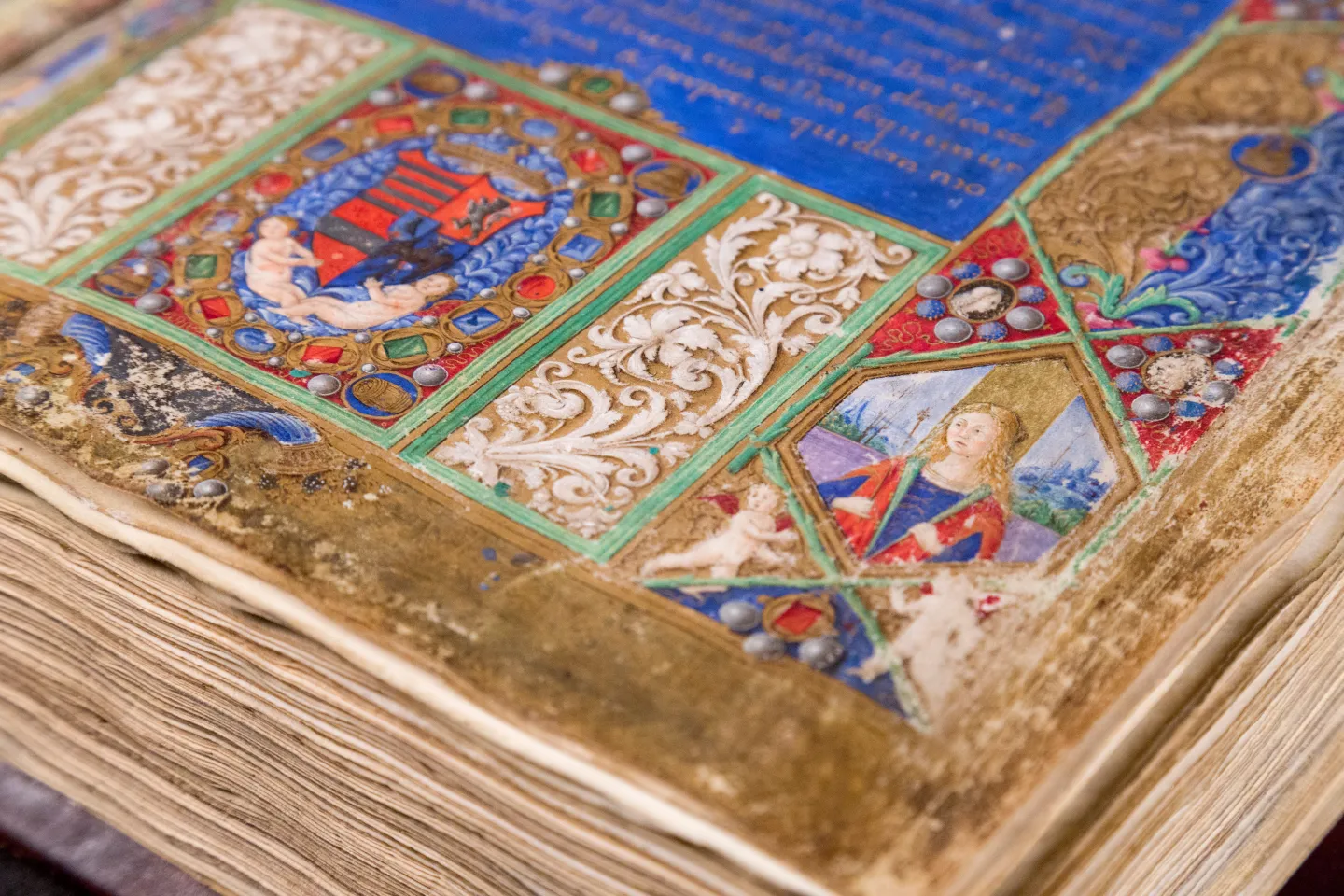
Fig. 4 The Philostratus Corvina, Budapest, National Széchényi Library, Cod. Lat. 417, 2r (detail):
Johannes Corvinus (1473–1504), heir to the Hungarian throne (Photo by Máté Török)
On the left page (1v) the emphasis shifts from the military deeds to the peaceful achievements of the King: a subtle reference is made to the fact that the Hungarian monarch not only serves Mars, but is also a friend of arts and sciences. Of course, the military element is still present here. Although the all’antica formal accent pervades both pages, it is especially strong on the left side. In one of the most prominent points, at the centre of the vertical border at the edge, we find the famous portrait of Matthias in the style of Roman emperor coins. It is flanked by the medal portraits of two real Roman emperors, Hadrian below and Nero above. The composition clearly places the Hungarian King in the context of Roman imperial representation. But why were these two emperors chosen? Hadrian was generally regarded as an ideal ruler during the Renaissance, but there were other factors that could have justified his inclusion: for example, in 107 AD, he served as governor of Pannonia Inferior and even defended the province against barbarian invasions. He was also the first to attempt to codify Roman law. In this respect, he can be compared to Matthias, who published the Decretum Maius, the Great Codex of Law, in 1486. The inclusion of Nero is undoubtedly surprising, unless it is justified by the fact that the Philostratus corpus includes a work entitled Nero. If we were to find a common point between him and Hadrian, it would be their shared passion for Greek culture and art. Hadrian is also frequently mentioned by Philostratus, for example in the De vitis sophistarum.
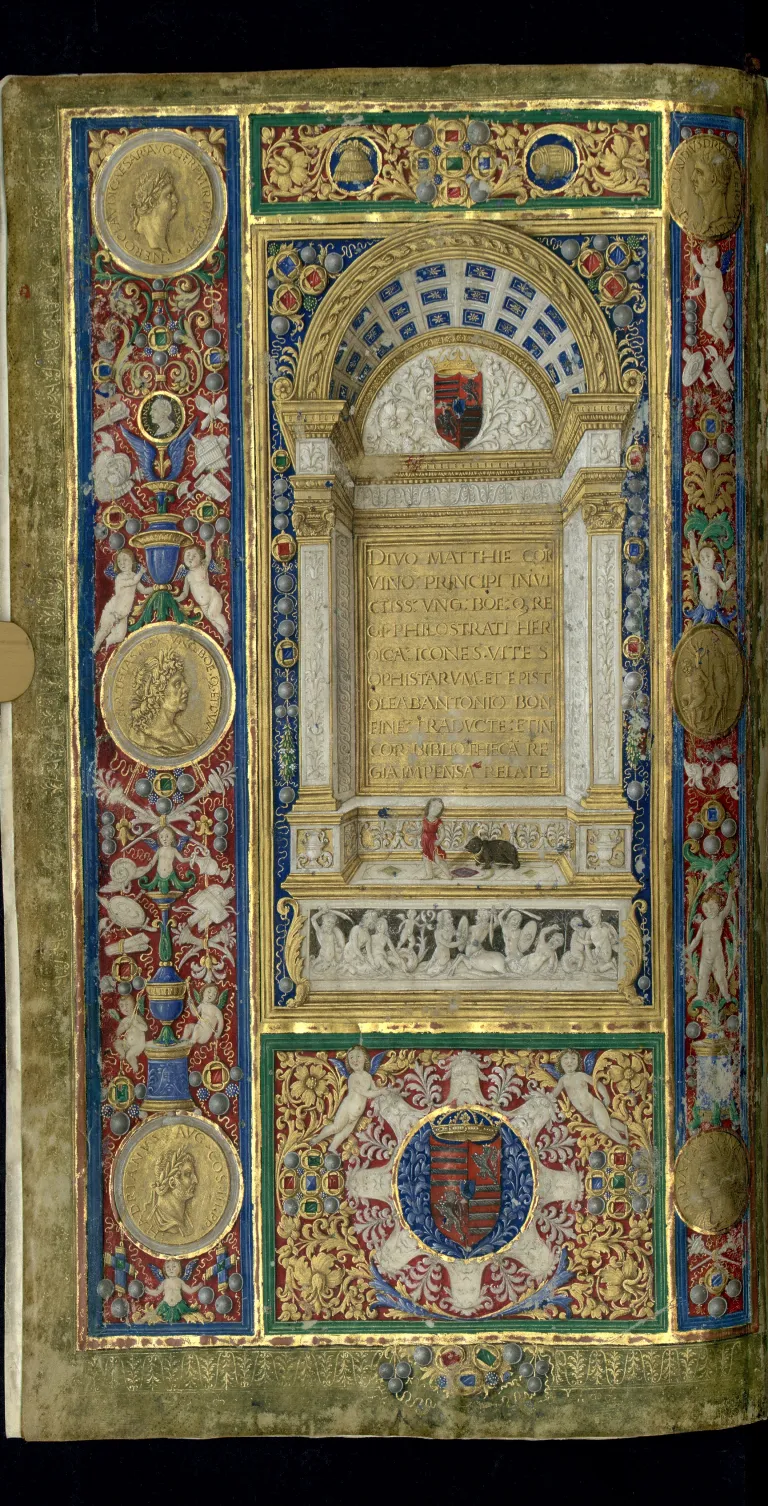
Fig. 5 The Philostratus Corvina, Budapest, National Széchényi Library,
Cod. Lat. 417, 1v
The medal portrait in the upper right corner depicts Nero Claudius Drusus Germanicus, son of Augustus’ wife Livia Drusilla by a previous marriage. He fought extensively in Raetia and Germania, crossing the Rhine, the natural border of the Empire, into new Germanic territories and even crossing the Elbe. (He was the father of Emperor Claudius and the grandfather of Nero.) We can only speculate as to why he was depicted in the codex. Of course, his excellence as a commander would, in itself, justify this, but the suspicion arises that his Germanic conquests were the main reason, since they could, in a sense, be paralleled with Matthias’ advance in Austria.
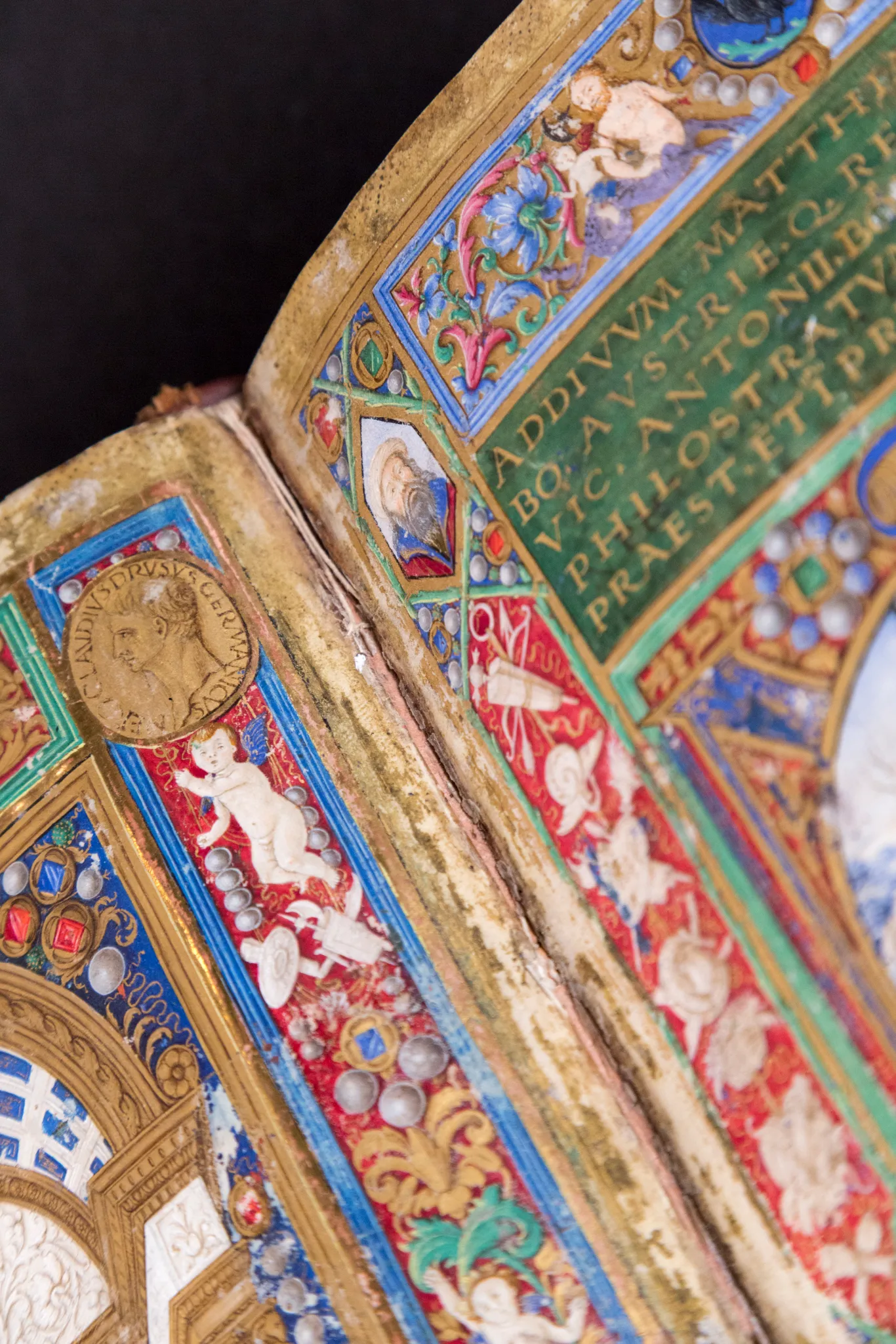
Fig. 6 The Philostratus Corvina, Budapest, National Széchényi Library, Cod. Lat. 417, 1v (detail): The medal portrait of Nero Claudius Drusus Germanicus in the upper right corner (Photo by Máté Török)
Finally, there is a portrait of a woman in the lower right-hand corner of the series: Faustina the Elder, wife of the Roman Emperor Antoninus Pius. A much-loved empress, she was renowned for her wisdom and charity, such as supporting the education of Roman children. After her death, Antoninus Pius elevated her to the rank of goddess, had a temple built in her honor, and had a coin minted with the inscription “DIVA FAUSTINA”. A copy of this coin can be seen in the codex. During the Renaissance, Faustina became a symbol of the ideal wife. It is clear that her inclusion in the manuscript may be a veiled reference to Matthias’ wife, Queen Beatrix, in a symmetrical position with the heir to the throne’s bride, Bianca Maria Sforza, to whom she turns her back. The gesture could also be interpreted as a veiled reference, as Beatrix was known to be against the marriage plan.
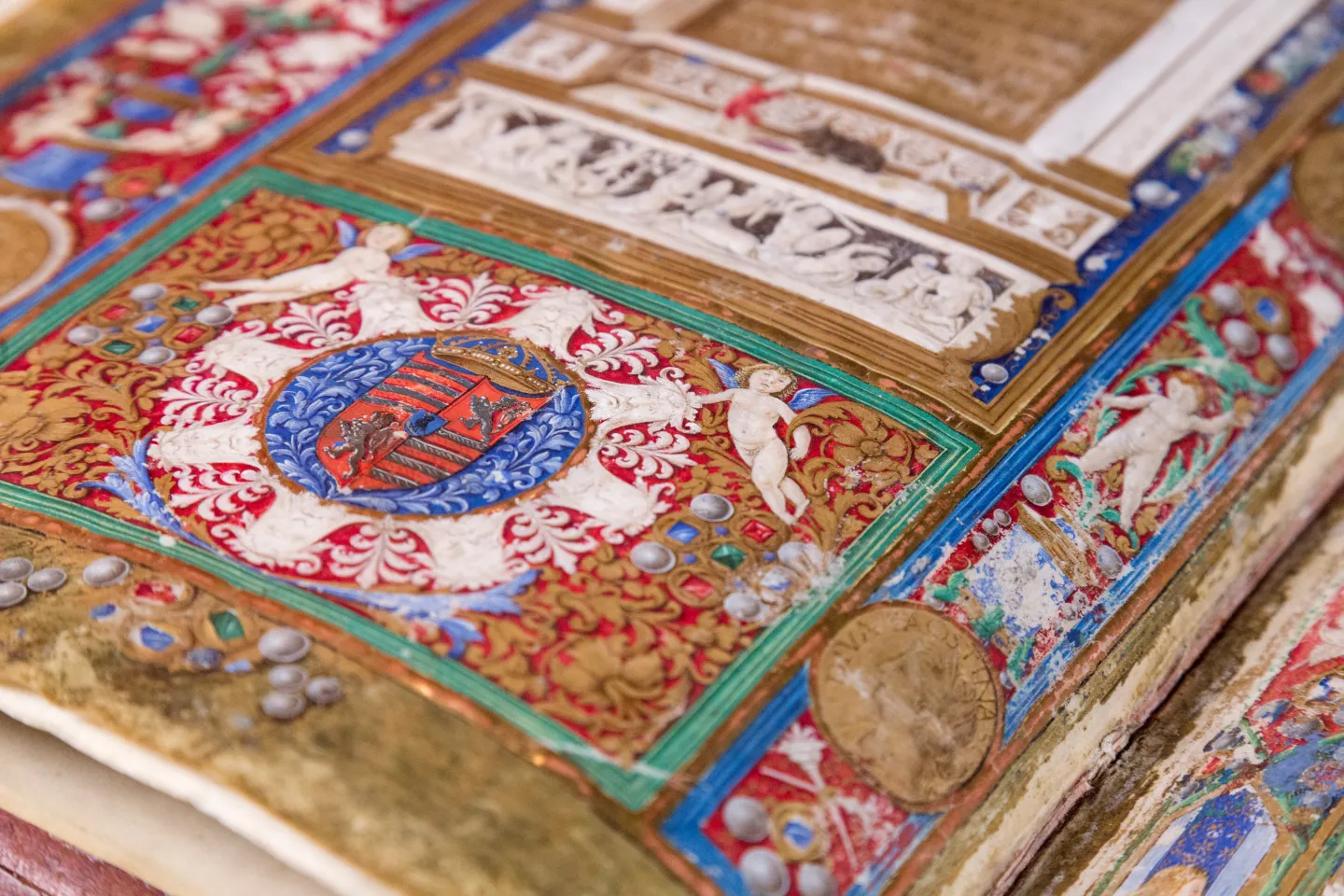
Fig. 7 The Philostratus Corvina, Budapest, National Széchényi Library, Cod. Lat. 417, 1v (detail):
The medal portrait of Faustina the Elder, wife of the Roman Emperor Antoninus Pius (Photo by Máté Török)
Together, as a group, the Roman portraits create a kind of Roman force field, in which Matthias Corvinus appears as their equal, belonging to them by his origin as a descendant of the gens Valeria Corvina. The portraits also outline the world in which Philostratus’ characters move—something similar to what happens in Plutarch’s Vitae Parallelae, where only biographies, or ‘textual portraits’, form the fabric of history. The Vitae Parallelae was, moreover, one of the ‘bibles’ of Renaissance humanism, partly creating and partly serving the cult of ‘personality’ of the time. The biographical perspective, linked to and drawing from literature, inevitably arises in the mind of the observer when encountering a medal portrait, potentially blurring the line between the visual and the literary experience. The function of the Roman imperial portraits is thus twofold: in addition to representing Matthias’ royal representation, they create a connection between the main text of the codex and the double title page. What is more, they weave the subtle content of the manuscript into the praise of the monarch: the cultivated world presented by Philostratus is also that of Matthias, and he moves within it; his cultural achievements are part of this scholarly, art-friendly space, and unfold within it. Ultimately, the royal representation itself is expanded: the period that welcomes Matthias is the sophisticated world of the first two centuries of the Roman imperial age, a world that particularly valued Greek culture.
Of the sphere of culture and intellectual virtues makes part a copy of the famous carneol intaglio of the Medicis, opposite the medallion portrait of Matthias, depicting the mythological contest between Apollo and Marsyas. [4]
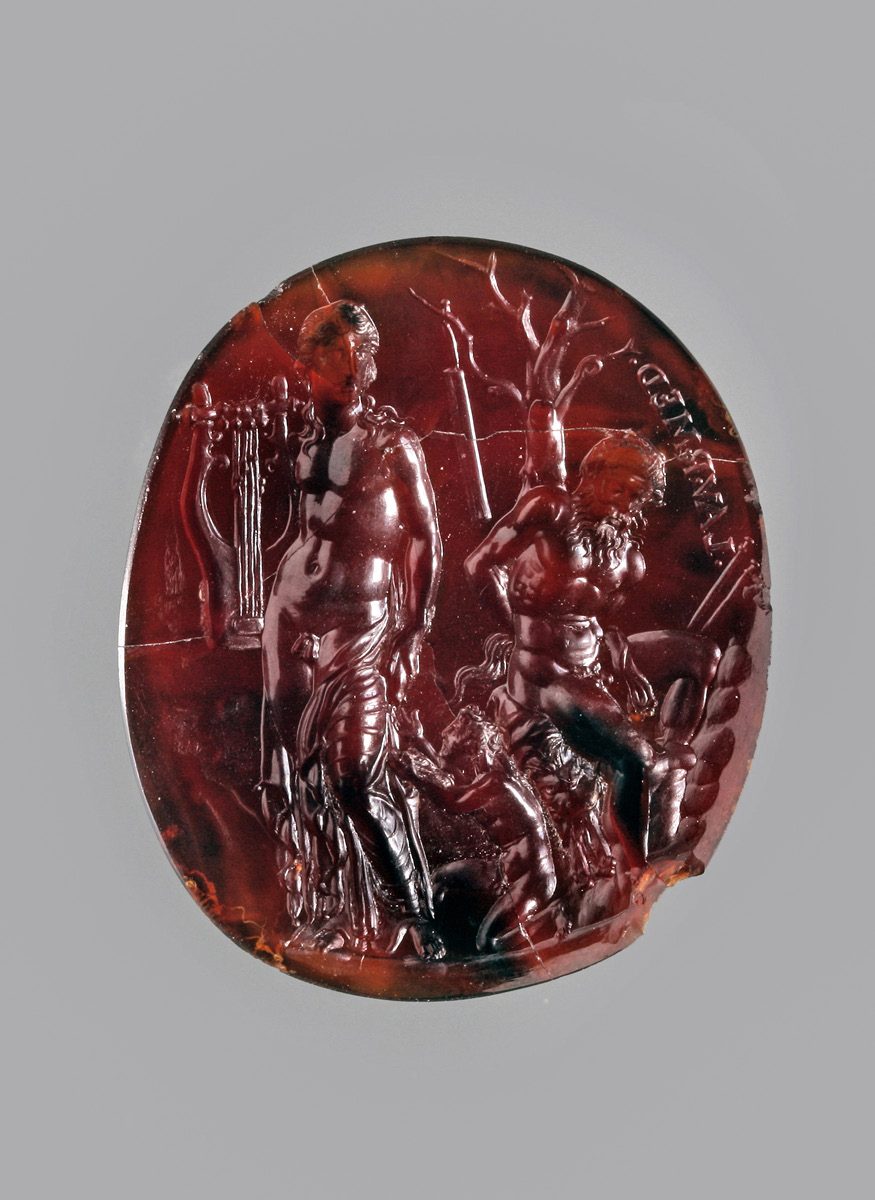

Left: Fig. 8 “Sigillo di Nerone.” Napoli, Museo Archeologico Nazionale, inv. 26051
Right: Fig. 9 The Philostratus Corvina, Budapest, National Széchényi Library, Cod. Lat. 417, 1v (detail): The scene Apollo and Marsyas, known as the “Sigillo di Nerone”, depicted on a bronze medal (Photo by Máté Török)
The background to the story is that in antiquity the flute/pipe was generally considered a lower instrument than the lute. According to the myth, the instrument was invented by the goddess Minerva, who was laughed at by others when she played it because her cheeks puffed out. In response, the goddess threw away the flute, which was found by the satyr Marsyas. Marsyas became a brilliant flutist, and arrogantly challenged Apollo, the unrivalled lute player, to a musical contest. Apollo was extremely indignant at this impertinence and stipulated that the winner could skin the loser alive as a prize. Apollo, of course, won the contest and, as agreed, flayed Marsyas and hung his skin in a temple. The semi-precious stone, and with it the corvina, depicts the myth in a condensed way, with the emphasis on the satyr’s defeat: Marsyas is tied to a tree, with Apollo standing behind him with his lute in his hand. The myth was very popular in Renaissance Italy, there are several levels of interpretation to it. Apollo’s victory can be seen as a victory of culture over barbarism in general, and as we have seen above, the internal world of the codex also makes us think strongly of Greco-Roman culture. But in the context of the visual programme of the double title page the triumph of culture can also be narrowed down to the triumph of the ruler’s wisdom. The representation, as well as the myth, also has philosophical connotations, which can be explained in terms of the New Platonic philosophy that was very popular at the time in Italy. In this spirit, the story symbolises the struggle between body and soul, the ascent and upward striving of the soul. And the motif of the skinning represents the separation of the soul from the body. This aspect must have been relevant in the Hungarian royal court of the late 1480s, since New Platonism had been known in the Hungarian Kingdom for several decades, and had almost become a court philosophy. Whatever the level of interpretation, the message is that the Hungarian King was committed to the values and achievements represented by Apollo. And what were the most important of these? The table of contents in the middle of the left-hand page, inscribed on a bronze plaque against the background of an aedicula on an antique sarcophagus, tells us:
“To the divine Matthias Corvinus, the invincible prince, King of Hungary and Bohemia: On Heroes, Images, Lives of the Sophists and Letters written by Philostratus, and translated by Antonio Bonfini, and housed in the Corvina Library at royal expense.” [5]
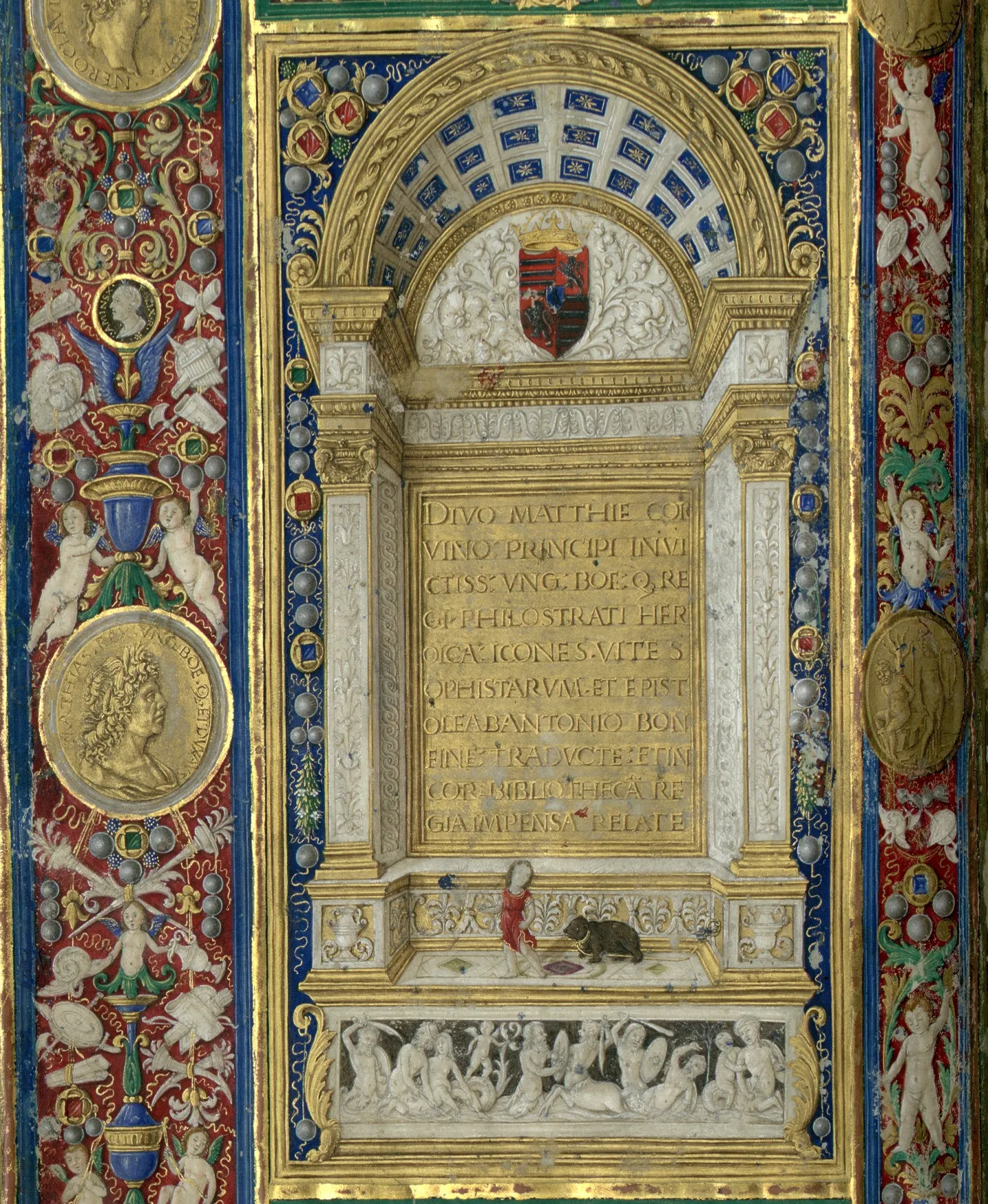
Fig. 5 The Philostratus Corvina, Budapest, National Széchényi Library, Cod. Lat. 417, 1v. Detail
The inscription not only mentions the contents of the codex, but also its home, the royal library. One of the most significant achievements of Matthias’ Muses was undoubtedly the library. The table of contents, written in Antiqua capital letters, a script that was also an expression of the modern culture born in Italy, refers to it as the “Corvina Bibliotheca”. This is the only occurrence of the term in a contemporary context, which has become one of the names of the library in use today. The fact that the library could have already been provided with a name suggests that the biblioteca was already established as an autonomous, independent element of the court. There may, of course, have been a functional reason for the birth of the name Corvina Bibliotheca, linked to the King’s current political ambitions. It is clear that Bonfini deliberately emphasised the adjective Corvinus in the text of the contents, thus naming both the King and the library. This, together with the iconographical programme presented above, the emphasis on the Roman imperial representation, was a way of conveying the Roman origin of the monarch and his family. As mentioned, Matthias saw this as important, above all, for the succession of his son. This is clearly demonstrated by the name of the King’s son, already known as Johannes Corvinus.
The Philostratus Corvina is the essence of many aspirations and phenomena. It reflects the cultural, representational, political and artistic milieu in which it was created. It is an inextricably intertwined and interdependent result of the interaction of various factors, within a distinctly antique and Renaissance force-field. And perhaps we are not mistaken in thinking that it can be considered authentic in this regard as well: the all’antica world is now at home in Buda. It has ceased to be a foreign construct, it has become capable of communicating even through symbols, as it was already well understood by the Hungarians. It was this heritage that Matthias passed on to the Jagiellon Kings of Hungary. The Philostratus codex was also highly valued during their reign. A note on one of its flyleaves attests that it was given by King Wladislaw II to the Viennese humanist Johannes Gremper in 1513, in the presence of his chamberlains. This is how it escaped destruction and can convey to us the message of Matthias’ splendid court.
For the digitised manuscript see:
Philostratus: Heroica, Imagines, De vitis sophistarum, Epistolae – Bibliotheca Corvina Virtualis
Notes
[1] Signature: Cod. Lat. 417.
[2] See Zsupán, Edina, „A Corvina Könyvtár »első« címerfestője: stílushűség és imitáció. A Philostratos- és a Ransanus-corvina provenienciájához”. Művészettörténeti Értesítő 66 (2017), 273‒302; Eadem, „A Corvina könyvtár budai scriptorai.” In: „Mestereknek gyengyének.” Ünnepi kötet Madas Edit hetvenedik születésnapjára, szerk. Hende Fanni, Kisdi Klára, Korondi Ágnes (Budapest, Országos Széchényi Könyvtár, Szent István Társulat, 2020), 125–137. Also, see the descriptions of the codex in the catalogues cited in the following note.
[3] Edina Zsupán, “Information Transfer in a Scholarly Exhibition (The Corvina Library and the Buda Workshop, Budapest, National Széchényi Library, 6th November 2018 ‒ 10 February 2019).” Alexandria: The Journal of National and International Library and Information Issues (British Library) 29 (2019)/1–2: https://journals.sagepub.com/doi/abs/10.1177/0955749019877087; For the new results see the catalogues of the National Széchényi Library’s 2018/19 exhibition: Edina Zsupán and Ferenc Földesi, A Corvina könyvtár budai műhelye. Kiállítási Kalauz / The Buda Workshop of the Corvina Library. A Guide to the Exhibition (Budapest, Országos Széchényi Könyvtár, 2018); “Az ország díszére.” A Corvina könyvtár budai műhelye, ed.Edina Zsupán (Budapest, Országos Széchényi Könyvtár, 2020 – more information and ordering)
[4] ‘Sigillo di Nerone.’ Napoli, Museo Archeologica Nazionale, inv. 26051. The gem was bought by Lorenzo de’ Medici in 1487.
[5] ‘Divo Matthie Corvino principi invictissimo Ungariae Boemiaeque Regi Philostrati Heroica Icones Vite Sophistarum et Epistole ab Antonio Bonfine traducte et in Corvinam Bibliothecam regia impensa relate.’
Related articles
November 9, 2026
by Konrad K. Szymański (Ossolineum National Library, Wrocław)
November 9, 2026