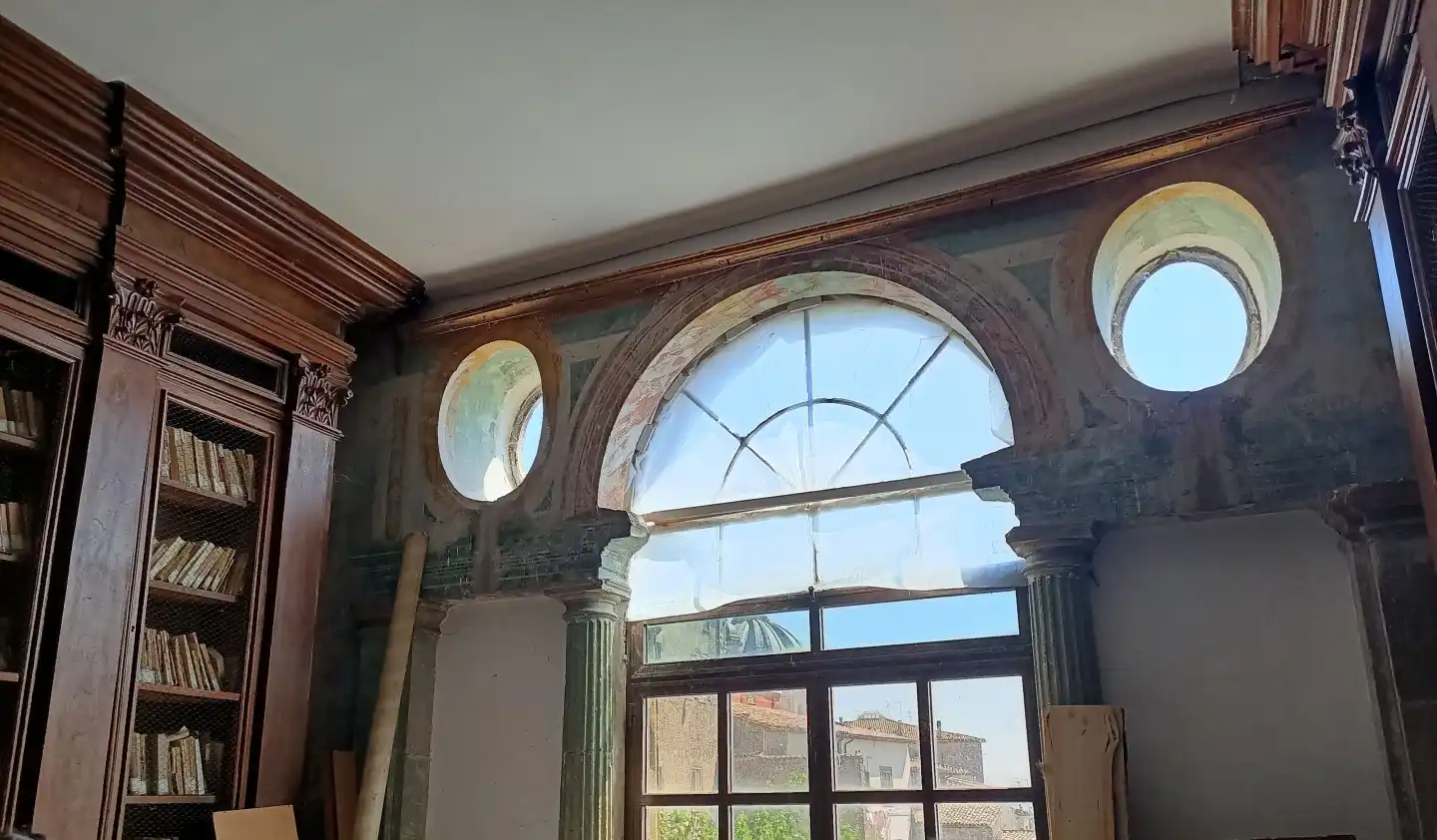
CERL Internships 2024 – Aikaterini Laskaridis Foundation
by Tom MacKinnon, Library assistant at the National Portrait Gallery of London and Archives Assistant at Christie’s
Share this article
Thanks to the CERL internship grants, I had the wonderful opportunity to spend one month working at the Aikaterini Laskaridis Foundation in Piraeus, near Athens. My objective was to create photographic records of provenance marks found in the Foundation’s incunabula, using CERL’s Provenance Digital Archive (PDA).
CERL PDA is a database that allows libraries and scholars to document visual evidence of provenance in early printed books. This can be anything that might indicate ownership, including (but not limited to) binding, margin annotations, hand-drawn illustrations, and ex libris bookplates. Users can upload hi-res images alongside descriptive metadata, which enables the research of provenance marks by their physical appearance.
These records can be linked to their corresponding entries in Material Evidence in Incunabula (MEI), another CERL database detailing the provenance of incunabula worldwide. This connection allows MEI users to access visual records of provenance marks in PDA, while PDA users can find detailed provenance information in MEI.
The Foundation and its incunabula
The Aikaterini Laskaridis Foundation was founded in 2007 by Greek shipping magnate Panos Laskaridis and his late wife, Marilena. Starting with a public lending library, the Foundation’s aim was to promote cultural and educational activity in Greece. In 2012 the Foundation created its Historical Library, which houses a collection of 165 incunabula and counting, amongst many other rare books.
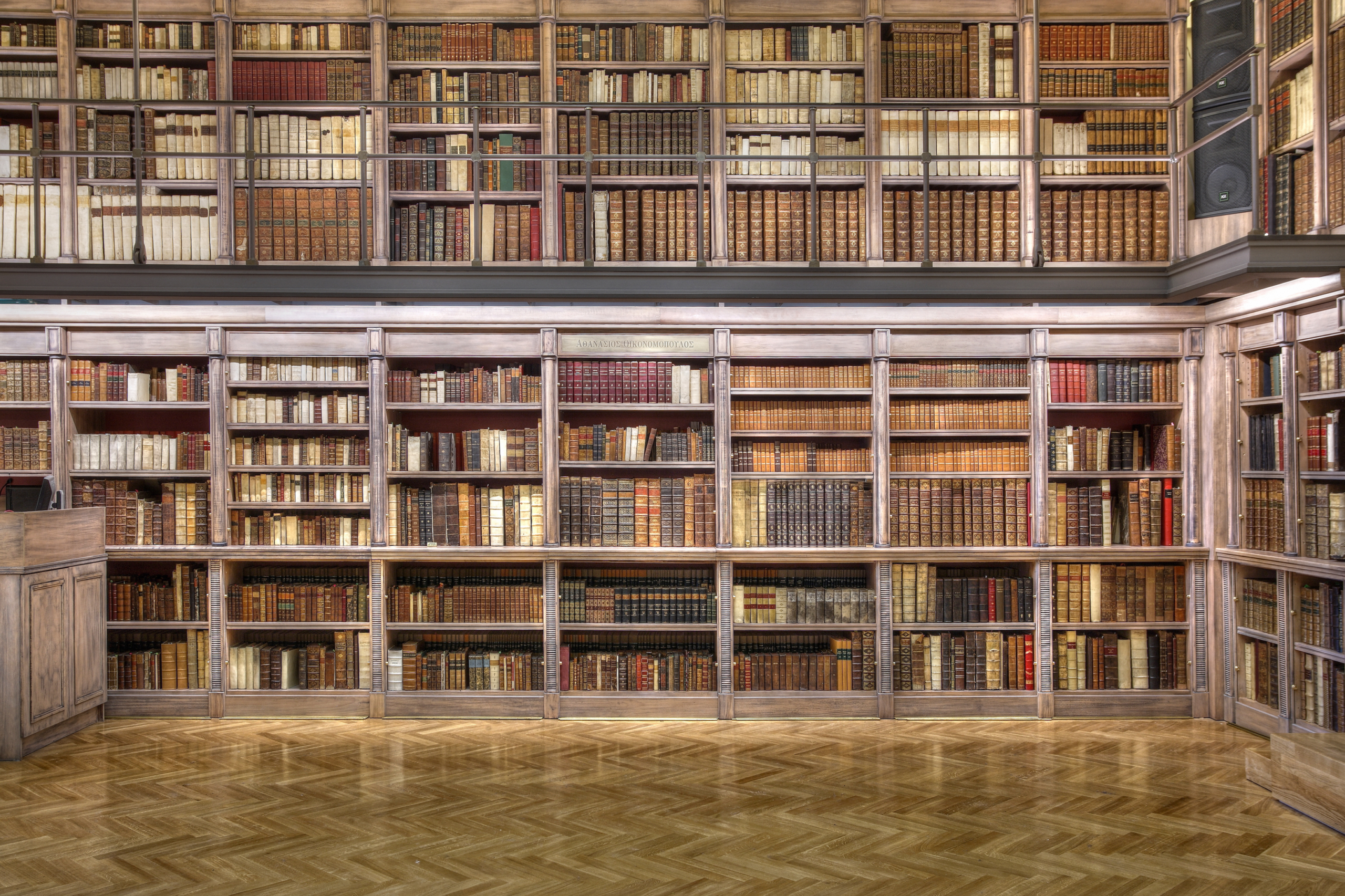
Inside the Historical Library
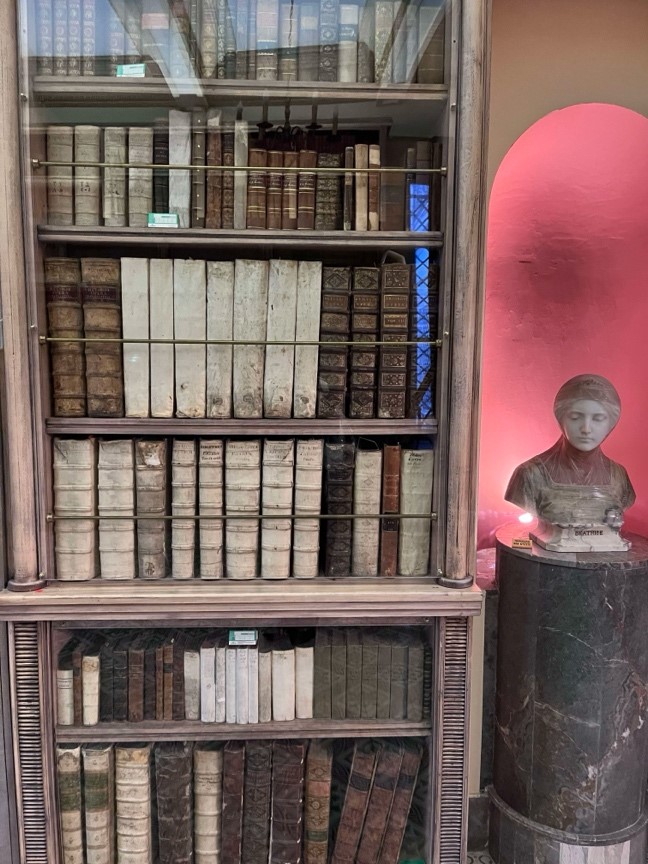
A shelf containing some of the Foundation’s rare books.
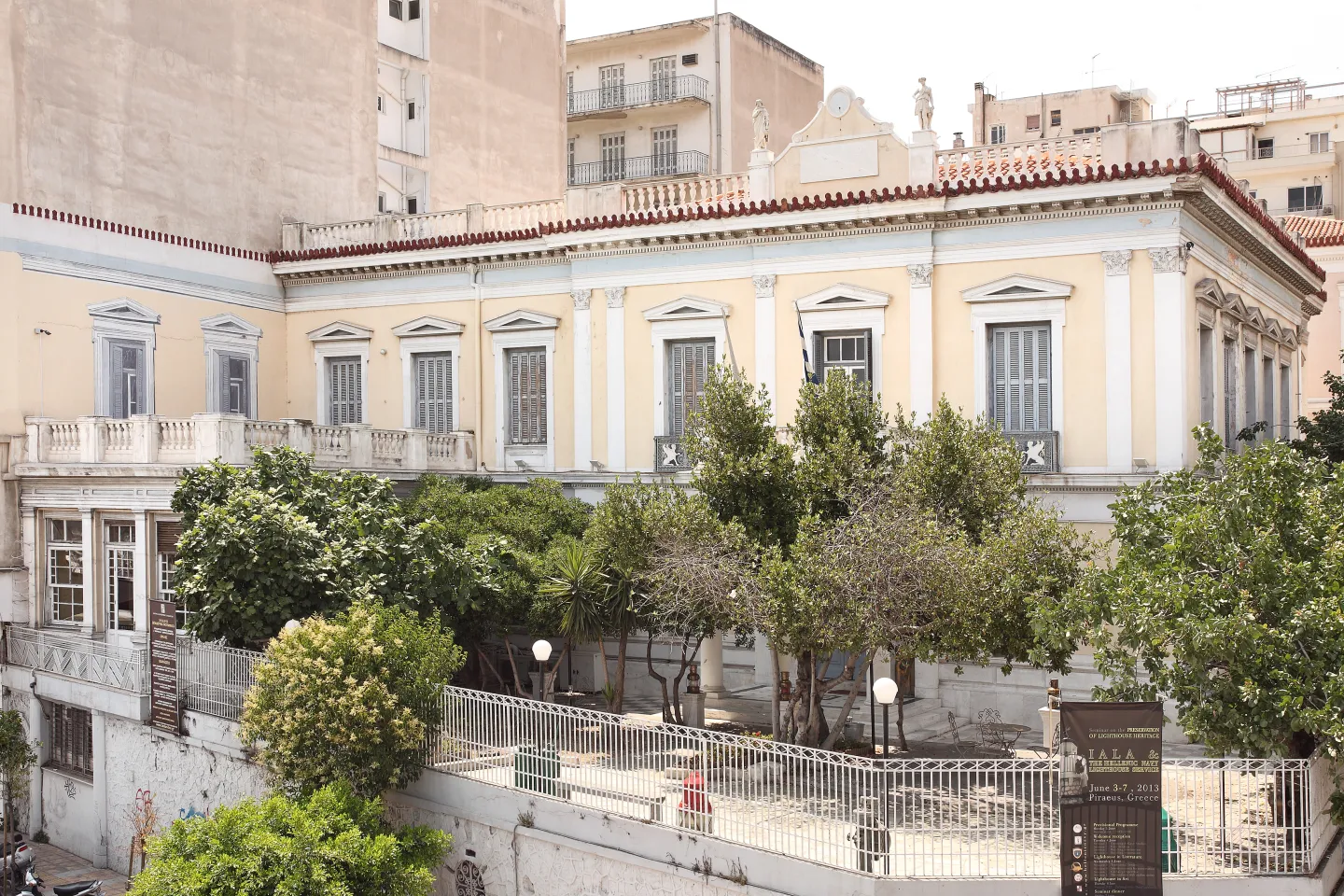
The Aikaterini Laskaridis Foundation’s Historical Library, looking out onto the Pasalimani harbour.
The Historical Library’s incunabula comprise numerous seminal Latin and Greek texts, as well as a handful of vernacular works, including Dante’s Inferno and Purgatorio.
Western European incunabula
The most intriguing Latin incunable I worked with was the Peregrinatio in Terram Sanctam (Pilgrimage to the Holy Land) of 1490, issued by the canon of Mainz Cathedral, Bernard von Breydenbach. Informed by Bernard’s own pilgrimage to Jerusalem, the Peregrinatio served as a travel account, or a guide for those interested in making the same journey.
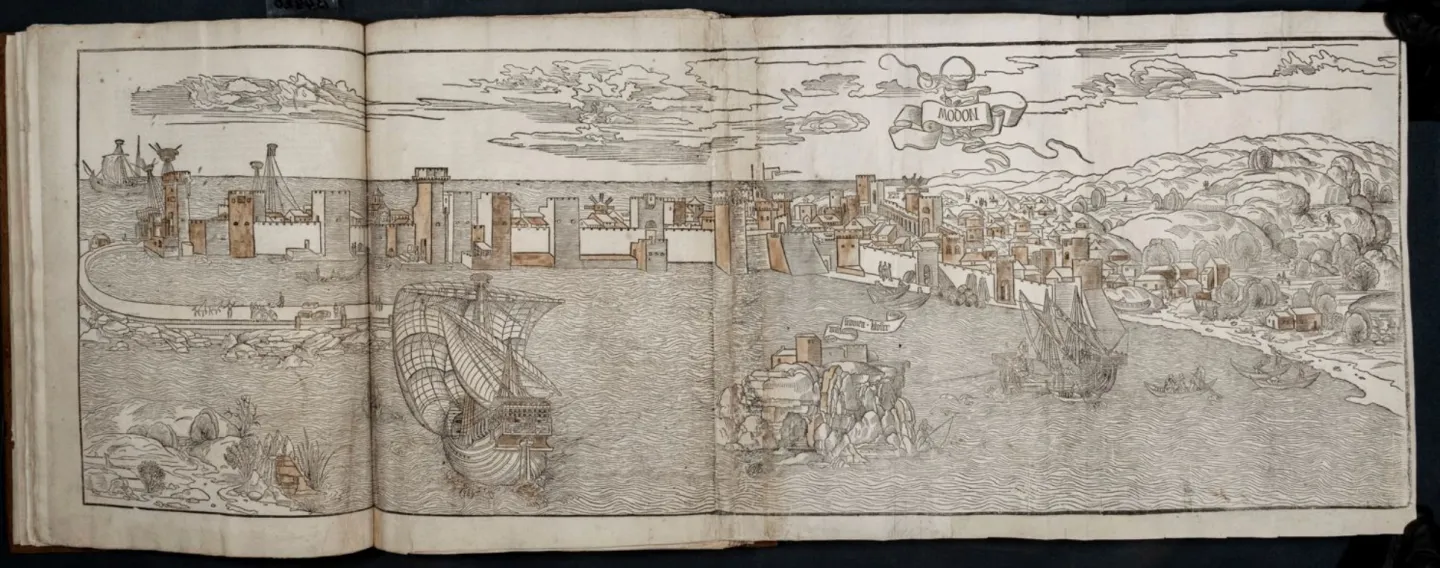
Example of a fold-out panorama in the Peregrinatio. This one shows Methoni (or Modon), a port village in Greece.
Bernard brought with him the Dutch artist Erhard Reuwich to make drawings of the sights of Venice, Greece and the Middle East. When they returned, they turned their findings into a book, packing it full of wondrous woodcut illustrations. Most impressive are the seven fold-out panoramic views of the wayfarer cities, towns and villages en route to Jerusalem. Some of the maps have been partially coloured, such as the pictured example of a Greek port village called Methoni. As the colouring is a handmade mark, it counts as provenance evidence, and has been recorded on PDA. You never know what could be useful for a researcher!
In another lively illustration, we see some animals the traveller may encounter (apparently!), including a unicorn, and a mysterious ape-like creature, labelled non constat de nomine (‘name unknown’).
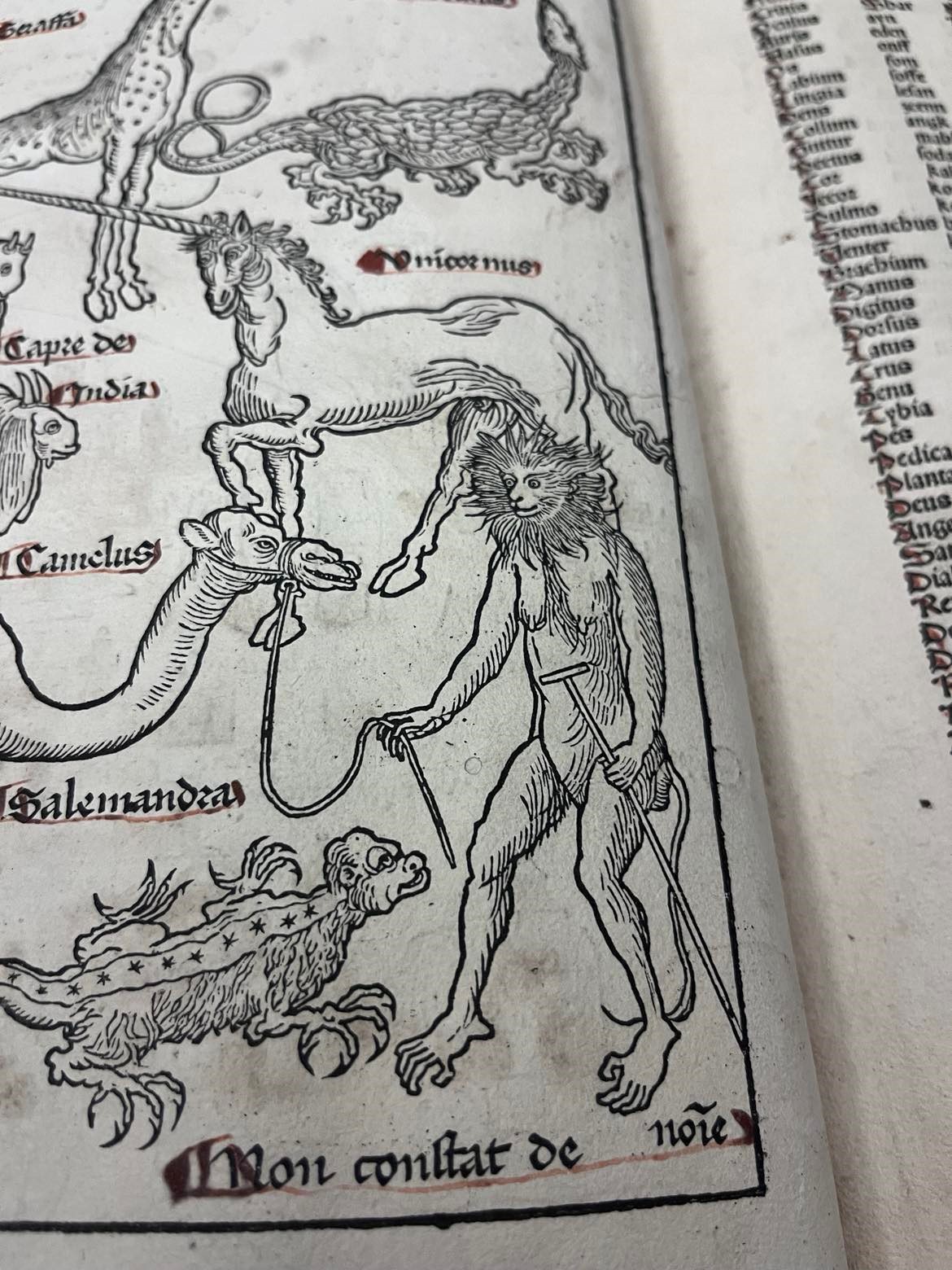
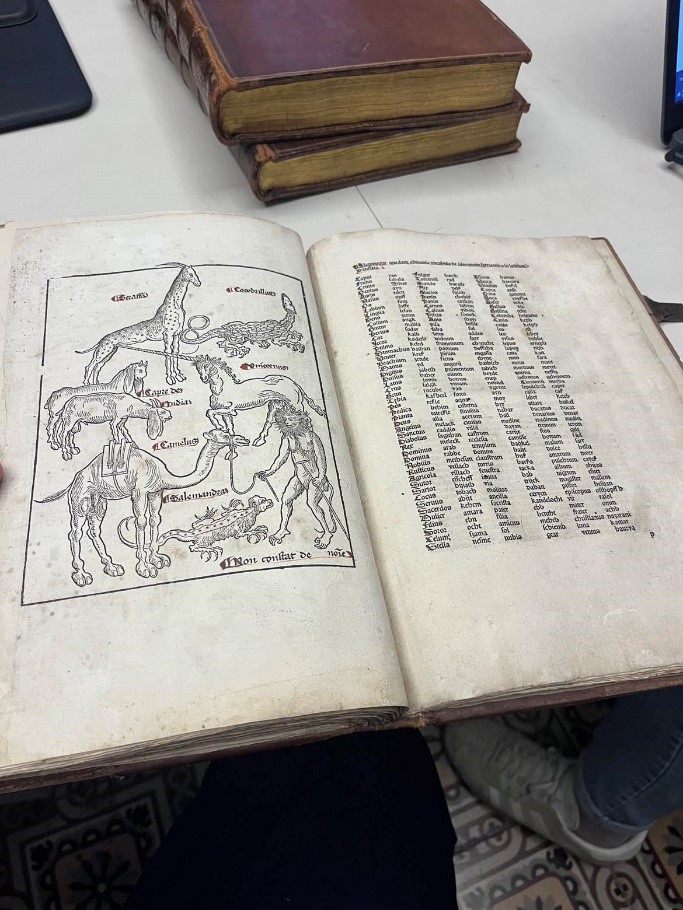
Purported middle eastern animals. Non constat de nomine holds a camelus on a leash!
To help travellers get by with the local languages, Bernard included vocabularies and alphabets for Greek, Arabic and Hebrew, like a 15th-century Duolingo. The Foundation’s copy contains a Hebrew inscription, seemingly from an early hand testing out the Hebrew alphabet grid.
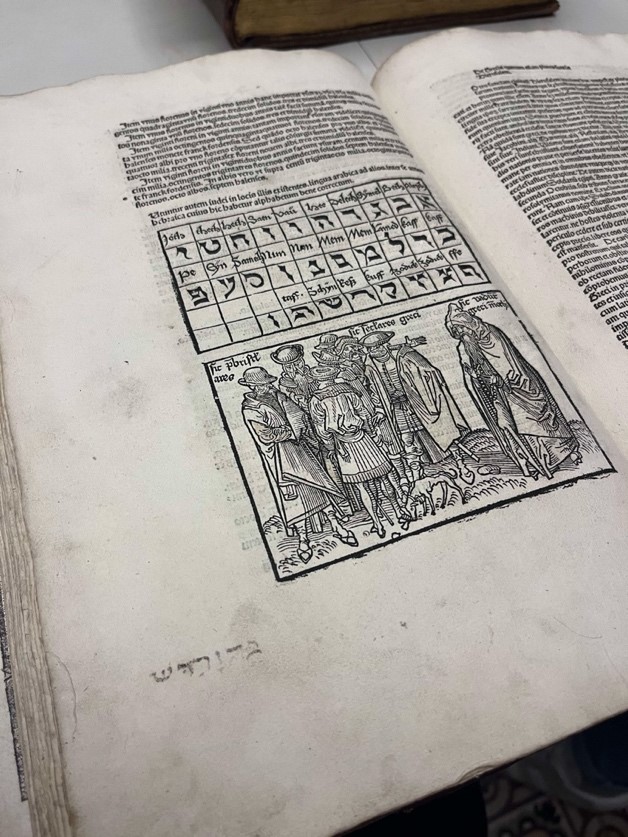
Leaf of the Foundation’s copy of the Peregrinatio: The Hebrew alphabet grid in the centre, and the Hebrew annotation in the bottom left.
Greek incunabula
In a conscious effort to tell the story of the Greek culture through print, the Foundation has amassed a large collection of Greek incunabula. Greece did not have a print culture until after it gained independence from the Ottomans in 1821, but Greek texts had been published for centuries before by Western European printers who had recognised the scholarly demand for ancient literature and histories, grammars, dictionaries and liturgical texts.
The Foundation owns a remarkable Greek psalter from 1496-8, edited by Justinus Decadyus and printed by famous Venetian Aldus Manutius. While many Greek texts were printed for scholarly western readers, this was made for Greek émigrés in Venice, who fled there after the fall of Constantinople.
During the typesetting, a line was mistakenly left out on i1r, so Aldus himself supplied it with his own hand!
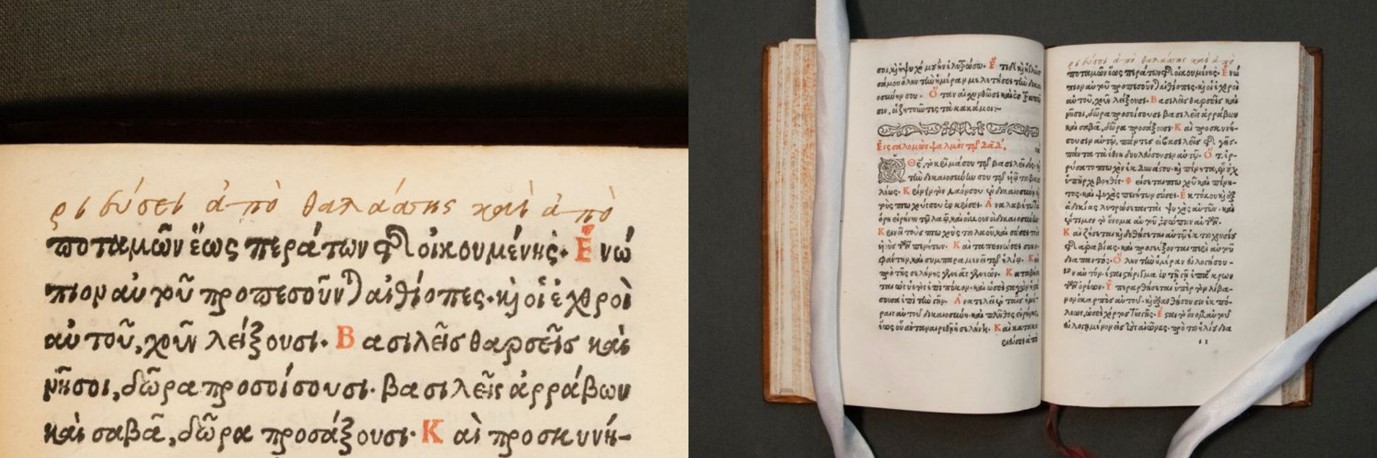
While most Greek incunabula were printed by Western Europeans, the end of the period saw the rise of Zacharias Callierges, a Cretan who in 1499, with the help of compatriot Nikolas Vlastos, established his own print shop in Venice and exclusively printed Greek texts. The Foundation owns several of his incunabula, in which we can see Callierges’ trademark red type, and his distinctive double-headed eagle printer’s emblem – a recognisable Byzantine symbol and clear marker of Greek identity.


Left: Callierges’ emblem – Right: Vlastos’ emblem
Identifying marks with CERL PDA
Part of the internship was to identify unknown provenance marks.
For example, on the front pastedown of the Foundation’s 1499 Lexicon graecum, there were two peeled-off bookplates, which I could identify thanks to another user’s entry on CERL PDA. By comparing the traces left with ex-libris plates on PDA, I identified them both as the marks of Sir John Hayford Thorold (1773-1831), a book collector based at Syston Park, Lincolnshire, England. In 1815 Thorold had inherited his father’s extensive book collection, and grew it further, purchasing tens of books at the sale of Baronet and politician Mark Masterman Sykes’ collection in 1824. Curiously, a later owner peeled off Thorold’s bookplates, but left Sykes’ untouched.
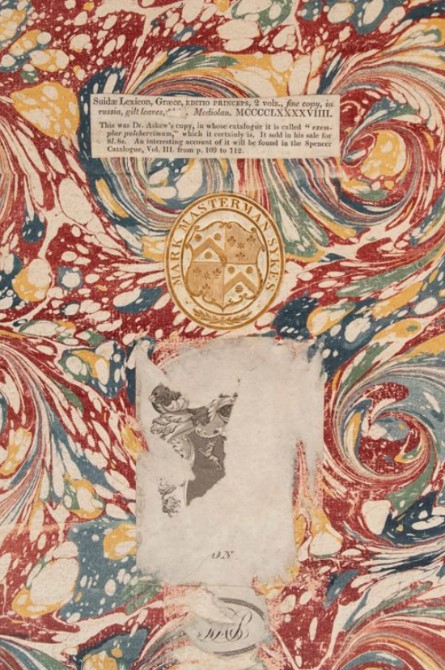
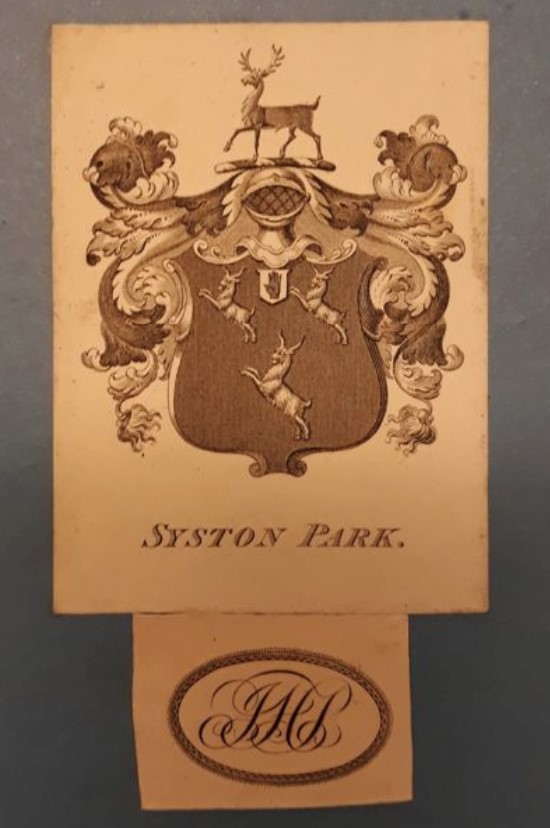
Left: Front pastedown from the Aikaterini Laskaridis Foundation’s Lexicon graecum (vol. 1), with Thorold’s peeled-off plates, and Sykes’ untouched plate.
Right: CERL PDA record from an incunable in the National Library of the Netherlands, which matches the remnants of the Foundation’s peeled-off plates.
With all three marks identified and visible on PDA, researchers can use them to further their investigations into book provenance, trade, and owner habits. This is also a great example of how PDA’s emphasis on visuality facilitated a breakthrough, in a way that written metadata simply could not.
Eccentric owners
An earlier hand in the Foundation’s Lexicon graecum reveals another interesting provenance stage. A note on the front flyleaf tells us that this copy was sold in a sale of a ‘Dr Askew’ in 1775. This refers to Dr Anthony Askew (1722-1774), an esteemed British physician and Hellenophile who aimed to own a copy of every Greek text ever printed.
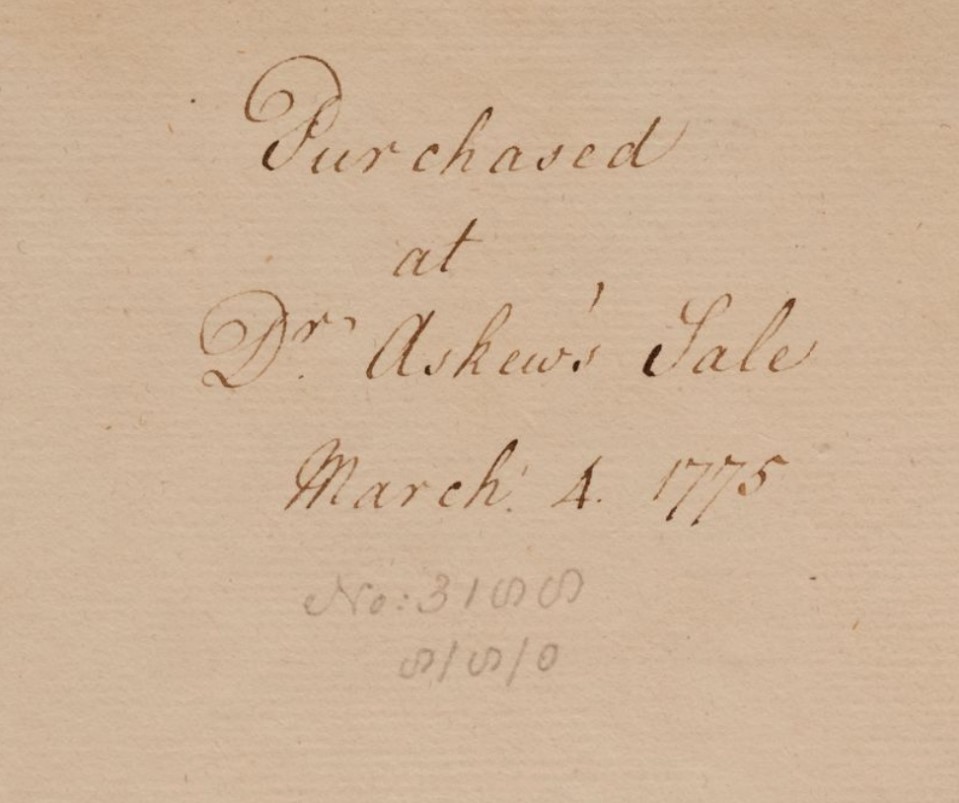
A note on the front pastedown of volume 1: ‘Purchased at Dr Askew’s sale March 4 1775’
His library of almost 7000 books was auctioned and raised nearly £4000. The sale attracted purchasers like George III, Louis XV, and the British Museum, with the latter winning the Foundation’s Lexicon Graecum, according to an annotated sales catalogue. A ‘Museum Britannicum’ stamp confirms this, and a ‘duplicate’ stamp dated 1804 suggests that it was moved on at some point after then.

This annotated catalogue of Anthony Askew’s sale tells us that the ‘museum’ won the Lexicon volumes for 8 guineas, and 8 shillings.
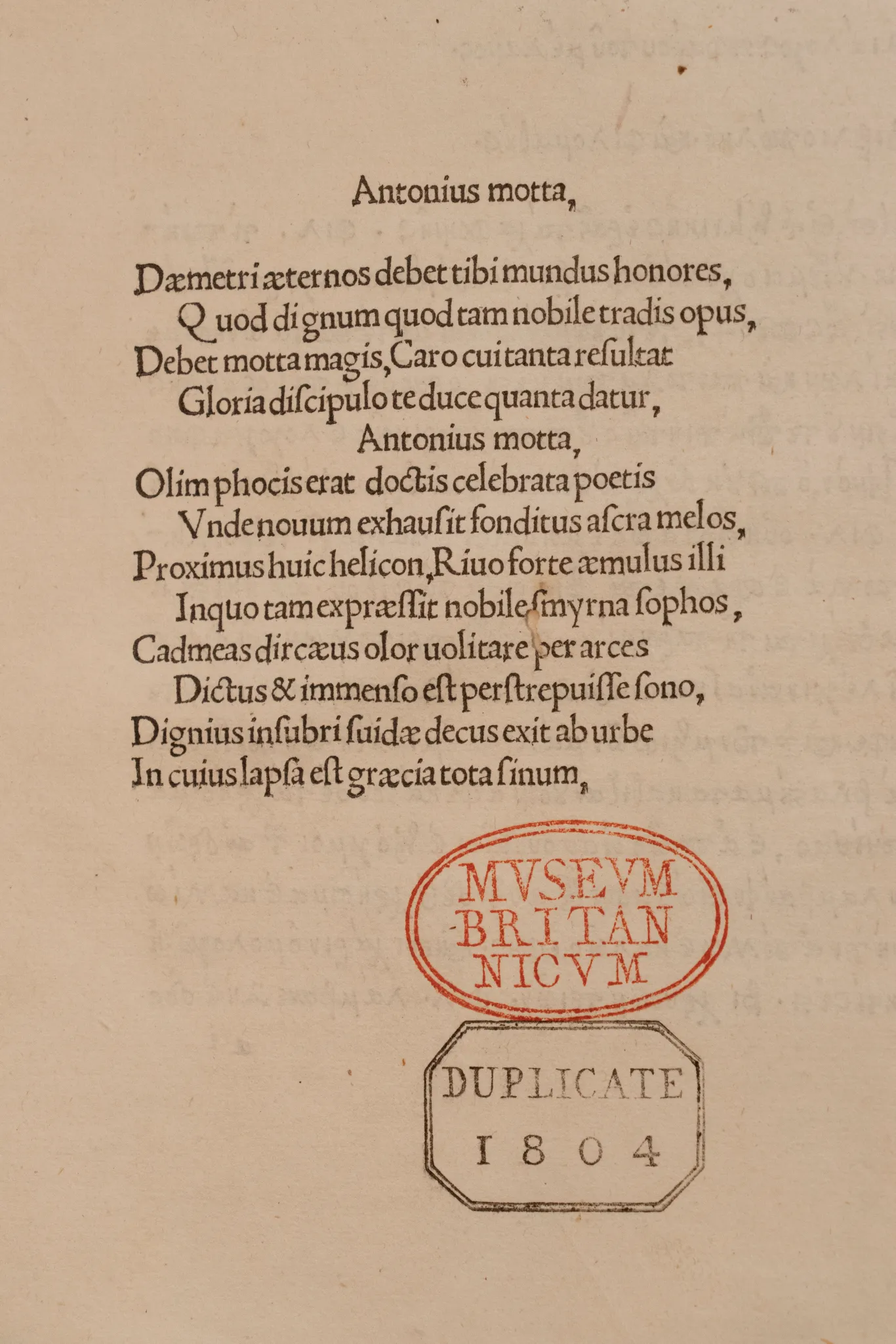
‘Museum Britannicum’ stamp, with a duplicate stamp dated 1804 below.
So, from examining this rich array of provenance marks, and using PDA and MEI, we can deduce that the provenance sequence is: Dr. Askew, British Museum, Sykes, then Thorold.
Other library visits:
The Foundation also kindly organised visits to other Athenian libraries for me. I was given thorough tours of the Onassis Library, and the Gennadius Library (of the American School of Classical Studies at Athens).
At both libraries I was shown a selection of their printed material, which, much like the Foundation, aim to tell the story of Greek print. The highlights were the Gennadius’ illuminated incunable of the Iliad, and, at the Onassis, Rigas Feraios’ 1797 allegorical map of ‘Great Greece’, a projection of an independent, empirical Greece, designed to rouse Greeks to fight against Ottoman rule. I also got to see the National Library of Greece and its facilities, including the reading and conservation rooms.


Left: The first page of the Gennadius Library’s Iliad, featuring marginalia and an historiated initial of Homer.
Right: Detail of Rigas’ map of Great Greece. Here, Greece is allegorised as a sleeping lion, weighed down by Ottoman weaponry.
In total, I made approximately 300 provenance mark records on PDA, from 60 incunabula in the Aikaterini Laskaridis Foundation’s collection, which can now be found, examined and cross-compared by provenance researchers using MEI and PDA.
This internship was fun, fascinating and brilliant for my professional development. I was able to advance my digital cataloguing skills, while also learning about the materiality of incunabula and its use in provenance research. I would like to say a big thank-you to Dr Vera Andriopoulou for all her invaluable support and supervision throughout the internship, and to Dr Cristina Dondi and the CERL board for giving me the opportunity.
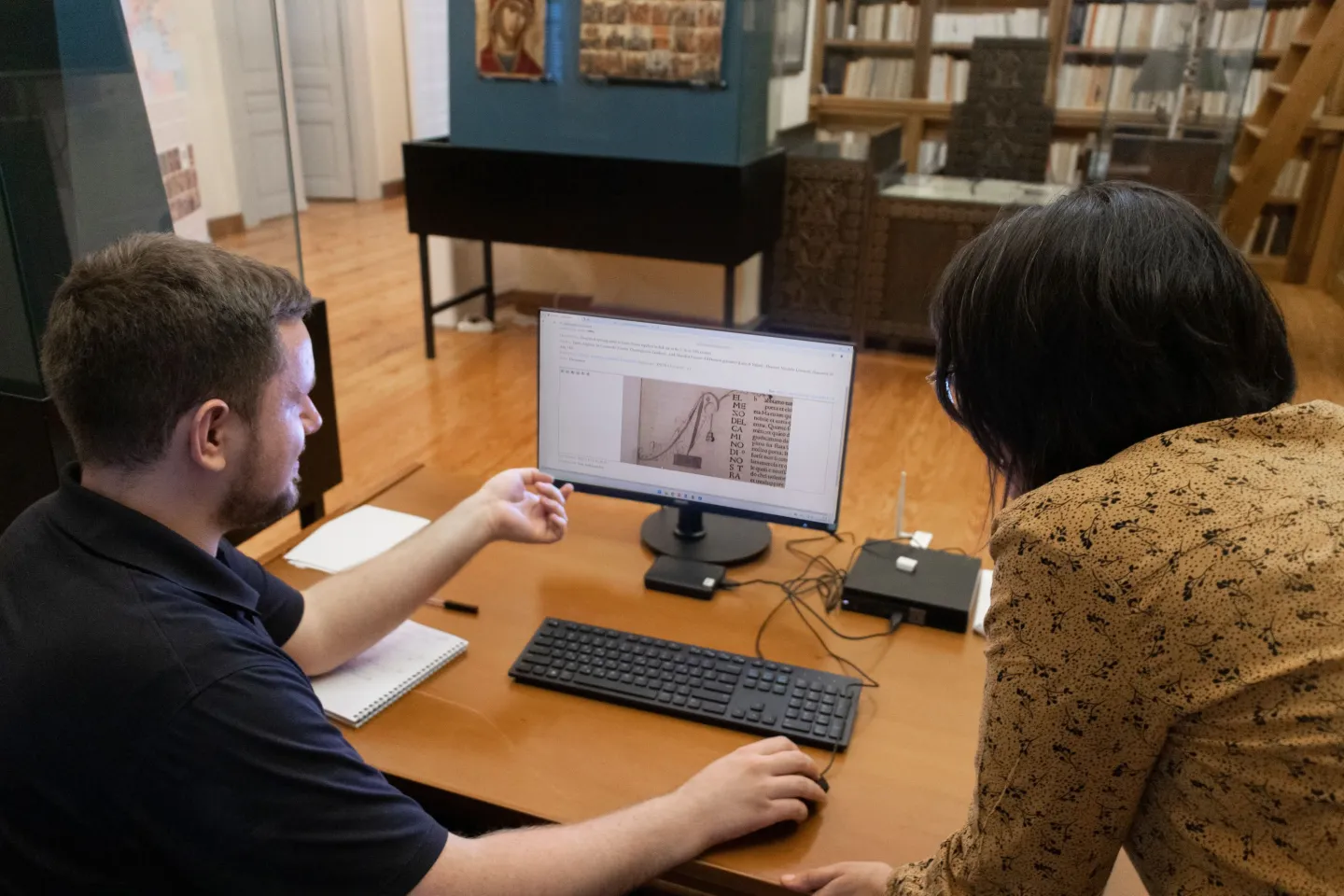
Working on CERL PDA.
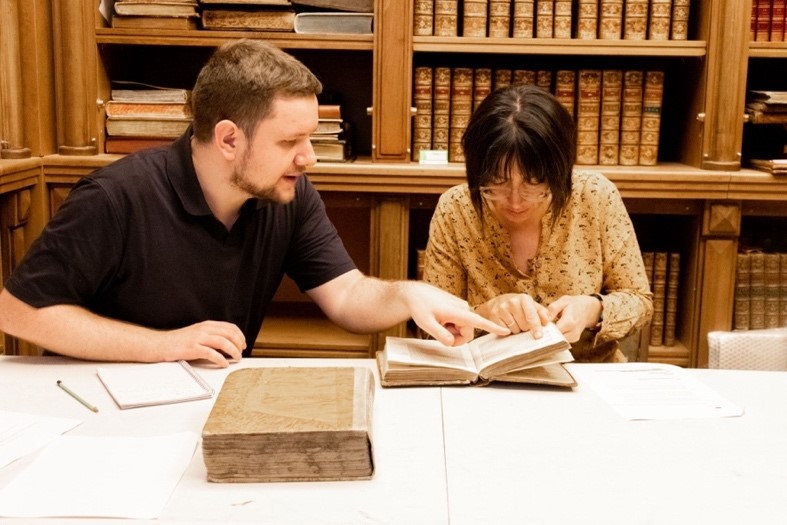
Me and Dr Vera Andriopoulou examining a provenance mark, book-in-hand.
Related articles
November 9, 2026
by Markéta Kučerová and Vojtěch Šícha, Library of the Czech Academy of Sciences
November 9, 2026