CERL Internships 2022 – Introducing MEI at the National Library of Madrid
by Elena Fogolin, CERL grantee 2018/19 to the Huntington Library, San Marino, CA. PhD candidate University of Udine, Italy/Johannes Gutenberg University in Mainz, Germany
Share this article
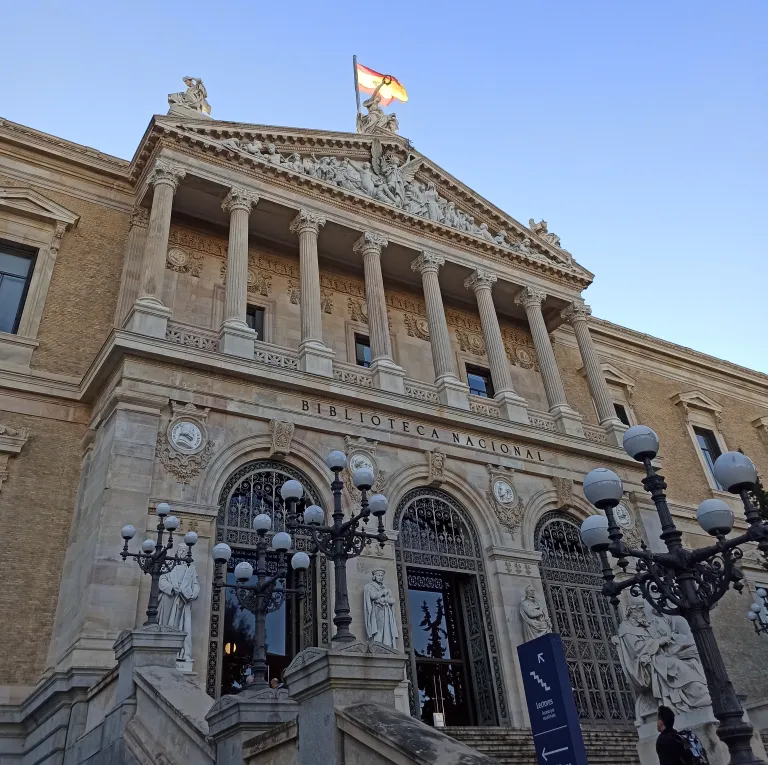
Thanks to the CERL Internship and Placement Grant 2022, I was able to work for four weeks as an intern at the Biblioteca Nacional de España in Madrid, under the supervision of Maria José Rucio Zamorano, head of the Manuscripts and Incunabula section.
Since I was already an experienced MEI Editor, I trained Maria José Rucio Zamorano and Isabel Hernández Gómez de Caso in the creation of MEI records. The training was divided in multiple sessions: after an in-depth presentation of MEI to get familiar with the database, we worked together on some copies of the Biblioteca Nacional in order to make some practical examples of how to create new MEI records. The aim of introducing MEI in the Biblioteca Nacional is to transfer gradually into the database the data published in Martín Abad, Julian, Catálogo bibliográfico de la colección de incunables de la Biblioteca Nacional de España, 2 vols (Madrid, 2010), as well as the new acquisitions.
During my stay at the Biblioteca Nacional in Madrid, I started tracking down provenances of Italian imprints, in particular incunabula printed in Rome. Up to now I have added in MEI 132 editions in 135 copies preserved at the National Library of Madrid. Moreover, I have created 17 new owner records.
The Biblioteca Nacional extraordinarily preserves a significant number of miscellaneous volumes, such as the incunable 558, which contains as many as 41 editions, mainly orations, all most likely printed in Rome between 1480-90, and bound in a 17th century parchment binding.
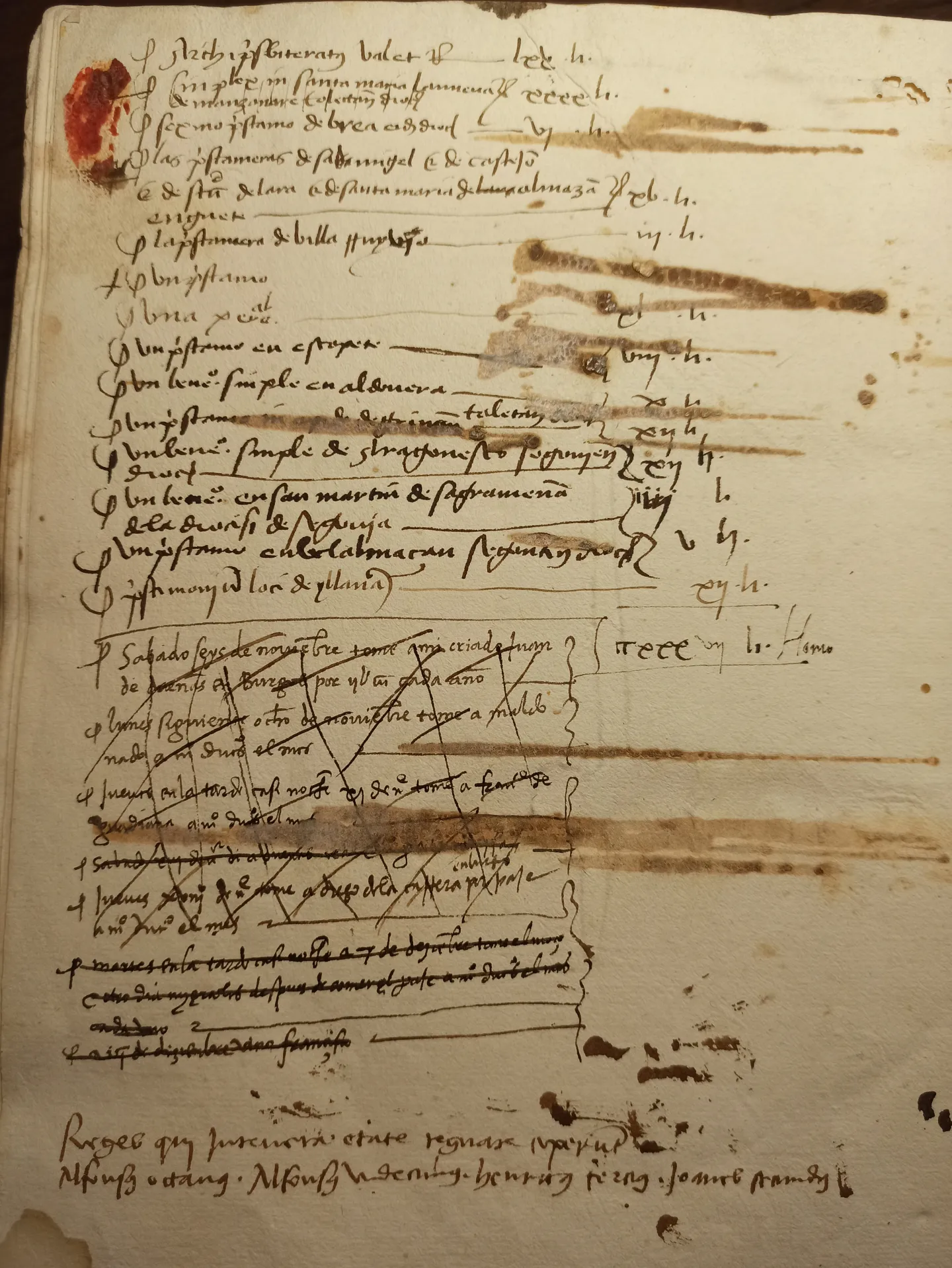
Other copies captured my attention, as they preserve extensive early manuscript annotations in Spanish. For example, a copy of Rodericus Zamorensis’ Compendiosa historia Hispanica printed by Ulrich Han in Rome not after 4 Oct. 1470 (ISTC ir00211000, GW M38526, Abad S-23), bound in a late 15th century/early 16th century binding, contains on the second rear flyleaf verso a recipe “pro peste” against the plague in a contemporary hand. On the verso of the second rear flyleaf there is a manuscript particular account of loans and servants taken into service in two early hands.

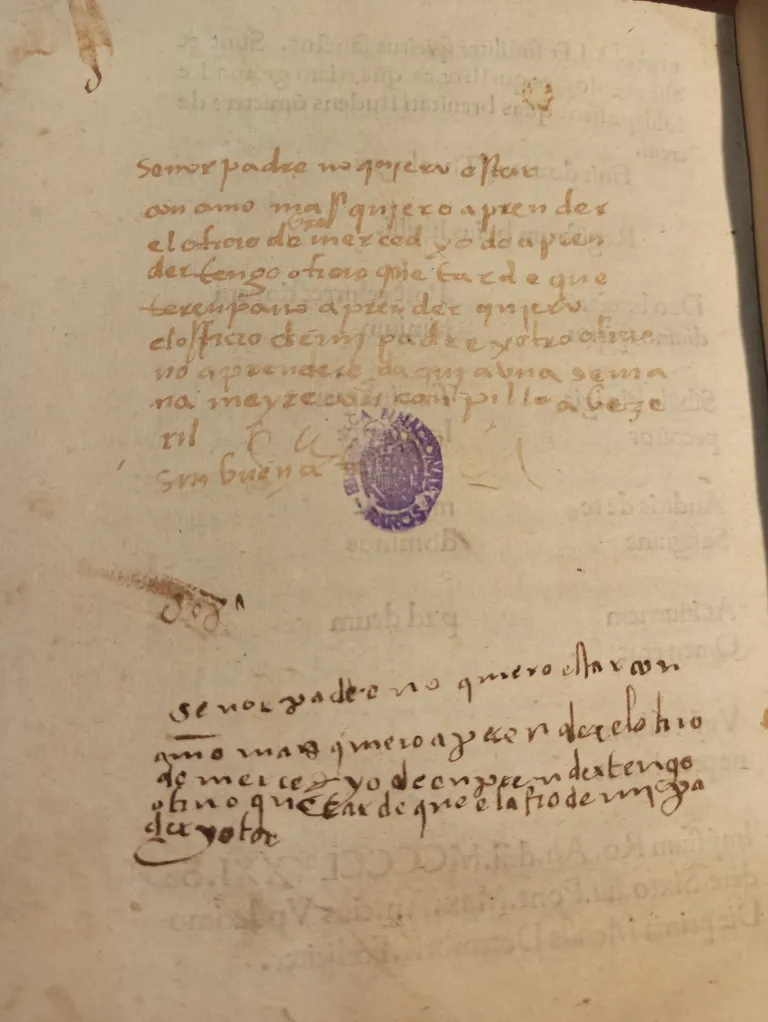
In a copy of Philippus de Barberiis’ Discordantiae printed in Rome by Johannes Philippus de Lignamine in 1481 (ISTC ib00118000, GW 3385, Abad B-33), there are two extensive MS notes in Spanish on the verso of the last leaf in two 15th-century hands, in which the person writing claims he would like to learn his father’s job, in order not to have any master. In case he doesn’t learn this job in one week, he argues he is going to Becerril (de la Sierra), a town in the mountains in the North of Madrid.
Special thanks go to Maria José Rucio Zamorano for her hospitality and her involvement in the project, and to her team, for their competence, for being so welcoming and for creating a comfortable and inspiring environment in which to strengthen my knowledge of the material evidence of fifteenth-century printed books.
Related articles
November 9, 2026
by Markéta Kučerová and Vojtěch Šícha, Library of the Czech Academy of Sciences
November 9, 2026