
New acquisition of two 17th-century Greek editions: a small story about circulation of books.
by Irini Solomonidi, Senior Librarian, Gennadius Library, ASCSA
Share this article
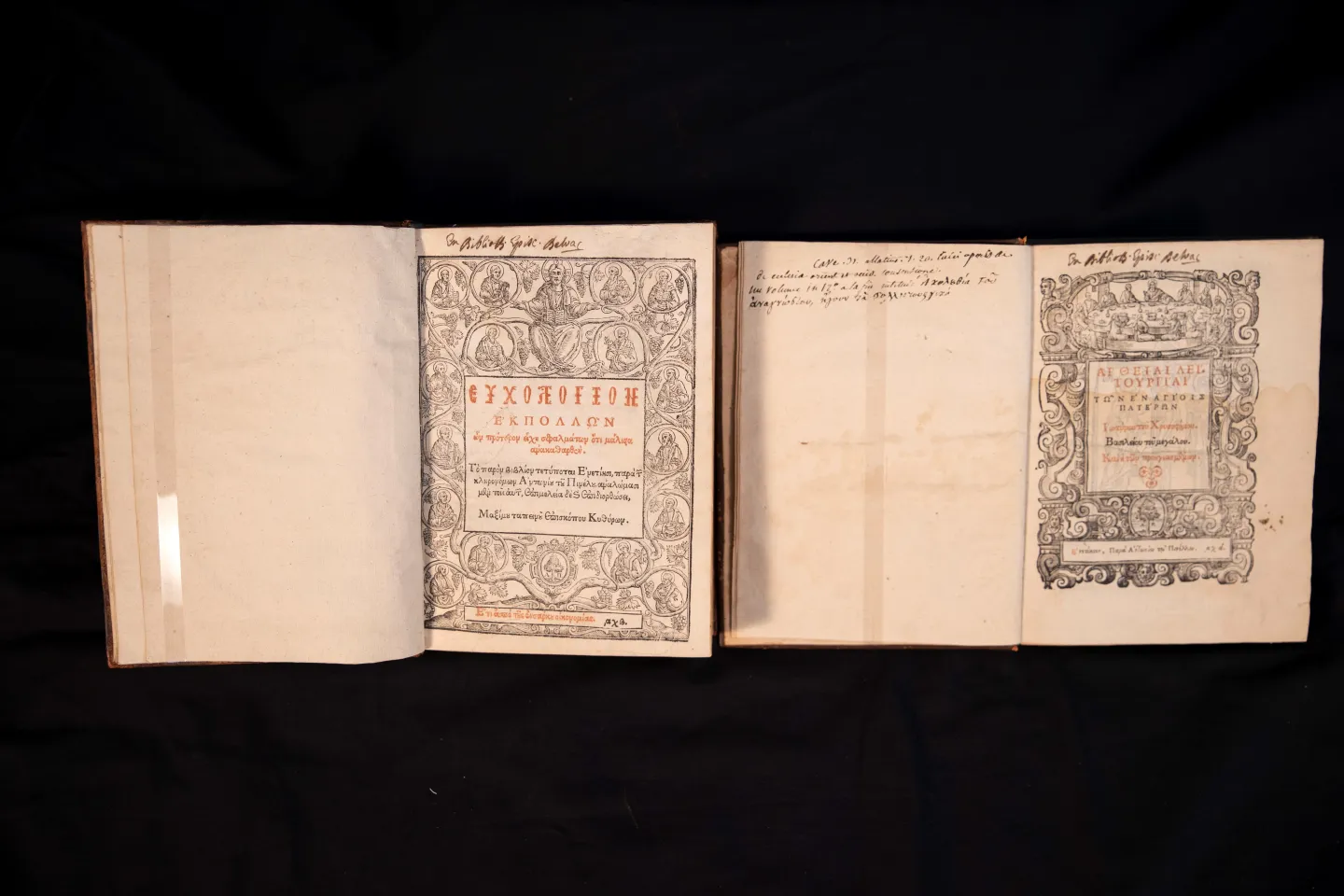
The Gennadius Library recently acquired the 17th-century first Greek editions of two liturgical texts: the Euchologion of Maximos Margounios, Bishop of Kythera (1602) and the Syntagmation of Gabriel Severus, Metropolitan of Philadelphia (1600). Both editions hold a special position in the history of Greek printing as they were published in Venice in the famous printing press of Antonio Pinelli.
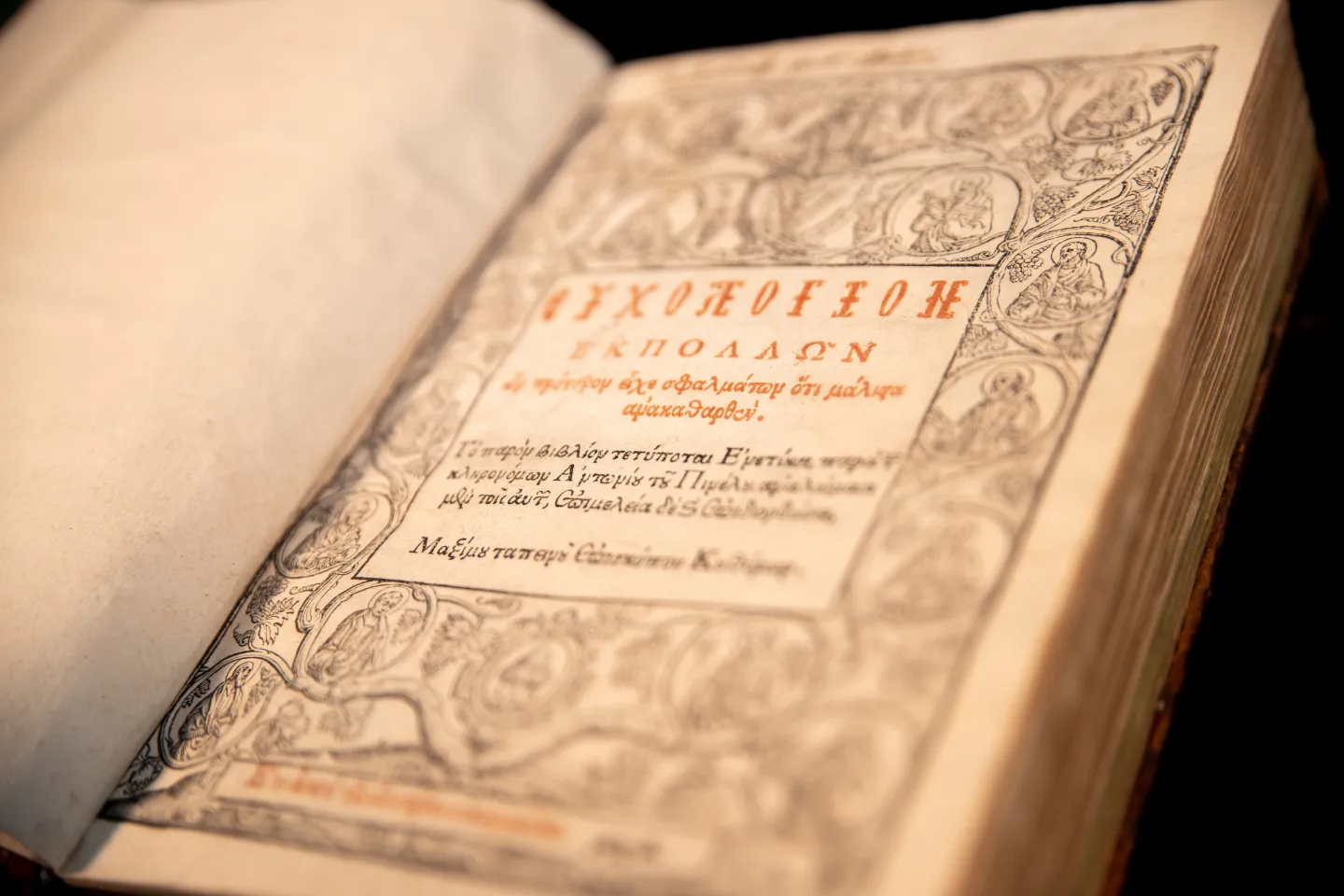
Euchologion. Antonio Pinelli, 1602. Gennadius Library
Founded in the early 17th century, the Pinelli family printing press was active for two centuries as the official printers (“Stampatori ducali”) of the Venetian Republic until its dissolution by Napoleon. During the period 1600 to 1676, the Pinelli publishing house printed a considerable number of Greek liturgical and vernacular literature books.
A total of 244 editions are recorded in the Greek bibliography of Thomas Papadopoulos (Ελληνική βιβλιογραφία, 1466 – c. 1800): 152 editions were printed by Antonio (or Giovanni Antonio) Pinelli, 85 editions by Giovanni Pietro Pinelli, 3 editions by Marco Pinelli, and 4 by the Typographia Pinelliana. The Gennadius Library owns 48 copies of Greek editions by Pinelli (20% of the total Greek production).
The mark of the Pinelli press was a pine tree enclosed in an elaborate frame. The title page and the colophon of the 1602 Euchologion,printed in black and red ink, bear this printer’s device with the initials of Antonio Pinelli in Greek (Α.Π.) or in Italian GAP (Giovanni Antonio Pinelli).
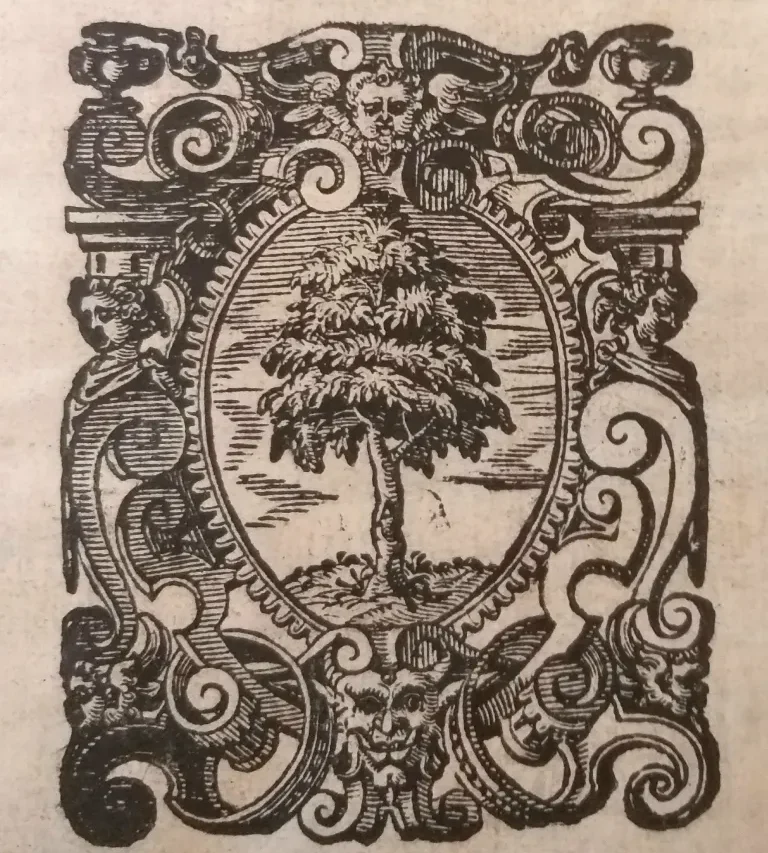
Illiad. Antonio Pinelli, 1603. Gennadius Library
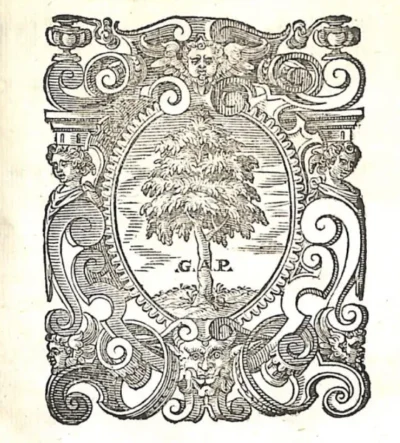
Euchologion. Antonio Pinelli, 1602. Gennadius Library
The 1600 Syntagmation, on the other hand, printed only in black ink, is most probably the only edition with a different mark on its title page: a dove sitting on a tree trunk holds a small olive branch in its beak.
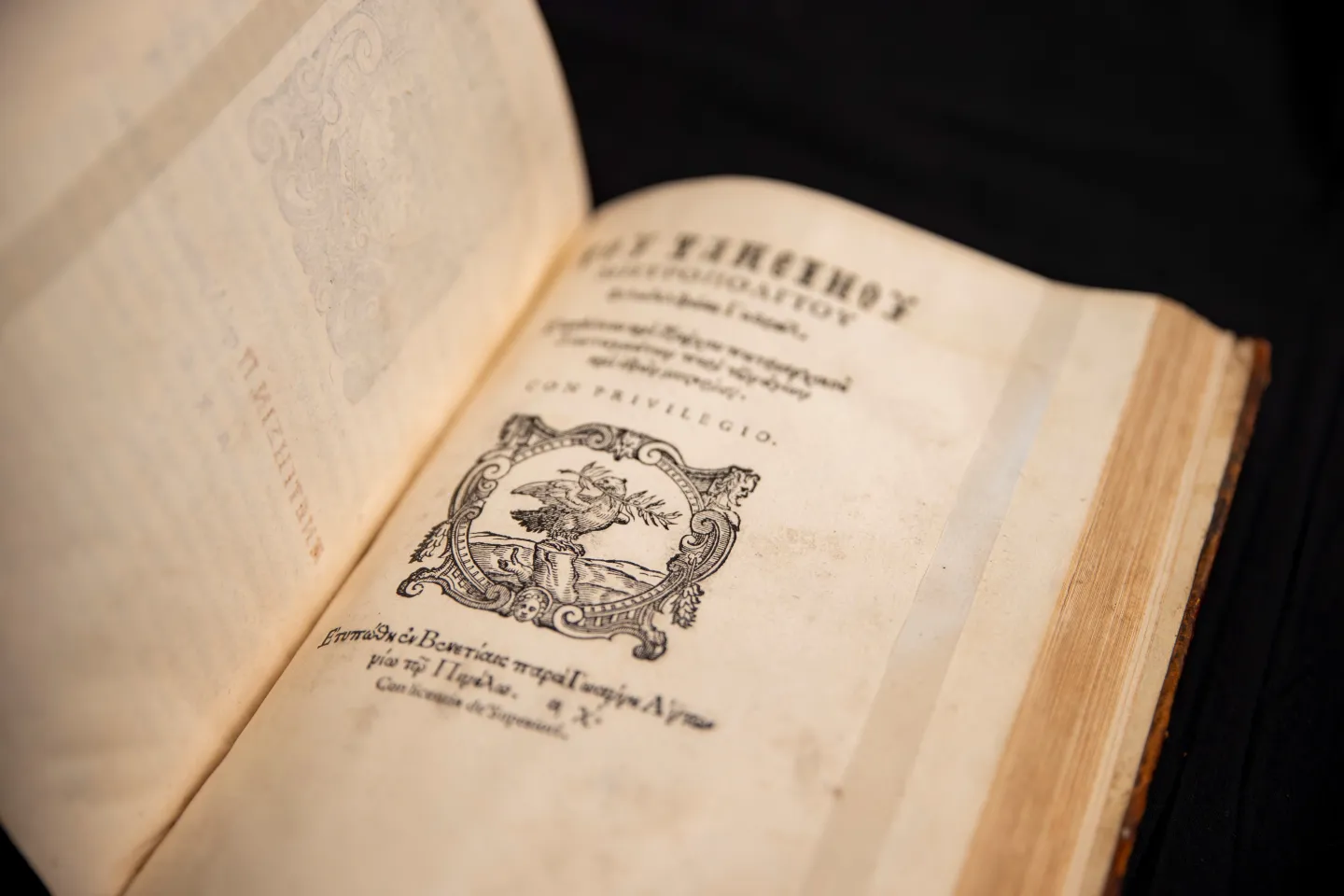
Syntagmation. Antonio Pinelli, 1600. Gennadius Library.
As we can verify in the CERL Thesaurus database, this was a mark used by the Compagnia (or Societas) Minima, an association of printers/editors active in Venice from 1592 to 1614. Members of the society were Fioravante Prati, Pietro Dusinelli, Giovanni Battista Porta and presumably others as well. The use of this mark by Antonio Pinelli not only suggests his ties with the Compagnia Minima, but is also testimony to the relations between printers and the circulation of printing material (woodcuts, typefaces etc.) in sixteenth- and seventeenth- century Venice.
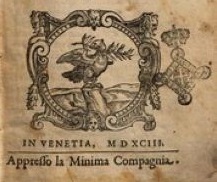
Il cortegiano del conte Baldassarre Castiglione.
Compagnia Minima. 1593. National Central Library of Rome.
The two editions are bound together in a wonderful early seventeenth century bookbinding with French calf and gilt edges. The ownership inscription on the title page, “Ex Biblioth. Episc. Belvac [ensis],” points to the Library of the Cathedral of Beauvais.
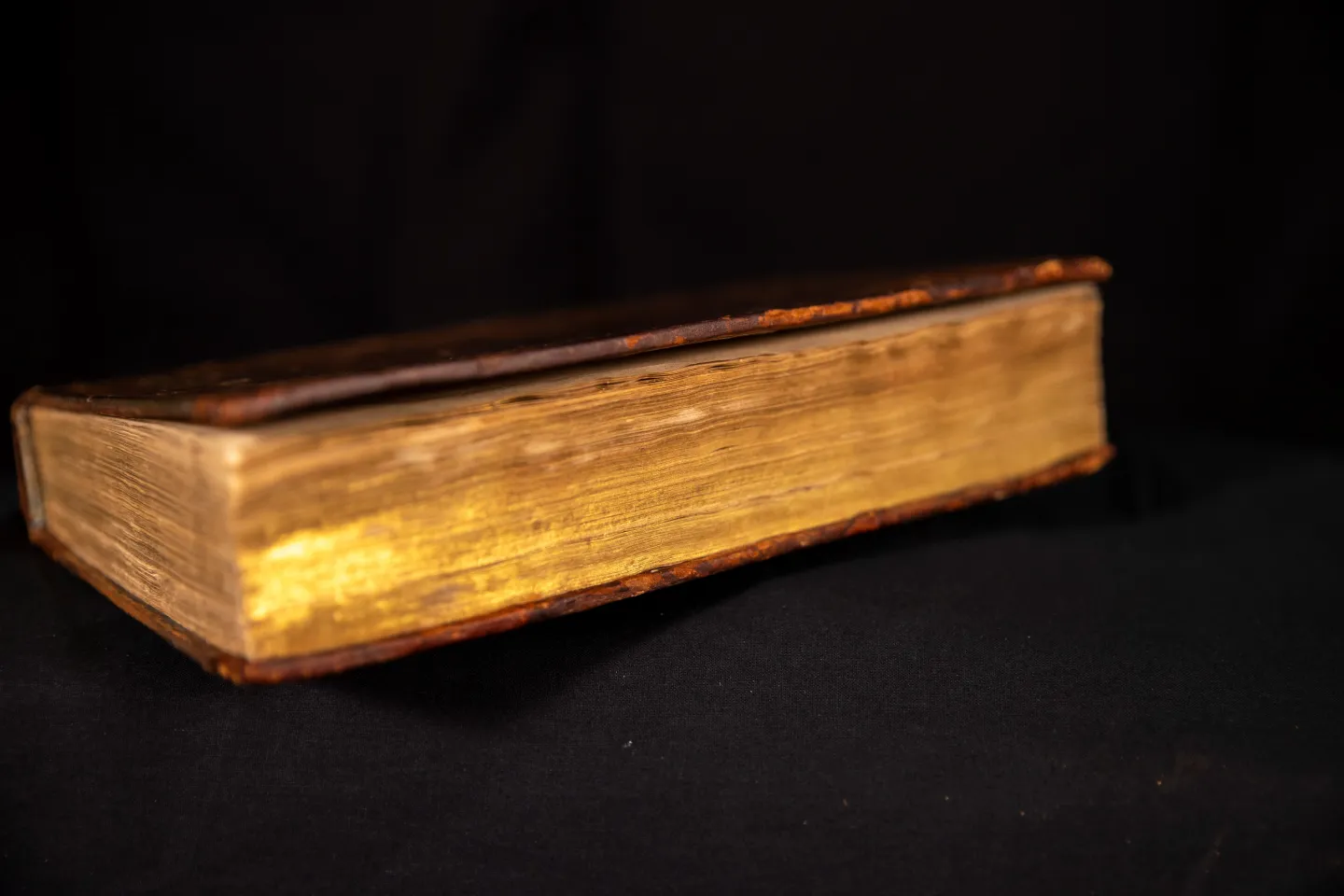

The newly acquired book joins another Gennadius specimen with the same provenance (Beauvais), binding and ownership inscription; the three liturgical texts Sylleitourgika (1603), Theiai leitourgiai (1601) and Syntagma … akolouthion (1595) bound together.
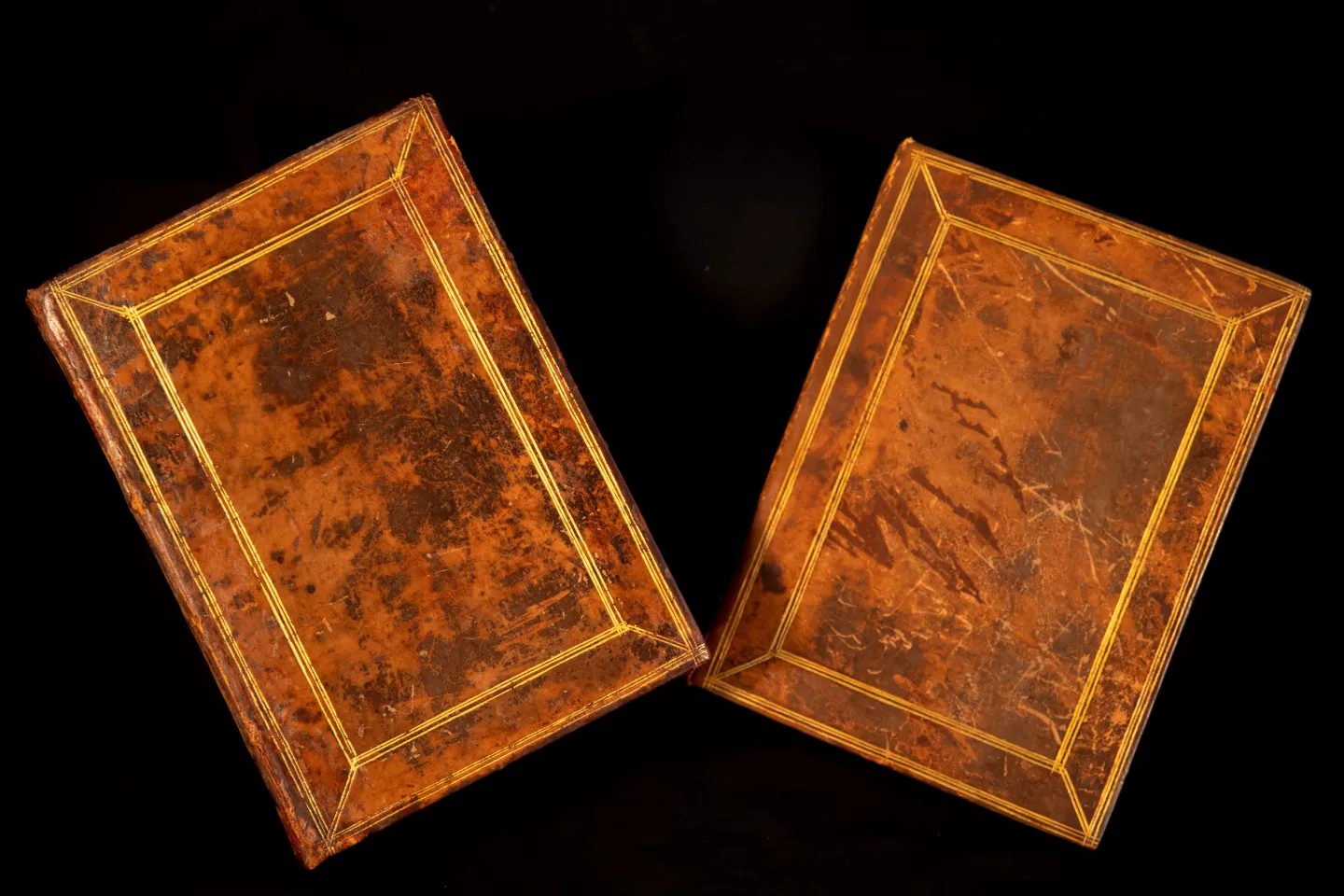
The three bound copies were purchased from Jammes Librairie in Paris, and were donated to the Library in 1975 by Mrs. Oscar Curtis Holder. In a letter addressed to M. Jammes, Francis Walton, Director of the Gennadius Library from 1961 to 1976, expressed his enthusiasm for the acquisition of the three Greek liturgical books and emphasized their importance: “It is exactly the kind of book I am eager to get for the Library, which should have ideally all the books of the type recorded by Legrand.”
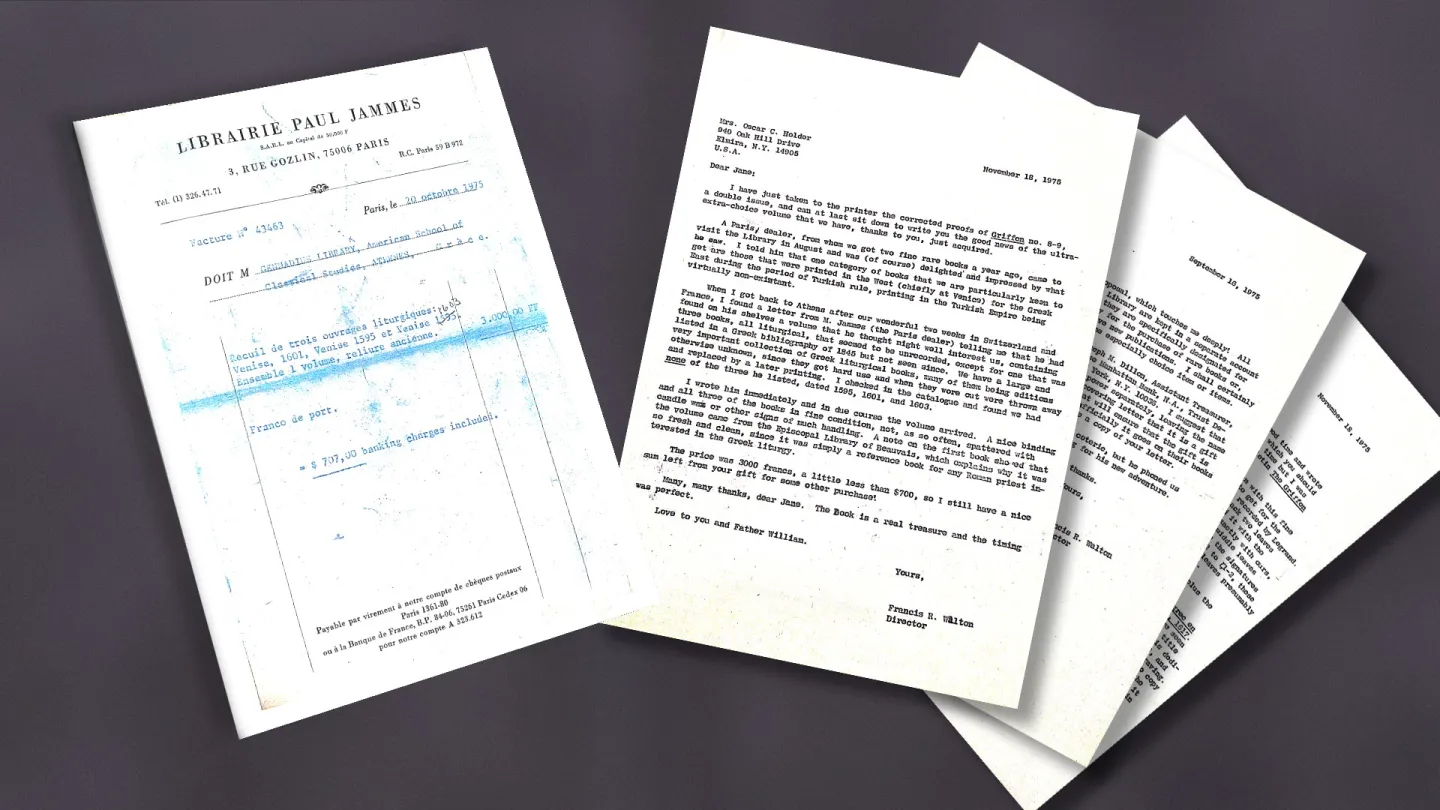
Francis R. Walton Papers. ASCSA Archives.
Related articles
by Konrad K. Szymański (Ossolineum National Library, Wrocław)
November 9, 2026
by Caroline Duroselle-Melish, Angela Dressen and Attilio Bottegal, I Tatti, Harvard
November 9, 2026
November 9, 2026