
The CERL Security Working Group supports member libraries in strengthening the protection of culturally significant heritage collections. Through practical tools, professional training, and trusted collaboration, the group helps institutions anticipate, prevent, and respond to security threats.
Membership of the Working Group is limited to CERL member institutions through nomination, while its conferences, workshops, and training activities are open to the wider professional community.
The Security Working Group supports CERL members in protecting heritage collections by:
- Coordinating information on security threats and incidents
- Monitoring emerging risks, methods, and technologies
- Supporting access to legislation, policy, and best practice guidance
- Organising training, events, and professional exchange
- The group focuses primarily on criminal threats and digital security
- To serve as an interface with security networks in related sectors
Member institutions may nominate one staff member, typically the Head of Security or equivalent, to join the Security mailing list. This secure forum enables trusted, confidential exchange of information on criminal incidents, emerging threats, and preventive measures across participating institutions.
Chair: Jacqueline Lambert, Koninklijke Bibliotheek van België – Bibliothèque royale de Belgique, Brussels
- Jarle Rui Aadna and Anna Magdalena Lindskog Midtgaard, Det Kongelige Bibliotek, Copenhagen
- Núria Altarriba, Biblioteca de Catalunya, Spain
- Steven Archer, Trinity College Library, Cambridge
- Greger Bergvall, Kungliga Biblioteket, Sweden
- Anne Blecksmith, Huntingdon Library
- Andrea Cappa, Biblioteca Nazionale Centrale di Roma (BNCR)
- Claire Couté, Bibliothèque nationale de France, Paris
- Louisa Coles, University of Glasgow Information Services
- Bente Granrud and Gunhild Myrbakk, National Library of Norway, Oslo
- Lizzy Hatfield and Ant Brewerton, Bodleian Library, Oxford
- Wolfgang-Valentin Ikas, Bayerische Staatsbibliothek, München
- Victoria Nordling, Uppsala University Library, Uppsala
- Karen Limper-Herz, British Library, London
- Joe Marshall, National Library of Scotland, Edinburgh
- Eva Maria Molleja Lopez, Biblioteca Nacional de España
- Kathleen Mühlen Axelsson, University Library Lund
- Gergely Nagy, National Széchényi Library of Hungary, Budapest
- Brian O’Donnell, National Library of Ireland, Dublin
- Marika Selga, National Library of Latvia, Riga
- Alessandro Sidoti, Biblioteca Nazionale Centrale di Firenze, Italy
- Fran Stroobants, Koninklijke Bibliotheek van België – Bibliothèque royale de Belgique, Brussels
- Wim Tromp and Foekje Boersma, Koninklijke Bibliotheek, The Hague

CERL Quick Audit Tool (QAT)
The Quick Audit Tool (QAT) helps libraries and archives quickly evaluate how their collection security policies and procedures compare with a shared baseline developed by CERL member institutions. Designed for organisations of all sizes, the tool promotes awareness, encourages internal discussion, and provides practical guidance for strengthening security frameworks.
Left: Participants of 2022 Summer School during a Workshop about the QAT.
Resources
The Security network provides a range of practical tools, reference materials, and external resources supporting collection security planning and risk awareness.
Events
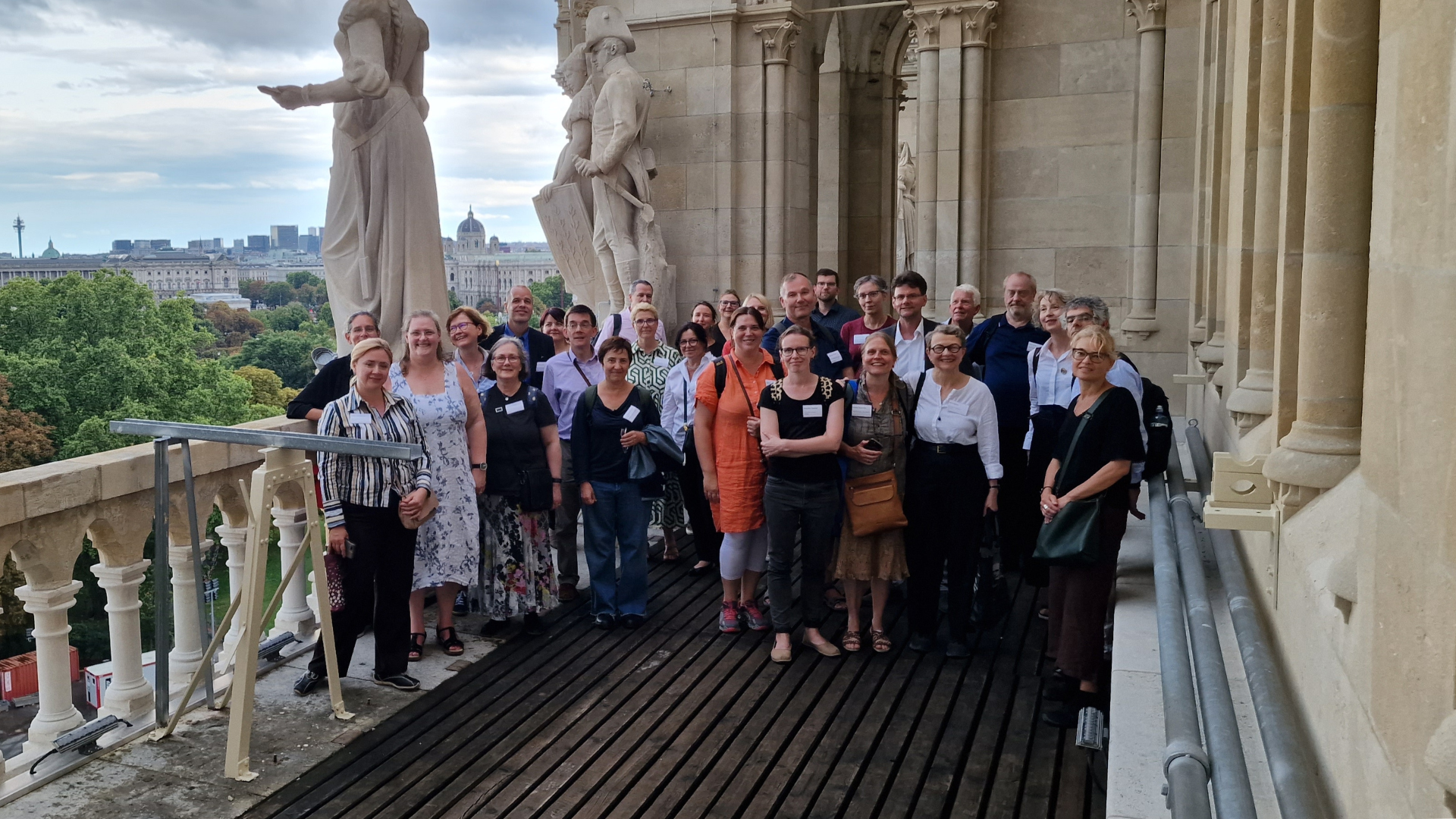
The Security Network organises summer schools dedicated to collection and institutional security for curators and security officers from libraries and archives. Hosted each year in a different European location, the programme explores topics such as reader behaviour, legal frameworks, incident response, collaboration, and digital security.
Each host adapts the course to regional needs while strengthening an international network that shares best practices and helps prevent and respond to theft and security threats.
Past Summer Schools


Contact information
For more information about the Security Network Working Group, please contact the Chair: Jacqueline Lambert, Koninklijke Bibliotheek van België – Bibliothèque royale de Belgique, Brussels.